10 Elegant Aesthetic Bedroom Ideas You’ll Want to Copy
A bedroom can look beautiful without feeling overly decorated. In fact, some of the most inviting bedrooms rely on a surprisingly simple formula: a calming color palette, comfortable layers, thoughtful lighting, and a few pieces that give the room personality. The goal is not to fill every empty corner. It is to create a space where everything feels intentional.
If your bedroom currently feels unfinished, mismatched, or simply a little bland, you do not necessarily need new furniture or a major renovation. Small changes can make a noticeable difference. Swapping harsh lighting for warmer lamps, adding natural textures, upgrading bedding, or introducing a well-chosen accent can completely change the atmosphere.
Elegant bedroom decorating is also more flexible than it may first appear. You can create a sophisticated look in a large primary bedroom, a small apartment bedroom, a guest room, or even a rental where permanent changes are limited. The trick is knowing which elements have the biggest visual impact.
The ideas below focus on practical decorating choices that combine comfort with an elevated appearance. You will find ways to work with neutral colors, natural materials, layered textiles, vintage details, soft lighting, and simple furniture arrangements without making the room feel staged.
Whether your personal style leans modern, traditional, romantic, minimalist, or somewhere in between, these ideas can be adapted to fit your home. Start with one or two changes rather than trying to transform everything at once. Often, the most elegant rooms develop gradually as you discover what actually works for your space.
Table of Contents

1. Soft Neutral Layers
A restrained palette of warm neutrals creates a calm foundation that is easy to personalize.
2. Natural Wood Details
Wood brings warmth, texture, and visual balance to an otherwise polished bedroom.
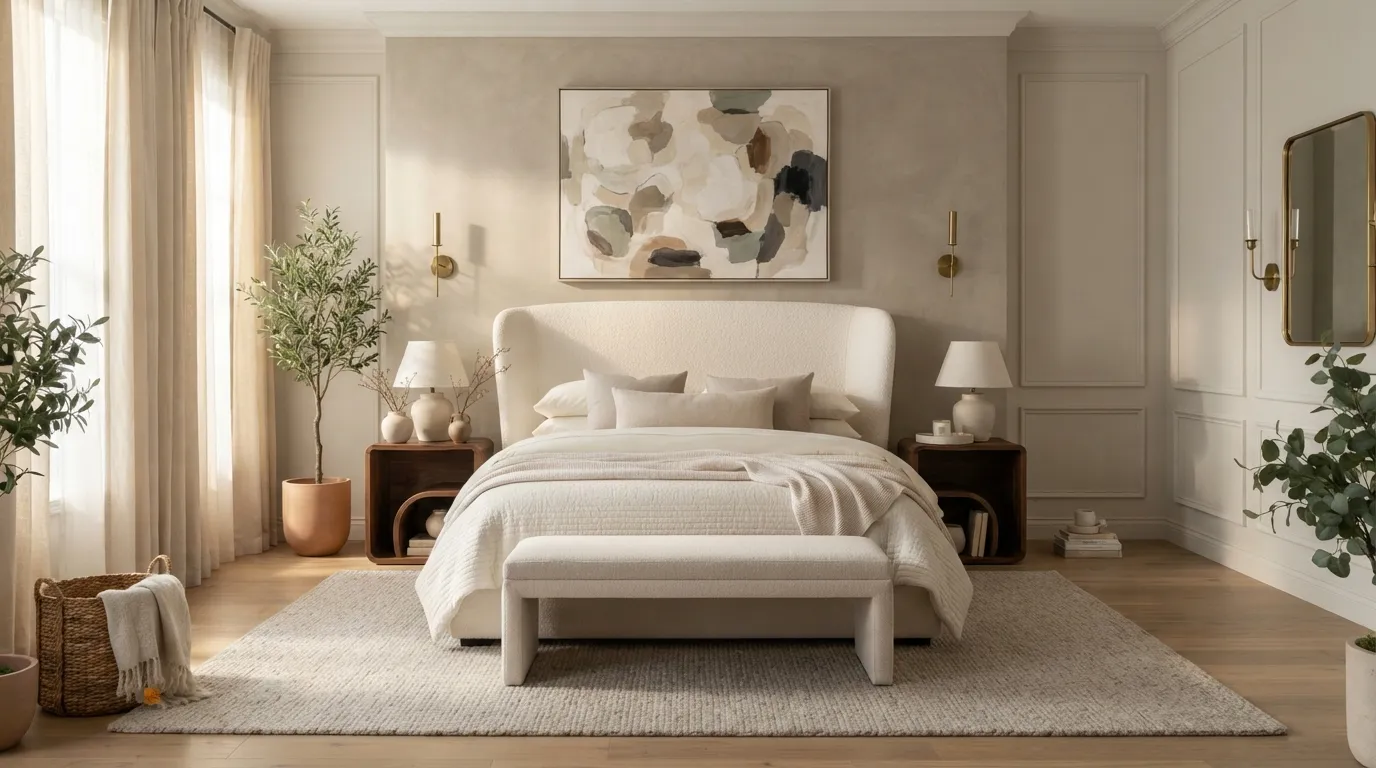
3. Statement Upholstered Bed
An upholstered bed can become the comfortable focal point that gives the entire room a finished appearance.
4. Layered Window Treatments
Combining curtains and shades adds softness while giving you greater control over natural light.
5. Warm Ambient Lighting
Multiple sources of warm light can make an ordinary bedroom feel considerably more inviting.
6. Vintage Accent Pieces
Thoughtful vintage details introduce character and keep an elegant room from feeling too predictable.
7. Textured Bedding Mix
Combining different fabrics gives the bed depth and makes the room feel comfortable rather than showroom-like.
8. Refined Wall Decor
Well-scaled artwork and mirrors can give blank walls personality without overwhelming the room.
9. Minimal Styling
Keeping surfaces intentionally edited creates a polished appearance and makes favorite pieces stand out.
10. Cozy Reading Corner
A small seating area adds function and creates another visually appealing layer within the bedroom.
1. Soft Neutral Layers
Quick Benefits
- Creates a peaceful visual foundation
- Makes the room feel brighter and more spacious
- Works with many decorating styles
- Makes seasonal updates easy
- Allows furniture and artwork to stand out
Why It Works
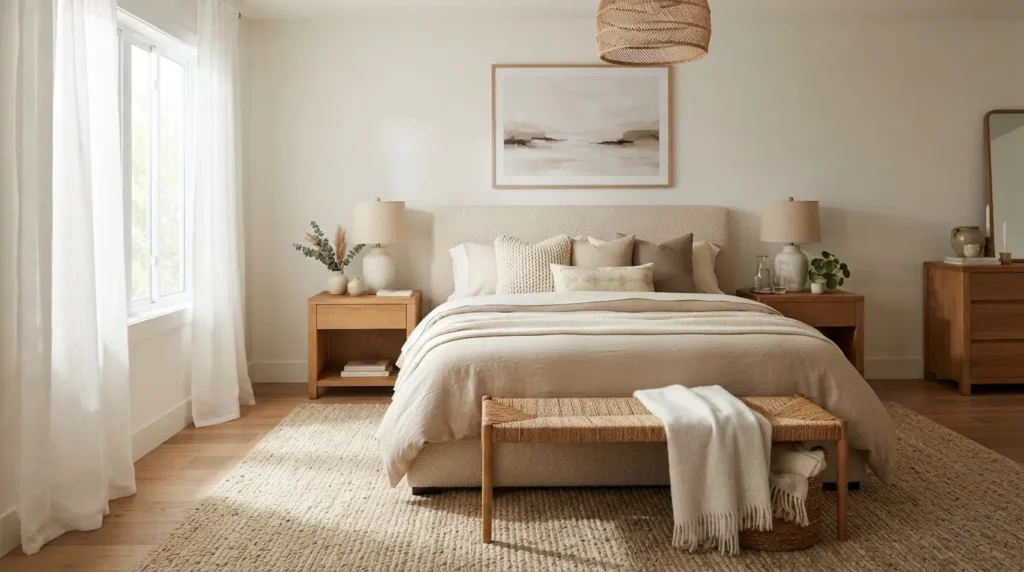
Warm neutrals are one of the easiest ways to make a bedroom feel sophisticated without making it look overly formal. Shades such as ivory, oatmeal, beige, taupe, soft gray, and warm white create a gentle backdrop that allows texture to do much of the decorating.
The key is avoiding a room where every item is exactly the same shade. A completely flat neutral palette can sometimes feel cold or unfinished. Instead, think in layers. A warm ivory wall might sit behind a beige upholstered headboard, while cream bedding, a taupe throw, and a woven basket introduce slightly different tones.
This approach works particularly well in bedrooms because the colors naturally support a restful atmosphere. They are also forgiving when you want to change your accessories later. A neutral foundation can accommodate black accents, brass hardware, muted blue, sage green, dusty rose, or deeper brown without requiring you to redecorate the entire room.
I’ve noticed that the most successful neutral bedrooms usually have more texture than color. Linen, cotton, wool, wood, boucle, woven fibers, and softly finished ceramics can provide enough visual interest to keep the space from looking plain.
How To Style It
Start with the largest surfaces first. If you are painting, consider warm white, creamy beige, mushroom, or light greige rather than a stark cool white. If repainting is not an option, use bedding, curtains, rugs, and accessories to create the same effect.
Choose one dominant neutral and two supporting shades. For example, warm ivory can be the main color, beige can provide depth, and medium taupe can anchor the room.
Layer the bed with a duvet or comforter, two to four sleeping pillows, a couple of decorative pillows, and a folded throw. Keep the fabrics slightly different so the arrangement feels collected rather than matched.
A natural fiber rug beneath the bed can visually connect the different tones. Finish with one or two darker elements, such as a walnut nightstand, bronze lamp, or dark wood frame. These small contrasts prevent the room from becoming visually washed out.
2. Natural Wood Details
Quick Benefits
- Adds warmth to neutral interiors
- Introduces organic texture
- Balances softer fabrics
- Works with modern and traditional styles
- Helps the room feel grounded
Why It Works
Bedrooms can easily become dominated by soft materials: bedding, curtains, upholstered furniture, rugs, and pillows. While these elements make a room comfortable, too many soft surfaces can make the design feel visually indistinct.
Natural wood solves that problem by introducing a harder, warmer material.
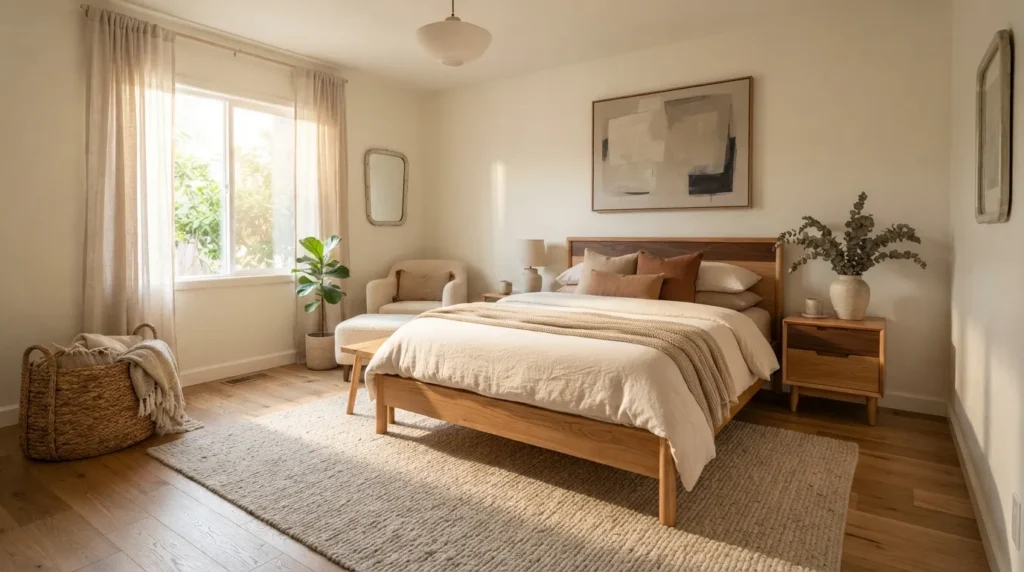
A wood nightstand, headboard, bench, dresser, floating shelf, or even a small stool can provide enough contrast to make a neutral bedroom feel more complete. The beauty of wood is that it does not have to match perfectly. Different wood tones can coexist when the overall palette is restrained.
Lighter oak can make a room feel airy and casual, while walnut creates a richer and more traditional appearance. Reclaimed or distressed wood brings rustic character, whereas smooth walnut or ash can look distinctly modern.
One mistake many homeowners make is adding too many different finishes. Three or four unrelated wood colors can make a bedroom feel accidental rather than curated. Instead, choose one dominant wood tone and repeat it in at least two places.
How To Style It
If you already have a wood bed frame or dresser, use that piece as your starting point. Repeat its tone with smaller elements such as picture frames, a bench, a tray, or a side table.
For a modern bedroom, pair smooth medium-toned wood with simple bedding and clean-lined furniture. For a more traditional space, look for pieces with turned legs, visible grain, or classic detailing.
A wooden bench at the foot of the bed is especially useful because it adds both visual weight and practical seating. In a smaller room, a compact wooden stool can provide a similar effect without taking up much floor space.
Keep accessories around wood furniture relatively simple. A ceramic vase, small lamp, stacked books, or a single branch arrangement is often enough.
If your furniture is already dark, consider adding lighter textiles around it so the room does not feel heavy. If the furniture is very pale, deeper brown accessories can provide contrast.
3. Statement Upholstered Bed
Quick Benefits
- Creates an immediate focal point
- Adds softness and comfort
- Makes the bed look more substantial
- Works in both traditional and modern rooms
- Can define the room’s overall style
Why It Works
The bed is usually the largest piece of furniture in a bedroom, so it naturally attracts attention. Rather than fighting that fact, make the bed an intentional focal point.
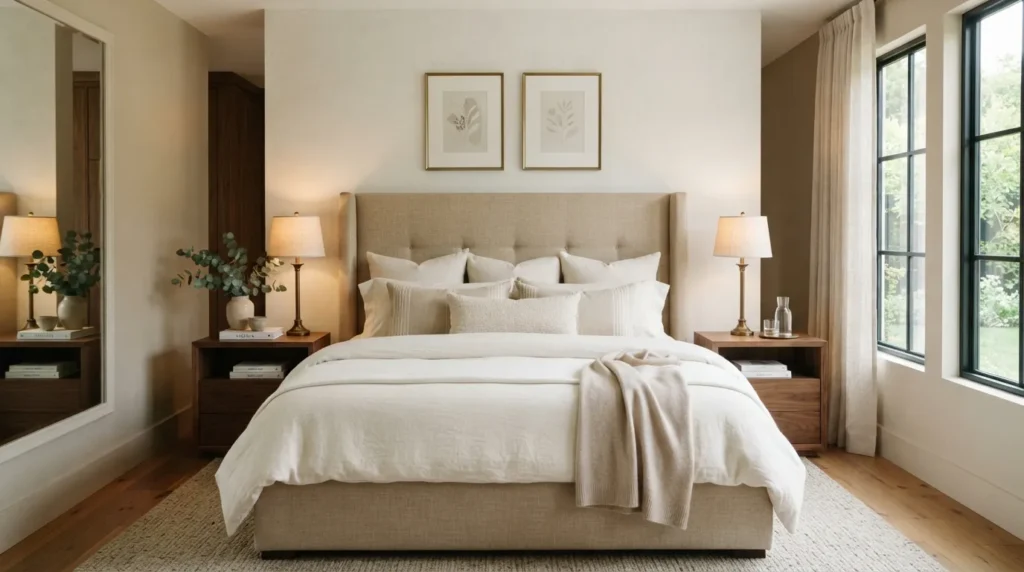
An upholstered headboard can instantly add softness and architectural presence. It also gives you a large surface where color and texture can influence the rest of the room.
A tall curved headboard can create a romantic, boutique-hotel feel. A rectangular linen headboard feels relaxed and timeless. Channel tufting introduces a more contemporary appearance, while classic paneling can lean traditional.
The important consideration is proportion. A statement headboard should feel appropriately sized for the wall and mattress. If the headboard is too small, it can disappear behind the bedding. If it is excessively large in a compact bedroom, it can make the room feel crowded.
An elegant bed does not necessarily require an expensive frame. You can create much of the same effect by using a simple upholstered frame and concentrating your budget on quality bedding and a few carefully chosen accessories.
How To Style It
Begin with the wall behind the bed. Keep the surrounding decor relatively restrained so the headboard has room to breathe.
For a classic look, choose linen, cotton, or velvet in ivory, beige, taupe, muted gray, or another subdued shade. If you prefer something more dramatic, a deeper olive, charcoal, navy, or chocolate tone can create a sophisticated focal point.
Place matching or coordinated nightstands on either side when space allows. They do not have to be identical, but similar visual weight helps the bed feel balanced.
Use bedding that complements rather than exactly matches the headboard. For example, a beige headboard can work beautifully with cream bedding and a taupe throw.
Avoid piling too many decorative pillows against the headboard. A few well-selected layers often look more inviting than a bed that takes several minutes to clear before sleeping.
4. Layered Window Treatments
Quick Benefits
- Makes windows look more finished
- Improves privacy
- Provides flexible light control
- Adds softness to hard architectural lines
- Creates a polished designer-inspired appearance
Why It Works
Windows are sometimes treated as an afterthought, but they occupy a significant amount of visual space. Bare windows can make an otherwise finished bedroom feel incomplete, while thoughtfully layered treatments can make the entire room appear more intentional.
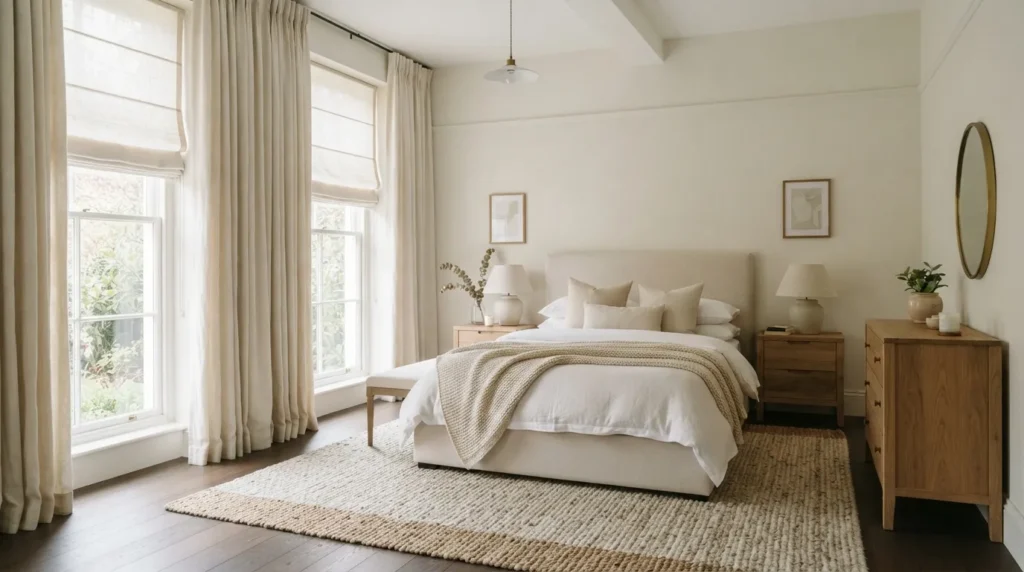
One effective approach is to combine a shade or blind with full-length curtains. The shade provides practical control over sunlight and privacy, while curtains add softness and vertical movement.
The arrangement also changes the perceived proportions of a room. Hanging curtain panels closer to the ceiling and allowing them to fall near the floor can emphasize height. In smaller bedrooms, this can make the walls appear taller without changing the architecture.
The choice of fabric matters as well. Linen and linen-look fabrics provide a relaxed elegance, while heavier drapery can make a bedroom feel more traditional and luxurious.
Layered treatments are particularly useful for bedrooms because they allow you to adjust the room throughout the day. You might want filtered morning sunlight, privacy during the afternoon, and a darker room at night.
How To Style It
For a timeless look, use simple roller shades, woven shades, or Roman shades beneath full-length curtains. Keep the colors within the same family as your bedding or walls.
Warm white curtains can soften a room without competing with artwork. Beige or taupe panels can create more definition against light walls.
When possible, mount curtain rods wider than the window frame so the panels can sit mostly outside the glass when open. This allows more natural light into the room and makes the window appear broader.
Choose curtains that reach the floor rather than stopping several inches above it. A small amount of pooling can look luxurious in a traditional room, while a clean floor-length hem usually feels more contemporary.
For renters, tension rods, removable hardware, and simple shades can provide similar benefits without requiring major permanent changes.
5. Warm Ambient Lighting
Quick Benefits
- Creates a softer evening atmosphere
- Makes textures more noticeable
- Adds visual depth
- Supports reading and nighttime routines
- Gives the bedroom a more finished appearance
Why It Works
Lighting can completely change how a bedroom feels after sunset. A room that looks beautiful during the day can become flat and uninviting if it relies on one bright overhead fixture.
Instead, think about bedroom lighting in layers.
Ambient lighting provides general illumination. Task lighting supports activities such as reading. Accent lighting highlights artwork, architectural features, or decorative areas.
Warm bulbs are generally more comfortable in a bedroom than very cool, blue-toned light. Multiple smaller sources also tend to feel more intimate than one powerful ceiling fixture.
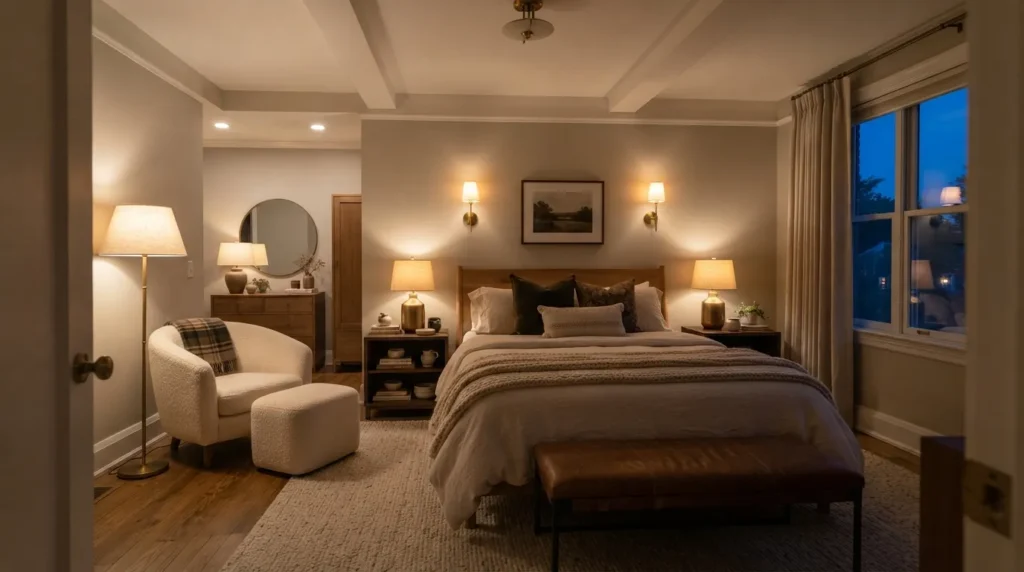
Table lamps on nightstands are an easy starting point, but you can go further with wall sconces, a floor lamp, a small picture light, or a dimmable ceiling fixture.
The placement matters as much as the fixture itself. Lamps positioned at different heights create more visual depth and prevent the room from appearing evenly illuminated from top to bottom.
A simple trick I always suggest is to turn off the overhead light in the evening and switch on the smaller lamps instead. The difference can be surprisingly dramatic.
How To Style It
Place matching lamps on both nightstands if you want a symmetrical, traditional appearance. For a more collected look, use different lamps with similar proportions.
Choose shades that complement your bedding and walls. Linen, paper, ceramic, glass, and metal can all work depending on the style.
Wall sconces are particularly helpful when nightstand space is limited. Adjustable sconces can also be positioned for reading without taking up valuable surface area.
Add a floor lamp beside a chair or in an empty corner. This gives the room another layer of illumination while making the corner feel purposeful.
If possible, use dimmers. They allow one fixture to perform several jobs, from bright morning illumination to soft evening light.
Avoid placing every lamp at exactly the same height. A combination of bedside lamps, a floor lamp, and a ceiling fixture usually creates a more natural rhythm.
6. Vintage Accent Pieces
Quick Benefits
- Adds personality
- Prevents the room from feeling too generic
- Introduces visual history
- Works with modern furniture
- Makes the space feel collected
Why It Works
A bedroom filled entirely with new furniture can sometimes feel like a showroom. Vintage and antique-inspired pieces introduce small imperfections, unusual shapes, and distinctive details that make the room feel more personal.
You do not need a room full of antiques to achieve this effect. One meaningful piece can be enough.
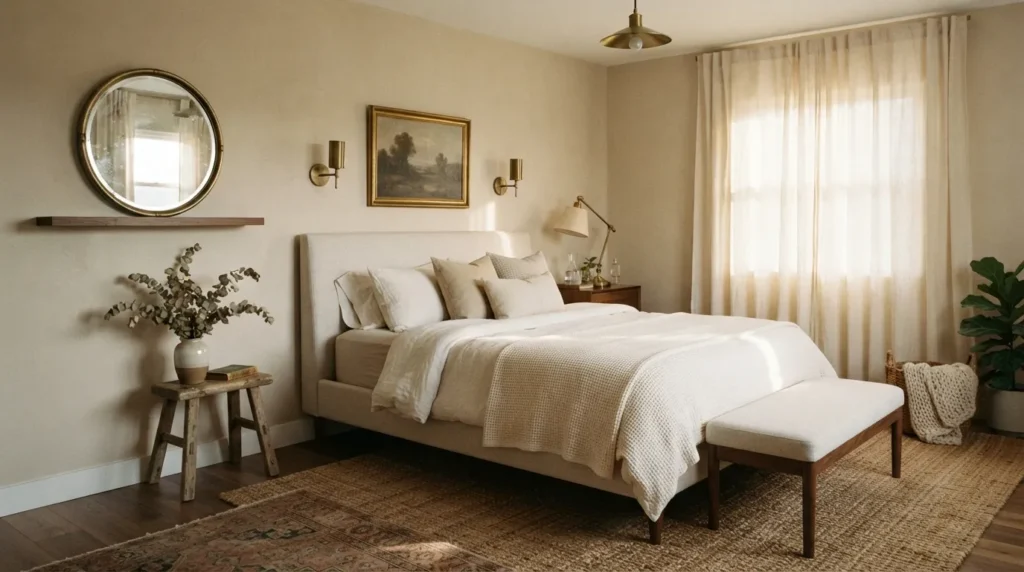
Consider a vintage mirror, old wooden stool, framed landscape, brass candlestick, antique-style lamp, small chest, or decorative box. These pieces can create contrast against newer furniture.
The goal is balance. If everything is vintage, the room may lean heavily toward a particular historical style. If everything is ultra-modern, one older piece can provide exactly the character the room needs.
This is also an approachable way to decorate on a budget. Thrift stores, estate sales, flea markets, and secondhand marketplaces can be excellent sources for smaller decorative items.
I’ve seen a simple older mirror completely change the personality of an otherwise basic bedroom. The worn finish can make new furniture feel less predictable.
How To Style It
Choose vintage pieces based on shape and character rather than trying to make every item belong to the same era.
A traditional mirror can look beautiful above a contemporary dresser. An old wooden bench can soften a minimalist bed. A brass lamp can add warmth to a room dominated by white and gray.
If you find an unusual piece, give it room. Don’t surround it with dozens of other decorative objects.
For a small bedroom, try one vintage accent on a nightstand or dresser. A ceramic vase, framed artwork, or decorative box can be enough.
If you prefer the appearance of vintage furniture without the maintenance, look for modern reproductions with aged finishes.
The most successful combination is usually old plus new: modern bedding, vintage accessory; contemporary lighting, antique mirror; simple furniture, traditional artwork.
7. Textured Bedding Mix
Quick Benefits
- Makes the bed look inviting
- Adds visual depth
- Creates a comfortable layered appearance
- Allows subtle color variation
- Works with almost any bedroom style
Why It Works
The bed is the visual centerpiece of most bedrooms, which makes bedding one of the easiest places to improve the overall design.
Instead of buying a complete matching bedding set, combine complementary materials and shades. This creates a more relaxed, sophisticated appearance because the bed looks assembled over time rather than purchased as one package.
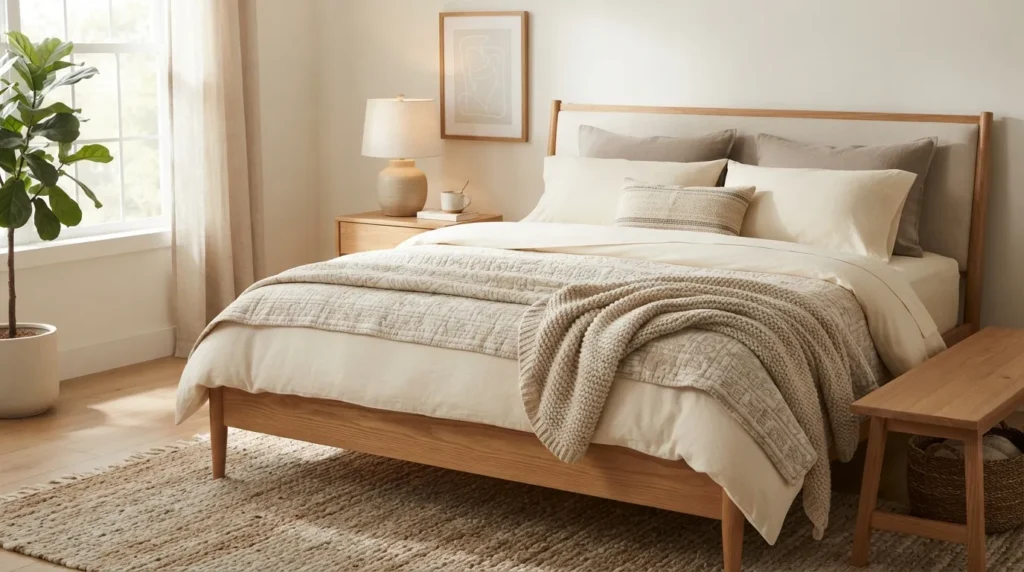
Texture is especially important when your color palette is neutral. Linen, cotton, quilted fabrics, knitted throws, velvet pillows, and woven blankets can all provide variation without requiring bright colors.
Think about the bed from bottom to top. A textured coverlet can create a foundation, a duvet provides softness and volume, pillows create height, and a throw adds a final layer.
You also want the bed to remain practical. If you have to remove a dozen decorative pillows every night, the styling may not suit your routine.
A good bedroom should look beautiful when made but still feel easy to live in.
How To Style It
Start with a duvet or comforter in a versatile neutral. Add a quilt or coverlet folded across the lower third of the bed.
Use sleeping pillows first, followed by one or two larger decorative pillows. Finish with a smaller lumbar pillow if desired.
Choose fabrics that contrast slightly. For example, pair smooth cotton sheets with a linen duvet, a chunky knit throw, and a subtle woven pillow.
Do not be afraid of small variations in color. Cream, ivory, beige, and taupe can look more sophisticated together than one exact shade repeated everywhere.
For a warmer bedroom, add muted brown, caramel, terracotta, or olive accents. For a cooler palette, consider dusty blue, soft gray, or muted sage.
When arranging the throw, avoid making it look perfectly folded every time. A relaxed drape can make the room feel more inviting.
8. Refined Wall Decor
Quick Benefits
- Fills empty walls thoughtfully
- Establishes the room’s personality
- Creates focal points
- Helps balance furniture
- Can make a room feel finished
Why It Works
Blank walls can make a bedroom feel unfinished, but filling every wall with decoration creates the opposite problem. Elegant styling is often about choosing fewer pieces and giving them enough space to be appreciated.
Scale is one of the most important considerations. A tiny frame above a large bed can look lost, while an oversized artwork can overwhelm a small wall.
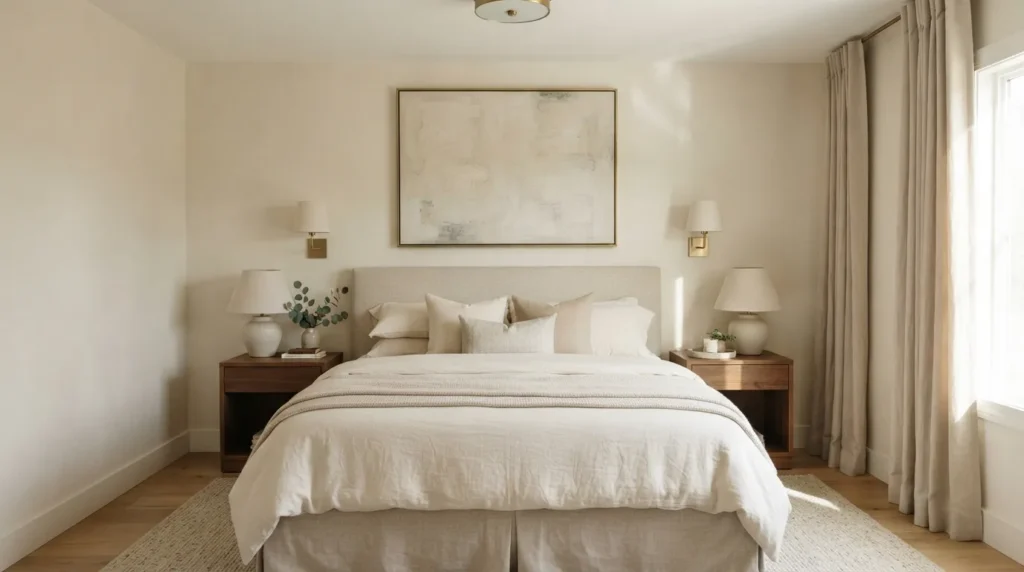
Large-scale artwork, a pair of coordinated prints, a substantial mirror, or a simple gallery arrangement can work beautifully depending on the room.
Mirrors are particularly useful because they reflect light and can make a smaller bedroom feel more open. However, the reflection matters. Avoid positioning a mirror where it reflects clutter or an unattractive part of the room.
Artwork also provides an opportunity to introduce a subtle accent color. A landscape painting with muted greens or browns can connect naturally with wood furniture and neutral bedding.
Pinterest-friendly bedrooms often have walls that look effortless rather than crowded. That effect usually comes from careful editing.
How To Style It
Begin with the largest piece of furniture and consider what the wall needs in relation to it.
Above a bed, a single oversized artwork can create a clean focal point. Two or three smaller pieces can create a more traditional arrangement.
For nightstands, wall sconces can double as functional and decorative elements. This keeps the surface clear while giving the wall more dimension.
Use frames in finishes that repeat elsewhere in the room. Brass can connect to lighting, dark wood can echo furniture, and black frames can provide a crisp contrast.
If you create a gallery wall, vary the size of the artwork while keeping a consistent visual connection through frame color or palette.
Before hanging anything, lay the arrangement on the floor and photograph it. This simple step makes it easier to spot awkward gaps before putting holes in the wall.
9. Minimal Styling
Quick Benefits
- Keeps the bedroom visually calm
- Makes favorite pieces more noticeable
- Reduces everyday clutter
- Makes cleaning easier
- Creates a polished appearance
Why It Works
Minimal styling does not mean an empty room. It means being selective about what deserves visual attention.
A bedroom can contain beautiful furniture and accessories yet still feel chaotic when every surface is covered. Nightstands, dressers, shelves, and benches often become convenient drop zones for everyday items.
The more objects you remove, the more important the remaining pieces become.
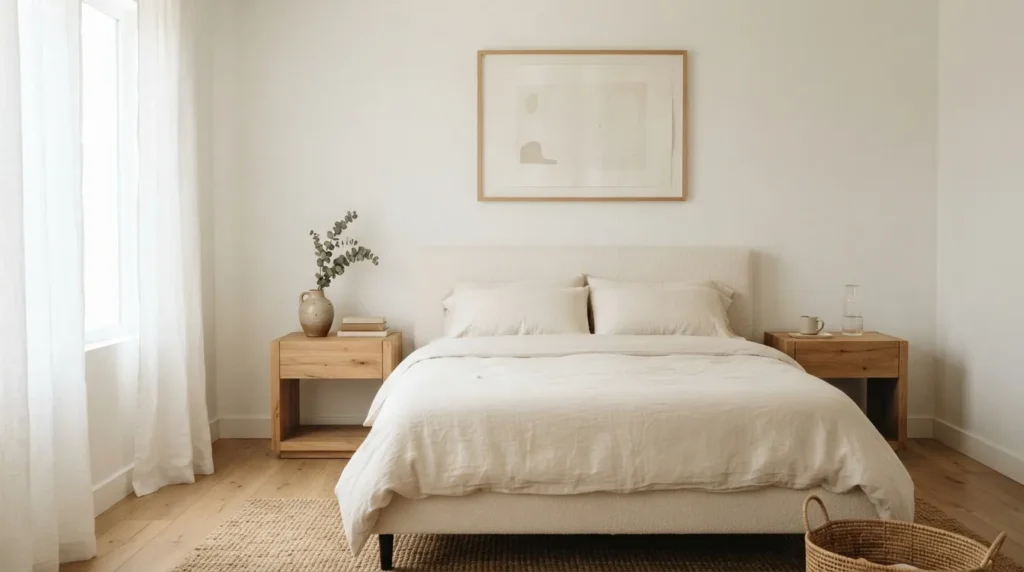
A simple ceramic vase can look more elegant when it is not surrounded by ten other accessories. A beautiful lamp becomes a stronger focal point when the nightstand beneath it has breathing room.
Minimal styling also has a practical advantage. Bedrooms are spaces where people need to relax, sleep, dress, and get ready. Reducing unnecessary visual noise can make the room easier to maintain.
The trick is to avoid making the room feel sterile. Soft textiles, natural materials, artwork, books, plants, and personal objects can provide warmth while still keeping the overall arrangement edited.
How To Style It
Choose one focal accessory for each major surface rather than decorating everything equally.
On a nightstand, try a lamp, a small stack of books, and one decorative object. On a dresser, consider a mirror or artwork with one or two smaller pieces beneath it.
Keep everyday necessities organized in drawers or attractive containers whenever possible.
Use baskets for blankets, laundry, or miscellaneous items. This keeps practical objects accessible without allowing them to dominate the room.
When deciding whether to keep an accessory, ask whether it contributes to the room’s color, texture, function, or personality. If it does none of those things, it may not need to stay.
Remember that negative space is part of the design. Empty space around furniture and accessories helps the room feel intentional.
10. Cozy Reading Corner
Quick Benefits
- Adds useful seating
- Makes an unused corner functional
- Creates a secondary focal point
- Encourages relaxation
- Adds another layer of texture and personality
Why It Works
If your bedroom has enough floor space, a small reading corner can make the room feel considerably more complete.
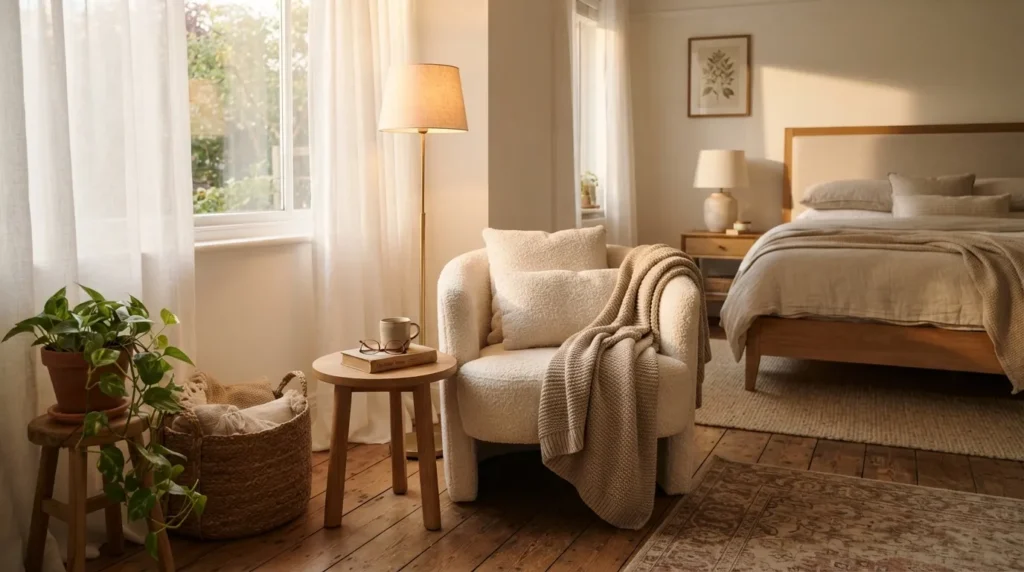
Bedrooms are often designed entirely around the bed, leaving corners that serve no real purpose. A chair, small table, and lamp can turn one of those forgotten areas into a comfortable retreat.
You do not need a large room to create this effect. Even a compact accent chair beside a window can work if the proportions are right.
The corner also gives you a chance to introduce a material or shape that does not appear elsewhere. A curved chair can soften a room dominated by straight lines. A woven chair can add texture. A small wooden table can connect the corner to other natural materials in the room.
The best reading corners are practical rather than purely decorative. The chair should actually be comfortable, and the lighting should be suitable for reading.
If you’re anything like me, a room becomes much more appealing when it includes a place where you can sit without automatically getting into bed.
How To Style It
Choose a chair that fits the scale of the room. In a smaller bedroom, an armless accent chair can provide seating without visually consuming the entire corner.
Add a small side table for a book, drink, or lamp. A round table can work particularly well beside a chair with a curved silhouette.
Place a floor lamp nearby or use a wall-mounted reading light if floor space is limited.
Add one soft throw over the chair rather than several pillows. A small basket beside it can hold additional blankets or reading material.
If the corner is near a window, keep the surrounding decor simple so natural light remains the star.
A small plant can add life, while artwork above the chair can visually connect the corner with the rest of the bedroom.
The goal is not to create another heavily decorated area. It should feel like a natural extension of the bedroom’s overall design.
Frequently Asked Questions
What makes a bedroom look elegant?
An elegant bedroom usually combines a restrained color palette, balanced furniture, quality-looking textiles, thoughtful lighting, and limited but meaningful accessories. You do not need expensive furniture to create the effect. Consistent colors, natural textures, proper proportions, and uncluttered surfaces can make even a modest bedroom feel polished and intentional.
What colors make a bedroom look sophisticated?
Warm neutrals such as ivory, beige, taupe, greige, soft brown, and muted gray are reliable choices for a sophisticated bedroom. You can add depth with restrained shades such as olive, dusty blue, charcoal, or chocolate brown. The most important factor is balance. Using several related shades and varying the textures often creates more interest than relying on one color throughout.
How can I make my bedroom look expensive on a budget?
Focus your budget on high-impact elements rather than buying many small decorations. Well-fitted curtains, layered bedding, warm lighting, a substantial mirror, natural wood accents, and quality-looking hardware can make a noticeable difference. Decluttering is equally important because an organized room allows the pieces you already own to look more intentional.
How do you make a small bedroom look elegant?
Keep the furniture proportional to the room and avoid filling every available surface. Light or warm neutral colors can create an airy foundation, while mirrors and layered lighting add depth. Choose furniture with useful storage and keep decorative accessories selective. Floor-to-ceiling curtains can also emphasize wall height and make a compact bedroom feel more finished.
Should bedroom furniture match?
Bedroom furniture does not have to match exactly. In fact, combining complementary pieces can make a room feel more personal and collected. The key is maintaining some visual connection through color, material, scale, or shape. For example, different nightstands can work when they have similar proportions and coordinate with the bed and other wood or metal finishes.
How many pillows should go on a bed?
There is no single correct number, but a useful starting point is two sleeping pillows per person followed by one or two decorative layers. A lumbar pillow can provide a final accent without making the bed difficult to use. If you prefer a practical bedroom, keep the arrangement simple enough that making the bed and removing the pillows at night does not become a chore.
How do I make my bedroom feel cozy but still elegant?
Combine soft textures with a controlled color palette. Linen bedding, a woven rug, curtains, a knitted throw, warm lamps, and natural wood can create coziness without visual clutter. Keep decorative objects limited and allow some empty space around furniture. The combination of texture, warm lighting, and thoughtful editing usually creates a more elegant result than adding more accessories.
Conclusion
Creating an elegant bedroom is less about following one decorating trend and more about understanding how the individual elements work together. A calm palette establishes the foundation, while wood, textiles, lighting, artwork, and carefully selected accessories provide depth and personality.
You also do not need to change everything at once. Start with the area that bothers you most. If the room feels cold, introduce warmer wood and softer lighting. If it feels cluttered, edit the surfaces and create better storage. If the bed looks unfinished, focus on layered bedding or a stronger headboard. Small changes can often have a surprisingly large visual impact.
The most successful bedrooms also reflect the people who use them. A beautiful room still needs to be comfortable, functional, and easy to live in. Leave space for your favorite books, a cozy chair, meaningful artwork, or the little details that make the room feel like yours.
Whether you prefer modern simplicity, traditional charm, natural textures, or a mixture of styles, use these ideas as a starting point rather than a strict formula.
Pick one or two ideas that fit your current space and build from there. With a thoughtful color palette, comfortable layers, warm lighting, and a little restraint, you can create a bedroom that feels polished while remaining genuinely inviting.
Related Articles
- Cozy Bedroom Ideas for a Warm and Relaxing Space
- Neutral Bedroom Decor Ideas That Never Go Out of Style
- Small Bedroom Ideas to Maximize Every Inch
- Modern Farmhouse Bedroom Ideas for a Timeless Look
- DIY Accent Wall Ideas for a Bedroom Makeover