

10 DIY Coffee Tables That Become Conversation Pieces
A coffee table usually sits at the center of a living room, but it doesn’t have to disappear into the background. The right design can become one of those pieces that makes guests stop and ask, “Where did you find that?”
That’s what makes a DIY coffee table so appealing. Instead of choosing a mass-produced table that looks similar to hundreds of others, you can create something with a distinct material, shape, or story. A reclaimed wood top can bring character into a neutral room, while a sculptural base can turn a simple tabletop into a modern focal point. Even inexpensive materials can look intentional when the proportions and finish are right.
The best DIY projects also don’t need to be complicated. A successful coffee table should be sturdy, appropriately sized for the room, and practical enough for everyday life. You want somewhere to place a mug, a book, or a serving tray—not a fragile art project that everyone is afraid to touch.
If you’re anything like me, the most satisfying DIY furniture projects are the ones where the finished piece looks much more expensive or custom than the materials suggest. That’s why this collection focuses on designs that combine personality with usability.
Before starting any project, measure your seating area carefully and think about how people move around the table. Check that the materials are structurally sound, use appropriate hardware, and follow tool and finish manufacturers’ safety instructions.
Below, you’ll find ten DIY coffee table ideas designed to become genuine conversation pieces, from reclaimed wood and concrete to unexpected vintage materials and sculptural modern forms.
Table of Contents

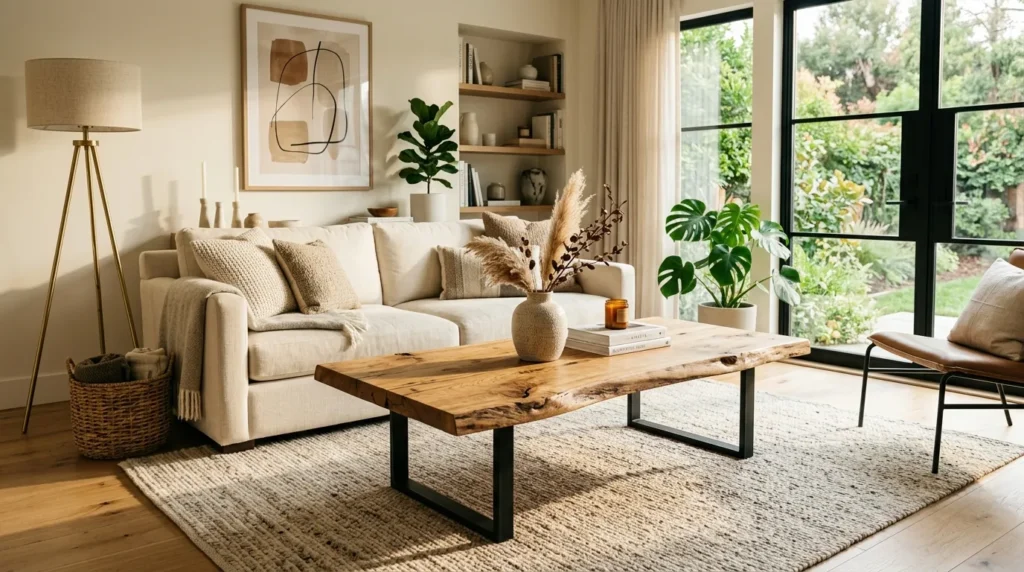
1. Reclaimed Wood Slab
A character-filled wood slab becomes a warm centerpiece with a simple modern base.
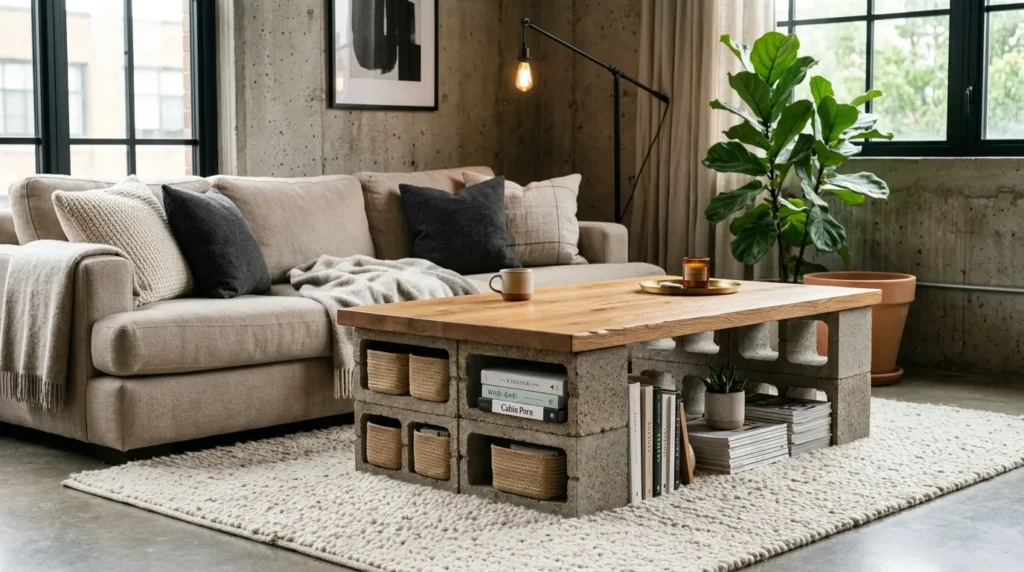
2. Concrete Block Table
Affordable concrete elements create a substantial industrial-inspired design.
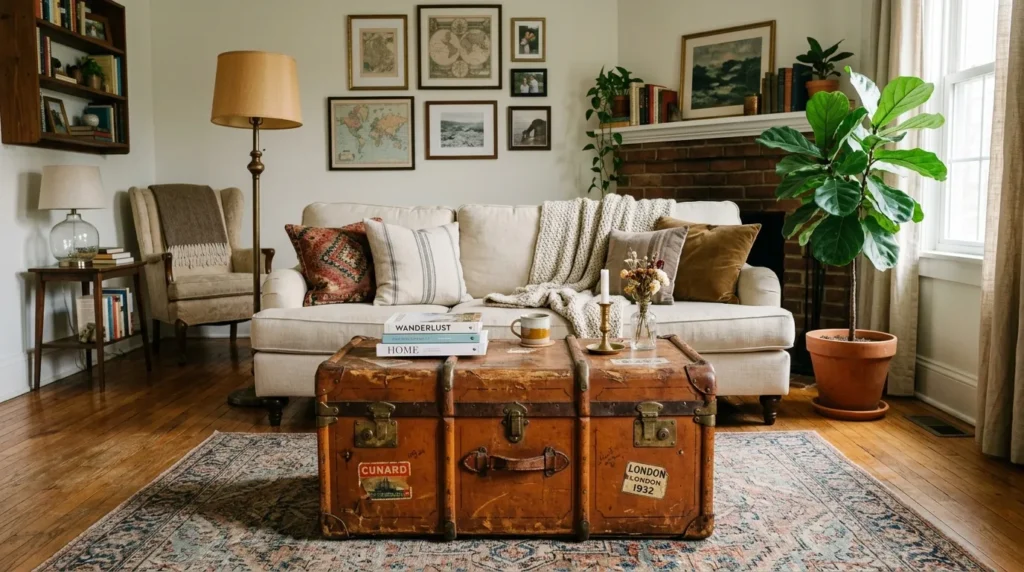
3. Vintage Trunk Table
An old trunk becomes functional furniture while adding history and personality.
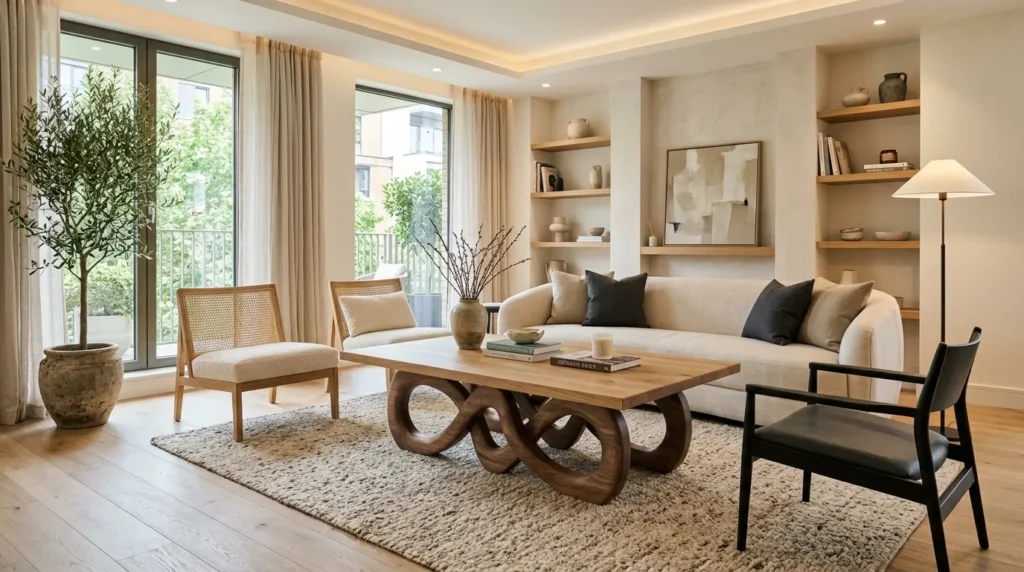
4. Sculptural Wood Base
A simple tabletop gets an artistic upgrade with an eye-catching geometric base.
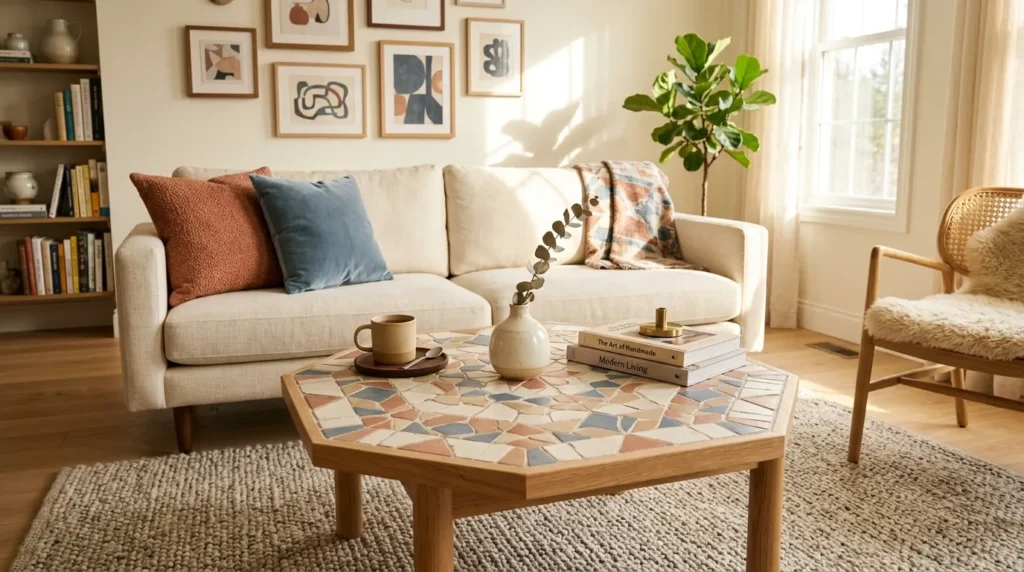
5. Tile Mosaic Table
Decorative tiles transform an ordinary tabletop into a colorful custom surface.
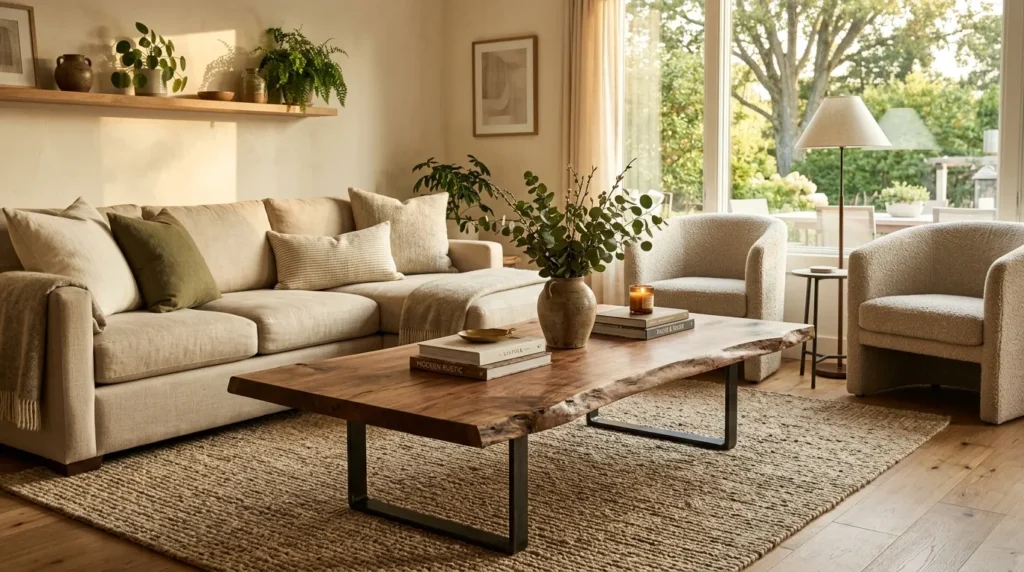
6. Live Edge Statement
Natural wood edges create an organic focal point with plenty of visual character.
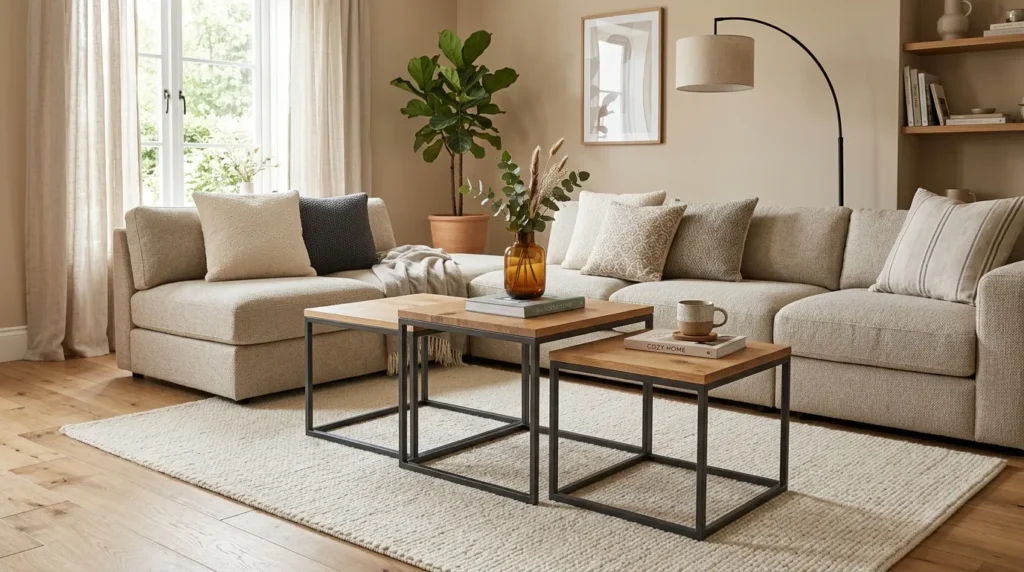
7. Nested Coffee Tables
Multiple small tables create a flexible arrangement that can adapt to everyday use.
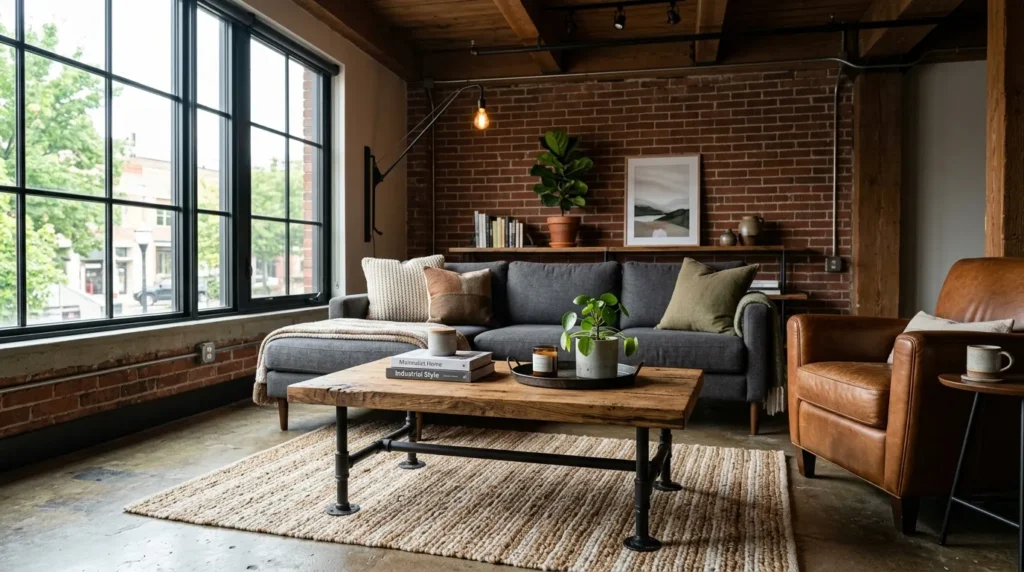
8. Industrial Pipe Table
Metal piping and wood combine for a practical, urban-inspired centerpiece.
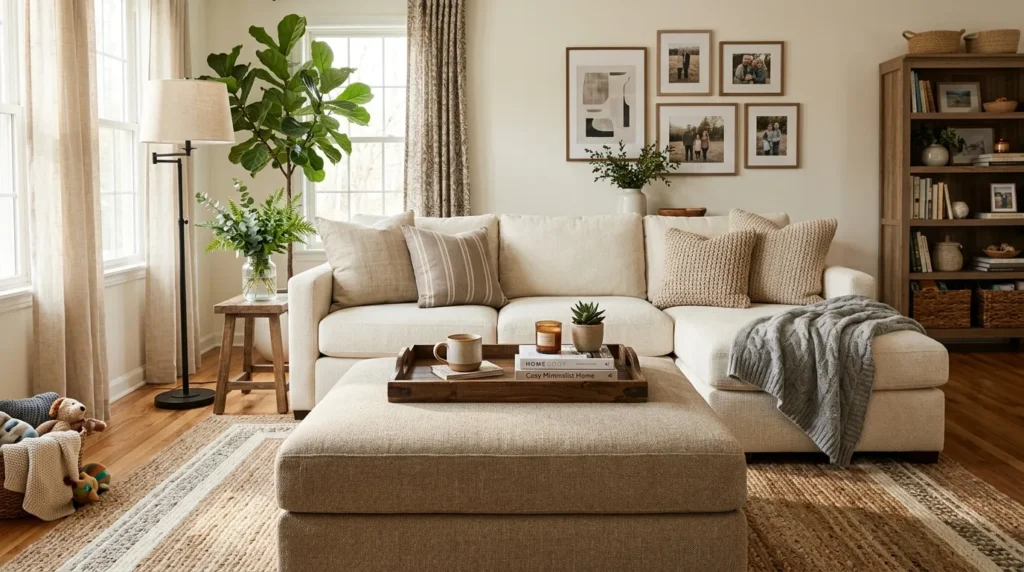
9. Oversized Ottoman Table
An upholstered DIY design adds softness while functioning as a flexible coffee table.
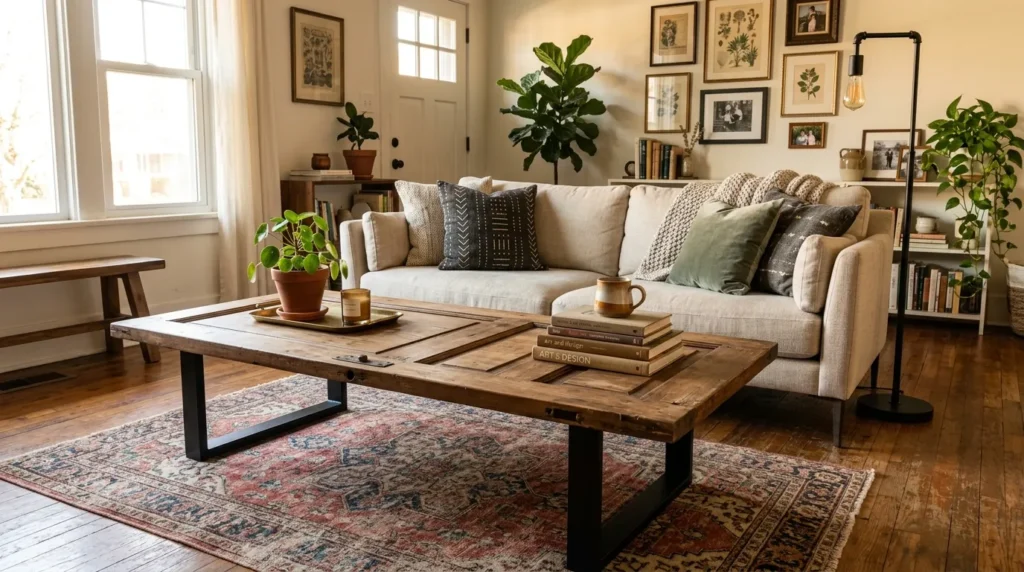
10. Repurposed Door Table
A salvaged door becomes a large, unexpected conversation piece.
1. Reclaimed Wood Slab
Quick Benefits
- Gives old wood a new purpose
- Every piece has unique character
- Works with modern and rustic interiors
- Can be customized to different sizes
- Combines naturally with metal or wood bases
Why It Works
Reclaimed wood has something new lumber can’t easily reproduce: history. Nail holes, variations in grain, weathered edges, knots, and subtle changes in color can make a coffee table feel like a one-of-a-kind piece.
This is particularly effective in living rooms where the rest of the furniture is relatively simple. The imperfections in the wood become the visual interest, while a restrained base keeps the design from looking overly rustic.
The key is selecting wood that is structurally appropriate. Old boards can be beautiful, but not every piece of reclaimed lumber is suitable for furniture. Look for material that is sound and properly prepared, and take appropriate precautions when working with unknown salvaged wood.
A natural or matte finish usually lets the material speak for itself. If the room is contemporary, a minimalist metal base can create an appealing contrast.
How To Style It
Start by determining the ideal tabletop dimensions based on your sofa and seating arrangement. Leave enough clearance for people to walk around the table comfortably.
A thick wood slab looks especially striking with simple black or dark metal legs. For a softer farmhouse or organic-modern look, pair it with a natural wood base.
Sand the surface enough to remove dangerous splinters while preserving character. Seal the finished top with an appropriate furniture finish suited to the intended use.
Keep accessories simple. A ceramic bowl, a stack of books, or a small vase is usually enough. You want the wood grain to remain visible.
2. Concrete Block Table
Quick Benefits
- Uses affordable materials
- Creates a substantial appearance
- Fits industrial and modern interiors
- Highly customizable
- Can provide built-in storage
Why It Works
Concrete blocks can look surprisingly sophisticated when arranged intentionally. Their weight and texture create a strong visual foundation, making them useful for a coffee table that needs to feel substantial.
This style works particularly well in modern, industrial, minimalist, and urban-inspired rooms. The rough surface of concrete contrasts nicely with soft upholstery, wool rugs, and warm wood.
One advantage is flexibility. Depending on the arrangement, blocks can create open compartments for books, baskets, or decorative objects. The tabletop can be wood, stone, or another suitable material.
Because concrete is heavy, stability should be treated as a priority. The final arrangement should not shift when someone accidentally leans against it.
How To Style It
Use a simple rectangular wood top over a carefully arranged base of concrete blocks. Consider painting or sealing the blocks if you want a more refined appearance, but their natural texture can also be attractive.
Add storage baskets to open sections if you want to reduce visual clutter.
Balance the hard materials with soft elements around the table. A textured rug, upholstered sofa, linen cushions, and warm lighting can prevent the room from feeling too industrial.
Keep the tabletop relatively uncluttered. The contrast between the smooth top and textured base is already a strong design feature.
3. Vintage Trunk Table
Quick Benefits
- Adds storage and history
- Makes use of vintage finds
- Creates an immediate focal point
- Works with eclectic and traditional styles
- Can be customized with legs or a base
Why It Works
A vintage trunk brings an instant story into the room. It may have old hardware, worn leather, painted surfaces, travel labels, or other details that give it personality.
Unlike a conventional coffee table, a trunk can also hide blankets, board games, remote controls, or other living-room items. That combination of character and function makes it particularly useful in family spaces.
The challenge is finding a trunk that is structurally sound and appropriately sized. Some vintage pieces are better suited to display than everyday furniture, so inspect hinges, corners, hardware, and the base carefully.
You should also consider whether the original materials and finish are appropriate for indoor use and whether they need cleaning or restoration.
How To Style It
A low vintage trunk can often work directly on the floor, while a taller trunk can be raised slightly with suitable legs or a stable platform.
Pair it with a modern sofa to create contrast. The mix of old and new tends to feel more collected than a room where every piece belongs to the same period.
Add a tray to the top if you want a stable surface for drinks and smaller accessories.
Because the trunk already has plenty of personality, avoid covering it with excessive decor. Let the hardware, texture, and aged details remain visible.
4. Sculptural Wood Base
Quick Benefits
- Creates an artistic focal point
- Can look custom-designed
- Works with simple tabletops
- Allows creative experimentation
- Complements contemporary interiors
Why It Works
Sometimes the tabletop doesn’t need to be unusual at all. A sculptural base can transform a simple slab of wood or glass into a distinctive furniture piece.
Geometric bases, intersecting boards, curved supports, and pedestal-inspired forms can all create strong visual interest. The important thing is balancing creativity with structural stability.
This type of project works especially well in modern and contemporary living rooms because the base becomes almost like a piece of sculpture.
A simple tabletop gives the eye enough space to appreciate the base. If both elements are highly decorative, the final piece can become visually overwhelming.
How To Style It
Choose a tabletop with a shape that complements the base. A round top can soften an angular structure, while a rectangular top can emphasize strong geometric lines.
Use wood species and finishes that coordinate with the rest of the room. You don’t necessarily need an exact match; repeating a similar tone can be enough.
Keep the surrounding furniture relatively streamlined. A neutral sofa and simple rug allow the coffee table to stand out.
If the base is unusually shaped, test the design at full scale before final assembly. Make sure the table remains stable and provides enough clearance for comfortable use.
5. Tile Mosaic Table
Quick Benefits
- Creates a highly personalized design
- Offers endless color possibilities
- Can transform an inexpensive base
- Adds pattern and texture
- Works in eclectic and colorful interiors
Why It Works
Tile turns a coffee table into a surface that can function almost like artwork. You can create geometric patterns, subtle tonal designs, vintage-inspired compositions, or simple grids depending on your style.
This is a particularly good DIY project if you have leftover tiles from another renovation or have found a collection of small tiles you love.
The design needs to be planned before installation. Tile thickness, grout width, edge treatment, and the final tabletop height all affect the finished piece.
A mosaic can become the dominant feature of the living room, so consider the colors already present in your sofa, rug, curtains, and artwork.
How To Style It
Start with a sturdy tabletop or furniture base that can support the tile assembly. Lay out the tiles before permanently attaching them so you can adjust the pattern.
For a sophisticated look, choose tiles within a narrow color family. For a more playful room, mix complementary shades and shapes.
Use a suitable adhesive and grout for the materials and follow the manufacturer’s directions carefully.
Once complete, keep accessories minimal. A tray or simple ceramic vessel can complement the surface without hiding the pattern.
6. Live Edge Statement
Quick Benefits
- Highlights natural wood character
- Creates an organic focal point
- Every piece is different
- Works with modern and rustic rooms
- Pairs beautifully with simple furniture
Why It Works
A live-edge tabletop brings the natural outline of the wood into the design. Instead of cutting the board into a perfectly straight rectangle, the irregular edge becomes part of the furniture.
This can create a beautiful contrast in modern rooms where most surfaces have clean, geometric lines. The natural edge introduces movement and makes the table feel connected to the material it came from.
The wood’s moisture content, condition, and finish matter greatly. Furniture-grade slabs need appropriate preparation before becoming a durable tabletop.
For a polished look, combine the organic top with a simple metal base. For a more natural room, use a timber base that echoes the wood grain.
How To Style It
Choose a slab that fits comfortably within your seating arrangement without making circulation difficult. The irregular edge should remain visible from the main seating positions.
A clear or low-sheen finish can preserve the appearance of the wood while protecting the surface.
Pair the table with neutral upholstery, woven textiles, natural fiber rugs, and greenery.
Avoid filling the tabletop with decorative objects. The irregular edge and natural grain already provide plenty of visual interest.
7. Nested Coffee Tables
Quick Benefits
- Flexible for different room layouts
- Easy to separate when needed
- Creates layered visual interest
- Useful for entertaining
- Works well in smaller spaces
Why It Works
Nested tables solve a practical problem while looking intentionally designed. Several smaller tables can sit together as one arrangement and separate when guests need additional surfaces.
This makes them particularly useful for living rooms where flexibility matters. One table can remain beside the sofa while another moves closer to a chair.
For a DIY version, you can experiment with different tabletop shapes, heights, and materials. The tables don’t need to be identical, but they should share at least one visual characteristic.
How To Style It
Use two or three tables with different heights. A round, medium-height table can anchor the center, while smaller tables can slide underneath.
Coordinate their materials rather than making every element identical. For example, wood tops with black metal legs can create a cohesive modern look.
Keep decorative objects easy to move. A small tray, candle holder, or plant can work well on the largest table.
The flexibility is the main feature, so don’t arrange the tables so tightly that they become difficult to separate.
8. Industrial Pipe Table
Quick Benefits
- Combines metal and wood
- Offers an approachable DIY structure
- Fits industrial and modern rooms
- Can be customized to different heights
- Provides a strong visual silhouette
Why It Works
Metal pipe bases have become popular in DIY furniture because they create a sturdy, recognizable industrial look without requiring an elaborate base design.
The contrast between dark metal and warm wood is particularly effective. It adds enough visual tension to make a simple tabletop feel more interesting.
The pipe components need to be assembled securely, and the base should sit evenly. Furniture that rocks or shifts quickly becomes frustrating in everyday use.
This design can also be adapted with different pipe layouts depending on the desired look.
How To Style It
Use a thick wood top for a substantial appearance. Reclaimed boards can make the piece feel rustic, while smooth finished wood can push it toward a cleaner contemporary style.
Dark pipe fittings pair especially well with neutral sofas and textured rugs.
Because the base is visually strong, keep other metal accents in the room relatively coordinated. Repeating black or dark metal in lamps, shelving, or picture frames can help connect the elements.
Add a simple tray or ceramic bowl to the tabletop rather than covering the entire surface.
9. Oversized Ottoman Table
Quick Benefits
- Adds softness to the living room
- Provides flexible seating
- Works as a footrest
- Can double as a serving surface
- Excellent for family-friendly spaces
Why It Works
A coffee table doesn’t have to be hard. An oversized upholstered ottoman can serve many of the same functions while making the living room feel softer and more relaxed.
It works especially well in homes where people like to put their feet up, and it can provide additional seating when guests arrive.
The trick is choosing upholstery that suits the way the room is used. High-traffic households may benefit from durable, cleanable upholstery rather than delicate fabric.
A large tray can create a stable surface for drinks, books, or decorative objects.
How To Style It
Choose an ottoman shape that works with the seating arrangement. Rectangular ottomans are often effective with sectional sofas, while round designs can soften rooms dominated by straight lines.
Use a neutral upholstery if you want flexibility. Cream, taupe, gray, or muted green can work with a wide range of decor.
Place a large tray in the center to establish a practical hard surface. Leave enough upholstered area visible around it so the softness remains part of the design.
Layer a textured throw nearby for an especially comfortable appearance.
10. Repurposed Door Table
Quick Benefits
- Gives salvaged materials a new purpose
- Creates a large tabletop
- Adds instant character
- Can be surprisingly affordable
- Ideal for eclectic interiors
Why It Works
A salvaged interior door can become an unexpectedly impressive coffee table. Its original panels, hardware marks, surface variations, and proportions can make the finished piece look like custom furniture.
This project is particularly appealing when you want a table with a story. Instead of buying something new, you’re transforming an existing architectural object into something useful.
The door must be structurally suitable for the project, and its dimensions should work within the living room. You may need to modify it considerably before it becomes a safe tabletop.
Lead paint and other hazards can also be a concern with older painted materials. If you’re working with a vintage door, identify the material and finish before sanding, cutting, or refinishing.
How To Style It
Choose a door with interesting panels or surface details. Remove or safely address hardware that isn’t part of the finished design.
Add a sturdy base underneath. Metal legs can create an industrial contrast, while simple timber supports can create a more traditional appearance.
Because doors can be large, measure your room carefully before committing to the project. Check walking clearances around sofas, chairs, and other furniture.
Keep the finished styling simple. A large tray, a few books, and one decorative object can be enough to complement the unusual surface.
FAQ
What makes a DIY coffee table a conversation piece?
A conversation-piece coffee table usually has something visually or historically distinctive about it. That might be an unusual material, reclaimed wood, a sculptural base, vintage hardware, a colorful tile design, or an unexpected repurposed object. The strongest designs also remain practical, so the table feels like usable furniture rather than an object that belongs only in a display space.
What is the easiest DIY coffee table to make?
A simple wood tabletop with ready-made legs is generally one of the more approachable options. You can also adapt an existing trunk, ottoman, or sturdy furniture piece with minimal construction. The easiest project depends on your tools and experience, but choosing a design that minimizes complex joinery can make the process much more manageable.
How do I choose the right coffee table size?
The table should fit comfortably within the seating arrangement while leaving enough room for people to walk around it. As a general design principle, the coffee table should relate proportionally to the sofa rather than looking dramatically too small or too large. Measure the available floor space before building, and account for doors, walkways, recliners, and other moving furniture.
Can I make a coffee table from reclaimed wood?
Yes, reclaimed wood can make an excellent tabletop when the material is appropriate and properly prepared. Inspect it for structural damage, embedded metal, pests, chemicals, and other potential hazards. Old painted wood may require additional precautions. Sanding, cleaning, and sealing should be done using methods appropriate for the specific material and finish.
How can I make a DIY coffee table look expensive?
Good proportions and a clean finish usually matter more than expensive materials. Choose a simple design, use appropriately sized hardware, carefully finish visible surfaces, and avoid overcrowding the tabletop. Combining contrasting materials—such as warm wood and dark metal—can also create a custom appearance. Taking time with sanding, alignment, and finishing can make a significant difference.
What materials work well for DIY coffee tables?
Wood is one of the most versatile choices, but concrete, tile, metal, glass, upholstery, stone, and reclaimed materials can also work. The right material depends on the room, budget, tools, and intended use. For family homes, prioritize durability and easy maintenance. For decorative pieces, you may have more flexibility with delicate finishes and unusual materials.
How do I make a DIY coffee table safe and sturdy?
Start with a structurally sound tabletop and a base designed to support its weight. Secure every connection properly, check that the table doesn’t rock, and round or smooth sharp edges where appropriate. Heavy materials should be supported correctly and positioned safely. Always follow tool, hardware, adhesive, and finish manufacturers’ instructions, especially when working with power tools.
Conclusion
A DIY coffee table can be much more than a weekend furniture project. It can become the piece that gives your living room personality.
The best conversation pieces usually combine something unexpected with practical design. Reclaimed wood brings history, a vintage trunk adds storage, a tiled surface introduces color, and a sculptural base can turn a simple tabletop into something that feels custom-made. Even a repurposed door can become an impressive centerpiece when its proportions and construction are handled carefully.
Before choosing a project, think about your room first. Measure the available space, consider the height of your sofa and seating, and decide how the table will actually be used. A beautiful table that blocks circulation or has a fragile surface won’t be enjoyable for long.
Then choose materials that fit your lifestyle. If you have children or frequently entertain, durability may matter more than a delicate finish. If the table is primarily decorative, you may have more freedom to experiment.
You don’t need professional woodworking skills to create something memorable. A straightforward design with carefully selected materials and a thoughtful finish can have plenty of personality.
Start with one idea that genuinely fits your home. Take your time with measurements, construction, sanding, and finishing, and don’t be afraid to let natural imperfections become part of the design.
The result should be a coffee table that does more than fill an empty spot. It should make the room feel more personal—and give your guests something interesting to talk about.
Related Articles
- DIY Living Room Furniture Ideas for Beginners
- Easy DIY Home Decor Projects With Big Impact
- Small Living Room Decorating Ideas
- Modern Coffee Table Styling Ideas
- Creative Ways to Repurpose Old Furniture