Beadboard Planks vs 4×8 Sheets: Which Creates Less Visible Vertical Seams?
Choosing between beadboard planks vs 4×8 sheets often comes down to balancing installation speed against the aesthetic goal of minimizing visible joints. While large sheets offer the convenience of covering vast wall areas quickly, they present unique challenges when you want to achieve a seamless, high-end look. Conversely, individual planks provide a traditional, authentic appearance but require significantly more labor to install.
Understanding the structural differences between these two materials is vital for anyone planning a home renovation or a custom wainscoting project. This comparison will help you decide which material path best suits your skill level, budget, and design expectations for your next wall covering project.
The Verdict on Visible Seams
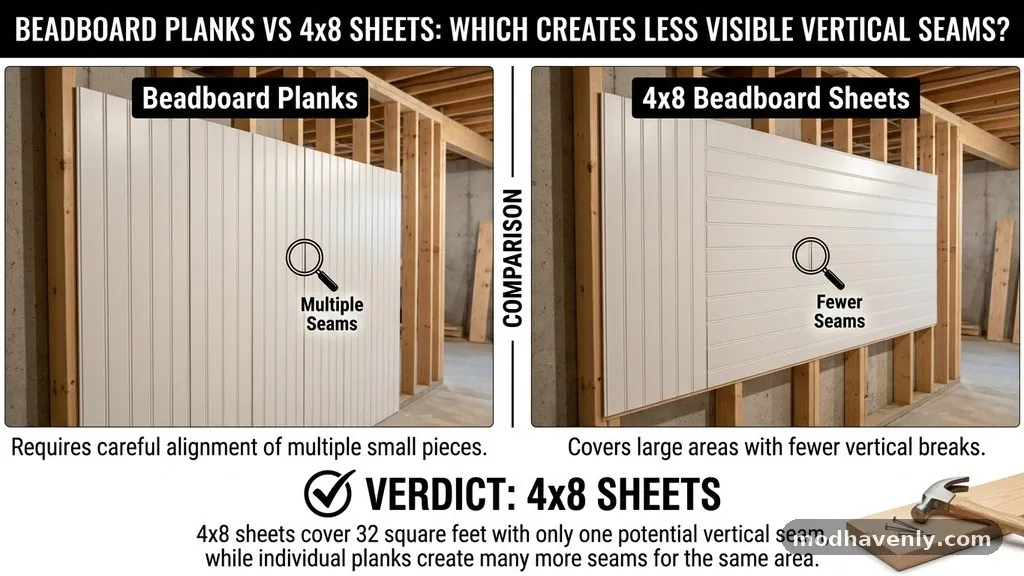
A 4×8 sheet, by contrast, relies on a factory edge or a butt joint where two flat surfaces meet, which is far harder to conceal. Even with professional-grade filler and sanding, the transition between two massive sheets often telegraphs through paint. Individual planks effectively hide the transition point by making the seam look like just another intentional decorative groove in the design.
Understanding the Mechanics of 4×8 Sheets
Large format panels are manufactured to cover 32 square feet of wall space in a single movement.
They are typically made from thin MDF or composite wood, which makes them lightweight and easy to handle for a solo installer. However, these sheets have a consistent, repetitive pattern that can look artificial if the seams are not perfectly aligned. Because the sheets are rigid and flat, they do not accommodate bowed or wavy wall studs well.
This lack of flexibility often forces the installer to use nails or heavy-duty adhesives, which can further complicate the finished look.
The Appeal of Individual Beadboard Planks
This method also allows you to terminate the beadboard at a specific point without needing to cut a large, awkward sheet to size. The resulting look is widely considered more traditional and authentic to the history of wainscoting.
Comparing Installation Complexity
The installation process for these two materials differs dramatically in terms of time and technical demand. Installing 4×8 sheets is a fast, high-impact project that can transform a room in an afternoon.
You simply measure the height of the wall, trim the sheet, and secure it with a nail gun. Planks require a much more methodical approach, as you must level the first board perfectly and then tongue-and-groove each subsequent piece. While planks take longer, they are more forgiving if you make a minor measurement error on a single board.
| Feature | 4×8 Sheets | Individual Planks |
|---|---|---|
| Installation Speed | High (Fast) | Low (Slow) |
| Seam Visibility | High (Often visible) | Low (Easily hidden) |
| Material Flexibility | Low (Rigid) | High (Adjustable) |
| Cost Per Sq. Ft. | Lower | Higher |
Managing Expansion and Contraction
One often overlooked factor in the beadboard planks vs 4×8 sheets debate is how the material reacts to changes in humidity. Wood and MDF expand and contract throughout the seasons, which can cause large sheets to buckle or pull away from the wall. Because sheets have fewer points of attachment relative to their size, this movement can create unsightly gaps at the seams. Planks, being smaller and having more points of attachment, handle these environmental shifts more gracefully. The small gaps between planks are designed to be part of the aesthetic, whereas a gap between two large sheets is clearly a structural failure.
Addressing Wall Irregularities
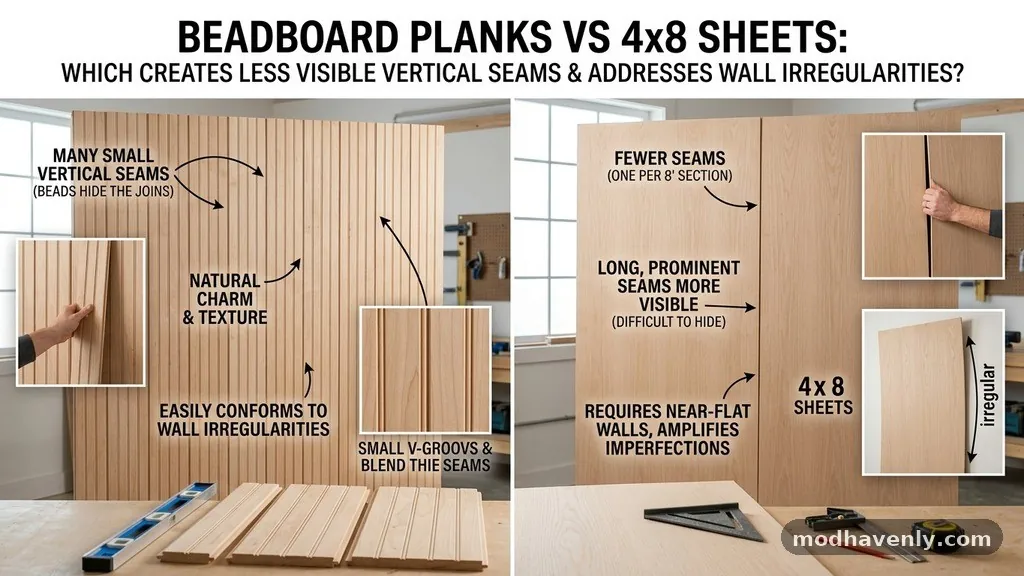
Most home walls are not perfectly straight or square, which creates a challenge for any wall covering. When you use 4×8 sheets, any curve in the wall will force the sheet to bend, often leading to a noticeable bulge at the seam where the two sheets meet. You cannot easily “hide” this bulge because the rigid nature of the panel makes it resistant to shaping. Planks allow you to follow the natural contour of the wall, as each piece is independent. You can shim individual planks to keep the surface plane consistent, ensuring the final wall looks straight regardless of the framing underneath.
Finishing and Trim Considerations
Regardless of which material you choose, the final look is heavily dependent on the trim. For 4×8 sheets, you often need to use a vertical batten strip to cover the seam between sheets, which creates a board and batten look. If you do not want this look, you are forced to use wood filler and sanding, which rarely produces a perfect result. Planks are much easier to finish because you can simply use a baseboard at the bottom and a chair rail or cap molding at the top. The planks themselves carry the design, requiring very little auxiliary trim to look finished.
Aesthetic Versatility in Design
The choice between these two materials can define the overall style of a room. Sheets often look best in modern or minimalist settings where a smooth, uniform surface is preferred. Planks provide a cozy, cottage-style aesthetic that works well in bathrooms, mudrooms, and dining areas. If you are aiming for a historical or farmhouse design, the texture of individual planks is almost always the superior choice. The depth of the grooves in high-quality planks creates shadows that add character to the wall, which is something thin, budget-grade sheets often lack.
- 4×8 Sheets: Better for large, flat, unobstructed walls where speed is the priority.
- Individual Planks: Better for detailed wainscoting, irregular walls, and achieving a high-end, classic look.
- MDF Options: Available in both formats, offering a stable, paint-ready surface.
- Real Wood Options: Best for staining or high-moisture areas where MDF might swell.
Cost Analysis and Budgeting
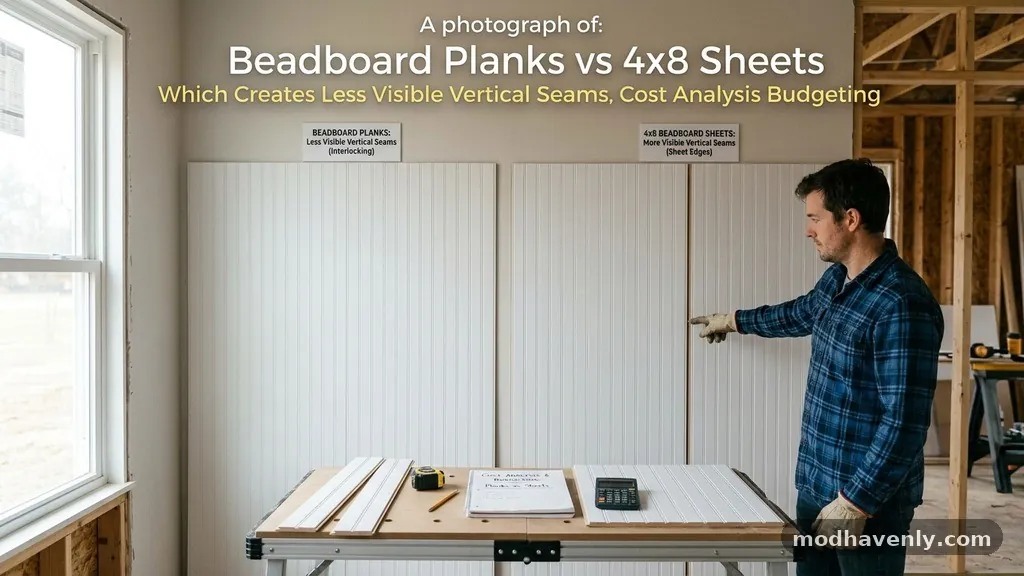
When weighing your options, consider the total cost, which includes materials, fasteners, and trim. 4×8 sheets are generally cheaper per square foot and require fewer fasteners to install. However, the cost of finishing supplies like high-quality wood filler, caulk, and extra molding to hide seams can add up. Planks have a higher upfront material cost, but they often require fewer specialized finishing products. If you are DIYing the project, the value of your time is another factor; planks will require several additional days of labor compared to the quick installation of sheets.
Maintenance and Long-Term Durability
Durability is a major concern in high-traffic areas like hallways or kitchens. Sheets are susceptible to denting and scratching, and once a large panel is damaged, the entire section may need to be replaced. Planks are generally more robust and easier to repair; if a single board is damaged, you can remove it and replace it without disturbing the rest of the wall. Furthermore, if you decide to change the color of your room, painting planks is straightforward as the grooves provide natural break points for your brush. Painting large sheets often requires a roller to maintain a consistent finish without lap marks.
Common Questions Regarding Beadboard
How can I best hide seams in 4×8 beadboard sheets?
The most effective way to hide seams in large sheets is to use a vertical batten strip to cover the joint, essentially turning the installation into a board and batten design. If you prefer not to use trim, you can use a high-quality flexible wood filler, but be aware that the seam may eventually crack due to the natural movement of the house.
Is it better to install beadboard vertically or horizontally?
Traditional wainscoting is almost always installed vertically, as it draws the eye upward and creates the illusion of higher ceilings. Horizontal installation is a more modern, shiplap-inspired look that can make a room feel wider, but it is much more difficult to keep level over a large area.
Can I install beadboard directly over drywall?
Yes, you can install both planks and sheets directly over drywall, provided the wall is clean and flat. Use a construction adhesive like liquid nails in addition to finish nails to ensure the material stays secure over time. If the drywall is heavily damaged, you may need to patch it before applying the beadboard.
What is the difference between MDF and wood beadboard?
MDF is a composite material that is very stable and easy to paint, making it a popular choice for interior wainscoting. Real wood beadboard, such as pine or cedar, offers a more natural texture and is better suited for staining or clear-coating. Real wood is also more resistant to moisture, making it a better choice for humid environments like bathrooms.
How do I handle corners when installing beadboard?
Corners should be finished with corner molding or by carefully scribing the planks to meet at a 45-degree angle. For 4×8 sheets, using an inside corner trim piece is the standard way to hide the raw edges where two walls meet. This provides a clean, professional transition that prevents the edges from fraying or peeling over time.
Final Considerations for Your Project
Deciding between beadboard planks vs 4×8 sheets depends on your specific goals for the space. If you are seeking a quick, low-cost solution for a large, flat wall, 4×8 sheets will get the job done efficiently. However, if you want a timeless, high-quality finish that hides joints naturally, individual planks are the superior choice. By carefully evaluating the condition of your walls and the level of effort you are willing to invest, you can select the material that provides the best long-term value. Whether you choose the speed of sheets or the craftsmanship of planks, proper preparation and quality trim will ensure a successful installation. Feel free to reach out if you need advice on selecting the right adhesive or trim for your specific wall layout.