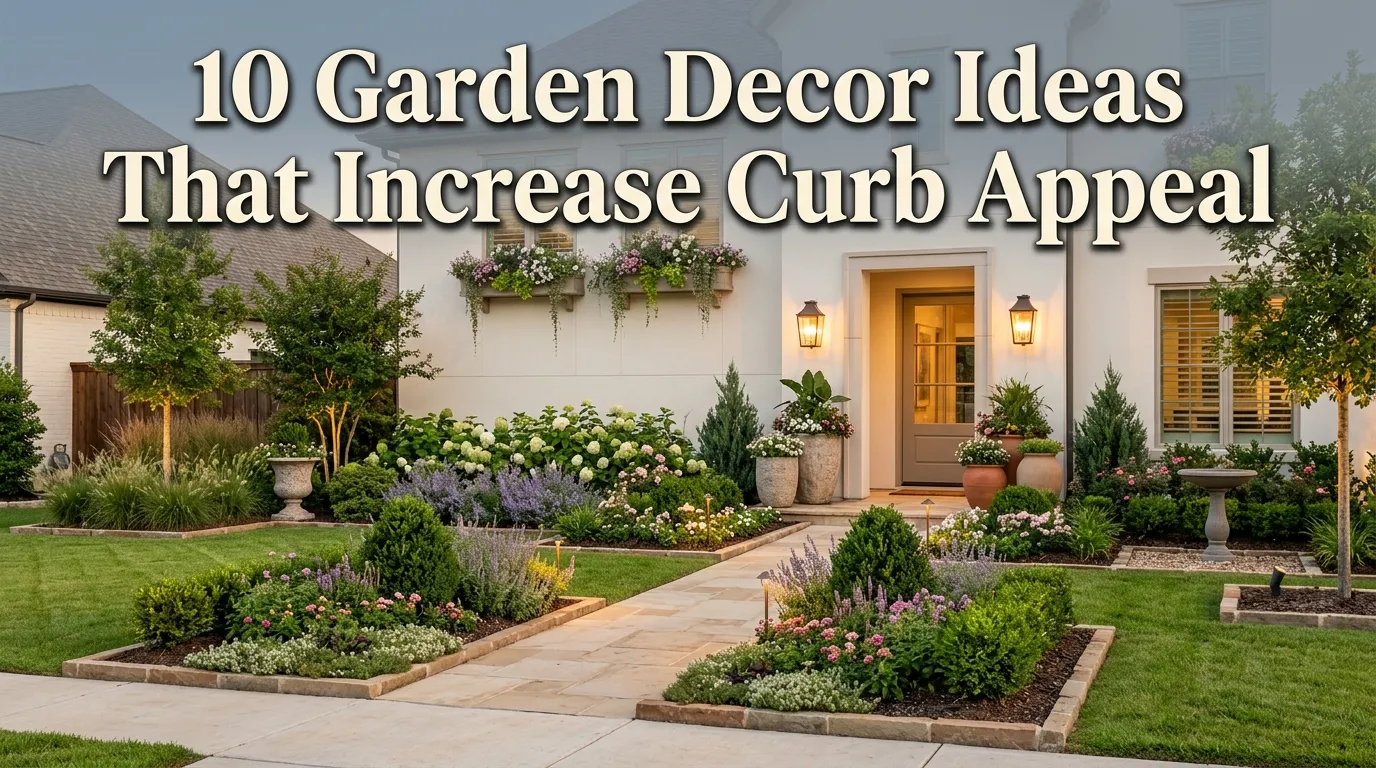
10 Garden Decor Ideas That Increase Curb Appeal
Your front garden is one of the first things people notice about your home. Before they see the entryway, front door, or interior, they see the landscape surrounding the property. That makes even small garden details surprisingly important when you’re trying to create a welcoming and well-maintained first impression.
The good news is that improving curb appeal doesn’t always require a major landscaping project. Sometimes, a few thoughtful additions can make an established garden feel more polished and intentional. A pair of planters can frame an entrance, a decorative pathway can guide visitors toward the front door, and well-placed lighting can make the entire property feel more inviting after sunset.
The key is choosing decor that works with the architecture and existing landscape rather than competing with it. I’ve found that garden decor tends to look most attractive when it repeats something already present in the home—such as a material, color, shape, or architectural detail.
You also don’t need to fill every empty space. A common landscaping mistake is adding too many decorative elements because a garden feels incomplete. In reality, leaving some breathing room can make individual features more noticeable.
Whether you’re preparing your home for guests, refreshing the front yard for the season, or simply want a more attractive entrance, these ideas offer practical ways to improve the look of your outdoor space. They range from simple container arrangements to pathway lighting and architectural features, so you can choose options that fit your home’s style, budget, and maintenance preferences.
The goal isn’t to make the garden look expensive. It’s to make it look cared for, cohesive, and welcoming.
Table of Contents
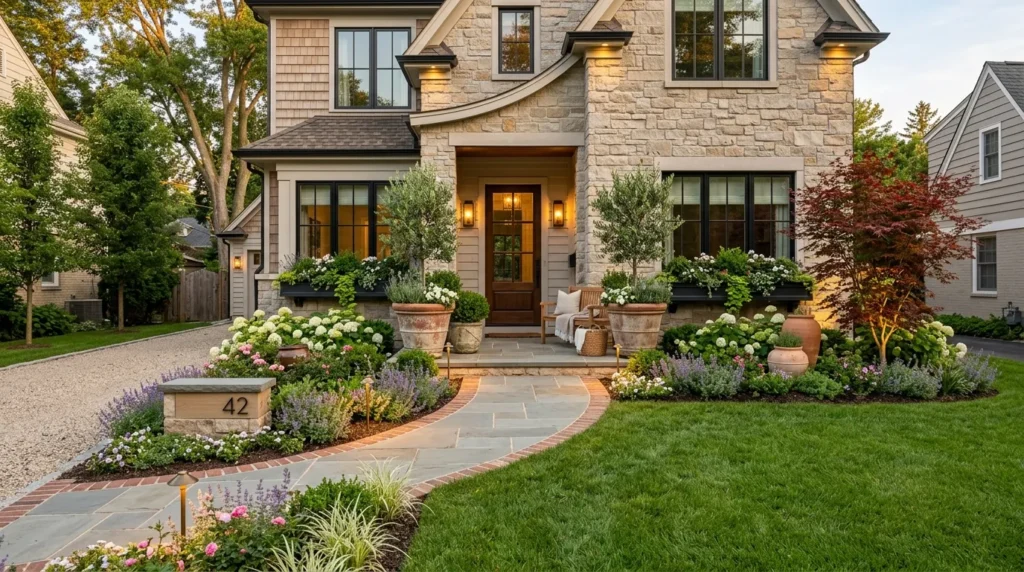
1. Statement Planters
Large containers create a polished focal point while framing entrances and pathways.
2. Layered Pathways
A thoughtfully designed walkway makes the front garden feel intentional and inviting.
3. Entryway Lighting
Well-placed lighting highlights architectural and landscape features after dark.
4. Decorative Garden Gates
A garden gate adds structure, charm, and a sense of arrival.
5. Sculptural Accents
Carefully chosen garden art adds personality without overwhelming the landscape.
6. Window Box Displays
Window boxes connect the architecture of the house with colorful seasonal planting.
7. Stone Garden Edging
Defined garden borders give planting beds a clean and finished appearance.
8. Welcoming Benches
A simple outdoor bench can create a functional focal point near the entry.
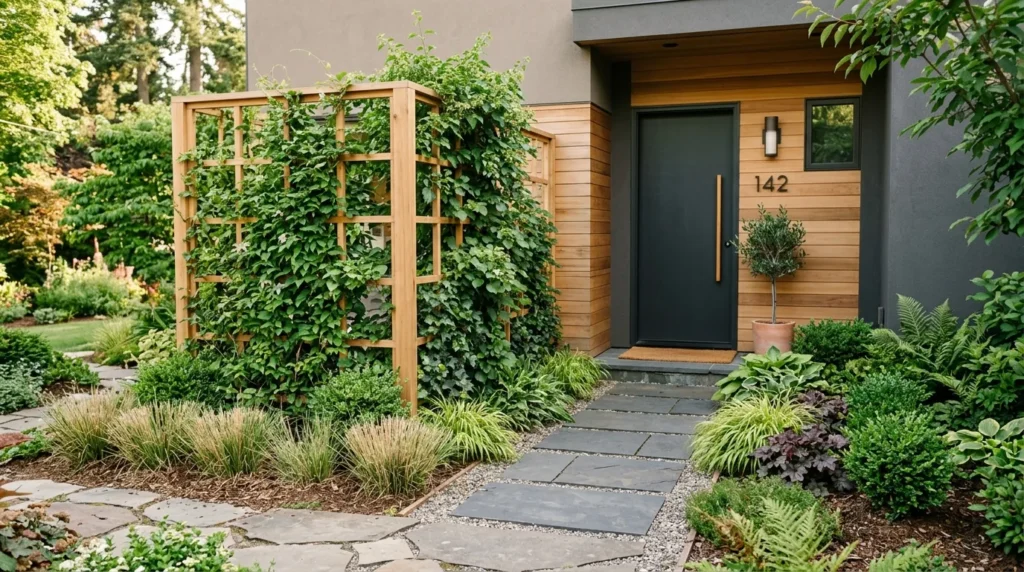
9. Vertical Greenery
Trellises and climbing plants add height while maximizing limited garden space.
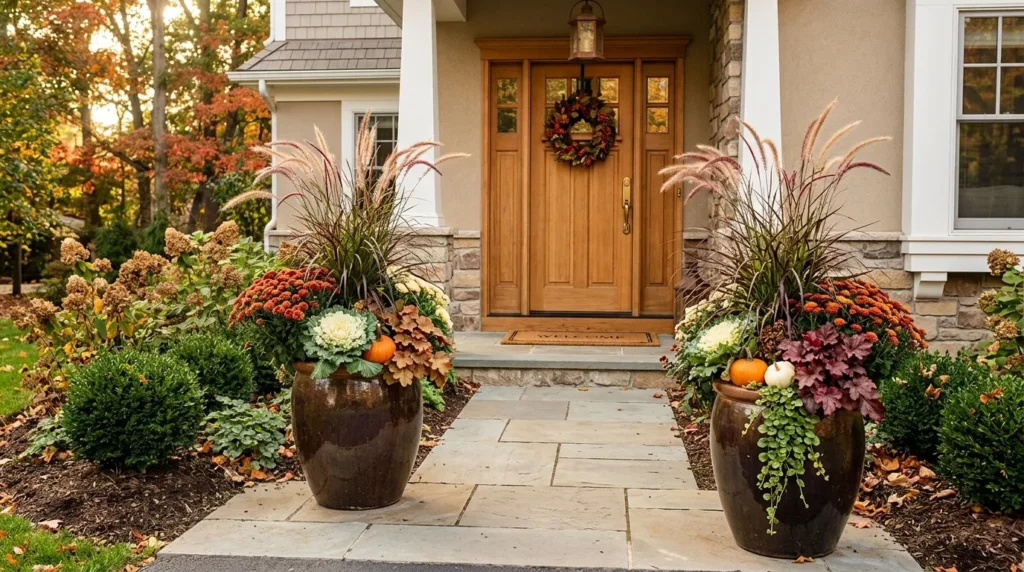
10. Seasonal Containers
Flexible container arrangements make it easy to refresh the home’s exterior throughout the year.
1. Statement Planters
Quick Benefits
- Creates an immediate focal point
- Frames doors and entryways
- Adds height to low planting areas
- Easy to update seasonally
- Works with traditional and modern homes
Why It Works
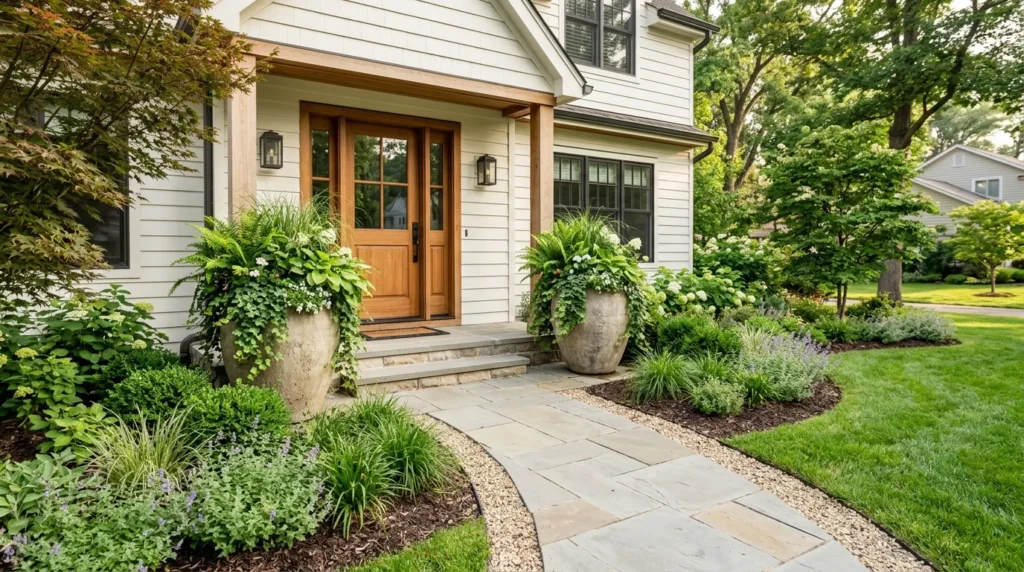
Large planters are one of the simplest ways to give a front garden more visual structure. They can create symmetry around a front door, emphasize the beginning of a walkway, or provide a strong focal point where the landscape otherwise feels flat.
The container itself is just as important as the plant inside it. A simple architectural planter can complement a modern home, while stone, terracotta, or classic painted containers may work better with traditional architecture.
Scale matters more than many homeowners expect. Tiny pots can disappear beside a large entrance, while oversized containers can make a narrow porch feel crowded. The goal is to choose a size that relates to the scale of the home.
For an especially polished appearance, repeat the same planter style on both sides of the entry. Symmetry isn’t required, but repetition helps create visual order.
How To Style It
Choose two substantial planters for either side of the front door or at the start of the walkway. Select plants with forms that complement the architecture.
For a modern home, consider structured plants with strong silhouettes. For cottage or traditional homes, softer flowering plants and trailing foliage can create a more relaxed appearance.
Use a simple color palette. Repeating white, green, deep blue, terracotta, or neutral tones can connect the containers with the exterior of the house.
Make sure the containers have adequate drainage and are appropriate for the plants and climate. If they’re heavy enough, position them carefully before filling them because large planters can become difficult to move.
2. Layered Pathways
Quick Benefits
- Guides visitors toward the entrance
- Adds structure to the front garden
- Connects landscaping with architecture
- Creates visual depth
- Works with many home styles
Why It Works
A pathway isn’t simply a way to get from the sidewalk to the front door. It can become one of the strongest design elements in the front garden.
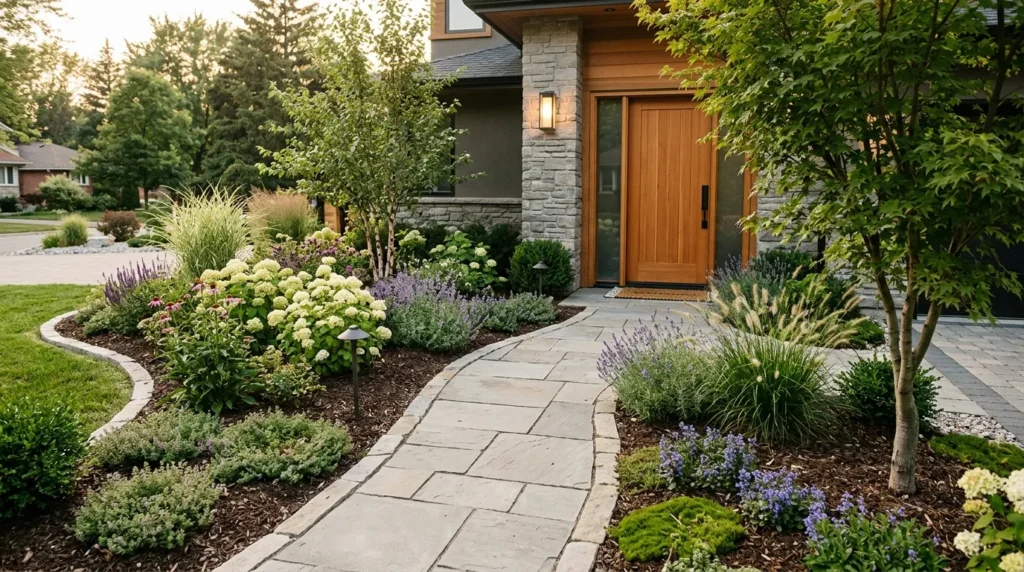
A straight walkway can emphasize a home’s symmetry, while a gently curved path can create a more relaxed garden feel. Materials also influence the character of the space. Brick feels traditional, natural stone feels organic, and large-format pavers can create a contemporary appearance.
The planting beside the path is equally important. Instead of placing one row of identical plants along each side, consider layering different heights. Low groundcover near the walkway, medium shrubs behind it, and taller plants closer to the house can create depth.
The pathway should remain practical first. Avoid planting that grows into the walking area or using slippery materials that become difficult to navigate.
How To Style It
Start by keeping the walkway visually clear. Then add planting in layers along the edges.
Use repeated plant varieties to create rhythm rather than selecting a different plant for every section. This makes the garden look more cohesive.
If the existing path is plain concrete, consider improving the surrounding planting rather than replacing the entire walkway. A well-designed border can make even a simple path feel more intentional.
For nighttime curb appeal, add low-level pathway lighting at appropriate intervals. The lights should help guide movement without creating a harsh runway effect.
3. Entryway Lighting
Quick Benefits
- Improves nighttime visibility
- Highlights architectural details
- Makes entrances feel welcoming
- Adds depth after sunset
- Can emphasize mature trees and planting
Why It Works
A garden can look completely different after the sun goes down. Without thoughtful lighting, beautiful planting and architectural details disappear into darkness. With too much lighting, however, the landscape can look harsh and overly commercial.
The best approach is usually layered lighting. Use brighter fixtures where people need visibility and softer illumination to highlight landscape features.
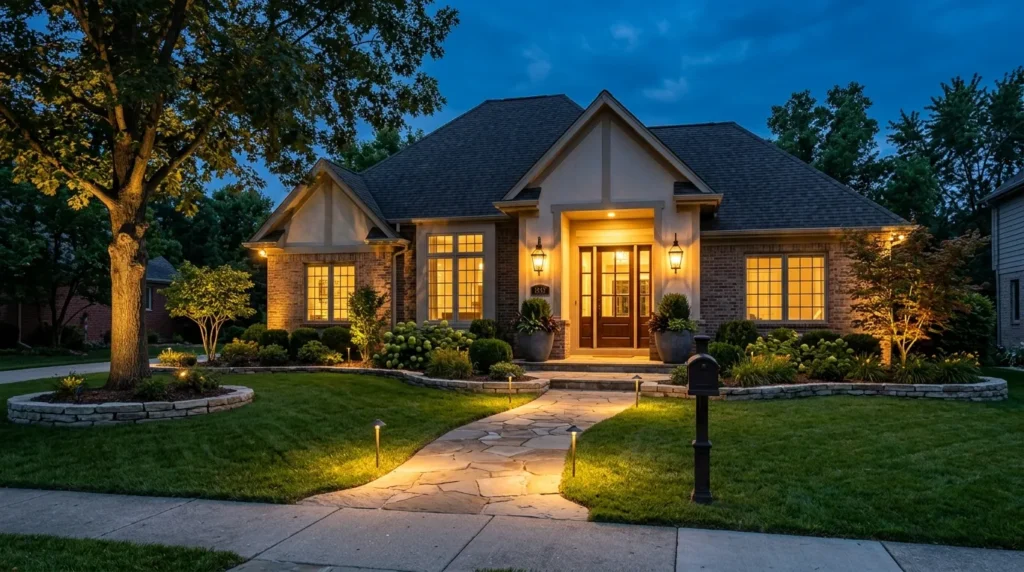
Entry lighting also creates a visual connection between the garden and the house. Wall sconces, porch fixtures, pathway lights, and landscape lighting can work together to make the entrance feel like one complete composition.
Lighting should be selected based on the property’s layout and local electrical requirements. Outdoor fixtures need to be suitable for exterior use and installed safely.
How To Style It
Begin with the front door and main pathway. Add practical lighting where people walk, then consider subtle accent lighting for trees, planters, walls, or architectural features.
Warm-toned lighting often creates a more comfortable residential atmosphere than extremely bright, cool lighting.
Avoid placing identical lights everywhere. Instead, vary the intensity and purpose of the fixtures.
For trees, upward-facing lights can emphasize trunk structure and canopy. For planting beds, low fixtures can create gentle highlights without illuminating every plant.
The final effect should make the property easier to navigate while preserving some darker areas. Contrast gives the landscape depth.
4. Decorative Garden Gates
Quick Benefits
- Creates a defined entrance
- Adds architectural character
- Can increase a sense of privacy
- Supports climbing plants
- Makes pathways feel more intentional
Why It Works
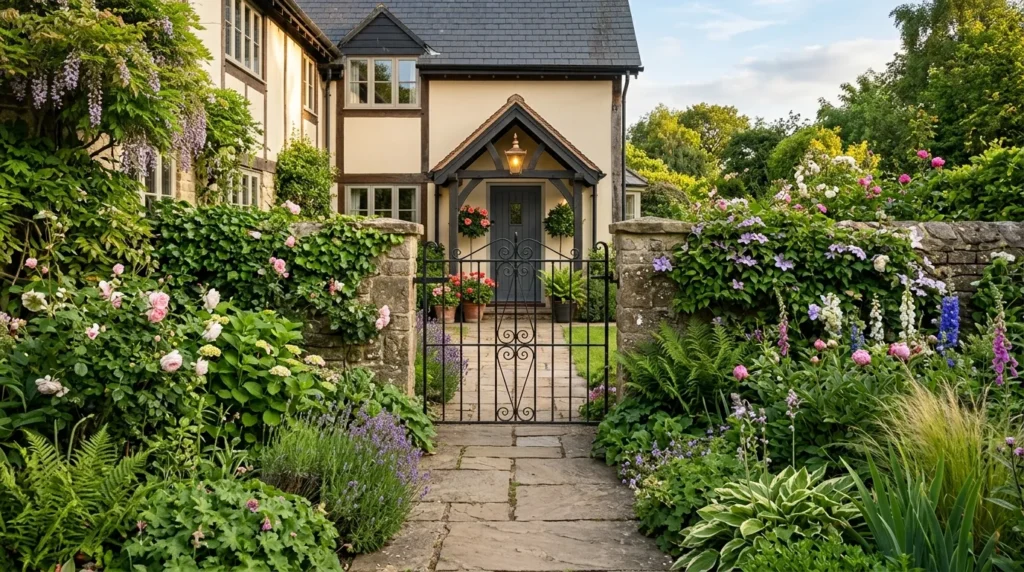
A garden gate creates a moment of transition. Even when the property isn’t fully enclosed, a gate can signal that visitors are entering a special part of the landscape.
The style should relate to the house. A simple black metal gate may complement a traditional brick home, while natural timber can work beautifully with cottage or craftsman architecture.
Gates can also introduce height to otherwise low planting. If the garden lacks vertical elements, an arched or rectangular gate can create an architectural focal point.
Climbing plants can soften the structure over time, although you should choose species that are appropriate for your climate and won’t damage the structure.
How To Style It
Position the gate where it naturally aligns with the walkway or garden entrance. Keep the surrounding planting slightly lower so the gate remains visible.
Choose one material or finish that appears elsewhere on the property. For example, black metal can echo window frames or exterior lighting, while wood can repeat a porch or fence material.
If using climbing plants, install suitable supports and give the vines enough room to grow.
A small light near the gate can emphasize the entrance after dark without overwhelming the rest of the garden.
5. Sculptural Accents
Quick Benefits
- Adds personality to the garden
- Creates visual focal points
- Works in small spaces
- Can complement architectural style
- Provides interest between planting areas
Why It Works
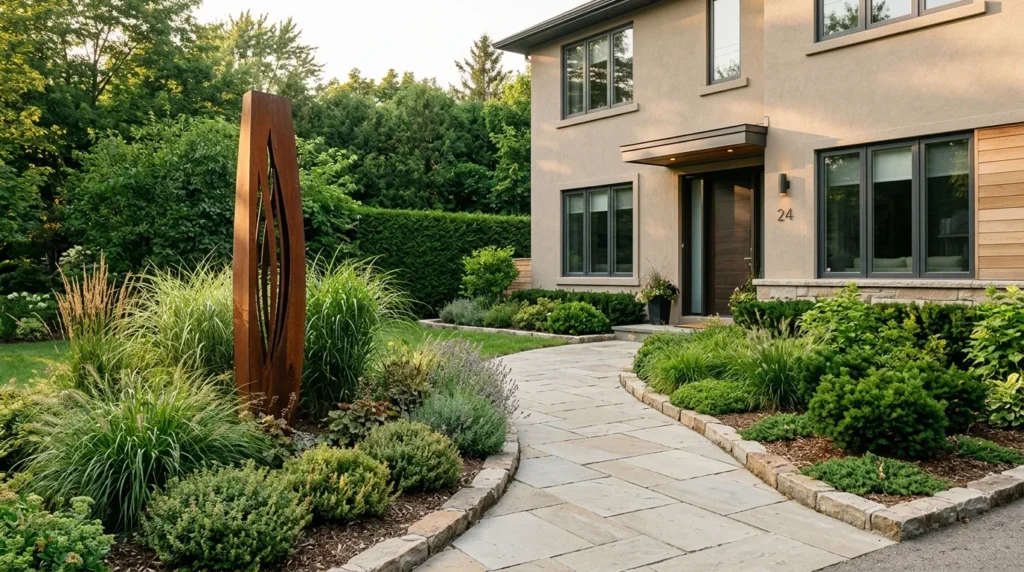
Garden art can add something that plants alone cannot: a deliberate human-made focal point. A sculpture, decorative stone, ceramic feature, or metal accent can create a pause within a planting bed and draw attention to a particular area.
The important part is restraint. One thoughtfully positioned sculpture often has more impact than several unrelated decorations scattered around the yard.
Scale matters too. A small decorative object may disappear in a large front garden, while a tall sculpture can overwhelm a compact planting bed.
Material choice should also make sense for the environment. Weathering is part of the charm of some materials, while others require more maintenance.
How To Style It
Choose a location where the sculpture can be seen from the sidewalk, driveway, or front door. It should have enough visual space around it to remain noticeable.
Use planting to frame the piece rather than completely hide it. Ornamental grasses can soften hard edges, while shrubs can create a backdrop.
For a modern landscape, consider geometric metal or stone pieces. A cottage garden may suit ceramic, weathered metal, or handmade accents.
Avoid matching multiple garden sculptures unless you’re deliberately creating a collection. A single statement piece generally feels more sophisticated.
6. Window Box Displays
Quick Benefits
- Adds color close to the home
- Connects windows with landscaping
- Works in small yards
- Easy to refresh seasonally
- Adds charm to plain facades
Why It Works
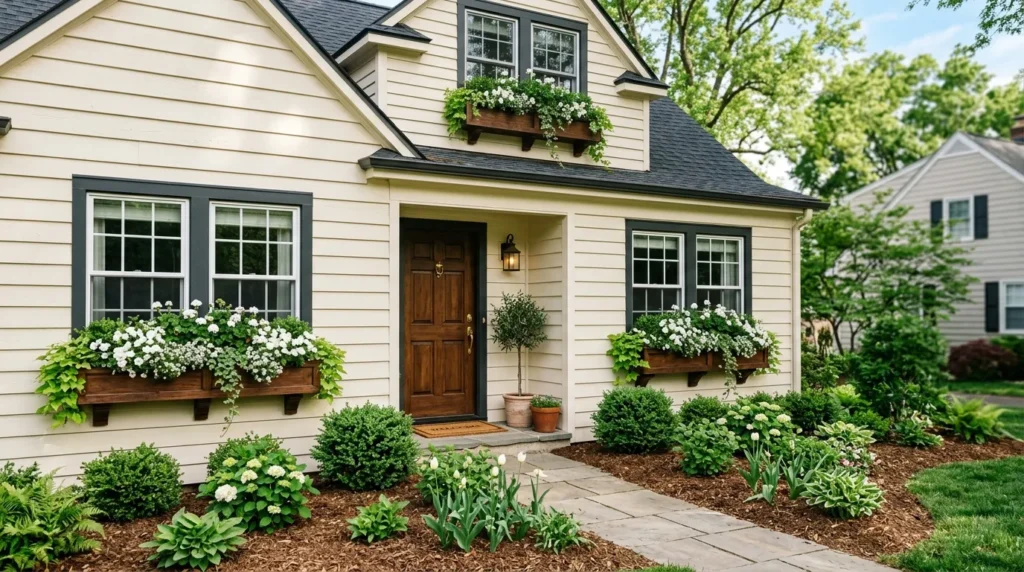
Window boxes bring planting directly onto the architecture. They can soften hard exterior lines and visually connect the house with the front garden.
They’re especially useful when ground space is limited. A narrow garden may not have room for extensive planting, but a few well-designed window boxes can still introduce greenery and seasonal color.
The best arrangements usually combine plants with different forms. Upright plants provide structure, trailing plants soften the edges, and fuller foliage fills the center.
Think about the exterior wall color and window trim when choosing flowers. A simple palette can look more sophisticated than a mixture of every available color.
How To Style It
Match the window box material to the architecture. Wood can create a traditional or cottage feel, while metal or simple composite boxes can suit modern homes.
Use plants appropriate for the amount of sunlight the window receives. This is particularly important because the box may experience different conditions from the surrounding garden.
Create repetition if you have multiple windows. Using a consistent plant palette helps tie the facade together.
Keep the boxes maintained. Removing dead flowers, trimming overgrowth, and watering appropriately can make a major difference in curb appeal.
7. Stone Garden Edging
Quick Benefits
- Defines planting beds
- Makes landscapes look maintained
- Separates lawn from garden
- Creates visual structure
- Works with many landscape styles
Why It Works
Sometimes the simplest garden improvements have the greatest visual effect. Clearly defined edges can make an otherwise ordinary front yard look considerably more organized.
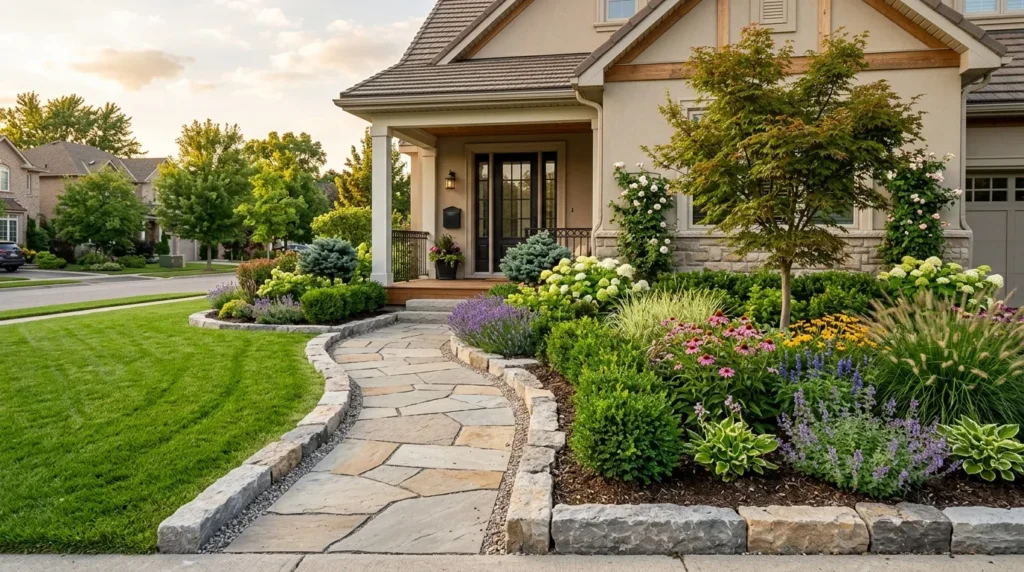
Stone edging creates a physical and visual boundary between lawn, pathways, and planting beds. It can also reduce the appearance of plants spilling into areas where they aren’t intended to grow.
The material should complement the home and existing hardscape. Natural stone creates an organic appearance, while manufactured edging can provide more uniform lines.
Good edging doesn’t need to be highly decorative. Its value comes from creating clear transitions.
How To Style It
Follow the natural shape of the planting bed rather than forcing unnecessary curves. In modern landscapes, clean straight lines often work well. In informal gardens, gentle curves can feel more natural.
Repeat the edging material elsewhere if possible. A stone path, retaining wall, or porch detail can create a visual connection.
Keep plants slightly behind the edge so the border remains visible. Over time, growth can soften the line without completely hiding it.
If using natural stone, vary the pieces slightly while keeping the overall installation organized.
8. Welcoming Benches
Quick Benefits
- Adds useful outdoor seating
- Creates a focal point
- Works near entryways
- Encourages people to enjoy the garden
- Can complement architectural style
Why It Works
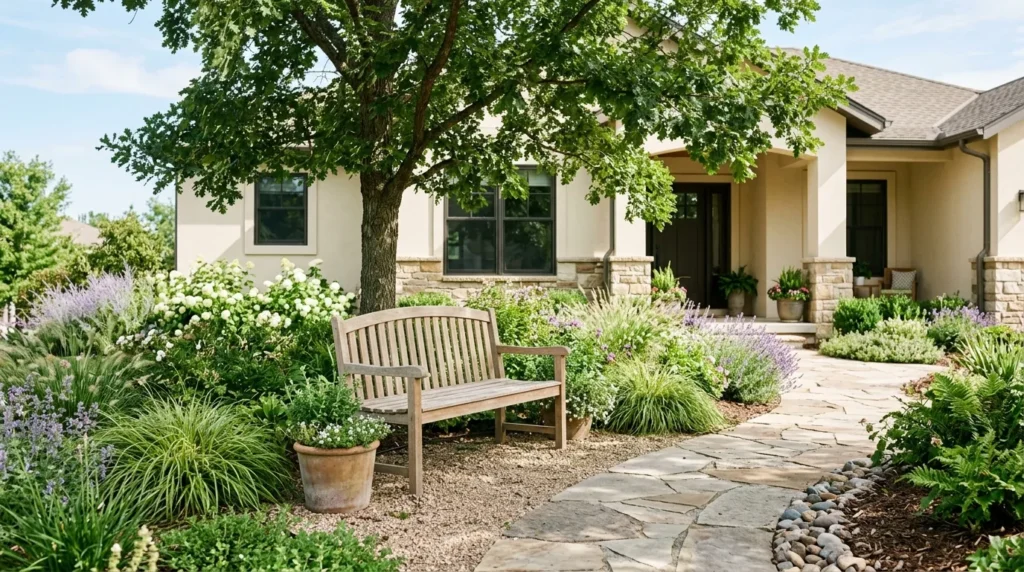
A bench can make a front garden feel more like a place to experience rather than something to look at. It provides a practical destination and can also help establish scale within a larger planting area.
A bench doesn’t have to be positioned directly beside the front door. It can sit beneath a mature tree, beside a pathway, or at the edge of a garden bed.
The material and shape should fit the landscape. A simple timber bench feels different from a decorative wrought-iron design or contemporary metal seat.
If the bench is intended for regular use, comfort should take priority over appearance.
How To Style It
Place the bench where it has a pleasant view and doesn’t obstruct pedestrian traffic.
Create a soft backdrop with shrubs, ornamental grasses, or a small tree. Avoid planting species with thorns or aggressive growth immediately beside the seating.
For a modern home, choose a simple bench with clean lines. For traditional properties, a more detailed design may complement the architecture.
A small side table or planter can sit nearby, but avoid filling the area with accessories. Let the bench remain the focal point.
9. Vertical Greenery
Quick Benefits
- Adds height to compact gardens
- Makes walls and fences more attractive
- Creates privacy
- Supports climbing plants
- Uses vertical space efficiently
Why It Works
When a front garden is narrow, there may not be enough room to create dramatic horizontal layers. Vertical gardening solves part of that problem by using walls, fences, trellises, and architectural supports.
A trellis covered with appropriate climbing plants can soften a plain wall while introducing height and greenery. Even before the plants mature, the structure itself can become a decorative element.
Vertical greenery can also frame entrances and create a stronger connection between the ground-level garden and the upper portion of the house.
Choose plants based on sunlight, climate, maintenance requirements, and the strength of the support.
How To Style It
Install a trellis against a suitable wall or fence and choose one or two climbing plants rather than filling the structure with multiple varieties.
For a contemporary appearance, use a simple geometric trellis. Natural wood structures work well in cottage and traditional gardens.
Place low planting at the base to transition gradually from ground level to vertical growth.
Trim and train climbing plants regularly so they remain attractive and don’t obscure windows, doors, or architectural details.
10. Seasonal Containers
Quick Benefits
- Makes curb appeal easy to refresh
- Adds seasonal color
- Works for renters and homeowners
- Allows flexible styling
- Can complement holidays and seasons naturally
Why It Works
Container gardening gives you flexibility that permanent planting cannot. Instead of redesigning an entire bed whenever you want a seasonal update, you can change a few containers near the entrance.
Spring might call for fresh flowering plants, summer can emphasize lush foliage, fall can introduce ornamental grasses and warm tones, and winter arrangements can focus on evergreen branches and structural elements where appropriate.
The trick is avoiding a cluttered seasonal display. A few large, well-positioned containers usually look more polished than numerous small pots.
How To Style It
Choose containers that can remain in place throughout the year if possible. Then change the plants or decorative elements inside them.
Repeat a color from the house exterior or front door for an intentional connection.
For autumn, consider muted oranges, burgundy, bronze, and evergreen. For spring, softer greens and flowering plants can brighten the entry.
Always choose plants based on the actual growing conditions rather than appearance alone. A beautiful container won’t improve curb appeal if the plants struggle in their location.
FAQ
What garden decor adds the most curb appeal?
Large planters, attractive pathway lighting, defined garden borders, and a well-maintained entryway can have a noticeable visual impact. The most effective choice depends on the existing landscape. In many homes, improving the entrance and creating a clear connection between the sidewalk, garden, and front door produces more impact than adding lots of decorative objects.
How can I improve curb appeal without major landscaping?
Start with smaller changes that affect the areas people notice first. Refresh planters, add clean garden edging, improve pathway lighting, prune overgrown plants, and introduce one attractive focal point. A freshly maintained garden combined with a few intentional decorative elements can look significantly more polished without requiring a complete landscape renovation.
What type of planters look best in a front garden?
The best planter style depends on the architecture. Clean-lined concrete, metal, or simple composite planters often suit modern homes, while terracotta, stone, and painted wood can work well with traditional or cottage-style properties. Regardless of style, choose containers large enough to relate to the scale of the house and entrance.
Does outdoor lighting really improve curb appeal?
Yes, thoughtful outdoor lighting can improve how a property looks and functions after sunset. Pathway lights can guide visitors, while accent lighting can highlight trees, architectural details, and planting. Avoid illuminating everything equally. A combination of light and shadow usually creates a more natural and visually interesting nighttime landscape.
How do I make a small front garden look better?
Use vertical space, defined planting beds, and appropriately scaled decor. A narrow trellis, a pair of medium-sized planters, or a well-designed pathway can create structure without taking up much ground area. Keeping the color and material palette simple also helps prevent a small garden from looking crowded.
Should garden decor match the house?
It doesn’t have to match exactly, but it should relate to the home’s architecture. Repeating a material, finish, or color from the house can create cohesion. For example, black metal garden details can echo black window frames, while natural stone edging can complement a stone facade. Coordination generally looks more intentional than exact matching.
How many decorative items should I put in my front garden?
There isn’t a fixed number, but restraint usually produces a more polished result. Start with the most important areas—the entrance, pathway, and one potential focal point. Add decor only when it serves a clear purpose. If several objects compete for attention, remove a few and allow the strongest pieces to stand out.
Conclusion
Improving curb appeal doesn’t mean turning your front garden into a showroom. The most attractive landscapes usually feel natural, maintained, and connected to the home.
Start by looking at the areas visitors see first. Is the walkway clear? Does the entrance have enough visual focus? Are planting beds clearly defined? Could a pair of planters or a simple bench give the garden more structure?
From there, add details gradually. Statement containers can frame the front door, garden edging can make planting beds look finished, and outdoor lighting can reveal the beauty of the landscape after dark. If you have limited space, vertical greenery and window boxes can provide plenty of interest without requiring a larger footprint.
One of the most useful principles is to repeat rather than scatter. Repeating a material, color, plant, or finish across different parts of the garden helps everything feel connected.
You also don’t need to complete everything in one weekend. Choose one improvement that will make the biggest difference and build from there. A better-defined pathway, refreshed containers, or a welcoming seating area may be enough to change how the entire front of the home feels.
The goal is simple: create an entrance that looks cared for and feels welcoming. When garden decor supports the architecture and existing planting rather than competing with them, even modest changes can create a noticeably more polished exterior.
Related Articles
- Front Yard Landscaping Ideas for a Welcoming Entrance
- Easy Curb Appeal Ideas for Every Home Style
- Low-Maintenance Front Garden Ideas
- Small Front Yard Landscaping Ideas
- Modern Front Porch Decor Ideas