
How to Declutter Your Home Without Stress or Mess
Decluttering your home sounds simple until you stand in the middle of a crowded room and realize you have no idea where to begin. A closet is overflowing, the kitchen counters have become a collection point for everyday items, and the junk drawer somehow seems to contain everything except the one thing you actually need.
The good news is that decluttering doesn’t have to mean emptying every cabinet, pulling everything out at once, or spending an entire weekend surrounded by piles of belongings. In fact, those approaches can make the process feel much more overwhelming than it needs to be.
A calmer approach starts with smaller decisions. Instead of trying to organize your entire house in one dramatic session, focus on one category, one drawer, one shelf, or one small area at a time. This gives you a clear finish line and makes it much easier to see progress.
I’ve found that the most sustainable decluttering routines are less about getting rid of as much as possible and more about making thoughtful decisions about what deserves space in your home. Items you use regularly should be easy to reach. Things you genuinely value should have a sensible place. And belongings that no longer serve you shouldn’t continue taking up valuable physical and mental space simply because they are difficult to deal with.
The goal isn’t to create a perfectly minimalist house. It’s to make your home easier to live in.
Below, you’ll find ten practical ways to declutter without creating chaos, along with simple strategies for deciding what to keep, where to start, how to prevent messes from spreading, and how to make your progress last.
Table of Contents
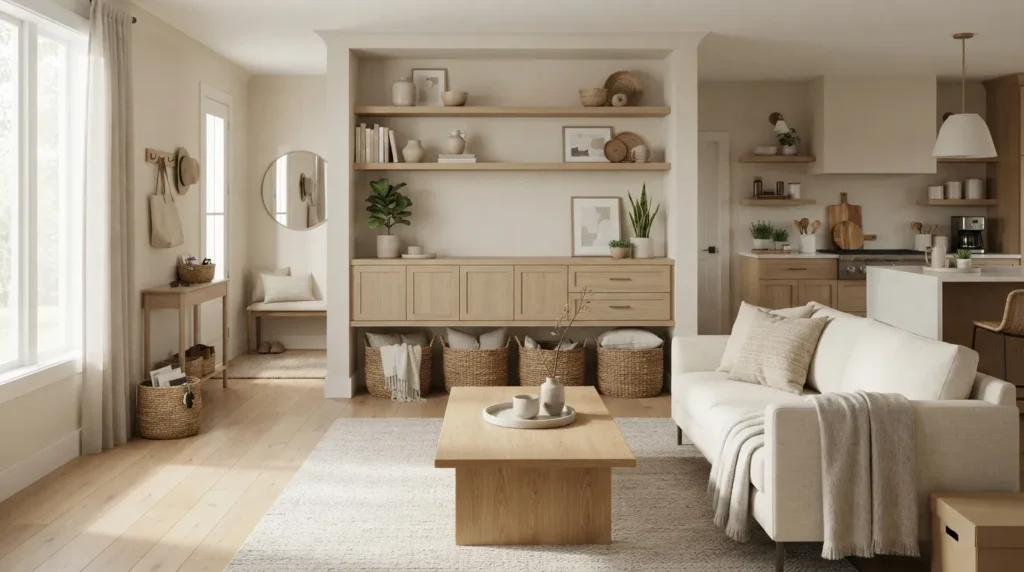
1. Start With One Zone
Choose a small, clearly defined area so you can make progress without creating a whole-house mess.
2. Use the Four-Pile Method
Sort belongings into simple categories that make decisions easier and keep the process moving.
3. Set a Short Timer
Short decluttering sessions make the work feel manageable and reduce decision fatigue.
4. Clear Visible Surfaces
Removing unnecessary items from counters and tables creates an immediate sense of order.
5. Declutter by Category
Grouping similar belongings together helps you see duplicates and make better decisions.
6. Create a Donation Box
A designated donation container prevents unwanted belongings from drifting back into your home.
7. Keep Daily Essentials Easy
Organize frequently used items where they’re convenient instead of hiding everything away.
8. Handle Sentimental Items
Use a thoughtful process for meaningful belongings without forcing yourself into rushed decisions.
9. Avoid the Maybe Pile
Clear decision rules can prevent a temporary holding pile from becoming permanent clutter.
10. Build a Reset Routine
A simple daily and weekly routine helps prevent clutter from rebuilding after you’ve cleared it.
1. Start With One Zone
Quick Benefits
- Prevents overwhelming messes
- Creates a clear starting point
- Makes progress easier to see
- Reduces decision fatigue
- Helps you finish what you start
Why It Works
One of the biggest reasons decluttering projects become stressful is that people start too large.
You decide to “declutter the house,” pull clothes from the bedroom, dishes from the kitchen, papers from the office, and toys from the living room—and suddenly every surface is covered with belongings.
Instead of creating a cleaner home, you’ve temporarily created a much bigger mess.
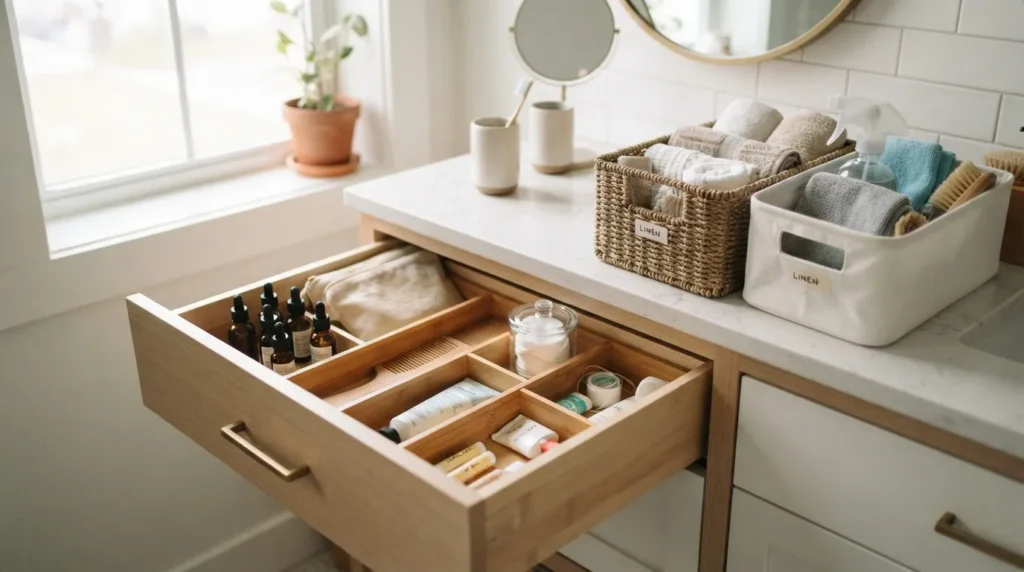
A better strategy is to choose one contained zone. That could be a single bathroom cabinet, one kitchen drawer, one shelf, a nightstand, or one section of your closet.
The smaller the area, the easier it is to see the entire project from beginning to end.
In my experience, finishing a small area creates momentum. Once you see a completely cleared drawer or organized shelf, the next project feels less intimidating.
How To Style It
Before you begin, define exactly what counts as the zone. If you’re decluttering a nightstand, don’t suddenly move into the entire bedroom.
Take everything from that small area and place it somewhere nearby where you can sort without blocking the room.
Separate the belongings into categories such as keep, donate, relocate, and discard. Wipe the empty space before returning anything.
Only put back items that belong in that specific zone.
If something belongs elsewhere in the house, place it in a small relocation basket rather than walking around putting things away one by one. This keeps you focused and prevents the project from turning into a house-wide wandering session.
2. Use the Four-Pile Method
Quick Benefits
- Simplifies decision-making
- Keeps belongings organized
- Prevents random piles
- Makes progress easier to track
- Works in almost any room
Why It Works
Decluttering becomes much easier when every item has somewhere to go.
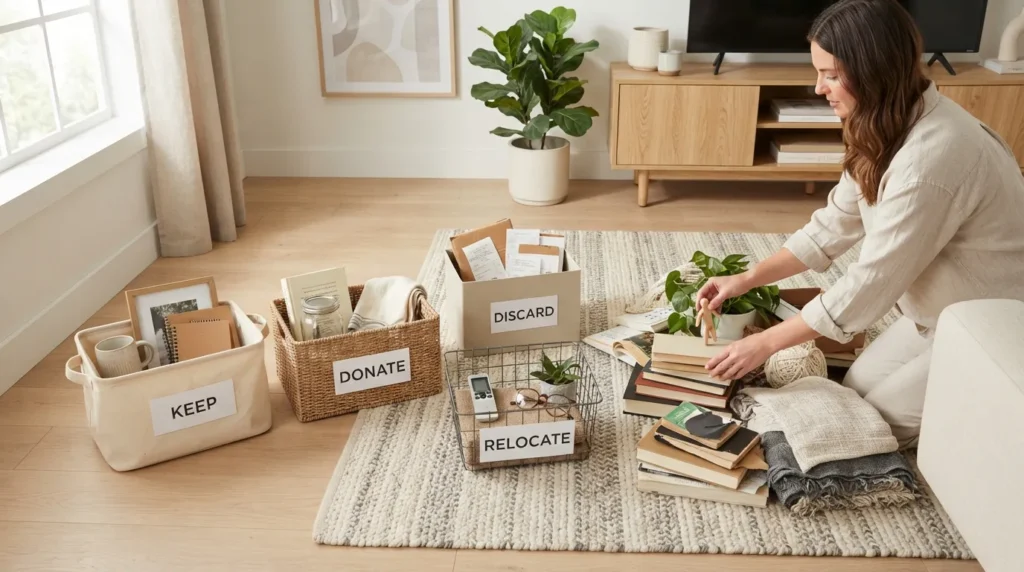
A simple four-category system can help: keep, donate, relocate, and discard.
The keep pile contains things you actively use or genuinely value. Donate is for usable items you no longer need. Relocate is for belongings that belong somewhere else in your home. Discard is for items that are broken, unusable, or otherwise appropriate for disposal according to local guidelines.
This approach is helpful because you aren’t constantly asking yourself what to do with an object after you’ve decided you don’t want it in the current space.
You also avoid the classic problem of creating one giant “deal with this later” pile.
How To Style It
Use four boxes, bags, bins, or clearly marked areas. If you’re working in a small space, don’t spread everything across the entire floor. Keep the categories compact.
For donations, use sturdy bags or boxes that can be closed once full.
For relocation items, a laundry basket works surprisingly well. As you move through the house, you can return each item to its proper room.
For things you’re discarding, follow appropriate local disposal and recycling guidelines rather than automatically placing everything in the trash.
Once you’re finished with the zone, remove the donation and discard items promptly. Leaving them nearby makes it much easier to change your mind later.
3. Set a Short Timer
Quick Benefits
- Makes decluttering less intimidating
- Encourages focused work
- Prevents burnout
- Fits into busy schedules
- Makes consistency easier
Why It Works
You don’t need three uninterrupted hours to make a difference in your home.
A short, focused session can be surprisingly effective because it gives you a defined beginning and end.
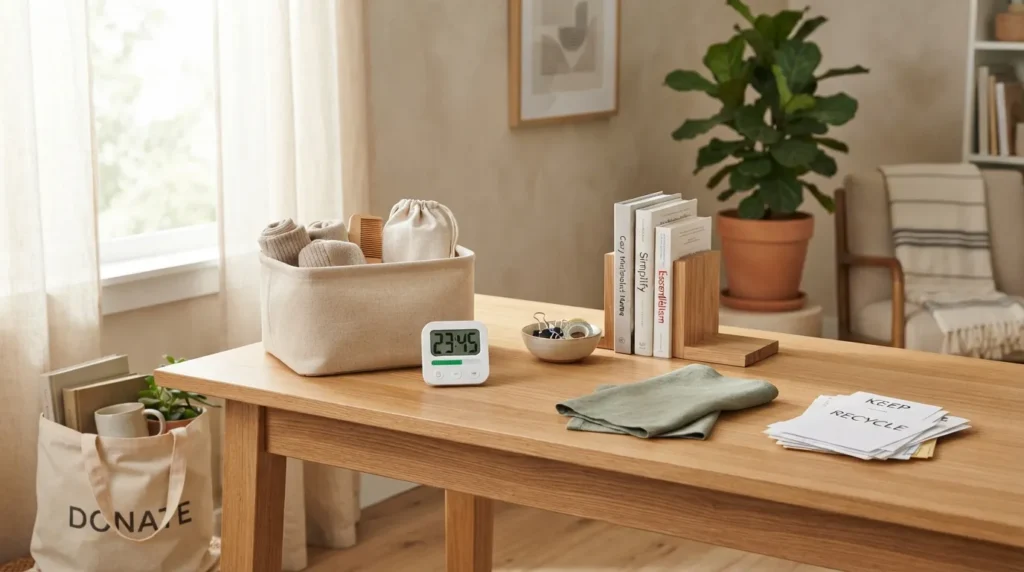
Try setting a timer for 10, 15, or 20 minutes. During that time, work on one small area without switching tasks.
The goal isn’t to finish the entire room. The goal is to make the space better than it was when you started.
This approach is especially useful if you find large organizing projects mentally exhausting. A short session feels manageable enough to start even when you don’t feel particularly motivated.
Once the timer ends, you can stop. If you feel like continuing, start another short session after a break.
The important part is avoiding the all-or-nothing mindset.
How To Style It
Choose a task small enough to fit into your available time.
For 10 minutes, you might clear a bathroom drawer or sort a stack of mail. For 20 minutes, you might tackle a small section of your closet.
Keep a donation bag and trash container nearby so you don’t spend your entire session walking around the house.
When the timer ends, take a moment to look at what changed. This small pause helps reinforce the progress you’ve made.
If you regularly have only 15 minutes available, make that your normal decluttering session. Consistency matters more than occasional marathon cleaning days.
4. Clear Visible Surfaces
Quick Benefits
- Creates an immediate visual improvement
- Makes rooms feel calmer
- Helps identify unnecessary items
- Makes cleaning easier
- Provides motivating results
Why It Works
When a room feels cluttered, visible surfaces are often the first place to look.
Kitchen counters, coffee tables, bathroom counters, entryway consoles, desks, and nightstands can collect objects surprisingly quickly.
Because these surfaces are always in your line of sight, even a small amount of clutter can make the entire room feel busier.
Clearing them creates one of the fastest visual improvements you can make.
The trick is not to simply move everything into a drawer. That only hides the problem temporarily.
Instead, ask whether each item belongs on the surface at all.
A kitchen counter may need a coffee maker and perhaps a fruit bowl. It probably doesn’t need yesterday’s mail, three reusable shopping bags, and every appliance you own.
How To Style It
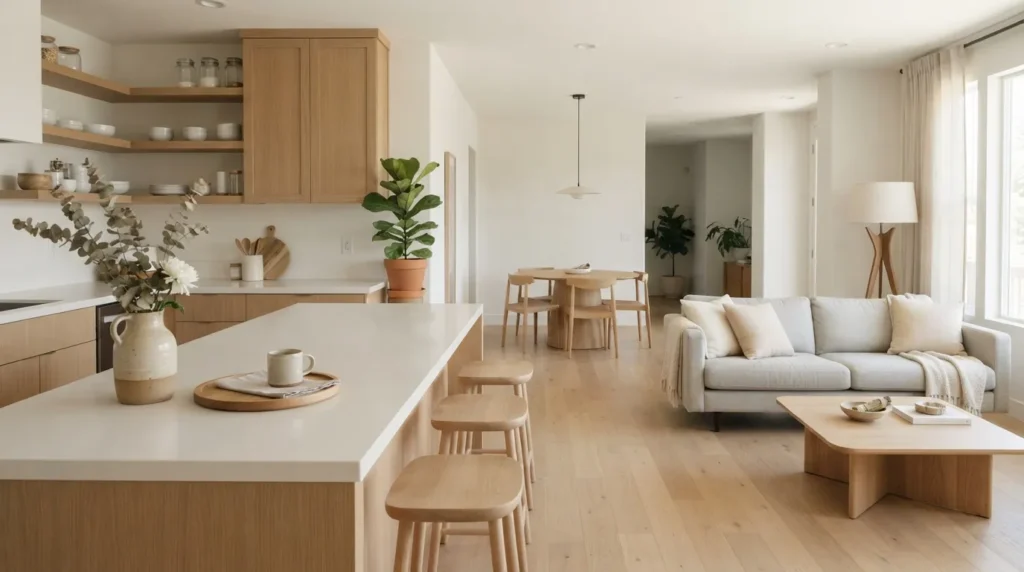
Choose one surface and remove everything from it.
Clean the surface, then return only the items you use regularly or intentionally want displayed.
Create small functional groupings rather than scattering objects across the entire area. For example, a tray can contain frequently used kitchen items, while a small bowl near an entryway can hold keys.
Avoid filling every newly cleared surface with decorative objects. Leaving some open space is part of the result.
If an item is used daily but doesn’t belong there, consider whether it needs a better storage location somewhere nearby.
5. Declutter by Category
Quick Benefits
- Makes duplicates easier to notice
- Reveals how much you actually own
- Encourages consistent decisions
- Works well for clothing and household goods
- Helps prevent unnecessary purchases
Why It Works
Sometimes clutter is difficult to recognize because similar items are stored in different places.
You may have batteries in three drawers, cleaning supplies in several cabinets, or kitchen utensils spread across multiple containers.
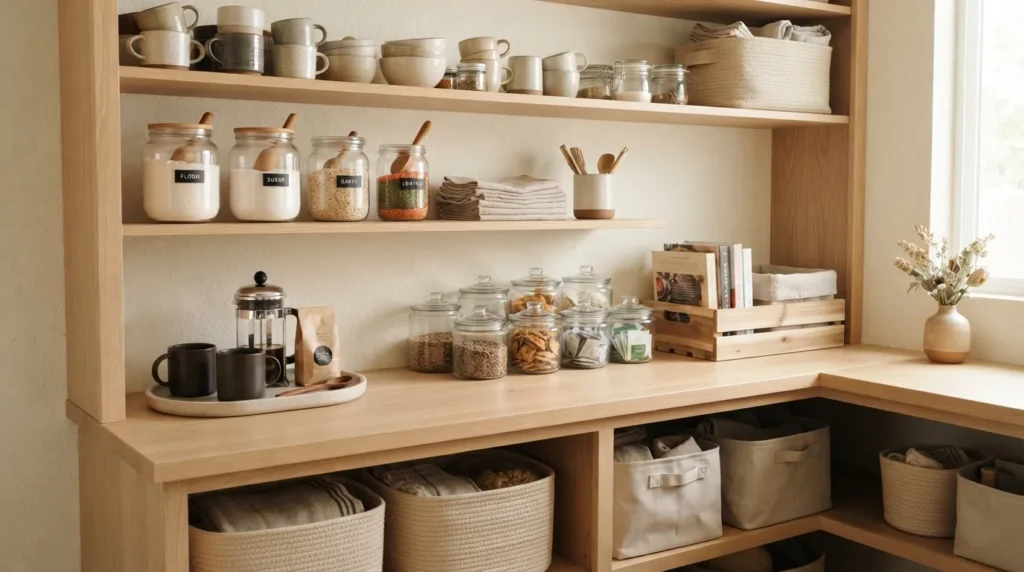
Decluttering by category brings similar belongings together so you can see the complete collection.
Once everything is visible, decisions become easier.
You might discover that you have six travel mugs but regularly use two. Or you may find several unopened cleaning products you forgot you owned.
This doesn’t mean every category needs to be reduced to a tiny number. The purpose is awareness.
When you understand what you already have, you’re less likely to buy duplicates and more likely to store things in sensible locations.
How To Style It
Start with categories that tend to accumulate duplicates.
Clothing, shoes, beauty products, kitchen tools, cleaning supplies, books, paperwork, and reusable containers are common examples.
You don’t necessarily need to empty the entire house. Work through one category at a time.
As you sort, group similar items together. Compare duplicates and decide which versions you actually use.
Then create one consistent storage location for the category.
If a category doesn’t fit comfortably in its designated space, that’s useful information. You may have more belongings than your storage can realistically accommodate.
6. Create a Donation Box
Quick Benefits
- Makes donating easier
- Prevents unwanted items from returning
- Encourages ongoing decluttering
- Provides a convenient decision point
- Reduces household buildup
Why It Works
One of the easiest ways clutter returns is through delayed decisions.
You know you don’t use a sweater, serving dish, or decorative item anymore, but it stays in the house because you haven’t decided what to do with it.
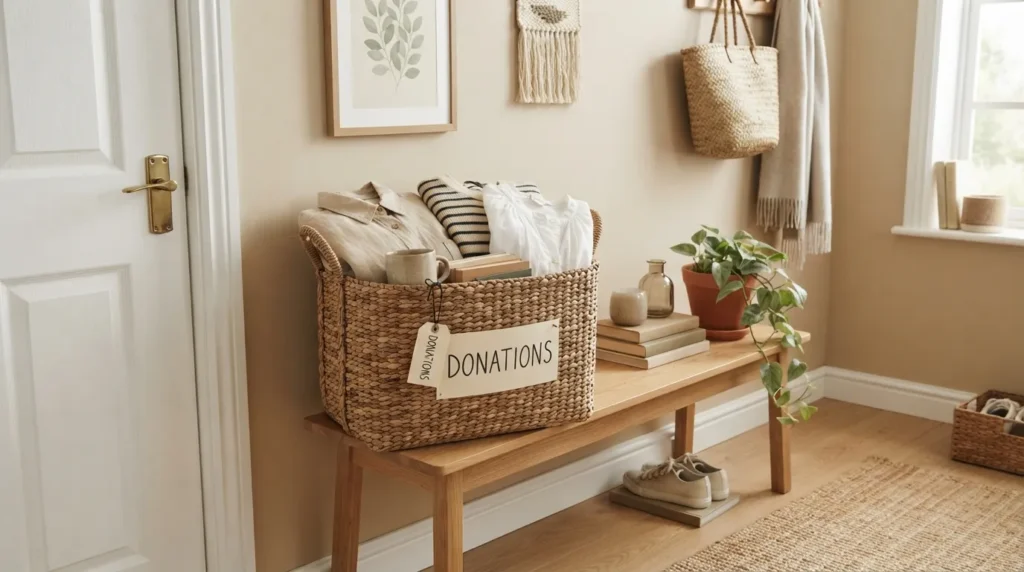
A designated donation box creates a clear place for those items.
Once the box is full, it’s ready to leave your home.
This is much easier than creating a large donation pile every few months because you can make small decisions throughout the year.
The box doesn’t need to be visible all the time. A closet, laundry area, or utility space can work as long as everyone knows its purpose.
The important rule is that the container should have a limit.
If the donation box has become a permanent storage bin, it’s time to empty it.
How To Style It
Choose a sturdy container that fits your available space.
A reusable box or durable bag works well. Label it clearly so household members know that items placed inside are intended for donation.
When something becomes a clear “I don’t need this anymore,” place it directly into the container.
Once full, schedule a realistic time to take the donations to an appropriate organization or collection point.
For larger items, arrange the appropriate donation, resale, recycling, or disposal option rather than allowing them to sit indefinitely.
The goal is to create a simple exit route for things leaving your home.
7. Keep Daily Essentials Easy
Quick Benefits
- Makes routines smoother
- Reduces unnecessary searching
- Prevents clutter from spreading
- Improves storage efficiency
- Keeps frequently used items accessible
Why It Works
Decluttering isn’t about hiding everything.
If the items you use every day are stored in inconvenient places, you’ll naturally leave them out. That’s how clutter often returns.
The solution is to make the easiest storage location the most practical one.
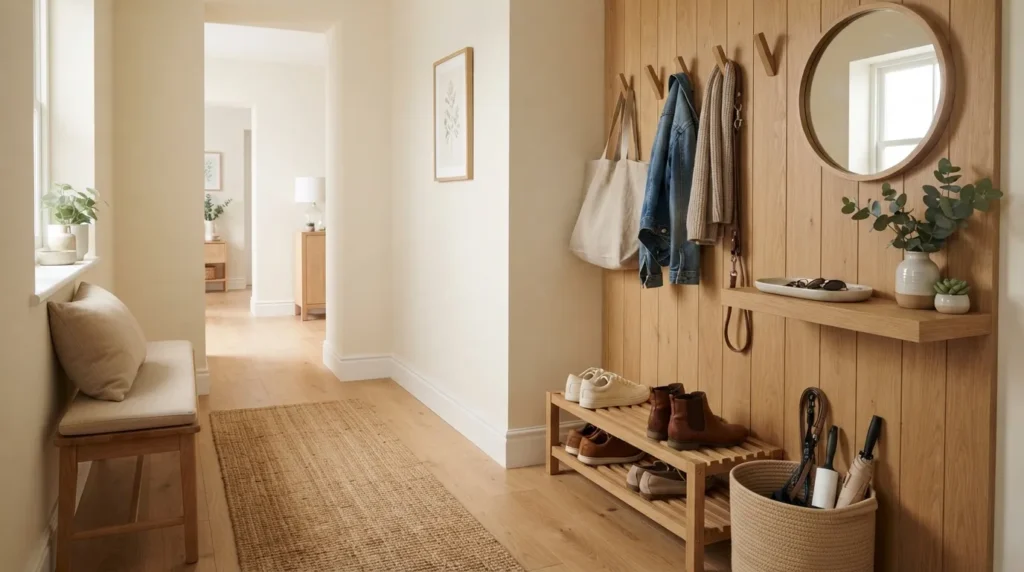
Keep daily essentials close to where they’re actually used.
If you make coffee every morning, coffee supplies should be easy to access. If you use the same skincare products daily, they shouldn’t be buried behind rarely used items.
Good organization works with your habits rather than fighting them.
I’ve noticed that when storage matches real routines, maintaining an uncluttered home becomes much less demanding.
How To Style It
Observe where you naturally place things during the day.
If keys always land on the kitchen counter, consider creating a dedicated key bowl or hook nearby.
If shoes pile up at the entryway, add a practical shoe storage solution where people actually remove them.
Keep frequently used items at comfortable reach and reserve harder-to-access storage for seasonal or occasional belongings.
Don’t organize according to an imaginary version of your household. Organize according to what people actually do.
The best storage system is the one everyone can use without thinking about it.
8. Handle Sentimental Items
Quick Benefits
- Reduces emotional pressure
- Protects meaningful belongings
- Prevents sentimental clutter from spreading
- Encourages thoughtful decisions
- Creates more intentional storage
Why It Works
Sentimental items are different from ordinary clutter because the decision isn’t simply about usefulness.
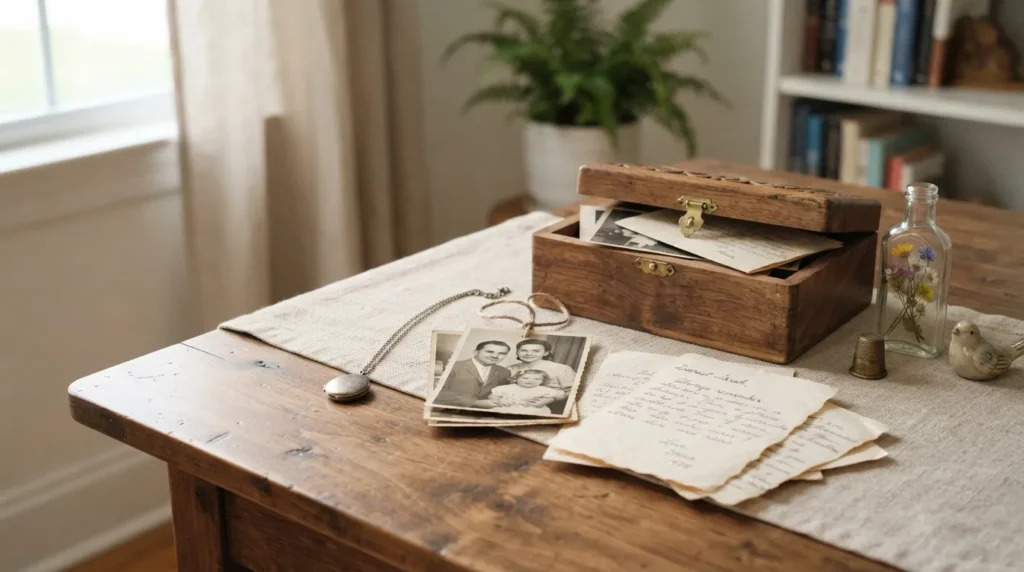
A child’s artwork, old photographs, inherited objects, travel souvenirs, or handwritten notes may carry memories that have nothing to do with their practical function.
That’s why sentimental decluttering should generally happen more slowly.
You don’t need to force yourself to make difficult decisions when you’re tired or overwhelmed.
Instead, start by grouping meaningful items together. Seeing the entire collection can help you understand what you truly want to preserve.
You may discover that a handful of objects represent the memory just as well as dozens of similar pieces.
The goal isn’t to erase memories. It’s to create a manageable way to keep the ones that matter.
How To Style It
Begin with an easy sentimental category rather than your most emotionally difficult belongings.
For photographs, consider organizing them by person, year, event, or another system that makes sense to you.
Children’s artwork can be photographed before selecting a smaller number of originals to preserve.
For inherited objects, keep the pieces that genuinely connect you to the person or memory rather than feeling obligated to keep everything simply because it was passed down.
Use labeled containers for sentimental items and establish a reasonable storage limit.
If you’re unsure about an item, it’s perfectly reasonable to set it aside and return to it later.
9. Avoid the Maybe Pile
Quick Benefits
- Speeds up decision-making
- Prevents clutter from returning
- Reduces procrastination
- Creates clearer boundaries
- Makes finished areas easier to maintain
Why It Works
The “maybe pile” feels helpful because it delays difficult decisions.
Unfortunately, it can also become the largest pile in the room.
A better approach is to establish a few personal decision rules before you begin.
Ask yourself:
- Do I use this?
- Would I buy it again today?
- Do I have something else that performs the same job?
- Does it fit my current life?
- Is keeping it worth the space it occupies?
You don’t need to answer every question for every object. A few clear criteria can make decisions much faster.
Remember that decluttering isn’t a competition. If something has genuine value to you, keeping it is a valid decision.
The goal is to eliminate unnecessary belongings, not to eliminate everything that isn’t perfectly practical.
How To Style It
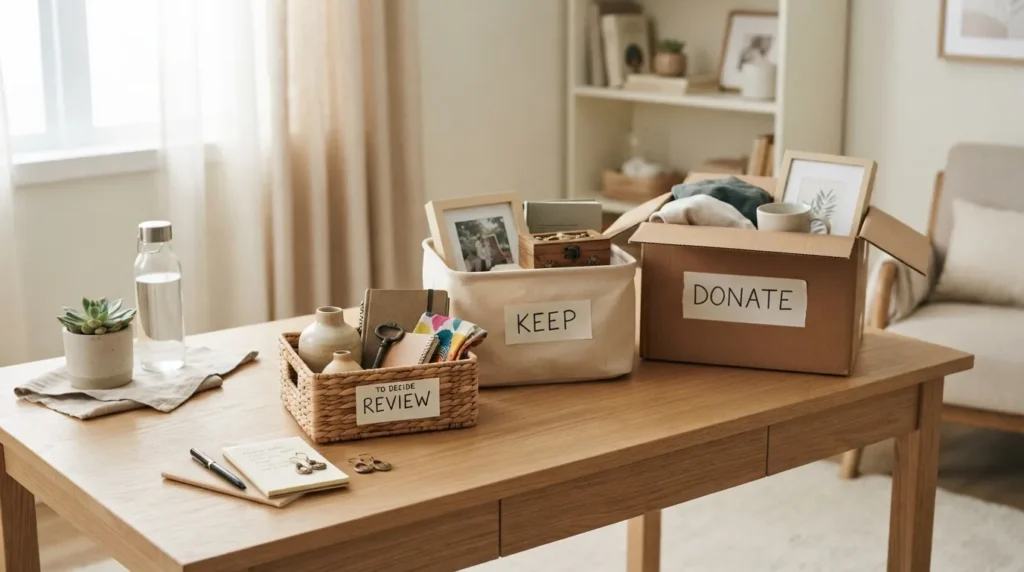
If you genuinely cannot decide, create a small, clearly limited “review later” container rather than an unlimited pile.
Label it with a date for reassessment.
When that date arrives, look at the items again. Time away from the object often makes the decision easier.
Avoid using this method for everything. It’s a tool for genuinely uncertain belongings, not a way to avoid decisions.
For obvious clutter, make the decision immediately and move the item toward its final destination.
10. Build a Reset Routine
Quick Benefits
- Prevents clutter from rebuilding
- Reduces future cleaning time
- Creates consistent habits
- Keeps surfaces manageable
- Makes the home easier to maintain
Why It Works
Decluttering once can make your home feel wonderful, but maintaining that result requires a small amount of ongoing attention.
Fortunately, maintenance doesn’t need to become another major project.
A short daily reset can prevent small piles from becoming large ones.
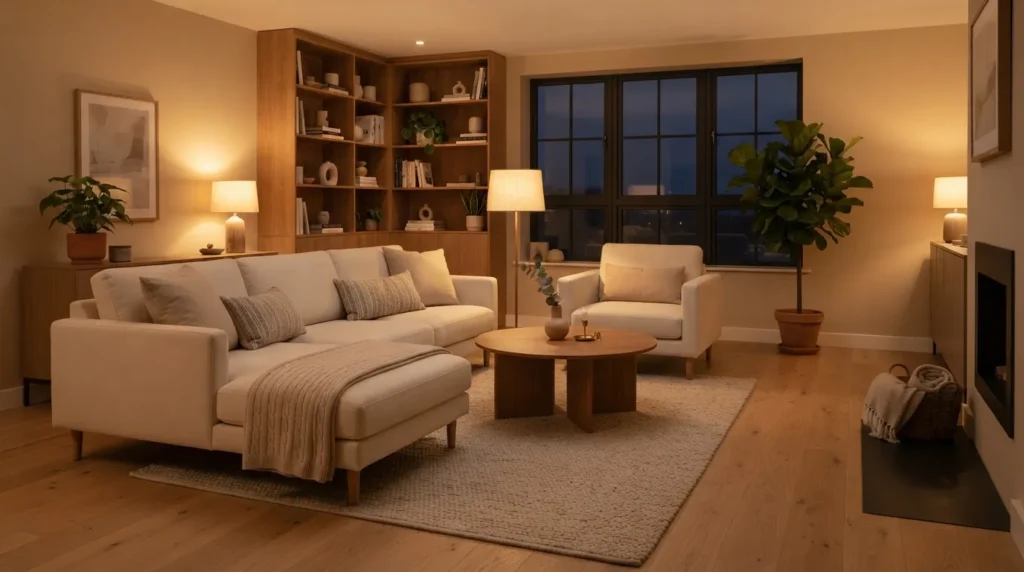
At the end of the day, return frequently used items to their homes, clear major surfaces, handle incoming paperwork, and move misplaced belongings toward their correct rooms.
A weekly reset can go a little deeper.
The idea is to catch clutter while it’s still manageable.
Think of it as brushing your teeth rather than waiting until you need a major cleaning appointment.
How To Style It
Choose a time that naturally fits your routine.
A 10-minute evening reset might include clearing the kitchen counter, putting away shoes, returning blankets, and gathering items that belong elsewhere.
Once or twice a week, choose one small area for a deeper check.
Keep a donation container available so unwanted items have somewhere to go immediately.
You can also establish simple household rules, such as returning an item after using it or dealing with mail when it enters the house.
The goal is not perfection. It’s creating enough structure that clutter doesn’t have an opportunity to take over.
What Should You Declutter First?
If you’re unsure where to begin, start with the area that creates the most daily friction.
That might be the kitchen counter that is always covered in items, the entryway where shoes accumulate, the bathroom drawer that won’t close properly, or the closet where you struggle to find clothes.
Another useful strategy is to begin with a low-emotion area.
A junk drawer may be much easier than a box of family photographs.
Quick wins can build confidence before you tackle more complicated categories.
You can also start with items that are obviously no longer useful: expired products, broken objects, duplicates, packaging, outdated paperwork, or things you haven’t used in a very long time.
There is no universal order that every household needs to follow.
The best starting point is the place where a small amount of effort will noticeably improve your everyday life.
How To Declutter Without Making a Bigger Mess
The secret is containment.
Don’t empty an entire room unless you have enough time and space to finish the project.
Work in zones and keep the items from that zone together.
Use boxes or bags for each decision category, and don’t let belongings spread into unrelated areas.
If you need to move something temporarily, give it a designated container rather than placing it on another surface.
Most importantly, finish the exit process.
Donations should leave the house. Trash should be disposed of appropriately. Relocation items should return to their homes.
A decluttering session isn’t really finished when the floor looks organized. It’s finished when the unwanted items have a clear destination.
What to Do With Things You No Longer Want
Not everything needs to go in the trash.
Depending on the item and its condition, you may have several options.
Usable clothing, furniture, books, household goods, and other belongings may be suitable for donation or resale.
Certain materials may be recyclable through local programs.
Electronics, batteries, chemicals, and other specialized items may require particular disposal methods.
Before getting rid of something, check the requirements in your local area. Disposal rules vary considerably by community.
For valuable belongings, resale can make sense if the effort required is reasonable.
But don’t let the possibility of making a few dollars become another reason clutter stays in your home for months.
Set a realistic deadline for items you’re selling. If they don’t sell, choose another appropriate exit route.
How to Keep Your Home Decluttered
Once you’ve cleared the excess, the next step is making it harder for clutter to return.
One useful habit is the “one in, one out” approach for categories where you frequently accumulate items. If you buy a new coat, for example, consider whether an older coat should leave your closet.
This doesn’t have to be a strict rule for every possession. Use it where it makes sense.
Another helpful habit is pausing before purchases.
Ask whether you already own something similar, where the new item will live, and whether you’ll realistically use it.
Give new belongings a home as soon as they enter the house.
If an object doesn’t have a logical place, that may be a sign that you don’t actually have room for it.
Finally, keep your standards realistic. A lived-in home will never remain perfectly clear all day. The goal is a home that can be reset easily, not one that looks untouched.
Frequently Asked Questions
What is the easiest way to start decluttering your home?
Start with one small, contained area such as a drawer, shelf, nightstand, or bathroom cabinet. Remove the items, sort them into keep, donate, relocate, and discard categories, then return only what belongs there. Starting small prevents the project from becoming overwhelming and gives you a finished result you can see immediately.
How can I declutter without making a huge mess?
Avoid emptying several rooms at once. Work in one small zone and keep your sorting categories contained in boxes or bags. Finish the area before moving to another one, and remove donations and discarded items from the space when you’re done. This keeps the project controlled instead of creating piles throughout the house.
How do I declutter when I don’t know what to get rid of?
Ask practical questions such as whether you use the item, whether you would buy it again today, whether you own something similar, and whether it fits your current lifestyle. For sentimental belongings, give yourself more time. You don’t need to make every decision during one session.
How long should I declutter each day?
Even 10 to 20 minutes can be enough to make meaningful progress. A short session is often easier to maintain than an occasional multi-hour project. Choose a time that fits naturally into your schedule and focus on one clearly defined task until the timer ends.
What should I do with items I don’t want but could sell?
Set a realistic deadline for selling them. Photograph and list worthwhile items promptly, then decide what you’ll do if they don’t sell. This prevents “things to sell” from becoming another permanent category of clutter. Valuable items may be worth the effort, but not every inexpensive item needs to be sold.
How do I declutter sentimental belongings?
Start with easier sentimental categories and work slowly. Group similar items together, choose the pieces that genuinely matter to you, and consider photographing certain objects before letting them go. Give meaningful belongings a defined storage space and limit rather than allowing sentimental items to spread throughout the house.
How do I stop clutter from coming back?
Create simple habits that fit your existing routine. Return items after use, process incoming mail promptly, keep a donation container available, and do a short daily reset. Also pay attention to new purchases. If you regularly bring home more items than your storage can comfortably accommodate, clutter will eventually return.
Conclusion
A cluttered home rarely becomes overwhelming because of one huge mess. More often, it’s the result of dozens of small decisions that were postponed—items left on counters, clothes pushed into crowded closets, paperwork set aside, and belongings without a clear home.
That’s why decluttering doesn’t need to be dramatic.
Start with one small zone. Give every item a destination. Work in short sessions. Clear visible surfaces. Keep the things that genuinely support your current life and create simple exit routes for everything else.
Don’t aim for a perfectly minimal home unless that’s what you personally want. A comfortable, lived-in home can still be organized and peaceful.
The real victory is making everyday life easier.
When your keys have a place, your kitchen counters have breathing room, your favorite clothes are easy to find, and the things you use regularly are stored where you expect them to be, your home starts working with you instead of against you.
Start with one drawer today. Then one shelf tomorrow. Small changes add up quickly.
You don’t have to declutter your entire home in a weekend. You simply need to create a system that makes your home a little easier to live in every day.
Related Articles
- 20 Easy Home Organization Ideas for Busy Families
- 15 Small Entryway Organization Ideas That Actually Work
- 20 Simple Kitchen Organization Ideas for a Clutter-Free Home
- 15 Closet Organization Ideas for Small Spaces
- 18 Easy Living Room Organization Ideas for Everyday Life