
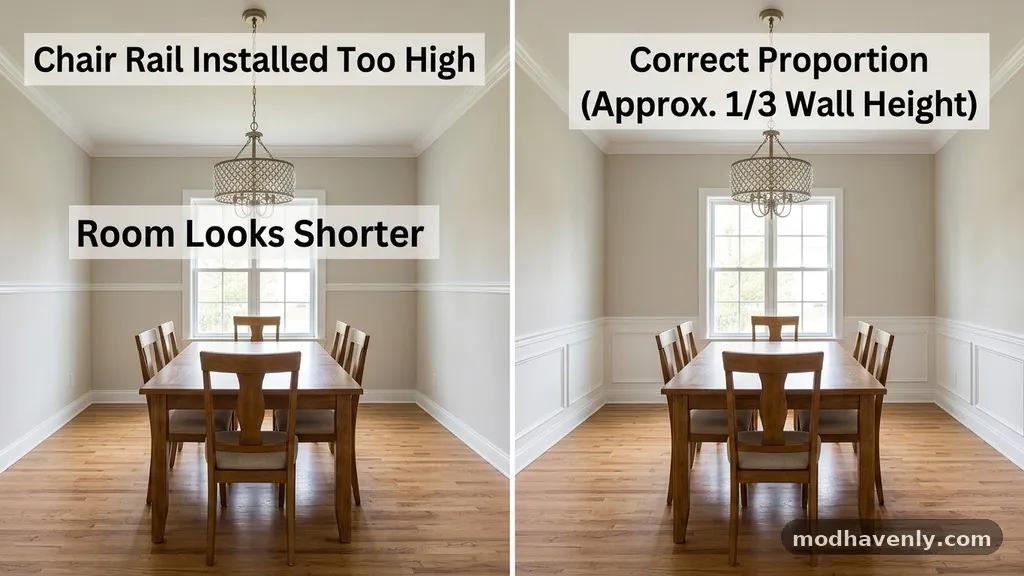
What Happens If a Chair Rail Is Installed Too High (Room Looks Shorter)?
When you decide to install decorative molding in your home, understanding exactly what happens if a chair rail is installed too high (room looks shorter) is essential for maintaining proper visual balance. Many homeowners choose this architectural feature to protect their walls or add a touch of classic character to a space. However, when the placement deviates from standard proportions, the results can be visually jarring.
Instead of creating a sense of refined elegance, an improperly positioned rail often makes a room look shorter and more cramped. This article explains why the specific height of your molding matters and how you can avoid common design mistakes that negatively impact your interior aesthetic.
The primary consequence of placing a chair rail too high is the disruption of the room’s natural focal points, which directly influences how the eye perceives vertical space. When a rail sits significantly above the traditional one-third mark of the wall, it creates a visual “cut” that makes the lower portion of the wall appear squat and the upper portion feel top-heavy. This imbalance effectively shrinks the perceived volume of the room.
You essentially force the viewer to see two distinct, disproportionate sections rather than a cohesive wall surface. Most design professionals agree that a rail placed too high kills the sense of openness you likely want to achieve in your living space.
The Golden Rule of Proportions
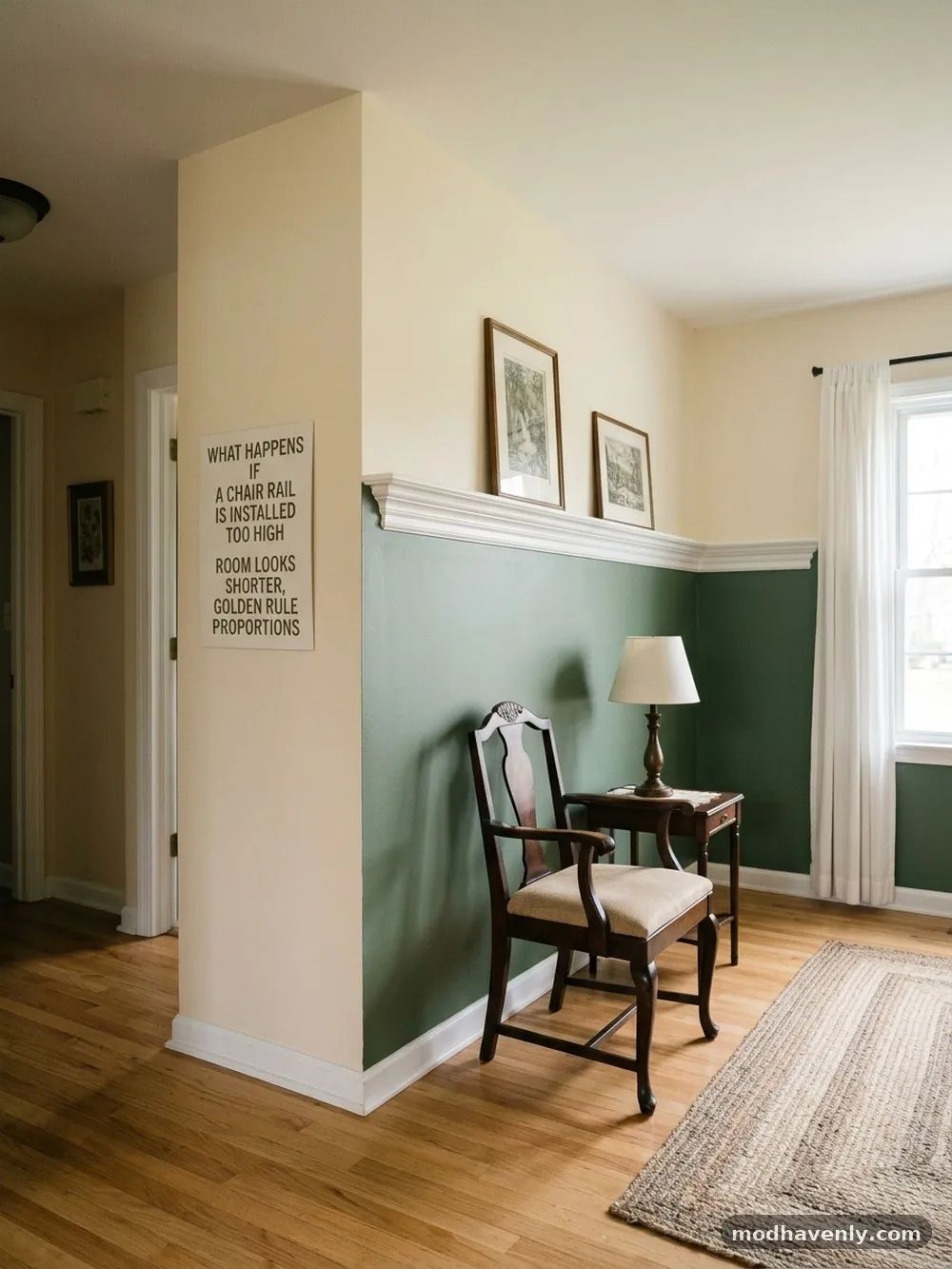
The most common mistake involves ignoring the mathematical relationship between the floor, the ceiling, and the furniture. A standard chair rail is meant to mimic the height of a chair back, which is typically between 30 and 36 inches from the floor. When you push this height toward the 40-inch mark or higher, you lose the functional connection to the furniture.
The wall ends up being divided in a way that feels unnatural to the human eye. If you have an eight-foot ceiling, placing the rail at 40 inches or above creates a “stunted” look that makes the ceiling feel lower than it actually is.
Visual Weight and Wall Division

The visual weight of your molding plays a significant role in how it interacts with the room’s overall proportions. A thicker, more ornate rail will draw more attention than a thin, simple trim. If you install a heavy rail too high, it acts as a permanent horizon line that traps the eye.
This creates a jarring transition point that emphasizes the lack of wall space below the molding. By keeping the rail lower, you allow the wall to flow upward more naturally, which maintains the illusion of height.
Impact on Ceiling Perception
Your ceiling height dictates the ideal placement of any wall molding. In rooms with high ceilings, you have more flexibility, but the “too high” rule still applies based on the room’s total verticality. If you have ten-foot ceilings, a rail placed at four feet might look fine, but in a standard eight-foot room, that same height is disastrous.
You must consider the total distance from the floor to the crown molding. The rail should ideally divide the wall into a one-third to two-thirds ratio. Deviating from this ratio is exactly what happens if a chair rail is installed too high (room looks shorter).
Furniture and Functional Misalignment

Chair rails were originally designed to protect walls from the backs of chairs. If you ignore this functional origin, you end up with a wall that looks like a museum display rather than a lived-in home. When your dining chairs or living room furniture sit entirely below the rail, the room feels like it belongs to a dollhouse.
You want the chairs to interact with the molding in a way that feels intentional. If the molding is too high, the furniture looks small and disconnected, which contributes to the feeling that the room is shrinking.
Material Choices and Installation
The materials you choose for your molding can either mitigate or exacerbate the problem of height. A high-contrast color scheme, such as dark molding against a light wall, makes the height error significantly more obvious. If you choose to paint the molding the same color as the wall, you can sometimes get away with a slight height error.
However, a bold color choice will highlight the exact point where the wall is divided. If you want to dive deeper into the technical aspects of interior trim, you can consult the National Park Service technical guidance on architectural elements for historical context.
The Importance of Symmetry

Symmetry is the enemy of a poorly placed chair rail. In most rooms, you have windows, doors, and fireplaces that already break up the horizontal lines of your walls. When you add a chair rail that is set at an awkward height, you create a conflict between the rail and your window sills.
Ideally, the rail should align with the bottom of your window frames. If the rail is too high, it will cut across the window trim, which creates a messy, disjointed appearance that makes the space feel cluttered and smaller.
Common Mistakes in Modern Design
Many modern homes try to incorporate traditional elements in ways that don’t quite fit the architectural style. A common error is assuming that “higher is better” for creating a grand look. In reality, this usually results in a room that feels like it has been cut in half with a knife.
You should prioritize the continuity of the wall surface over the desire to add more decorative layers. If your space feels small, adding a high chair rail will only confirm your fears by creating an aggressive horizontal line.
Data Comparison of Molding Placements

To understand how different heights affect a standard 96-inch (8-foot) wall, consider the following data. Note that these are based on general aesthetic principles rather than rigid code requirements.
| Rail Height (Inches) | Visual Impact | Proportion Rating |
|---|---|---|
| 28-30 inches | Low/Traditional | Excellent |
| 32-36 inches | Standard/Modern | Very Good |
| 38-42 inches | Too High (Stunted) | Poor |
| 45+ inches | Distorted/Shrunk | Very Poor |
Correcting an Existing Error
If you have already installed a rail and realized it is too high, you have a few options for correction. You can remove the rail entirely and patch the drywall, which is the most labor-intensive but effective solution. Alternatively, you can paint the entire wall—including the rail—a single, monochromatic color to minimize the visual “cut.”
This trick camouflages the molding and prevents it from acting as a harsh, horizontal barrier. If you must keep it, try adding wainscoting below the rail to give the lower portion of the wall more visual weight.
Alternatives to Traditional Rails

If you are worried about the impact on your room’s height, consider alternatives that provide texture without the horizontal division. Vertical shiplap or board-and-batten designs can actually make a room look taller by drawing the eye upward.
These options provide the same protective benefits as a chair rail without the risk of creating a “short” look. You can also use simple picture frame molding, which adds depth without the continuous horizontal line that often makes a space feel cramped.
Checklist for Successful Installation
Before you start any project, use this list to ensure your design choices enhance your home rather than detract from it:
- Measure your ceiling height to determine the correct one-third ratio for your specific wall.
- Align the top of the rail with the bottom of your window sills to create a continuous, unified line.
- Test the height with painter’s tape before committing to permanent nails or adhesive.
- Consider the height of your existing furniture to ensure the rail serves a functional purpose.
- Evaluate the color contrast; if the rail is high, use a color that blends with the wall.
- Check for obstacles like light switches or outlet covers that might interfere with the placement.
Frequently Asked Questions
Does a chair rail make a room look bigger or smaller?
A chair rail can make a room look smaller if it is placed incorrectly, particularly if it is installed too high. When placed at the correct height, it adds architectural interest, but an improperly high rail creates a horizontal line that visually compresses the vertical space.
Is chair rail outdated in 2026?
Chair rails are not necessarily outdated, but the way they are used has evolved. Modern design favors cleaner lines and subtle applications, such as painting the molding the same color as the wall to provide texture without creating a harsh, dated visual division.
What is the best height for a chair rail?
The best height generally falls between 30 and 36 inches from the floor, though this should be adjusted based on your ceiling height. The goal is to divide the wall into a ratio of approximately one-third to two-thirds to maintain visual balance and prevent the room from feeling smaller.
What can I use instead of a chair rail?
If you want to avoid the “cut” look of a chair rail, consider using vertical board-and-batten, shiplap, or simple picture frame molding. These alternatives add depth and character to your walls while avoiding the horizontal line that can make a room appear shorter.
Can I install a chair rail if I have low ceilings?
You can, but you must be very careful with the placement. In rooms with low ceilings, keep the rail at the lower end of the recommended range (closer to 30 inches) to maximize the amount of wall space above the rail, which helps the ceiling feel higher.
Conclusion
Achieving the right balance in your home design is all about understanding how architectural elements interact with your perception of space. Knowing exactly what happens if a chair rail is installed too high (room looks shorter) allows you to avoid the common pitfalls that lead to cramped, uncomfortable interiors. By adhering to the one-third rule and ensuring your molding aligns with existing architectural features like windows, you can add classic elegance without sacrificing the perceived volume of your rooms.
Always test your placement with tape before making any permanent changes to your walls. If you find yourself struggling with a space that feels off, take a step back and look at your horizontal lines to see if a simple adjustment might be the answer.