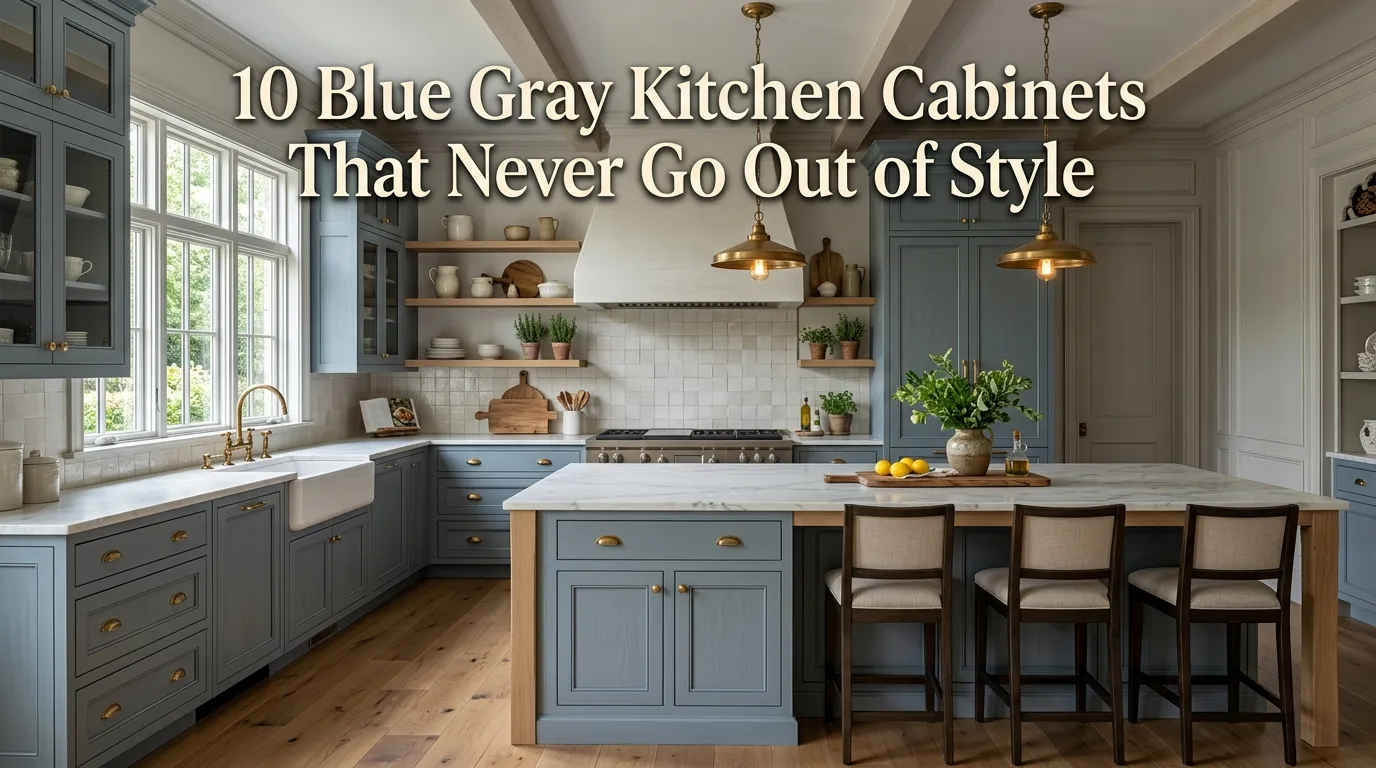
10 Blue Gray Kitchen Cabinets That Never Go Out of Style
Kitchen cabinet colors can completely change the personality of a space. If you’re looking for something more interesting than white but don’t want to commit to a bold or trendy shade, blue gray is one of those wonderfully flexible choices that can bridge the gap.
Blue gray kitchen cabinets have a calm, sophisticated quality that works in both traditional and modern homes. Depending on the lighting and surrounding finishes, the color can read soft and airy, rich and moody, or quietly coastal. That versatility is a big reason homeowners continue to gravitate toward it.
The best part is that you don’t need to redesign your entire kitchen around blue gray cabinetry. The color pairs naturally with white countertops, warm wood, brushed brass, matte black, natural stone, and plenty of neutral backsplash options. It can also work beautifully on a kitchen island when you want to introduce color without covering every cabinet.
Choosing the right shade does require a little thought. Blue gray paint can look dramatically different in morning sunlight, under warm evening bulbs, and beside cool-toned surfaces. Testing samples in your actual kitchen is one of the simplest ways to avoid ending up with a color that feels too blue, too gray, or unexpectedly dark.
Below, you’ll find ten blue gray cabinet ideas that range from light and understated to deep and dramatic. Each one shows how to use this adaptable color while keeping the kitchen comfortable, cohesive, and timeless.
Table of Contents
1. Soft Blue Gray
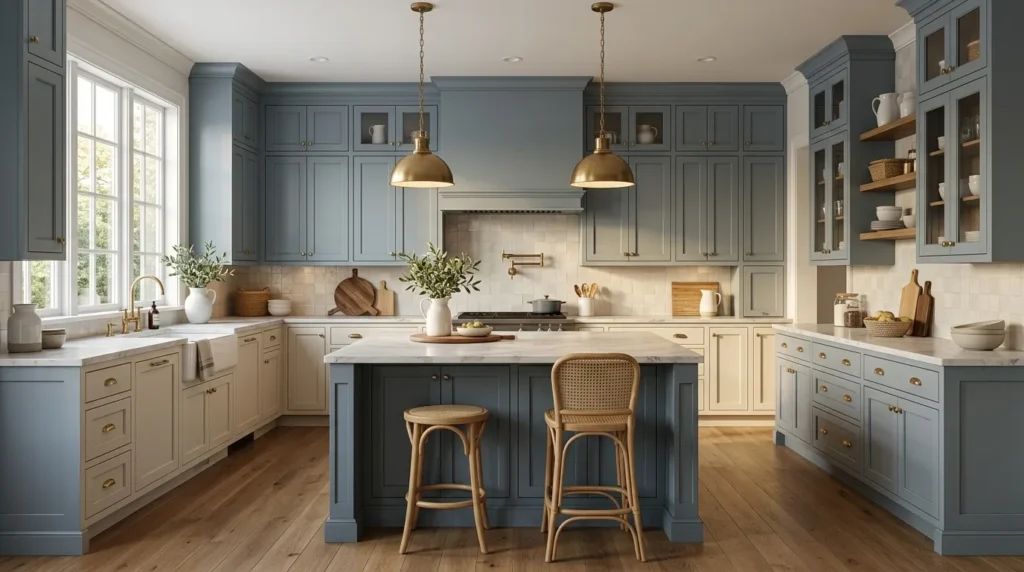
A pale blue gray creates an airy cabinet color that works beautifully in bright kitchens.
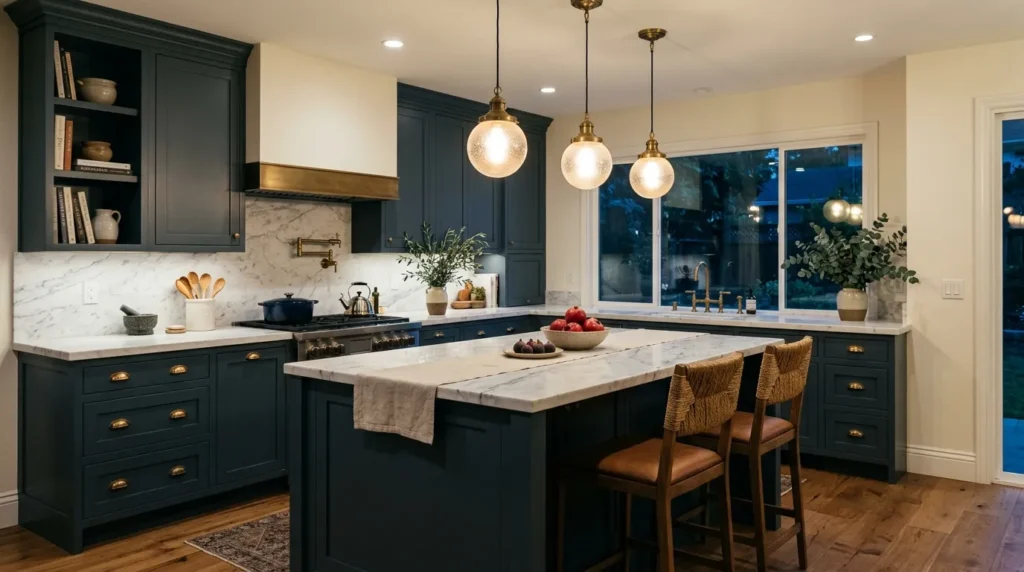
2. Deep Slate Blue
A darker blue gray brings depth and drama while maintaining a sophisticated neutral quality.
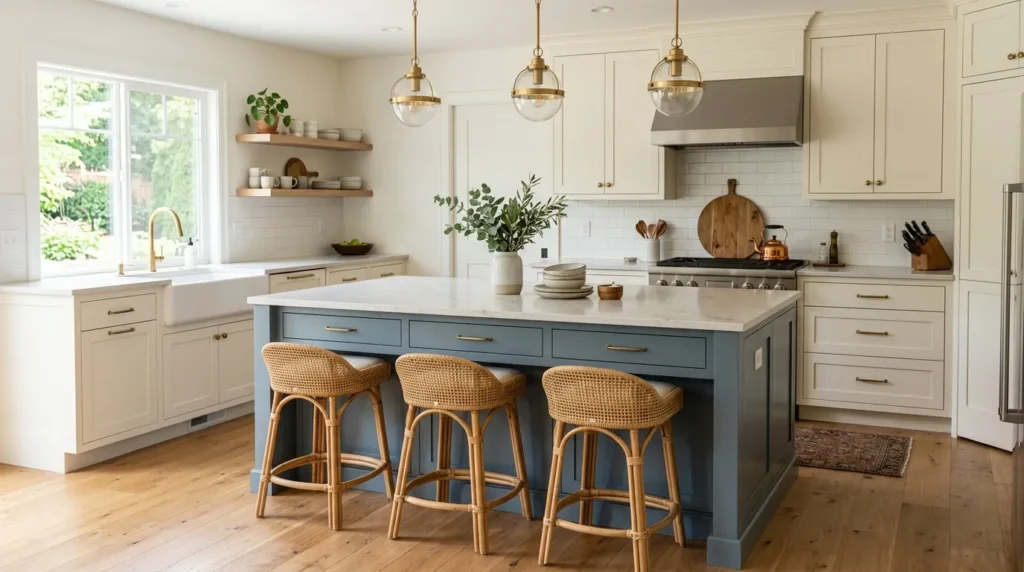
3. Blue Gray Island
Using blue gray only on the island adds color without overwhelming the entire kitchen.
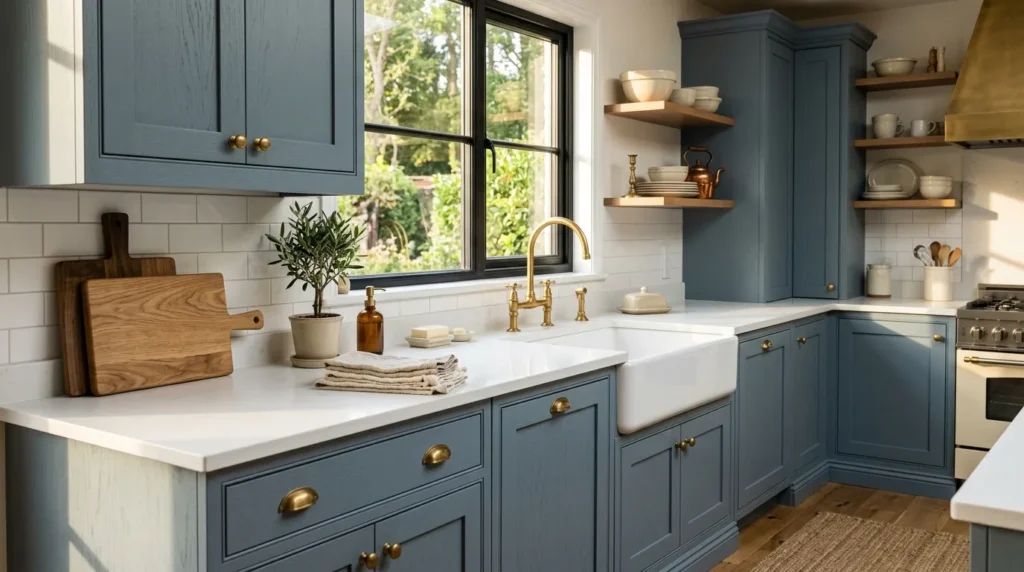
4. Brass Hardware
Warm brass creates an inviting contrast against cool blue gray cabinetry.
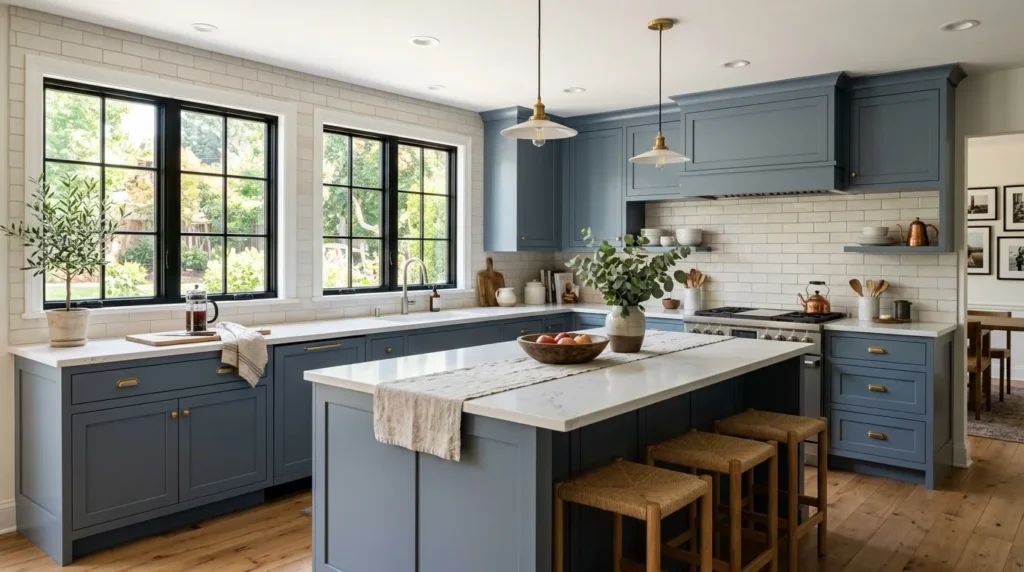
5. White Countertops
Crisp light countertops keep blue gray cabinets feeling fresh, bright, and balanced.
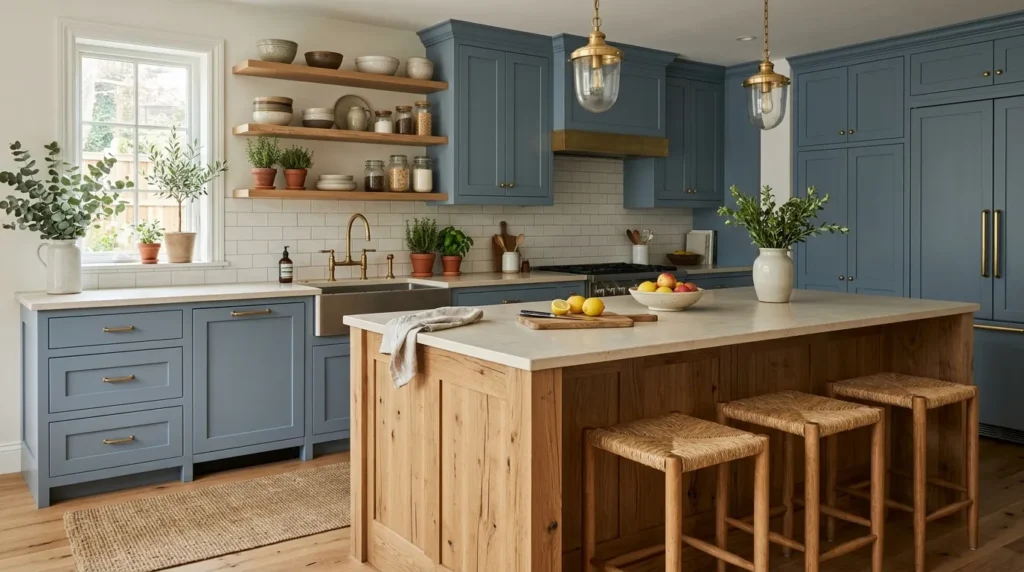
6. Natural Wood Pairing
Warm wood introduces organic texture and prevents blue gray from feeling too cool.
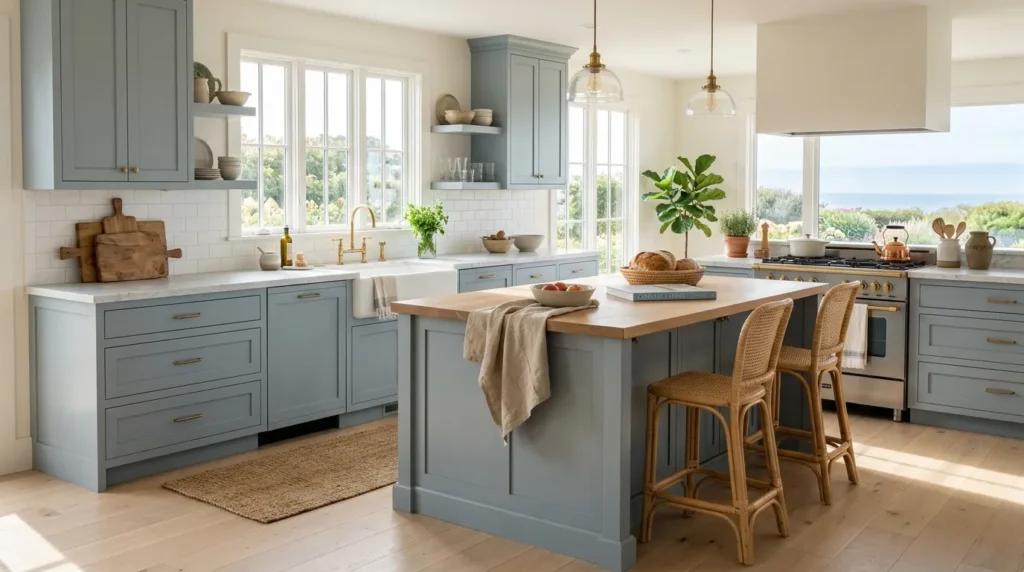
7. Coastal Blue Gray
A softer blue gray creates an understated coastal atmosphere without relying on obvious beach decor.
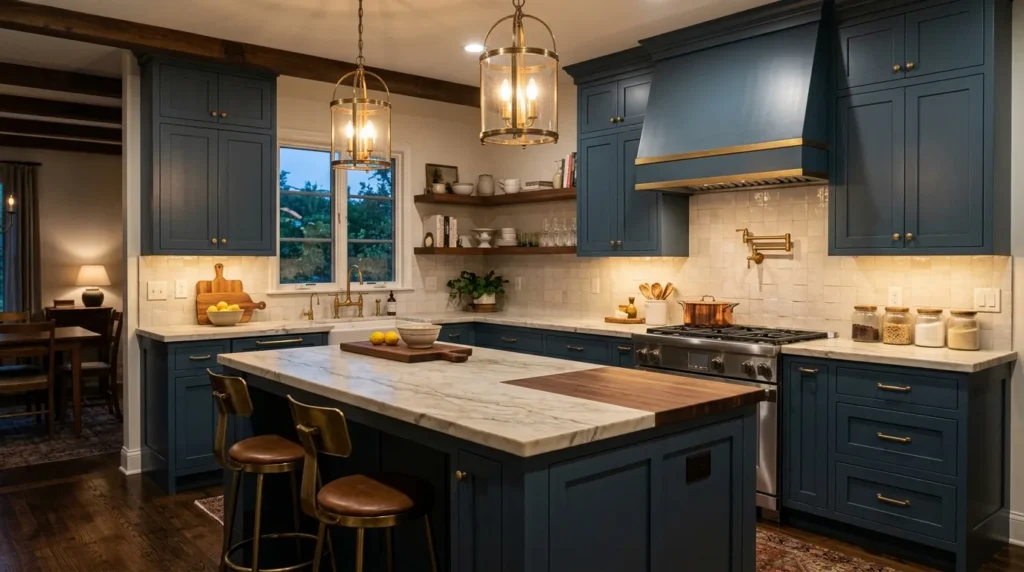
8. Moody Blue Gray
A richer shade creates a sophisticated kitchen with depth, character, and dramatic appeal.
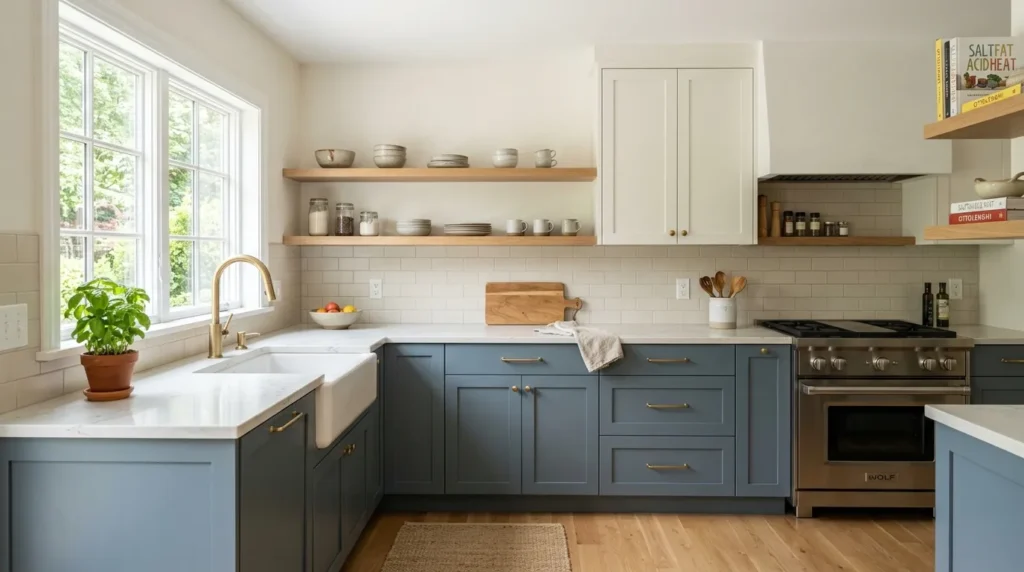
9. Two-Tone Cabinets
Combining blue gray with another cabinet color creates dimension and visual separation.
10. Classic Farmhouse Style
Blue gray cabinetry adds subtle color to a farmhouse kitchen while preserving its timeless character.
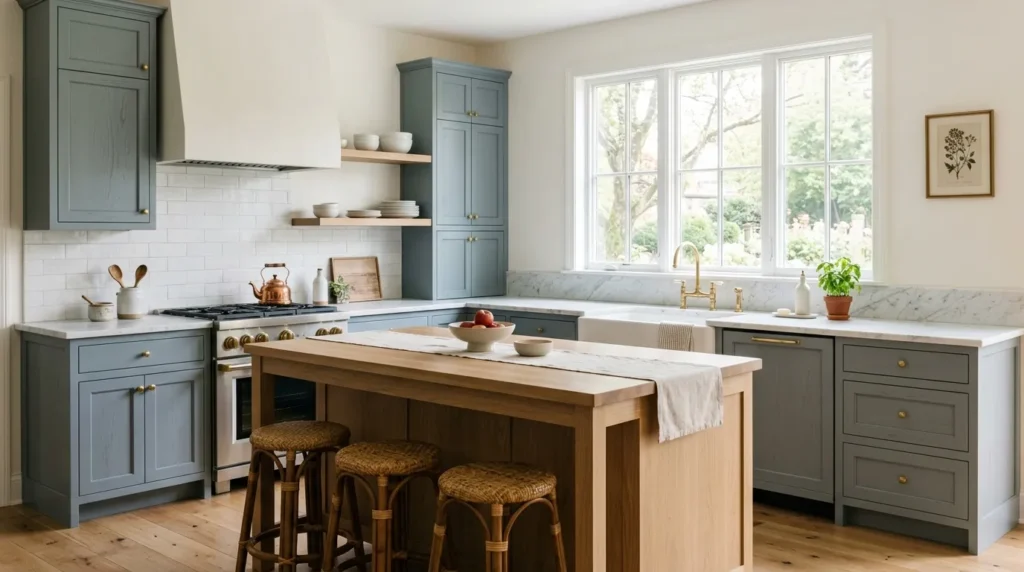
1. Soft Blue Gray
Quick Benefits
- Keeps the kitchen feeling bright
- Adds subtle color
- Works well with white
- Creates a calm atmosphere
- Easy to accessorize
Why It Works
Soft blue gray is an excellent choice if you want colored cabinetry without making the kitchen feel visually heavy. The gray undertone keeps the blue restrained, while the blue adds enough color to make the cabinets more interesting than a standard neutral.
In a kitchen with plenty of natural light, a pale blue gray can look almost silvery during the day and slightly warmer in the evening. That changing quality gives the cabinetry depth without requiring a complicated color scheme.
It also works across decorating styles. Pair it with marble and brass for a more traditional look, or combine it with simple hardware and streamlined countertops for something contemporary.
How To Style It
Keep the surrounding finishes relatively light. White quartz or softly veined marble can create a clean contrast, while a warm white backsplash prevents the kitchen from feeling too cool.
For hardware, brushed brass can add warmth, while polished chrome or nickel creates a quieter, cooler look.
Natural wood cutting boards, woven counter stools, and simple ceramic accessories can introduce texture. If the kitchen has limited natural light, test the cabinet color carefully before committing because pale blue gray can appear noticeably different in shadowed areas.
2. Deep Slate Blue
Quick Benefits
- Adds dramatic depth
- Creates a sophisticated focal point
- Works well in large kitchens
- Pairs beautifully with brass
- Complements light countertops
Why It Works
Deep slate blue is the moodier side of blue gray. It combines enough gray to feel sophisticated with enough blue to prevent the cabinetry from looking like plain charcoal.
This shade works particularly well in kitchens with generous natural light, where the color can show its complexity rather than simply appearing dark. It can also make a large kitchen feel more intimate and grounded.
Dark cabinetry is often most successful when the surrounding finishes provide contrast. A light countertop, pale backsplash, and warm lighting can keep the overall space from feeling too heavy.
How To Style It
Pair deep blue gray cabinets with white or light stone countertops. Brass hardware can add warmth and create a beautiful visual contrast.
Consider using light wood on an island or open shelving to soften the darker cabinetry. Cream-colored walls and warm under-cabinet lighting can also prevent the room from feeling overly cool.
If you love the shade but have a small kitchen, consider using it only on the lower cabinets or island. This preserves the dramatic effect without visually closing in the entire room.
3. Blue Gray Island
Quick Benefits
- Introduces color gradually
- Creates a natural focal point
- Works with white perimeter cabinets
- Easy to coordinate
- Excellent for two-tone kitchens
Why It Works
You don’t have to paint every cabinet blue gray to enjoy the color. A blue gray island can become a sophisticated focal point while keeping the perimeter cabinetry light and versatile.
This approach is particularly useful when you already have white, cream, or light wood cabinets that you like. Instead of replacing everything, painting or refinishing the island can create a significant transformation.
The island also occupies a natural visual position in the kitchen. A contrasting color makes it feel more like a piece of furniture and less like another wall of cabinetry.
How To Style It
Pair a blue gray island with warm white perimeter cabinets for a classic combination. For a slightly more modern appearance, use pale wood cabinetry around a deeper blue gray island.
Choose countertop materials that connect the two colors. White stone with subtle gray veining is an easy option because the gray can visually relate to the island while the white keeps the kitchen bright.
Pendant lights above the island can reinforce the focal point. A woven stool, natural wood accessories, or a large ceramic bowl can soften the overall look.
4. Brass Hardware
Quick Benefits
- Adds warmth
- Creates contrast
- Works with light and dark blue gray
- Provides a refined finish
- Easy to update
Why It Works
Blue gray is naturally cool, so warm brass hardware can provide exactly the contrast needed to make the kitchen feel more welcoming.
The combination works because neither color has to compete for attention. The blue gray establishes the background while brass appears in smaller, more intentional details.
Aged brass can create a traditional or vintage-inspired look, while brushed brass feels more contemporary. The finish you choose can therefore influence the overall style of the kitchen.
How To Style It
Use brass consistently enough to make it feel intentional. Cabinet pulls and knobs can establish the finish, while a brass faucet or pendant lights can repeat it elsewhere.
For a softer look, choose aged or brushed brass rather than a highly reflective gold. Pair it with cream walls, natural wood, or warm stone to enhance the cozy quality.
Avoid adding too many metallic accessories. Let the hardware provide the sparkle while the cabinetry, countertop, and backsplash create the larger visual story.
5. White Countertops
Quick Benefits
- Creates bright contrast
- Balances darker cabinetry
- Makes small kitchens feel lighter
- Works with many backsplash styles
- Keeps the color combination timeless
Why It Works
White countertops are one of the simplest ways to balance blue gray cabinetry. The contrast gives the kitchen a clean visual break and allows the cabinet color to remain the star.
This is especially effective with medium and dark blue gray shades. Light countertops reflect more light and can prevent the lower half of the kitchen from feeling visually dense.
White also creates flexibility. You can introduce wood, brass, black accents, or patterned tile without having to worry about competing colors.
How To Style It
Choose a countertop with either a subtle pattern or soft veining. A completely plain white surface creates a crisp appearance, while light gray or beige veining can make the overall design feel more layered.
For the backsplash, consider warm white subway tile, simple zellige-style tile, or a natural stone that relates to the countertop.
Add wood through stools, cutting boards, or open shelves. These details help bridge the cool cabinetry and bright countertop.
6. Natural Wood Pairing
Quick Benefits
- Adds warmth
- Introduces organic texture
- Softens cool colors
- Works in modern and traditional kitchens
- Creates visual balance
Why It Works
Natural wood and blue gray cabinetry create an especially attractive combination because the materials balance each other’s visual temperature.
Blue gray provides calm, cool color while wood contributes warmth and natural variation. The result can feel both sophisticated and comfortable.
This pairing is useful if you worry that blue gray might make your kitchen feel cold. Even a few wood elements can shift the atmosphere noticeably.
How To Style It
A wood island is one of the strongest ways to introduce the material, but you can also use open shelves, bar stools, cutting boards, or a wood range hood.
Oak, walnut, and medium-toned woods can all work depending on the blue gray shade. Warmer wood usually creates stronger contrast, while pale oak gives the kitchen a lighter Scandinavian-inspired feel.
Keep other accessories relatively simple. Ceramic bowls, woven baskets, and neutral textiles can add texture without introducing unnecessary colors.
7. Coastal Blue Gray
Quick Benefits
- Creates a relaxed atmosphere
- Works with light-filled kitchens
- Feels fresh without being trendy
- Pairs naturally with white
- Easy to accessorize
Why It Works
Blue gray is a natural fit for coastal-inspired kitchens because it can suggest water and sky without relying on bright turquoise or obvious nautical decorations.
The gray undertone keeps the color sophisticated. Instead of making the kitchen look themed, it creates a subtle sense of calm.
This approach works especially well with natural materials such as light oak, rattan, linen, and stone. The result feels relaxed rather than overly decorative.
How To Style It
Choose a soft, slightly muted blue gray rather than an intense blue. Pair it with warm white walls, pale countertops, and natural wood.
Woven stools, linen window treatments, and simple ceramic accessories can reinforce the relaxed quality. You don’t need seashells, anchors, or other overt coastal motifs.
For lighting, natural daylight is ideal. If the kitchen is darker, test the paint carefully because blue gray can become noticeably cooler under certain artificial lighting.
8. Moody Blue Gray
Quick Benefits
- Creates a dramatic atmosphere
- Adds sophisticated depth
- Works beautifully with warm lighting
- Makes traditional kitchens feel richer
- Creates a memorable focal point
Why It Works
A moody blue gray can turn ordinary cabinetry into the defining feature of the kitchen. These deeper shades tend to shift throughout the day, sometimes appearing more blue and at other times closer to charcoal.
This makes them especially attractive for homeowners who want color with complexity. The gray prevents the blue from feeling overly bright, while the blue keeps the color from becoming flat.
The surrounding materials determine whether the result feels cozy or severe. Warm wood, brass, creamy walls, and layered lighting can make dark blue gray cabinetry feel inviting.
How To Style It
Use warm lighting throughout the kitchen. Under-cabinet lights, pendant fixtures, and warm bulbs can make the deeper color feel much more welcoming at night.
Pair the cabinets with creamy or light stone countertops and natural wood accents. Brass hardware can add another layer of warmth.
If you’re working with a small kitchen, consider using the moody shade on the island or lower cabinets instead of the entire room. This creates depth while preserving visual openness.
9. Two-Tone Cabinets
Quick Benefits
- Adds dimension
- Breaks up large kitchens
- Creates visual hierarchy
- Works with multiple design styles
- Allows color experimentation
Why It Works
Two-tone kitchens can make cabinetry feel more like furniture by giving different sections distinct identities. Blue gray is particularly versatile for this approach because it can connect naturally with both light neutrals and warm wood.
A common combination is blue gray lower cabinets with white uppers. Another option is blue gray cabinetry paired with natural wood.
This strategy is also practical when you love the color but aren’t sure about committing to it everywhere. Using two cabinet colors gives you the visual interest of blue gray without making it the only feature.
How To Style It
For a classic look, use blue gray on the lower cabinets and warm white above. Keep the countertop relatively light so it acts as a visual transition between the two colors.
For a more organic kitchen, combine blue gray with natural oak. Repeat the wood in stools, shelving, or accessories so the pairing feels intentional.
Keep the backsplash simple if the cabinetry already provides plenty of contrast. A soft white tile or lightly patterned stone can maintain balance.
10. Classic Farmhouse Style
Quick Benefits
- Combines color with tradition
- Creates a welcoming atmosphere
- Works with natural materials
- Easy to personalize
- Remains visually timeless
Why It Works
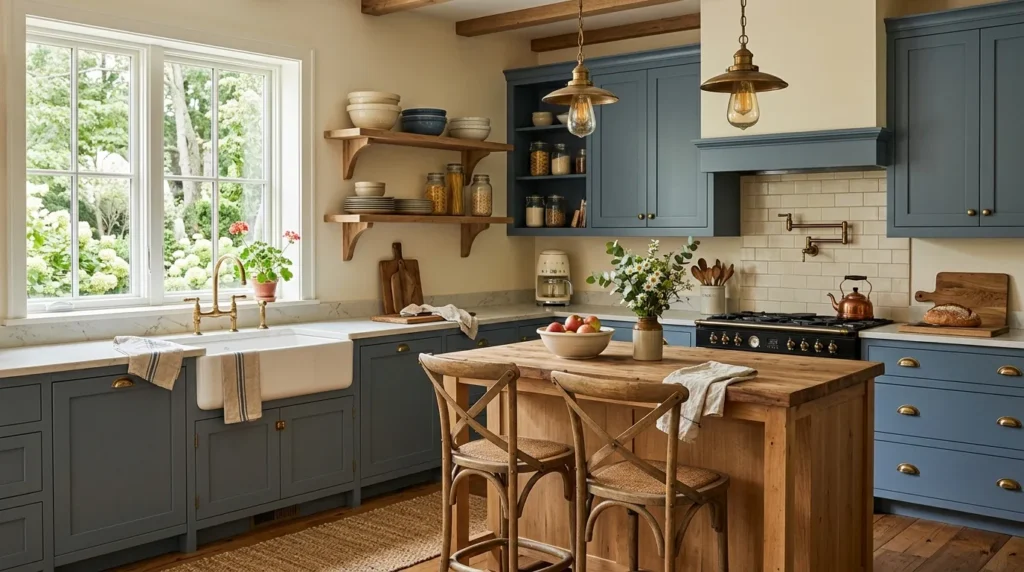
Blue gray cabinetry can give a farmhouse kitchen a fresh update while preserving the comfortable qualities that make farmhouse design so appealing.
Instead of relying entirely on white cabinets, blue gray introduces subtle color and depth. It works beautifully alongside farmhouse staples such as apron-front sinks, wood islands, simple tile, vintage-inspired lighting, and natural textiles.
The result doesn’t have to feel rustic or overly themed. With restrained accessories and classic materials, blue gray can make the kitchen feel collected and current while still maintaining traditional charm.
How To Style It
Combine blue gray cabinets with a farmhouse sink, light stone countertop, and natural wood island. Aged brass or black hardware can provide contrast depending on the desired mood.
Use open shelving to display everyday ceramics and wooden boards. Linen towels, woven baskets, and simple botanical touches can add warmth.
For the backsplash, white subway tile or handmade-looking neutral tile keeps the room classic. Add a vintage-style pendant or lantern fixture to complete the look without overdecorating.
How To Choose the Right Blue Gray Cabinet Color
Blue gray isn’t one single color. Some shades lean strongly toward blue, while others contain enough gray to appear almost neutral. Before painting or ordering cabinets, test your preferred color in the actual kitchen.
Check it in morning and evening light. Natural light changes throughout the day, and artificial bulbs can alter the appearance even further.
Place samples beside your countertop. A blue gray that looks beautiful on a paint card may clash with a warm beige stone or cool white quartz.
Consider your flooring. Warm wood flooring can make a cool cabinet shade feel more balanced, while gray flooring may reinforce the cooler side of the color.
Don’t skip large samples. Small paint chips can be misleading. A larger sample gives you a much better sense of how the color will behave across a cabinet door.
Think about the rest of the room. Backsplash tile, wall color, appliances, lighting, and hardware all influence the final appearance.
A little testing upfront can save a lot of frustration later.
FAQ
Are blue gray kitchen cabinets timeless?
Blue gray cabinets can have a timeless quality because the color sits between a traditional neutral and a more noticeable accent color. Choosing a muted shade, classic cabinet profile, and simple hardware can help the kitchen remain adaptable as trends change. The surrounding materials also matter, so timelessness comes from the entire combination rather than the paint color alone.
What colors go well with blue gray kitchen cabinets?
Blue gray works especially well with white, cream, warm wood, natural stone, brass, black, and soft neutral tones. The best pairing depends on whether the blue gray leans warm, cool, light, or dark. Warm materials such as oak and brass can help balance a particularly cool shade.
Is blue gray good for a small kitchen?
Yes. Lighter blue gray shades can work beautifully in smaller kitchens because they add color without the visual weight of very dark cabinetry. If you prefer a deep blue gray, consider using it on an island or lower cabinets while keeping upper cabinets and walls lighter to maintain a sense of openness.
What hardware looks best with blue gray cabinets?
Aged brass, brushed brass, nickel, chrome, and matte black can all work with blue gray cabinets. Brass provides warm contrast, while silver-toned metals create a cooler and more understated appearance. Black hardware offers stronger definition and can be especially effective in modern or farmhouse kitchens.
Do blue gray cabinets work with wood floors?
Absolutely. Wood floors are one of the easiest ways to balance the cool undertones of blue gray cabinetry. Warm oak and walnut can make the kitchen feel especially inviting, while lighter wood creates a more airy appearance. Consider the undertone of the floor when selecting your cabinet color.
Should blue gray cabinets be paired with white countertops?
White countertops are a classic pairing because they provide brightness and contrast. This is especially helpful with medium and dark blue gray cabinets. If you want a softer look, choose a warm white or lightly veined surface rather than a stark, cool white.
Will blue gray cabinets look blue or gray?
That depends on the exact paint color and the lighting in your kitchen. Natural daylight, artificial bulbs, nearby wall colors, countertops, and flooring can all influence how the color appears. The safest approach is to test a large sample in the room before making a final decision.
Related Articles
- Timeless Kitchen Cabinet Colors for Every Home
- Beautiful Two-Tone Kitchen Cabinet Ideas
- Warm White Kitchen Ideas With Classic Style
- Kitchen Island Color Ideas for a Stylish Home
- Farmhouse Kitchen Ideas With Modern Charm
Conclusion
Blue gray kitchen cabinets offer a beautiful middle ground for homeowners who want more personality than a standard neutral without choosing an overly bold color. Their versatility allows them to work across farmhouse, coastal, traditional, transitional, and modern spaces.
The key is choosing the right shade for your kitchen. Soft blue gray can keep a small room bright and airy, while deeper slate shades can create a dramatic and sophisticated atmosphere. If you’re hesitant about using the color throughout the entire kitchen, a blue gray island or lower cabinets can give you the look with less commitment.
From there, the supporting materials make all the difference. White countertops create crisp contrast, natural wood adds warmth, and brass hardware brings an inviting glow. Simple backsplash tile and carefully selected lighting can keep the overall design balanced.
Before committing to a cabinet color, always test it in your own space and view it under different lighting conditions. A shade that looks perfect online can behave very differently beside your countertop or flooring.
With the right combination of color, materials, and classic details, blue gray cabinetry can create a kitchen that feels current today while remaining beautiful for years to come.