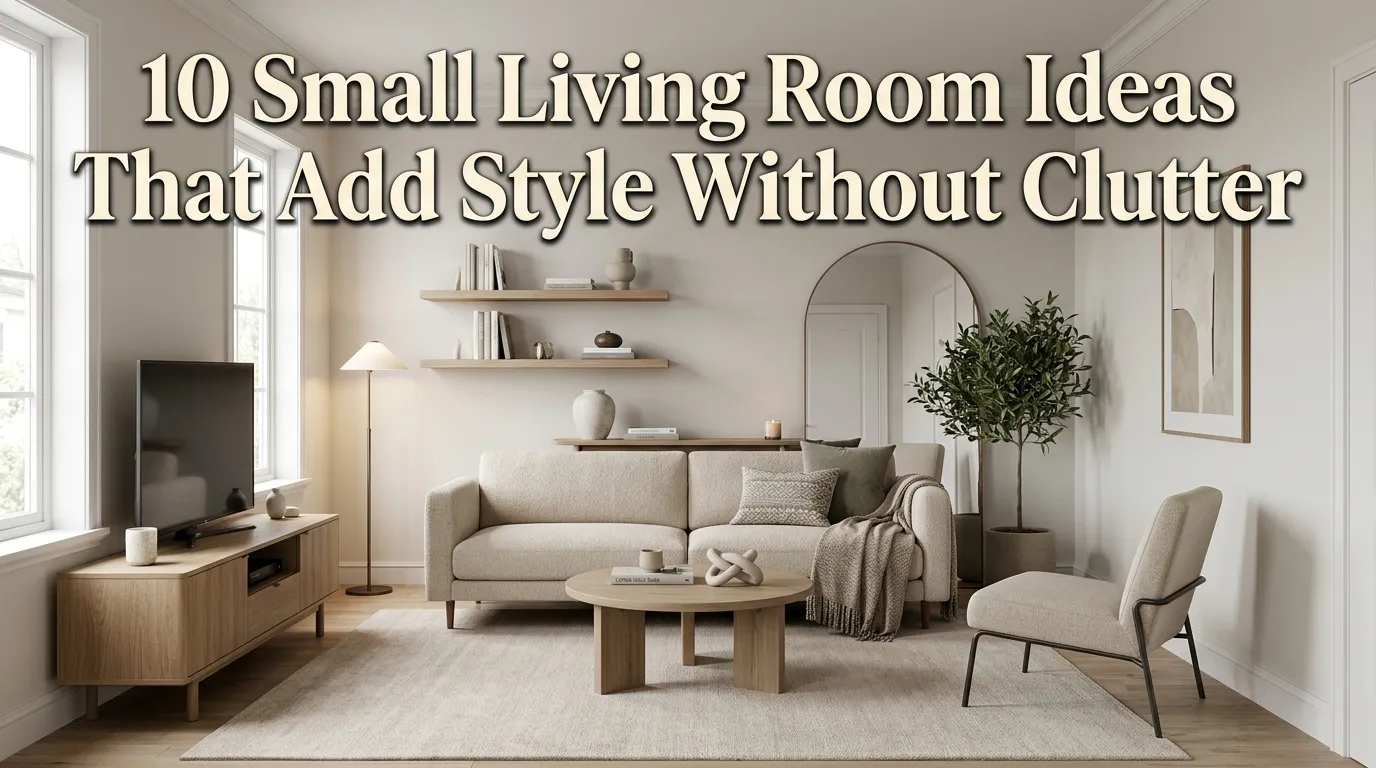
10 Small Living Room Ideas That Add Style Without Clutter
If you’ve ever stood in the middle of your living room wondering how a space this small can feel this chaotic, you’re not alone. I’ve worked with more compact living rooms than I can count, and the complaint is almost always the same: not enough square footage, too much stuff, and a layout that never quite feels finished. The good news is that a small living room doesn’t have to feel small. In my experience, the rooms that feel the most cramped usually aren’t lacking space — they’re lacking a strategy.
Small living room ideas get thrown around a lot on Pinterest, but most of them stop at “use a mirror” or “keep it light.” That’s a start, but it’s not the whole picture. A living room that actually functions well in a tight footprint needs a plan for furniture scale, storage, lighting, texture, and visual flow — all working together instead of fighting each other.
That’s exactly what this guide is built around. I’ve pulled together ten ideas that I’ve seen work again and again in real homes, not just in styled photos. Some of them are about furniture choices. Others are about how you layer light, color, and texture to make a room breathe. A mistake many homeowners make is trying to fix a small room by removing everything from it, which usually just makes it feel empty and cold rather than open and calm. The better approach is intentional editing — keeping the pieces that earn their place and styling them so the room feels curated instead of crowded.
Whether you’re working with a studio apartment, a starter home, or an awkward rental layout, these ideas are meant to be practical. You’ll find styling logic, material suggestions, and layout advice you can actually use, not just inspiration to scroll past. Let’s get into it.
Table of Contents
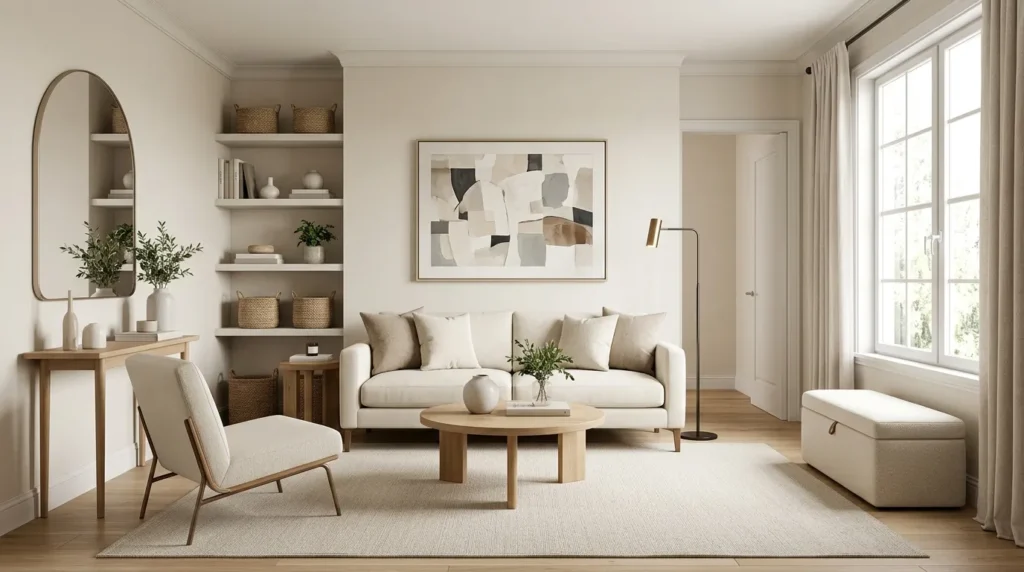
- Multi-Functional Furniture — Choosing pieces that do more than one job to save floor space.
- Vertical Wall Storage — Using height instead of floor area to store and display.
- Light Neutral Palette — Building a color base that makes the room feel open.
- Mirrors For Depth — Placing reflective surfaces to visually expand the room.
- Slim Profile Seating — Selecting furniture silhouettes that don’t overwhelm the space.
- Layered Lighting Design — Combining light sources so the room feels warm, not flat.
- Curated Coffee Table — Styling a central surface without letting it become clutter.
- Floating Shelves — Adding storage and personality without eating up square footage.
- Rugs That Define Space — Using scale and placement to anchor the room.
- Textiles For Warmth — Layering soft materials so the space feels finished, not sparse.
- Statement Wall Accent — Drawing the eye to one focal point instead of many small ones.
1. Multi-Functional Furniture
Quick Benefits
- Reduces the total number of pieces needed in the room
- Adds hidden storage without visual bulk
- Makes the space feel more organized
- Works well for entertaining and everyday use
- Adapts as your needs change over time
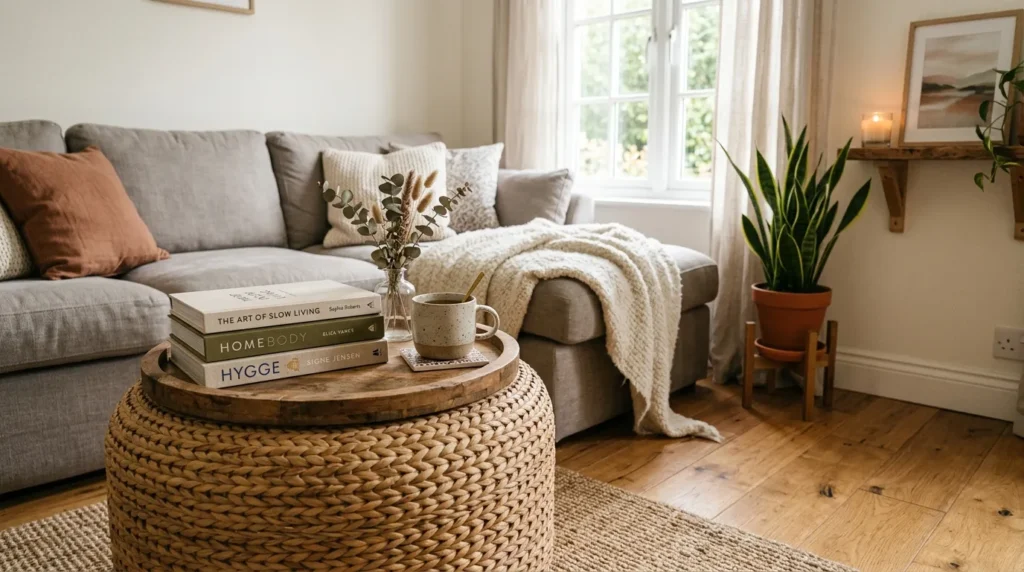
Why It Works In a small living room, every piece of furniture has to earn its spot twice. I’ve noticed that the rooms that feel the most put-together are almost never the ones with the most furniture — they’re the ones where each piece is doing double duty. A storage ottoman that works as a coffee table, extra seating, and a blanket bin is a perfect example. It removes the need for a separate storage cabinet, which means one less large object competing for floor space. Multi-functional furniture also tends to have a lower visual profile than a room full of single-purpose pieces, which keeps sightlines open and the room feeling calmer.
How To Style It Start with a storage ottoman or bench in a neutral upholstery so it blends with your existing seating rather than competing with it. A console table with drawers can replace both a side table and a catch-all tray by the entry. If you’re working with a sleeper sofa or daybed, choose one with clean, tailored lines rather than an overstuffed silhouette, since bulkier shapes read as heavier in a small footprint. Nesting tables are another easy win — they separate for entertaining and tuck away when you need the floor space back.
2. Vertical Wall Storage
Quick Benefits
- Frees up floor space for movement
- Draws the eye upward, making ceilings feel taller
- Provides storage without a bulky footprint
- Creates opportunities for display and personality
- Keeps clutter off tables and counters
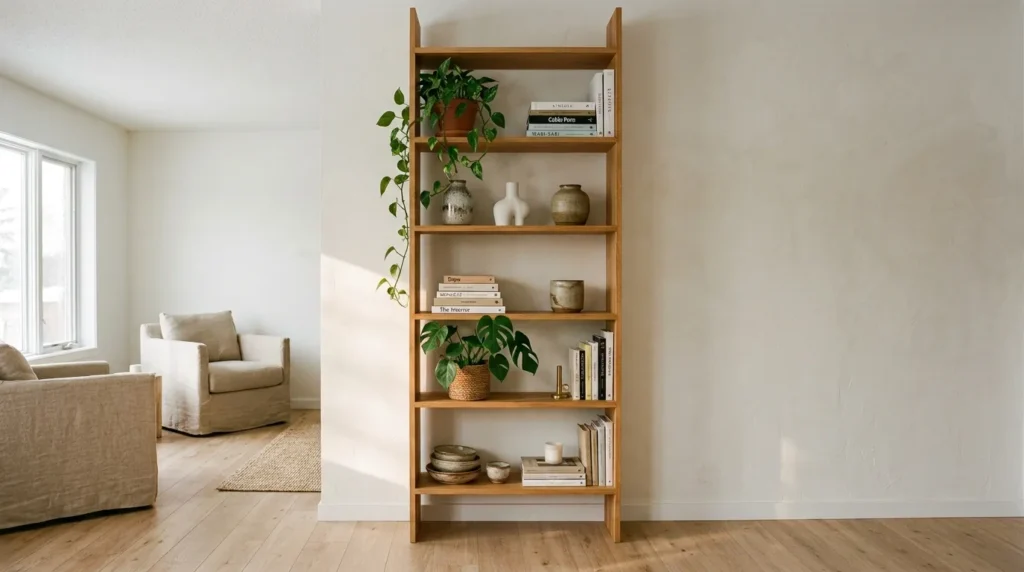
Why It Works One simple trick I always suggest for small rooms is to stop thinking in square footage and start thinking in cubic footage. Most small living rooms have plenty of unused vertical space, even when the floor plan feels tight. Tall, narrow shelving units use a fraction of the footprint that a low, wide bookcase does, while often holding just as much. Vertical storage also has a psychological effect — when the eye travels upward instead of stopping at eye level, the whole room reads as taller and more open, even if the actual dimensions haven’t changed at all.
How To Style It Choose a tall bookshelf or ladder shelf that’s narrow in depth, ideally 10 to 12 inches, so it doesn’t intrude into the walking path. Wall-mounted cabinets above a console or media unit are another strong option, especially in a room without a coat closet nearby. When styling the shelves themselves, group items in threes, mix in a few books stacked horizontally, and leave some breathing room between groupings so the storage doesn’t read as cluttered from across the room.
3. Light Neutral Palette
Quick Benefits
- Reflects more natural and artificial light
- Makes walls feel like they recede rather than close in
- Creates a flexible backdrop for changing decor
- Pairs easily with almost any furniture style
- Reduces visual noise in a small footprint
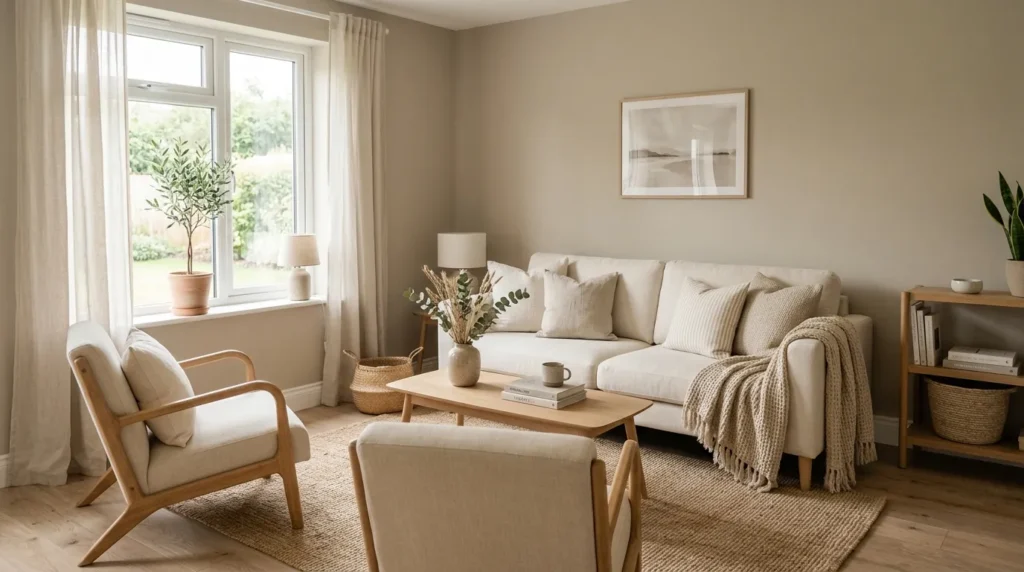
Why It Works A light neutral palette is one of the most reliable small living room ideas because it directly addresses how light behaves in a room. Darker colors absorb light, which can make walls feel like they’re pressing inward, especially in rooms with limited natural light. Soft whites, warm greiges, and light oatmeal tones bounce light around the space instead, which creates the illusion of more square footage than you actually have. That’s why many designers recommend starting with the walls and largest upholstered pieces in a light neutral before introducing any bolder color.
How To Style It Choose a warm white or soft greige for the walls rather than a stark, cool white, which can feel sterile in a small space. Keep your sofa and largest furniture pieces in a similar tonal family so the room reads as one continuous space rather than a series of separate blocks. Introduce color and pattern through pillows, art, and a rug instead, which lets you change the mood of the room seasonally without repainting or reupholstering anything.
4. Mirrors For Depth
Quick Benefits
- Visually doubles the sense of space
- Bounces natural light deeper into the room
- Adds a decorative focal point
- Works in nearly any design style
- Requires no floor space to install
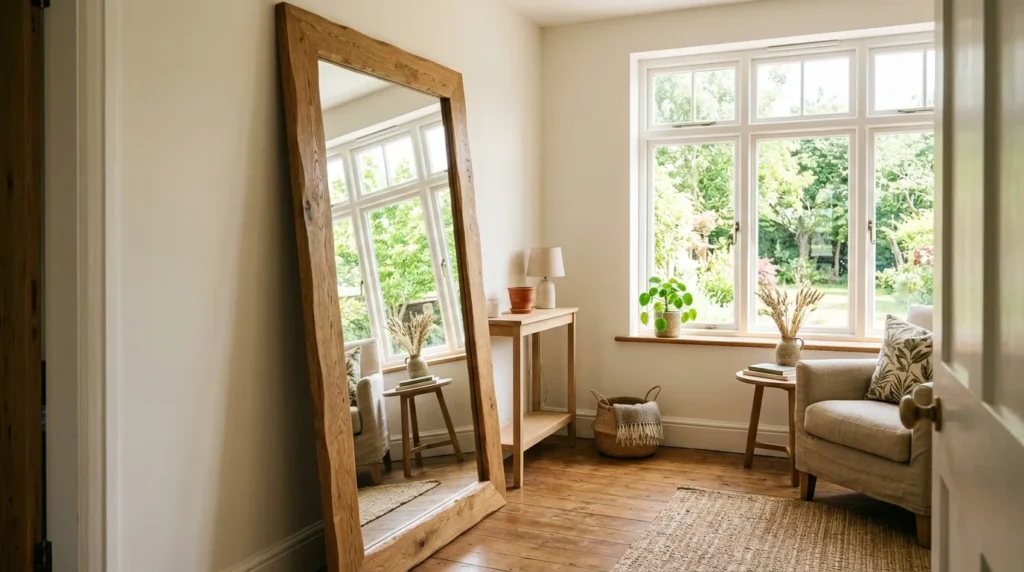
Why It Works I’ve seen this idea transform spaces more than almost any other on this list. A well-placed mirror doesn’t just reflect light — it reflects the room itself, which tricks the eye into perceiving twice the depth. In a small living room, this matters more than most people realize, because it’s one of the only tricks that adds a sense of scale without adding a single physical object to the floor. Mirrors positioned across from a window are especially effective, since they pull daylight from one side of the room to the other.
How To Style It A large leaning mirror against the wall opposite your main window will do more for the room than several smaller mirrors scattered around. If floor space is too tight for a leaning mirror, a wide wall-mounted option above the sofa or console works just as well. Avoid placing a mirror directly across from a cluttered wall or an unattractive view, since it will reflect and effectively double that clutter too.
5. Slim Profile Seating
Quick Benefits
- Leaves more open floor space for walking
- Makes the room feel proportionate rather than crowded
- Allows for more flexible furniture arrangements
- Pairs well with layered textiles for comfort
- Suits both modern and traditional styles
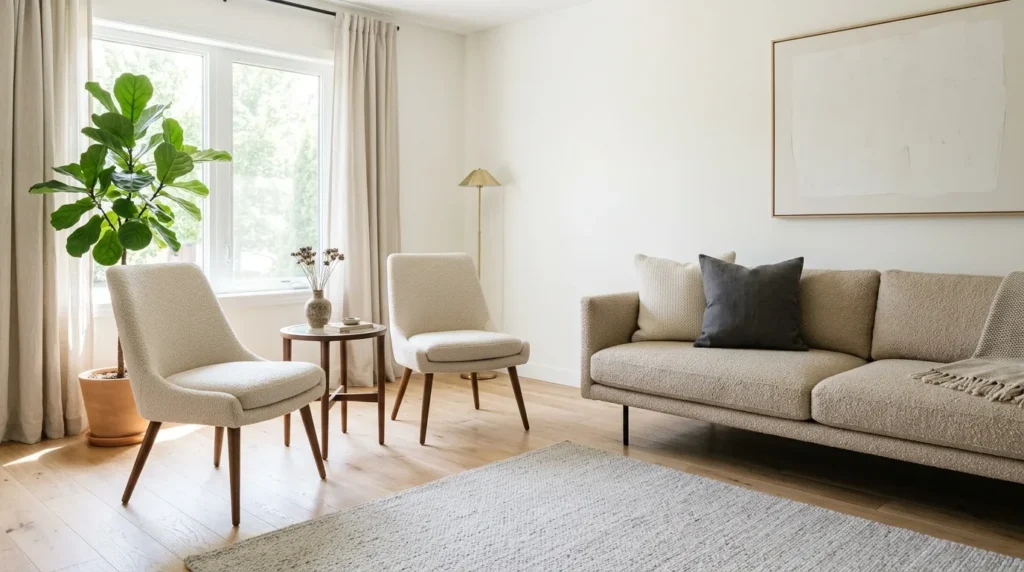
Why It Works A common mistake many homeowners make is choosing a deep, oversized sofa because it looks comfortable in a showroom, without considering how it will scale in an actual small room. Slim profile seating — sofas and chairs with tapered arms, raised legs, and a lower overall depth — takes up noticeably less visual and physical space while still offering real comfort. Furniture with visible legs is especially effective because it lets light and floor pass underneath, which keeps the room feeling open rather than grounded and heavy.
How To Style It Look for a sofa with an arm width of 6 inches or less and a seat depth around 20 to 22 inches, which is easier to fit into a tighter layout than a deep sectional. Choose accent chairs with exposed wood or metal legs rather than skirted bases. If you need more seating for guests, a pair of slim accent chairs or poufs that can be pulled in and stored against a wall will flex better than a permanent oversized sectional.
6. Layered Lighting Design
Quick Benefits
- Eliminates harsh, flat overhead lighting
- Creates warmth and depth in the evening
- Highlights specific zones within the room
- Adds ambiance without adding furniture
- Makes photos and everyday moments feel cozier
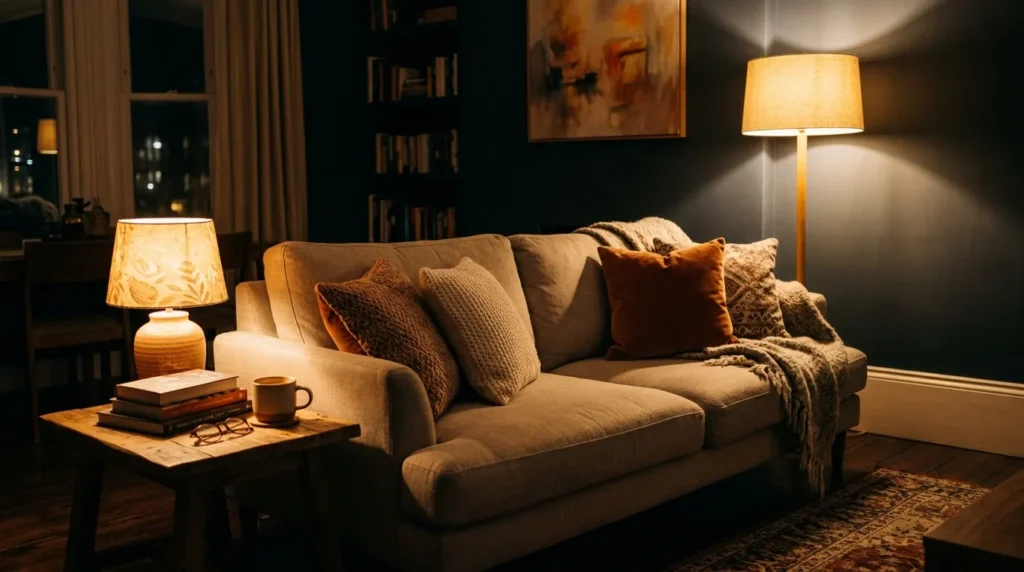
Why It Works One thing that works especially well in small living rooms is moving away from a single overhead light and toward layered lighting instead. A single ceiling fixture tends to flatten a room, casting even light across every surface with no variation. Layered lighting — a mix of floor lamps, table lamps, and small accent lights — creates pockets of brightness and shadow that add dimension. This matters more in a small room than a large one, because depth and shadow are two of the easiest ways to make a space feel larger than its actual dimensions.
How To Style It Add a floor lamp near a reading chair, a table lamp on your console or shelf, and consider a plug-in wall sconce if outlets allow. Aim for warm bulbs in the 2700K to 3000K range rather than cool white light, which tends to feel clinical in a residential space. Turning off the overhead light in the evening and relying on your lamps instead is a simple, no-cost way to instantly make the room feel more intentional.
7. Curated Coffee Table
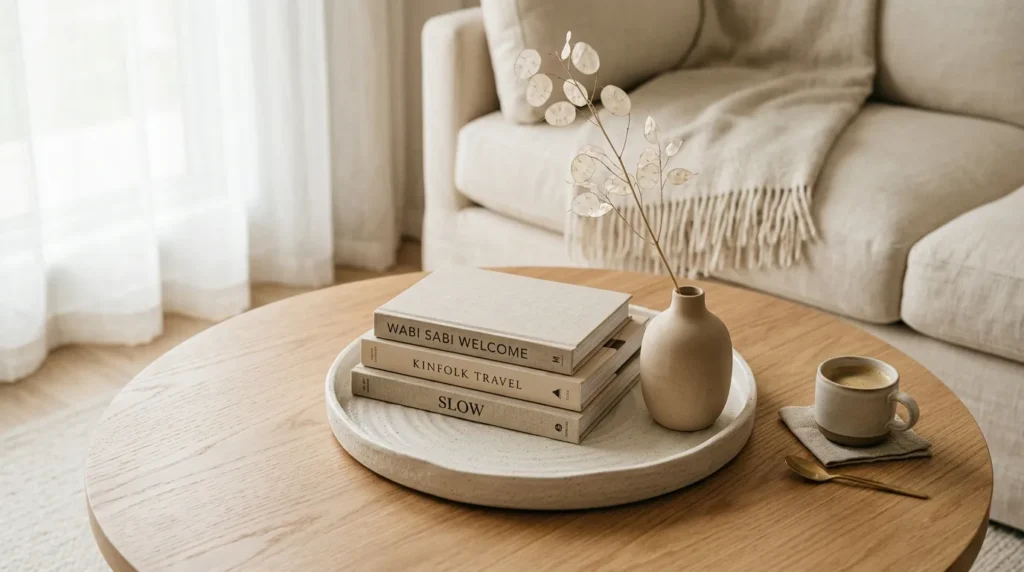
Quick Benefits
- Creates a visual anchor for the seating area
- Prevents the surface from becoming a catch-all
- Adds texture and personality at eye level
- Keeps the center of the room feeling open
- Easy to update seasonally
Why It Works The coffee table is one of the first things guests see, and in a small living room it’s often the piece that determines whether the space feels styled or simply lived-in. A cluttered coffee table pulls focus and makes the whole room feel busier than it actually is, even if everything else is tidy. Curating it with a small, intentional grouping of objects gives the eye a place to land without adding visual noise. In my experience, this is one of the fastest five-minute fixes for a room that feels “off” but you can’t quite pinpoint why.
How To Style It Stick to a simple formula: one tray, one stack of books, and one small object like a candle or a small plant. Keep the tray on one side and let the other side stay open, which prevents the table from feeling symmetrical and static. Choose a coffee table with a lighter visual weight — glass, wood with visible legs, or a woven base — so the table itself doesn’t compete with what’s styled on top of it.
8. Floating Shelves
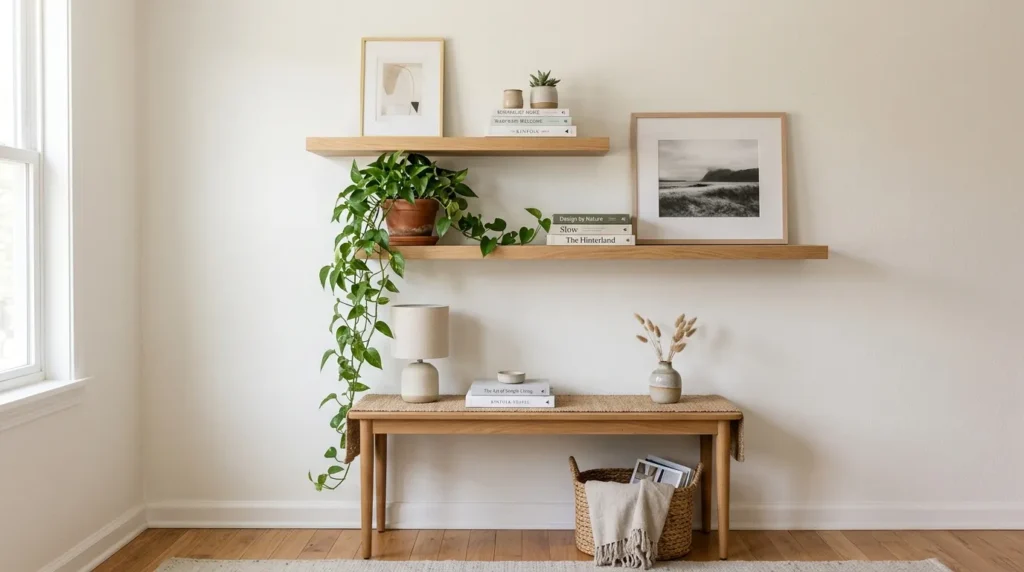
Quick Benefits
- Adds storage without touching the floor
- Creates opportunities for personal styling
- Works well above sofas, consoles, or in corners
- Keeps the room feeling open below eye level
- Inexpensive to install compared to built-ins
Why It Works Floating shelves solve a specific problem in small living rooms: the need for storage and display space without sacrificing floor area. Because they’re mounted directly to the wall with no visible brackets or legs, they read as lighter than a traditional shelving unit, even when they’re holding a similar number of items. That’s why many designers recommend them for rentals and smaller homes specifically — they add function and personality to an otherwise blank wall while leaving the floor plan completely untouched.
How To Style It Install two or three shelves in a staggered arrangement above a sofa or console rather than one long shelf, which creates more visual interest. Style each shelf with a mix of heights — a small plant, a stack of two or three books, and one framed piece of art leaned rather than hung. Leave at least a third of each shelf empty so the styling doesn’t read as crowded, and keep the color palette consistent with the rest of the room so the shelves feel integrated rather than like an afterthought.
9. Rugs That Define Space
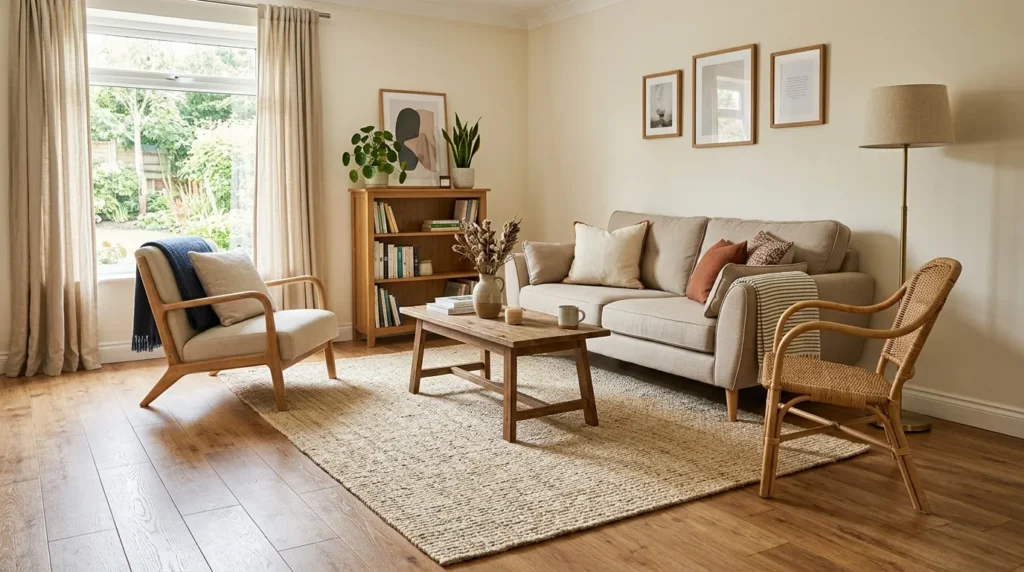
Quick Benefits
- Anchors the seating area visually
- Adds warmth and softness underfoot
- Helps separate zones in an open floor plan
- Introduces color and pattern at a low commitment
- Makes furniture feel grounded rather than floating
Why It Works A rug that’s too small is one of the most common styling mistakes I see in small living rooms, and it’s an easy one to fix. When a rug is undersized, it visually shrinks the seating area and makes the whole room feel disconnected. A properly sized rug does the opposite — it defines the boundaries of the living space and makes the furniture feel like it belongs together, which in turn makes the room feel more intentional and larger overall. This is one of those small living room ideas that has an outsized visual impact for a relatively small cost.
How To Style It As a general rule, aim for at least the front legs of every seating piece to rest on the rug, even in a tight layout. In a small room, a rug that runs nearly wall to wall, leaving a border of 8 to 12 inches of floor visible around the edges, will make the room feel considerably larger than a small, centered rug floating in the middle of the space. Lighter rug colors with subtle pattern tend to work best for keeping the room feeling open.
10. Textiles For Warmth
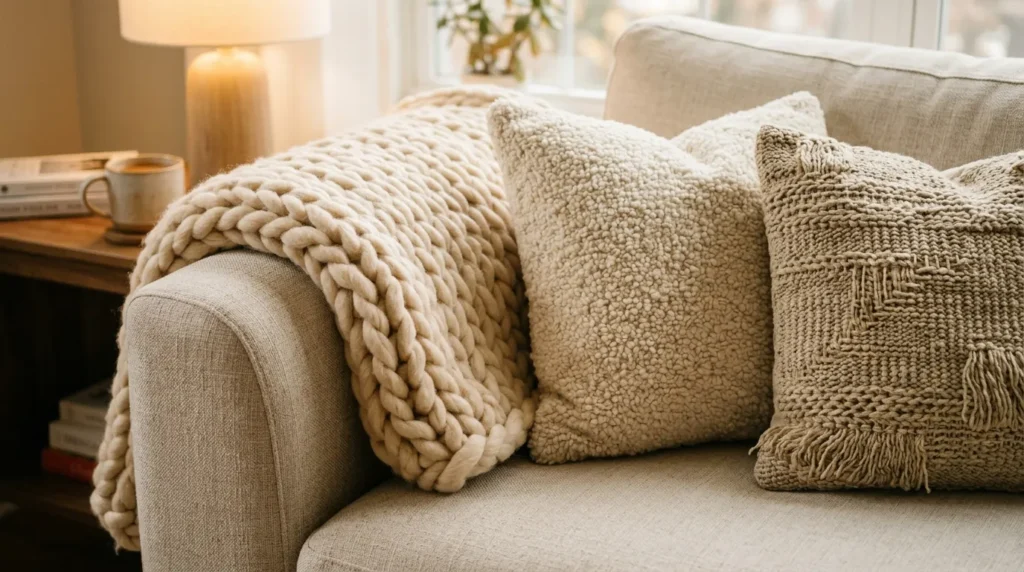
Quick Benefits
- Adds comfort without adding furniture
- Introduces texture that photographs beautifully
- Easy and affordable to swap seasonally
- Softens hard surfaces like wood and glass
- Makes the room feel finished, not sparse
Why It Works If you’re anything like me, you’ve walked into a room that had all the right furniture but still felt unfinished, and textiles are usually the missing piece. Throw pillows, blankets, and window treatments add layers of texture that a room simply can’t achieve with furniture alone. In a small living room, this matters because texture creates visual interest without requiring additional floor space, which makes it one of the most efficient ways to add depth and comfort to a compact room.
How To Style It Choose two to three pillow textures — something woven, something soft like velvet or boucle, and something with a subtle pattern — rather than matching a full set. Drape a throw blanket over one arm of the sofa or across the back rather than folding it flat, which adds movement to the styling. Floor-to-ceiling curtains, hung slightly above the window frame, will also make the ceilings feel taller and the whole room feel more elevated.
11. Statement Wall Accent
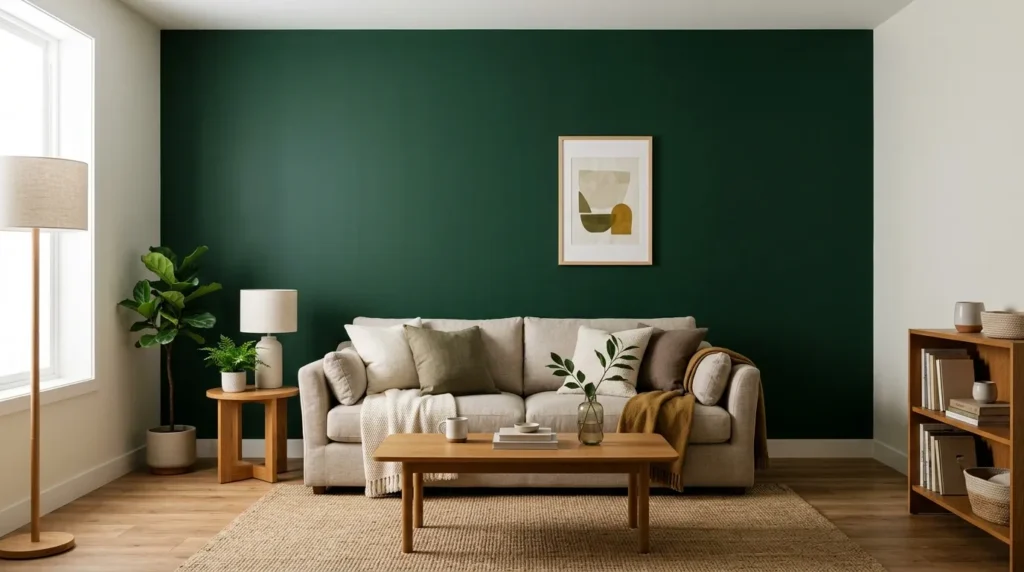
Quick Benefits
- Gives the eye one clear focal point
- Prevents the room from feeling visually scattered
- Adds personality without adding furniture
- Works with paint, wallpaper, art, or texture
- Elevates the whole room’s perceived design level
Why It Works Small rooms often suffer from too many competing focal points rather than too few — a gallery wall here, a bold rug there, a patterned chair in the corner. One statement wall accent solves this by giving the eye a single place to rest, which makes the rest of the room feel calmer by comparison. I’ve noticed that rooms with one strong focal point consistently photograph and feel more polished than rooms with several smaller ones competing for attention, even when the actual amount of decor is similar.
How To Style It Choose one wall — usually the one behind the sofa or the first wall visible from the entry — and commit to a single strong move, whether that’s a deep paint color, a textured wallpaper, or one oversized piece of art. Keep the furniture and other walls in the room simpler and more neutral so the accent wall has room to stand out. Resist the urge to add a second statement moment elsewhere in the room, since that’s what dilutes the effect in the first place.
Frequently Asked Questions
What is the best layout for a small living room? An L-shaped or single-wall furniture arrangement usually works best, with seating pushed toward the walls to keep the center of the room open. Floating a sofa in the middle of a small room can work in some layouts, but it typically only makes sense in larger rooms with enough space to walk comfortably around it.
How do I make a small living room feel bigger without renovating? Focus on light colors, a properly sized rug, mirrors, and slim-profile furniture with visible legs. These changes cost far less than a renovation and address the same core issue, which is how light and sightlines move through the room.
Should I avoid dark colors in a small living room? Not necessarily. A single dark accent wall or dark furniture piece can add depth when balanced with plenty of light elsewhere in the room. The mistake is using dark tones on every surface, which absorbs light and makes the whole room feel smaller.
What size rug works best in a small living room? Choose the largest rug your budget and layout allow, ideally one that fits at least the front legs of your seating on top of it. A rug that’s too small is one of the most common reasons a small living room feels disjointed.
How much furniture is too much for a small living room? If you can’t walk comfortably between pieces or the room feels crowded at a glance, it’s likely too much. A general guideline is one sofa, one or two chairs, one coffee table, and one storage piece, with everything else added only if it earns its place.
Do small living rooms need overhead lighting? Overhead lighting isn’t required and often isn’t the most flattering option. Layered lighting from floor and table lamps tends to create a warmer, more dimensional feel than a single ceiling fixture used on its own.
What’s the biggest mistake people make in small living rooms? Buying furniture that’s scaled for a larger room. Oversized sofas, wide coffee tables, and bulky storage pieces are the most common culprits, and swapping even one for a slimmer alternative can make a noticeable difference.
Final Thoughts
A small living room doesn’t need less personality — it needs a more intentional plan. Every idea in this guide, from layered lighting to a properly sized rug, works because it addresses how the eye actually reads a space, not just how much square footage is available. You don’t need to tackle all ten ideas at once, and honestly, you shouldn’t try to. Start with one or two ideas and gradually build a space that reflects your style and supports everyday comfort.
The rooms that feel the most successful are rarely the ones with the most decor. They’re the ones where every piece, from the coffee table styling to the color on the walls, is working toward the same goal. Give these ideas time to come together, and don’t be afraid to edit as you go. A small living room, styled with intention, can feel just as complete and welcoming as any larger space.
Related Articles
- Cozy Bedroom Ideas For Small Spaces
- Small Apartment Living Room Layouts
- Modern Farmhouse Living Room Decor
- Neutral Home Styling Tips
- DIY Accent Wall Ideas On A Budget