
10 Bedroom Wall Decor Ideas with Unique Textures
Your bedroom walls have a bigger influence on the feel of the room than they often get credit for. A bed, nightstands, and beautiful bedding can create a polished foundation, but the walls are what help tie everything together. When those walls are completely flat and empty, even a well-furnished bedroom can sometimes feel unfinished.
Texture is an easy way to change that.
Instead of relying only on paint color or framed artwork, textured wall decor can add warmth, depth, softness, and character. Think woven materials, natural wood, limewashed finishes, upholstered panels, plaster-inspired surfaces, or layered pieces that catch the light differently throughout the day. The best part is that textured walls can work with many decorating styles, from relaxed coastal bedrooms to modern spaces and cozy farmhouse rooms.
You also don’t need to renovate the entire bedroom to get the effect. A single accent wall behind the bed can be enough to make the room feel intentional. For renters, removable wallpaper, fabric panels, woven wall hangings, and lightweight decorative pieces offer ways to experiment without committing to permanent changes.
I’ve noticed that the most successful bedroom walls usually aren’t the ones with the most decoration. They’re the ones where materials, colors, and scale work together. A simple wall with one beautiful texture can feel much more sophisticated than a collection of unrelated pieces.
In this guide, you’ll find ten ways to bring texture to bedroom walls, along with practical styling ideas, material suggestions, layout tips, and image inspiration. Whether you’re refreshing a primary bedroom, guest room, apartment, or small bedroom, these ideas can help you create a wall that feels comfortable, personal, and visually interesting.
Table of Contents
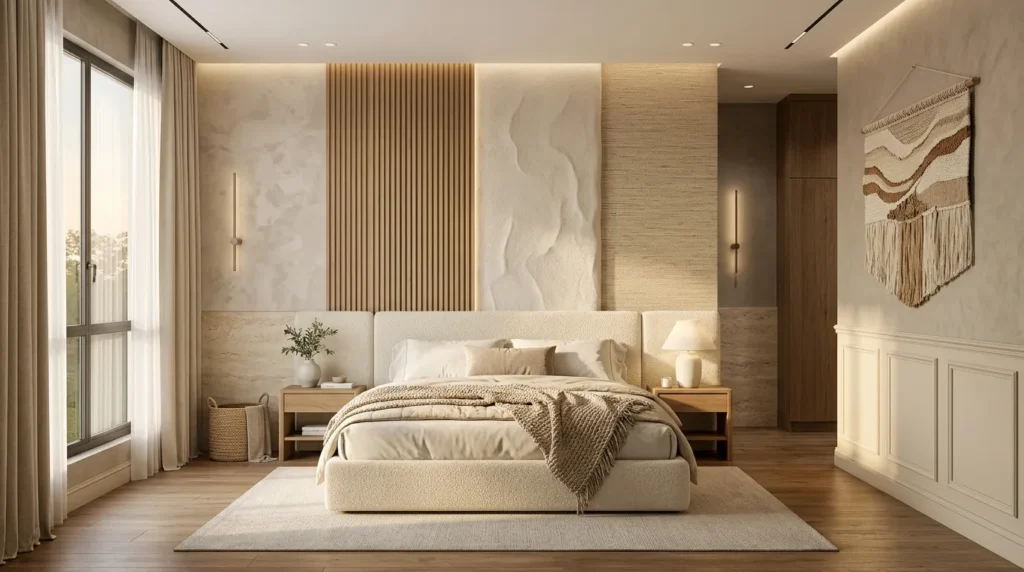
1. Wood Slat Accent
A warm wood treatment adds architectural interest while keeping the bedroom inviting and timeless.
2. Woven Wall Hangings
Natural fibers bring softness and handmade character to otherwise plain walls.
3. Textured Plaster Finish
A subtle plaster-inspired surface creates depth without overwhelming the room.
4. Upholstered Wall Panels
Soft fabric panels add comfort and make the wall behind the bed feel luxurious.
5. Grasscloth Wallpaper
Grasscloth introduces organic texture and an elegant layered look.
6. Fluted Wall Details
Vertical fluting adds rhythm, dimension, and visual height to the bedroom.
7. Layered Textile Art
Fabric-based artwork creates a relaxed, collected feeling with plenty of tactile interest.
8. Stone-Inspired Surface
Stone textures create a grounded, natural backdrop for modern and earthy bedrooms.
9. Decorative Molding
Molding adds architectural character and gives painted walls more dimension.
10. Ribbed Wood Panels
Ribbed panels combine texture and structure for a contemporary statement wall.
1. Wood Slat Accent
Quick Benefits
- Adds warmth and architectural character
- Creates an instant focal point behind the bed
- Works with modern, Scandinavian, rustic, and transitional styles
- Can visually emphasize the height or width of a wall
- Pairs beautifully with neutral bedding and natural materials
Why It Works
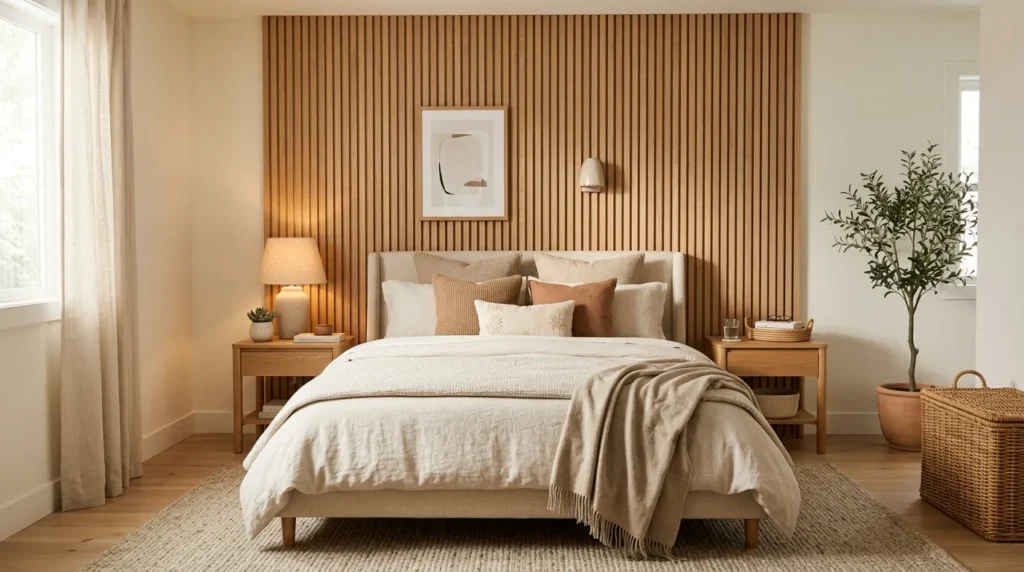
Wood is one of those materials that can make a bedroom feel warmer almost immediately. A slatted wood wall introduces repeated lines and natural grain, giving a flat surface visual depth without requiring a large collection of accessories.
Behind the bed, evenly spaced wood slats can create a strong architectural backdrop while allowing the rest of the room to remain relatively simple. This is particularly useful if your furniture is understated. The wall becomes the design feature rather than competing with the bed, lamps, or artwork.
The color of the wood also matters. Light oak or ash can create an airy Scandinavian feel, while walnut and darker stained woods feel richer and more dramatic. For a relaxed bedroom, natural or lightly finished wood usually works beautifully with linen bedding, woven baskets, ceramic lamps, and soft neutral textiles.
A common mistake is choosing wood that is much darker or more orange than the existing furniture. Before committing, compare a sample against your flooring, bed frame, nightstands, and natural light.
How To Style It
For a balanced look, use the slatted treatment on the wall behind the headboard rather than covering every wall. Keep the spacing consistent and let the natural grain provide most of the visual interest.
A simple upholstered or wooden bed works well in front of it. Add two matching nightstands if you prefer symmetry, then use warm bedside lighting to emphasize the wood texture in the evening.
If your bedroom is small, consider using lighter wood tones and narrower slats. They can add dimension without making the room feel visually heavy. Pair the wall with cream, beige, soft gray, or muted green bedding.
For renters or anyone avoiding permanent construction, wood-look acoustic panels or lightweight decorative slat panels can provide a similar visual effect with a less involved installation.
2. Woven Wall Hangings
Quick Benefits
- Adds softness to hard bedroom surfaces
- Introduces handmade character
- Works especially well with neutral palettes
- Easy to layer with other decor
- Suitable for renter-friendly decorating
Why It Works
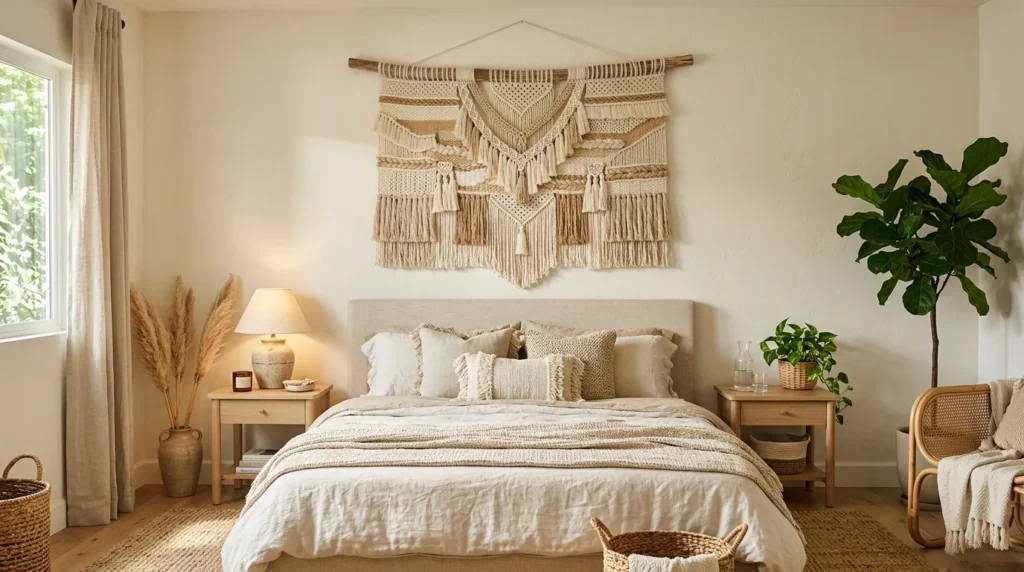
Woven wall decor brings a completely different kind of texture to a bedroom. Instead of architectural texture, it gives the room softness and movement. Materials such as cotton, wool, jute, rattan, and other natural fibers can create subtle variations that make a wall feel more interesting.
This approach works especially well in bedrooms because textiles naturally support a comfortable, relaxed atmosphere. A large woven piece above the bed can act almost like artwork while adding tactile dimension.
For a coastal, bohemian, organic modern, or farmhouse-inspired bedroom, woven textures can connect the wall to other natural materials already in the room. A jute rug, linen bedding, wooden furniture, and woven baskets can all reinforce the same visual language without looking overly coordinated.
Scale is important. A tiny wall hanging can disappear above a king-size bed, while an oversized piece can overwhelm a narrow room. Think about the width of the furniture below it and choose a piece that feels proportionate.
How To Style It
Place one substantial woven wall hanging above the headboard or center it on the wall if the bed sits elsewhere. Look for pieces with varied knots, fringe, loops, or layered fibers if you want stronger texture.
Keep the surrounding wall relatively quiet. Too many small decorative objects can compete with the woven piece and make the wall look cluttered.
For color, natural cream, tan, ivory, and warm beige are easy starting points. If the bedroom already has a neutral palette, consider a woven piece with muted terracotta, olive, charcoal, or dusty blue details.
For a more collected look, you can combine two or three smaller woven pieces of different shapes. Keep a common color family so the arrangement feels intentional rather than random.
3. Textured Plaster Finish
Quick Benefits
- Creates subtle depth across an entire wall
- Gives a handcrafted appearance
- Works with minimalist interiors
- Helps soften the look of plain painted surfaces
- Provides a sophisticated backdrop for simple furniture
Why It Works
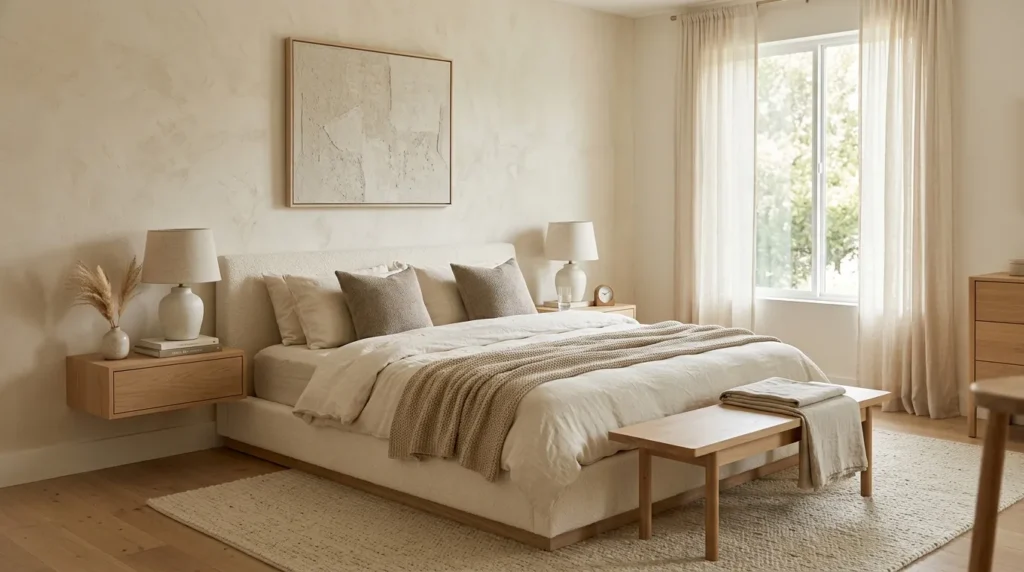
A plaster-inspired wall finish can make a bedroom feel more architectural without adding lots of objects. Instead of creating texture through decoration placed on the wall, the surface itself becomes the decoration.
The beauty of this approach is its subtlety. A softly uneven finish catches natural and artificial light differently throughout the day. In the morning, sunlight may emphasize gentle variations across the wall; in the evening, bedside lamps can create a warmer, more dimensional appearance.
This style is particularly effective in minimalist bedrooms because it gives the room visual interest without introducing patterns. It can also work beautifully with Mediterranean, organic modern, European-inspired, and contemporary interiors.
Warm whites, creamy beige, sandy taupe, and soft gray are popular directions, but the best choice depends on the rest of the room. If your flooring and furniture are warm, a cool gray plaster effect may feel disconnected.
How To Style It
Use the textured finish as a backdrop for a simple bed and restrained accessories. A low-profile upholstered headboard, natural wood nightstands, ceramic lamps, and linen bedding can complement the organic surface.
If you are creating the finish yourself, test the technique on a sample board first. The amount of variation can dramatically change the final appearance.
For a less permanent approach, textured wallpaper with a plaster or handmade-paper appearance can create a similar visual impression.
Avoid placing too many decorative pieces directly against the wall. The point is to allow the surface to remain visible.
One particularly effective approach is to keep the bedding fairly simple and let the changing light reveal the wall texture throughout the day.
4. Upholstered Wall Panels
Quick Benefits
- Adds softness behind the bed
- Creates a comfortable, layered appearance
- Can improve the visual scale of the headboard area
- Available in many fabrics and colors
- Works well in contemporary and traditional bedrooms
Why It Works
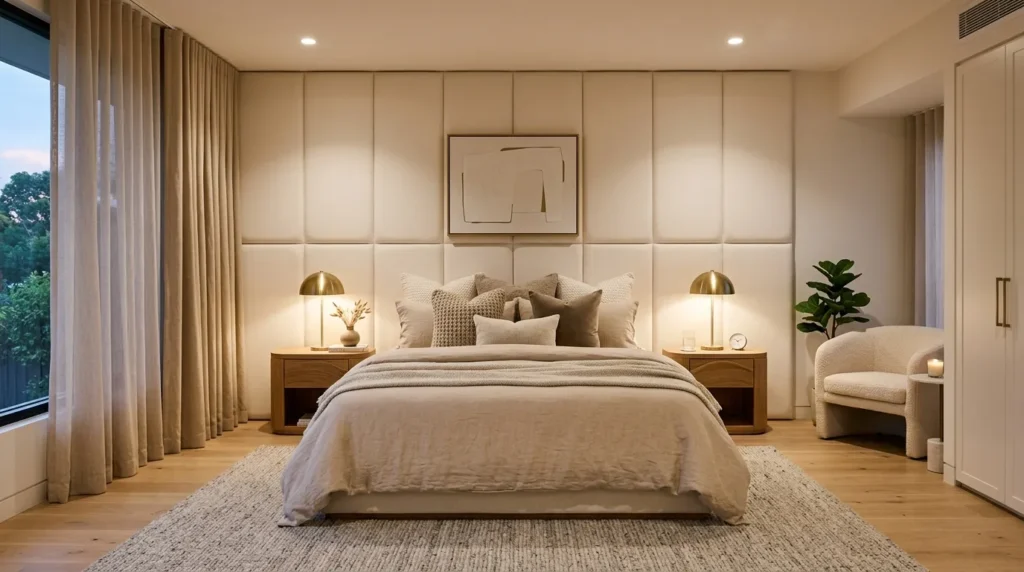
Bedrooms are naturally associated with comfort, so bringing fabric onto the wall can make sense both visually and practically. Upholstered panels create a padded surface that feels softer than paint, wood, or hard decorative materials.
They are particularly effective behind a bed because they can visually extend the headboard area and create a more substantial focal point. Instead of having a small headboard floating against a large blank wall, a series of fabric panels can establish a defined zone.
Velvet creates a more luxurious appearance, while linen and cotton blends tend to feel relaxed and casual. Bouclé can introduce a chunky, tactile quality, while a smooth performance fabric may be easier to maintain in a busy household.
Color can be used strategically. Neutral upholstery keeps the room calm, while muted green, navy, clay, or dusty blue can create a stronger focal point without becoming overly bright.
How To Style It
Start by measuring the width of your bed and deciding how far beyond the mattress you want the panels to extend. A wider arrangement can make the sleeping area feel more substantial.
Keep the panel design relatively simple if you already have patterned bedding. If your bedding is plain, you can choose a fabric with more noticeable texture.
Pair upholstered panels with soft lighting and layered textiles. Linen curtains, a textured rug, and a knitted throw can reinforce the comfortable feeling.
For a rental-friendly project, lightweight fabric-covered acoustic or decorative panels can sometimes provide the visual effect without constructing a permanent built-in wall.
5. Grasscloth Wallpaper
Quick Benefits
- Adds natural fiber texture
- Creates an elegant layered backdrop
- Works beautifully with neutral colors
- Adds subtle pattern without looking busy
- Can complement traditional and modern interiors
Why It Works
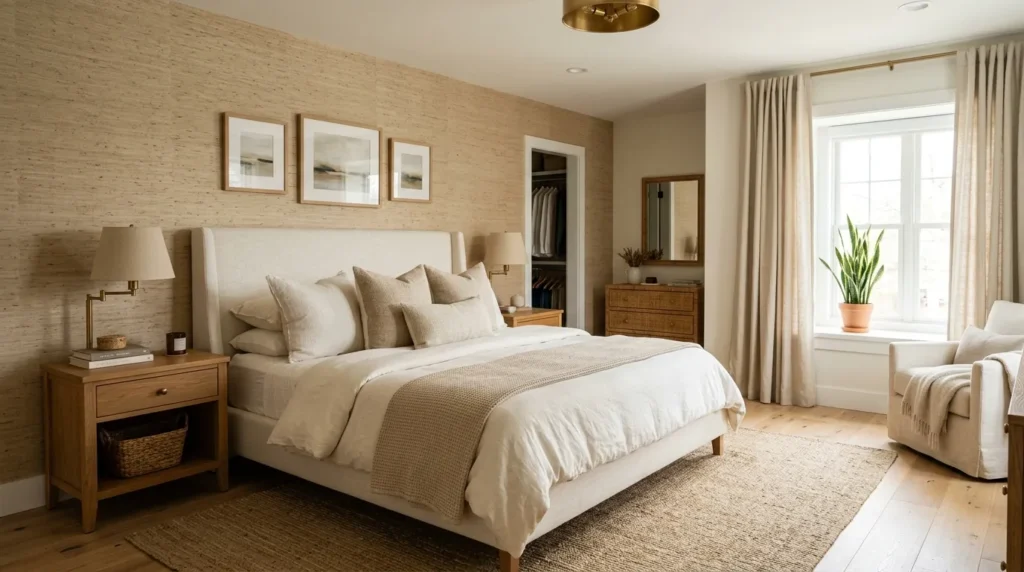
Grasscloth wallpaper is a classic choice when you want wall texture that feels refined rather than heavily decorative. Its natural fibers create small variations in color and surface, giving the wall a depth that ordinary paint cannot provide.
It is especially appealing in bedrooms because the texture tends to read as quiet and sophisticated. Instead of demanding attention, it gives the eye something to notice when viewed up close.
Natural grasscloth often works well with wood furniture, brass lighting, linen fabrics, and woven accessories. It can also soften a room that contains many hard surfaces.
One consideration is maintenance. Natural grasscloth may not be as forgiving as washable vinyl wallpaper, so think about where it will be installed and how the room is used.
How To Style It
Use grasscloth across the wall behind the bed for a focused accent, or cover the entire room if you want a more immersive effect.
For a classic bedroom, pair it with upholstered furniture, traditional lamps, and restrained artwork. For a more contemporary look, combine it with clean-lined furniture and minimal accessories.
Neutral grasscloth is usually the easiest to style because it can work with changing bedding and seasonal decor.
If natural grasscloth isn’t practical for your space, look for vinyl or printed wallpaper designed to imitate woven fibers. These alternatives can offer the visual effect while being easier to clean.
6. Fluted Wall Details
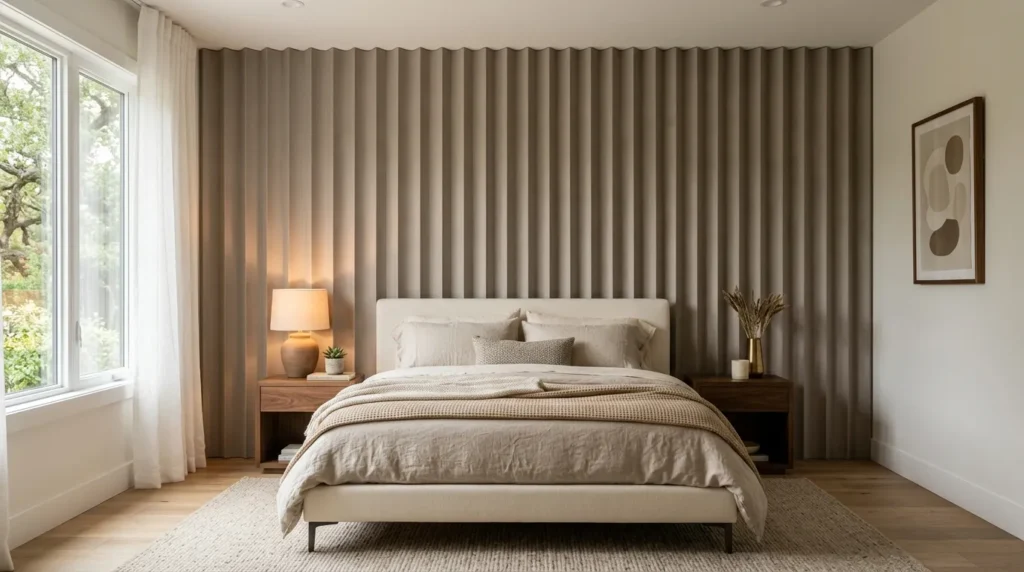
Quick Benefits
- Adds vertical dimension
- Creates a modern architectural effect
- Can make ceilings appear taller
- Provides a strong backdrop for a bed
- Works with contemporary and transitional furniture
Why It Works
Fluted surfaces have a natural sense of rhythm. The repeated grooves create shadows and highlights, making a wall appear more dimensional even when the color remains simple.
Vertical fluting is particularly useful in bedrooms with lower ceilings because the direction of the lines naturally draws the eye upward. It doesn’t physically change the ceiling height, of course, but it can influence how the proportions of the room are perceived.
This texture can be created with wood, MDF, plaster-like materials, decorative panels, or other architectural products. The choice of material affects the overall mood. Natural wood feels warm and organic, while painted fluting can feel cleaner and more contemporary.
How To Style It
Use fluting behind the bed and keep the surrounding furniture relatively streamlined. A low-profile bed can work especially well because the wall provides the vertical element.
For a modern bedroom, try a monochromatic approach where the wall and trim share a similar color. This allows the shadows created by the grooves to provide the visual variation.
For warmth, choose natural wood and pair it with cream bedding, woven accessories, and soft lighting.
Be mindful of scale. Very deep or closely spaced grooves may look dramatic in a showroom but overwhelming in a small bedroom. A sample is worth testing before installing a full wall.
7. Layered Textile Art
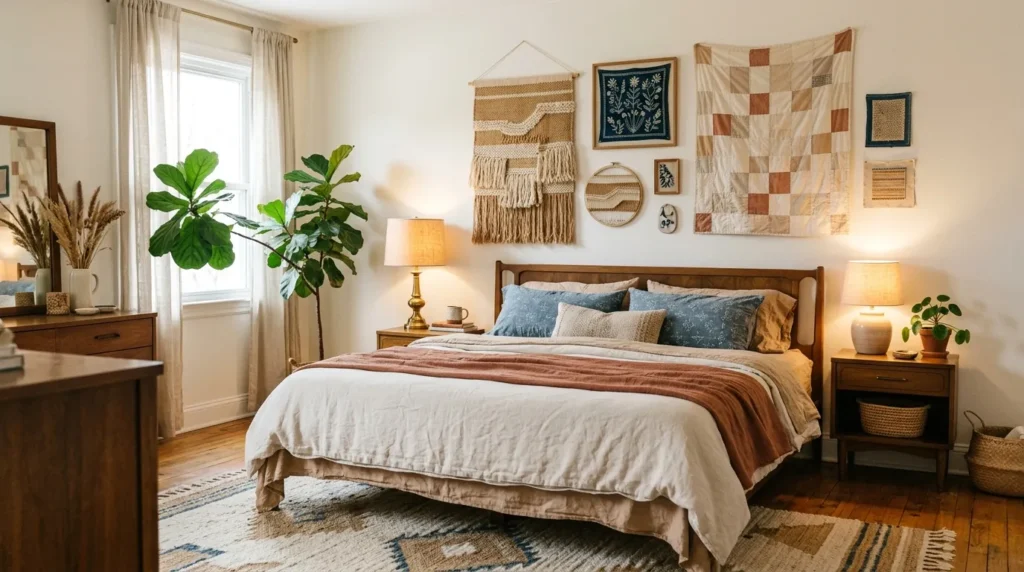
Quick Benefits
- Adds personality without heavy construction
- Creates a soft, collected appearance
- Easy to change over time
- Works well with neutral bedrooms
- Provides opportunities to mix patterns and materials
Why It Works
Not every textured wall needs to be a renovation project. Layered textile art offers a flexible way to bring fabric, fibers, stitching, embroidery, quilts, and other tactile materials into the bedroom.
A textile piece can feel more personal than mass-produced artwork, particularly when it has visible craftsmanship or a story behind it. It also helps soften rooms where the furniture and architecture contain many hard lines.
The key is layering without creating visual chaos. Texture should be noticeable, but the overall composition still needs a sense of order.
This approach works beautifully in eclectic, cottage, bohemian, farmhouse, and collected interiors. It can also bring warmth to an otherwise minimalist room.
How To Style It
Choose one large textile as the main focal point or build a balanced arrangement using several smaller pieces. Keep the color palette connected to the bedding, rug, curtains, or accent furniture.
A quilt can be hung as wall art, while smaller woven or embroidered pieces can be framed or mounted nearby.
If the textile has a lot of pattern, keep the surrounding decor simple. If it is mostly neutral, you can introduce more variation through shape and material.
Position textile art where it can be appreciated from the bed rather than placing it too high on the wall. As with any bedroom artwork, make sure the mounting method is secure.
8. Stone-Inspired Surface
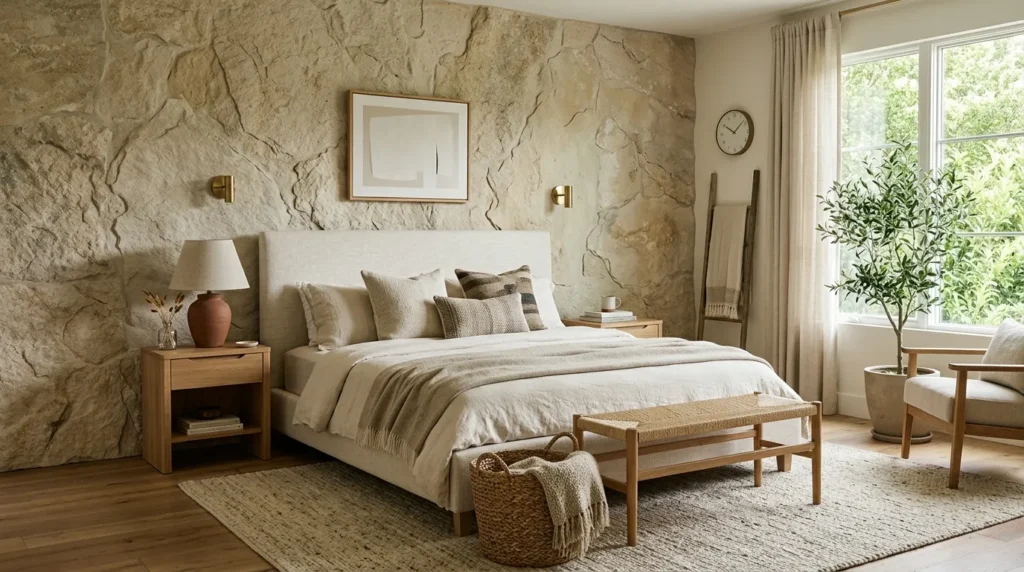
Quick Benefits
- Adds earthy character
- Creates a grounded visual backdrop
- Works with modern and organic interiors
- Pairs naturally with wood and linen
- Makes a strong statement without bright colors
Why It Works
Stone-inspired surfaces bring a sense of permanence and connection to natural materials. In a bedroom, that can create an appealing contrast with soft bedding and upholstered furniture.
You don’t necessarily need actual stone to achieve the effect. Large-format porcelain, textured wall panels, stone-look wallpaper, and plaster treatments can all create variations of the same visual idea.
The most successful stone-inspired bedroom walls usually avoid looking too artificial. Choose materials with subtle variation rather than highly repetitive printed patterns.
Warm limestone, travertine-inspired finishes, muted sandstone, and soft gray stone can all work depending on the room’s palette.
How To Style It
A stone-inspired accent wall works particularly well behind a simple upholstered or wood bed. Let the wall provide the visual weight and keep accessories understated.
Add natural materials such as oak, rattan, linen, wool, and ceramic. These materials create a cohesive connection with the earthy wall.
If the room doesn’t receive much natural light, avoid choosing an extremely dark stone finish. Mid-tone warm neutrals can provide texture while keeping the room comfortable.
For a small bedroom, consider using stone texture only in a defined area rather than covering every wall.
9. Decorative Molding
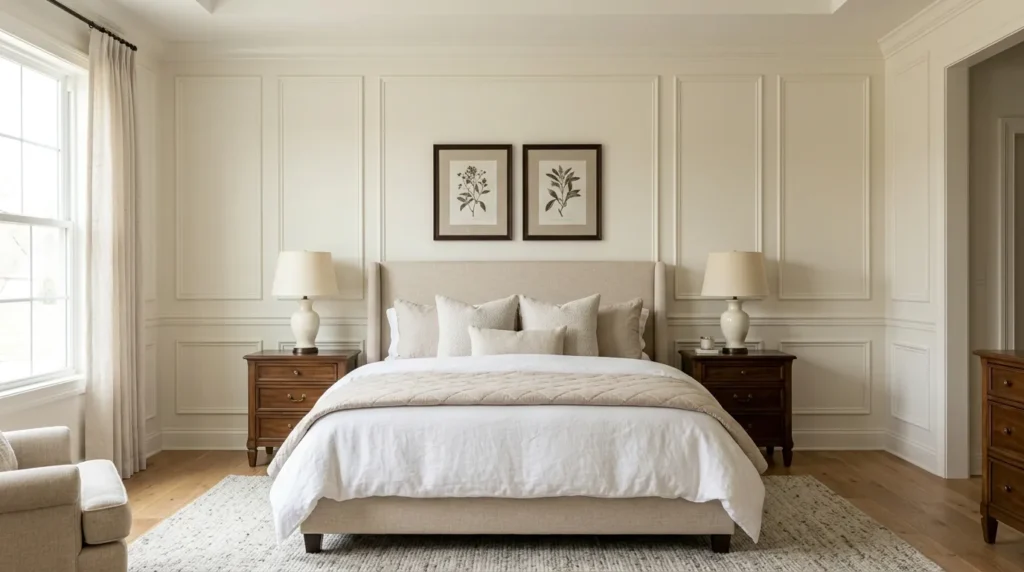
Quick Benefits
- Adds architectural detail
- Works with many decorating styles
- Can make plain walls look custom
- Provides structure for artwork
- Can be painted for a seamless effect
Why It Works
Decorative molding is one of the most versatile ways to create wall dimension. Unlike a heavily textured surface, molding adds structure and geometry. The shadows around each frame or panel provide subtle depth while the overall wall can remain the same color.
This approach works particularly well in traditional, transitional, English-inspired, French-inspired, and modern classic bedrooms. It can also be adapted for contemporary spaces by using simple rectangular profiles.
Painting the molding and wall the same color creates a sophisticated monochromatic effect. Using contrasting colors makes the architectural detail more noticeable.
A mistake many homeowners make is using too many small panels on a large wall. Scale matters. Larger, well-proportioned rectangles often look more intentional than a crowded arrangement.
How To Style It
Begin by mapping the wall with painter’s tape before installing anything. This lets you test the proportions and see how the molding relates to the bed, nightstands, doors, and windows.
Keep the panels symmetrical if you prefer a classic appearance. For a more contemporary approach, use fewer, larger shapes.
A painted monochromatic wall pairs beautifully with an upholstered headboard and simple artwork. If you want the molding to stand out, use a slightly different sheen or color.
The surrounding decor should support the geometry rather than compete with it. Simple lamps, restrained artwork, and soft bedding usually provide enough contrast.
10. Ribbed Wood Panels
Quick Benefits
- Creates strong tactile dimension
- Adds warmth and movement
- Works especially well as a statement wall
- Combines texture with natural material
- Fits modern, organic, and contemporary bedrooms
Why It Works
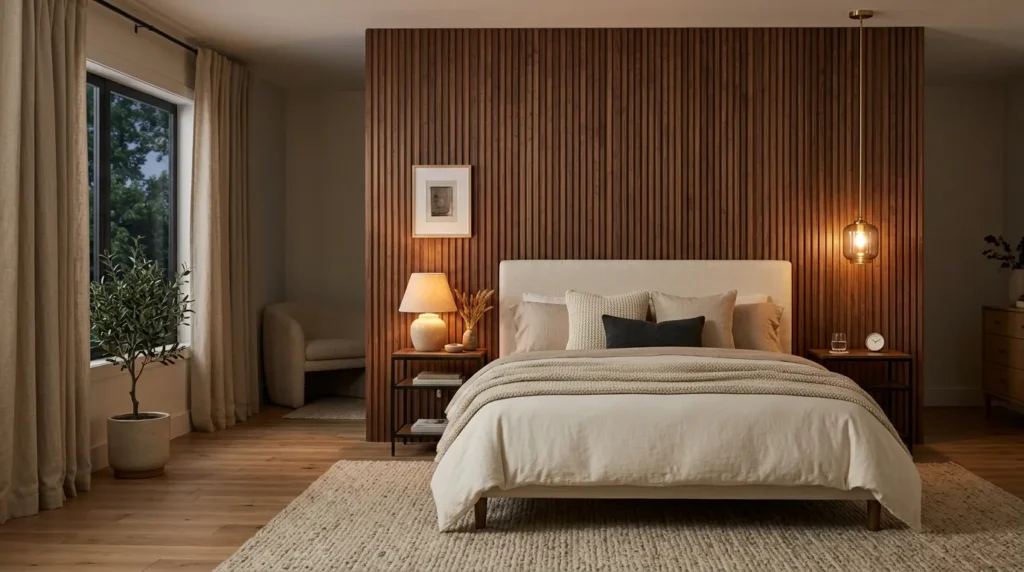
Ribbed wood panels create a deeper and more sculptural effect than a flat wood wall. The repeated rounded or narrow ribs catch light and shadow, making the surface change as you move through the room.
This is a strong choice if you want your bedroom wall to function almost like architectural artwork. It can look sophisticated without relying on bold color.
Natural wood tones are ideal for organic modern rooms, while painted ribbed panels can create a more streamlined contemporary appearance.
Because the pattern is repetitive, the wall already has plenty of visual activity. That’s why it generally looks best when the furniture in front of it is simple.
How To Style It
Place ribbed panels behind the bed and allow the texture to extend slightly beyond the headboard on each side. This creates a deliberate visual zone.
Pair the wall with a simple upholstered bed, minimal nightstands, and warm bedside lamps. Linen bedding and a textured area rug can add additional layers without fighting the wall treatment.
For a darker, moodier bedroom, walnut or deep-stained wood can create a dramatic backdrop. Balance it with lighter bedding and warm lighting.
In a bright bedroom, pale oak or natural wood can preserve an airy feeling while still providing the dimension you’re looking for.
FAQ
What is the easiest way to add texture to a bedroom wall?
The easiest options are usually woven wall hangings, textile art, textured wallpaper, or removable decorative panels. These approaches can add noticeable dimension without requiring a full renovation. If you’re renting, focus on lightweight pieces and removable products. For homeowners, a single accent wall behind the bed is often enough to create a finished look without changing the entire room.
What wall texture looks best behind a bed?
The best choice depends on the bedroom’s style. Wood slats and ribbed panels work well in modern and organic spaces, while upholstered panels provide a softer look. Decorative molding suits traditional and transitional bedrooms, and plaster-inspired finishes work beautifully in minimalist rooms. The scale of the texture should also match the size of the bedroom and bed.
How can I make a small bedroom wall look more interesting?
Choose texture that adds dimension without visually overwhelming the room. Light-colored wood, subtle plaster finishes, narrow vertical fluting, and simple woven artwork are good options. Keeping the wall and surrounding decor within a cohesive color palette can also make the space feel calmer and more spacious.
Can textured walls work with neutral bedroom decor?
Absolutely. In fact, neutral bedrooms are often where texture makes the biggest difference. When color variation is limited, materials such as wood, linen, woven fibers, plaster, upholstery, and molding give the eye something to explore. Layering several subtle textures can make a neutral room feel warm and finished without introducing strong colors.
Are textured wall treatments difficult to maintain?
Maintenance depends on the material. Painted molding and smooth textured wallpaper can be relatively easy to clean, while natural grasscloth and delicate textiles require more care. Wood panels should be maintained according to their finish. Before choosing a material, consider dust, humidity, pets, children, and how frequently the wall may need cleaning.
Should bedroom wall texture match the furniture?
It doesn’t need to match exactly. A better approach is to coordinate materials and tones. For example, natural wood wall panels can complement a wooden nightstand without being identical. Similarly, an upholstered wall can repeat the softness of the headboard or curtains. The goal is to create relationships between materials rather than making every element look like part of one matching set.
Is one textured accent wall enough?
Yes. One well-designed textured wall can completely change the character of a bedroom. The wall behind the bed is usually the most natural location because it already functions as the room’s primary focal area. Keeping the other walls simpler can actually make the texture more noticeable and prevent the room from feeling visually crowded.
Conclusion
Bedroom walls don’t have to remain a blank background. With the right texture, they can become one of the most inviting and memorable parts of the room.
The best choice depends on the feeling you want to create. Wood brings warmth and natural character. Woven materials add softness and handmade appeal. Plaster-inspired finishes provide subtle depth, while upholstered panels create a comfortable, luxurious backdrop. Molding gives traditional rooms architectural structure, and fluted or ribbed surfaces can bring a modern bedroom to life.
You also don’t have to tackle a major renovation to get started. A large woven wall hanging, textile artwork, textured wallpaper, or a carefully chosen accent panel can make a meaningful difference. If you own your home, more permanent treatments such as wood slats, decorative molding, or custom upholstery can create an even stronger focal point.
Start with the wall behind the bed and consider the room as a whole. Look at your flooring, bedding, furniture, lighting, and natural light before choosing a material. The goal isn’t to add texture simply for the sake of texture. It’s to create layers that make the bedroom feel comfortable, cohesive, and personal.
Choose one or two ideas that fit your existing style, then build from there. A thoughtful combination of materials can turn an ordinary bedroom wall into a feature you’ll enjoy every day.
Related Articles
- Cozy Bedroom Ideas for a Warm and Relaxing Space
- Small Bedroom Decorating Ideas That Maximize Space
- Modern Farmhouse Bedroom Ideas for a Timeless Look
- Neutral Bedroom Ideas With Layered Textures
- DIY Accent Wall Ideas for Every Decorating Style