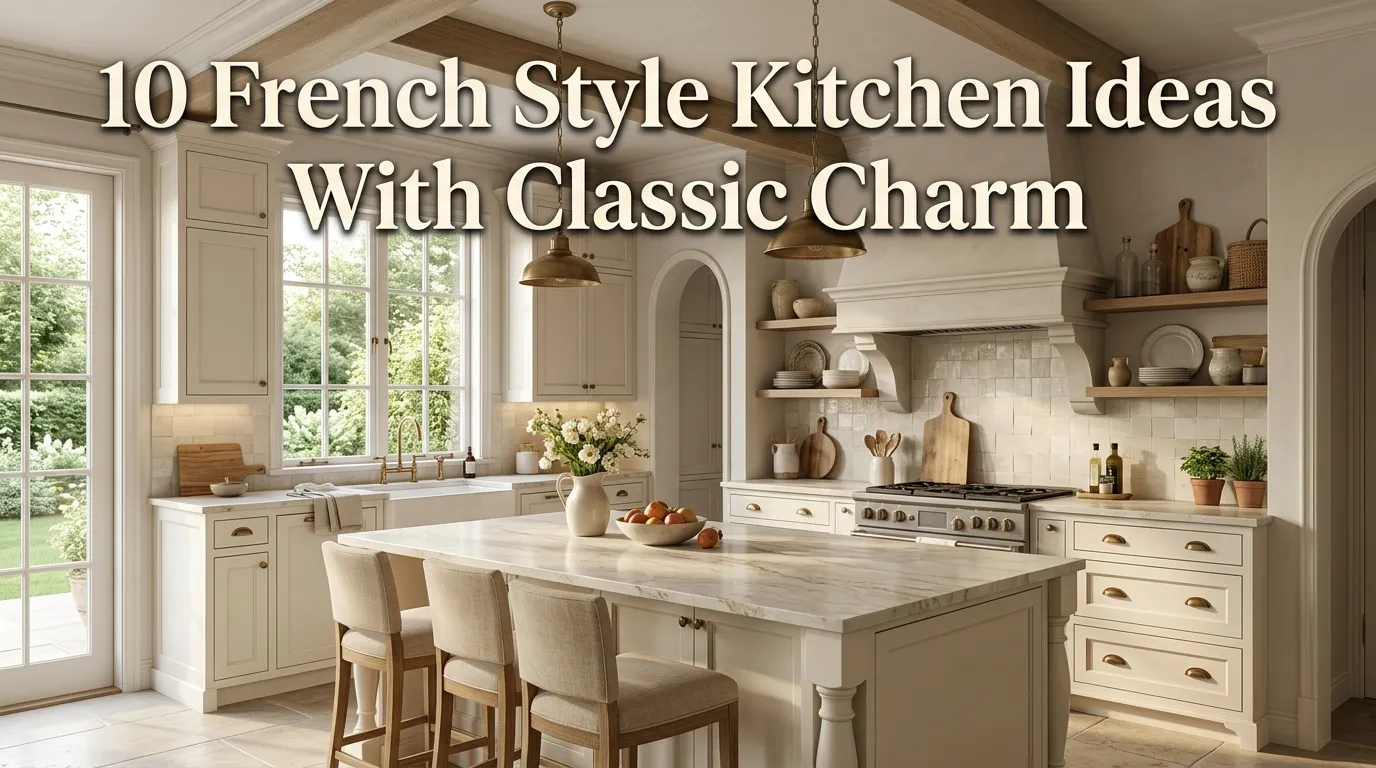
10 French Style Kitchen Ideas With Classic Charm
French-inspired kitchens have a way of feeling elegant without looking overly formal. They blend old-world character with everyday comfort, creating spaces where weathered wood, warm stone, aged finishes, and beautiful details can coexist with the practical demands of modern life.
That balance is what makes French style so appealing for homeowners who want a kitchen with personality. Instead of relying on a perfectly matched set of cabinets and accessories, this look often feels collected over time. A painted cabinet might sit beside a natural wood island, while antique-inspired lighting, aged brass hardware, and softly patterned textiles add warmth throughout the room.
You also don’t need a centuries-old farmhouse in Provence to bring this aesthetic into your home. A few carefully chosen elements can create the same relaxed European feeling in a standard American kitchen. Even renters can borrow some of the look through lighting, hardware, textiles, open shelving, and countertop accessories.
The secret is knowing which details create authentic-looking character without making the room feel cluttered or themed. French-inspired design usually works best when materials are allowed to show their natural variation and the color palette remains warm and restrained.
Below, you’ll find ten French style kitchen ideas that combine classic charm with practical decorating choices. Whether you’re planning a full kitchen renovation or simply want to refresh your existing space, these ideas can help you create a kitchen that feels welcoming, timeless, and beautifully lived-in.
Table of Contents
1. Creamy Painted Cabinets
Soft painted cabinetry creates a warm foundation for a timeless French-inspired kitchen.
2. Aged Brass Details
Antique-style hardware and fixtures add warmth, character, and a subtle sense of history.
3. Rustic Wood Island
Natural wood brings texture and an inviting farmhouse quality to the center of the kitchen.
4. Marble Countertops
Classic stone surfaces add elegance while complementing the softer materials throughout the room.
5. Vintage-Inspired Lighting
Decorative pendants and lantern-style fixtures create a collected European atmosphere.
6. Open Wood Shelves
Simple shelving gives everyday dishes and cookware a relaxed, lived-in appearance.
7. Patterned Tile Backsplash
Decorative tile introduces visual interest while reinforcing the traditional character of the space.
8. Farmhouse Sink
A deep apron-front sink combines practicality with one of the most recognizable traditional kitchen details.
9. Linen And Natural Textures
Soft fabrics and organic materials make the kitchen feel comfortable rather than overly polished.
10. Antique Kitchen Accents
Thoughtful vintage-style accessories complete the look and give the room a collected personality.
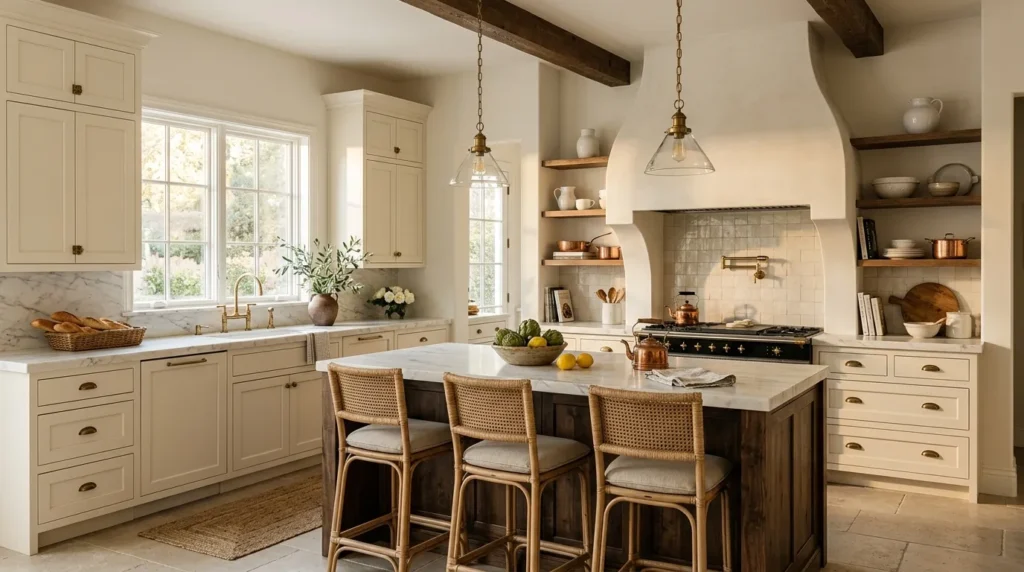
1. Creamy Painted Cabinets
Quick Benefits
- Creates a warm foundation
- Makes the kitchen feel timeless
- Works with traditional architecture
- Pairs easily with natural materials
- Brightens the room without stark white
Why It Works
Painted cabinetry is one of the easiest ways to establish a French-inspired mood because the style tends to favor softness over high-contrast finishes. Cream, ivory, warm white, muted beige, and very pale gray can all create a gentler backdrop than bright, cool white.
The beauty is in the undertone. A slightly warm cabinet color works beautifully beside natural stone, aged brass, oak, and linen because none of those materials feel artificially crisp or overly coordinated.
This approach also gives the kitchen a sense of age. Even newly installed cabinets can feel more established when paired with traditional profiles, visible wood texture, understated hardware, and classic countertops.
How To Style It
Choose cabinetry with simple Shaker-style doors, raised panels, or another traditional profile that complements your home’s architecture. Avoid making every finish identical. A cream cabinet paired with a natural wood island can create much more depth than an entirely matching kitchen.
For hardware, consider aged brass, antique brass, or another softly finished metal. Warm white walls and natural stone countertops can complete the foundation.
If you want more visual interest, add a few open shelves between cabinets or use glass-front doors for selected upper storage. Keep countertop decor restrained—ceramic pitchers, wooden boards, and a few everyday dishes are enough to make the kitchen feel lived in.
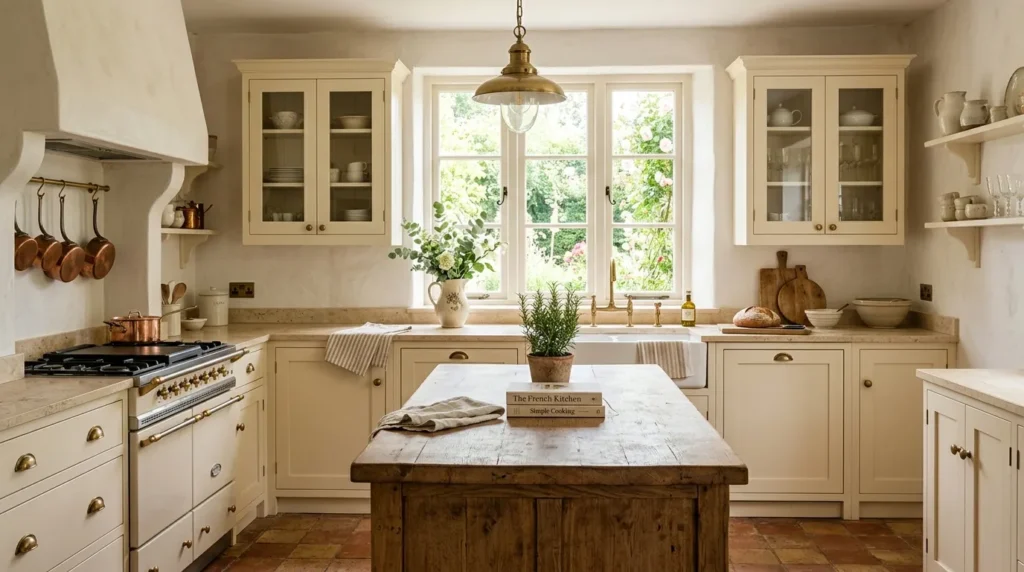
2. Aged Brass Details
Quick Benefits
- Adds warmth
- Creates vintage character
- Complements neutral cabinetry
- Works with traditional fixtures
- Provides subtle contrast
Why It Works
Small details can completely change the personality of a kitchen. Aged brass is particularly effective in French-inspired spaces because it introduces warmth and a slightly timeworn quality without demanding attention.
Unlike highly polished gold, an aged or brushed brass finish can look softer and more established. It works especially well alongside cream cabinetry, marble, wood, and natural stone.
You also don’t need to replace every metal fixture in the room. Using brass selectively can be enough to introduce the look while allowing existing materials to remain part of the design.
How To Style It
Start with cabinet knobs and pulls, then consider repeating the finish on one or two larger elements such as a faucet or pendant light.
For a cohesive appearance, keep the brass finish similar rather than mixing several dramatically different gold tones. At the same time, don’t feel obligated to match every metal perfectly. A small amount of black iron or aged bronze can add contrast when used intentionally.
Pair brass with creamy cabinetry and warm wood to keep the overall effect sophisticated. Ceramic canisters, stoneware bowls, and linen towels will soften the metallic elements and keep the kitchen from feeling too formal.
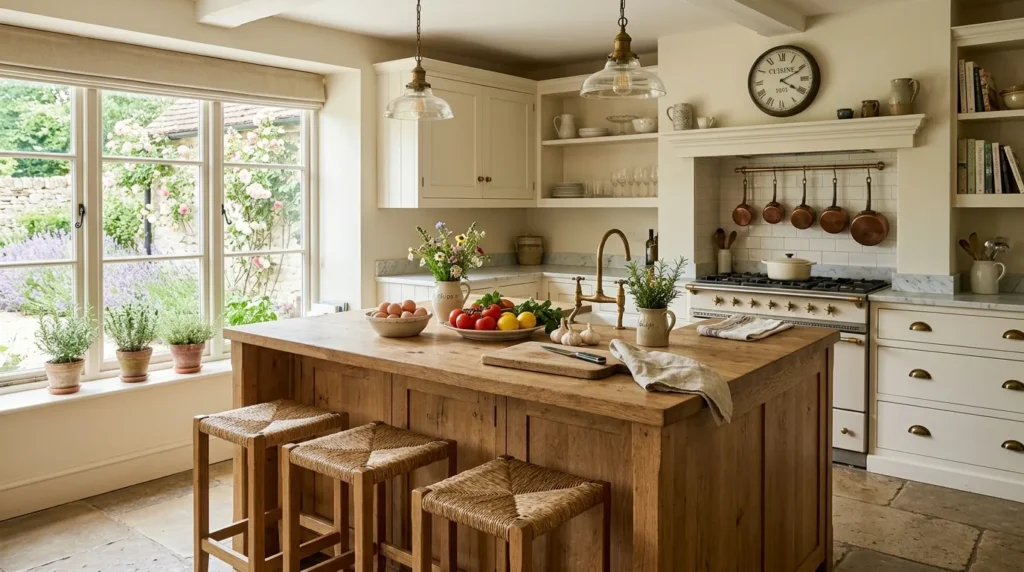
3. Rustic Wood Island
Quick Benefits
- Adds natural warmth
- Creates visual contrast
- Brings farmhouse character
- Makes the kitchen feel collected
- Works with many cabinet colors
Why It Works
A natural wood island can become the heart of a French-inspired kitchen. It introduces texture and variation that painted cabinetry alone may not provide.
The most appealing versions don’t necessarily look brand new. Wood with visible grain, subtle variation, or a lightly weathered finish can make the island feel as though it has belonged in the kitchen for years.
This is also a practical design choice because an island is one of the largest visual elements in the room. Changing its material can create a strong focal point without requiring an entirely different cabinet layout.
How To Style It
Choose an island finish that complements—not necessarily matches—the surrounding cabinetry. Natural oak, reclaimed-looking wood, medium walnut, and softly distressed finishes can all work depending on the rest of the room.
Pair the island with simple counter stools in wood, woven material, or painted finishes. Avoid excessive ornamentation; the grain and texture should be the star.
For the countertop, stone or a durable wood surface can work depending on how the island is used. Add a ceramic bowl filled with seasonal produce, a wooden cutting board, or a simple vase to reinforce the natural character.
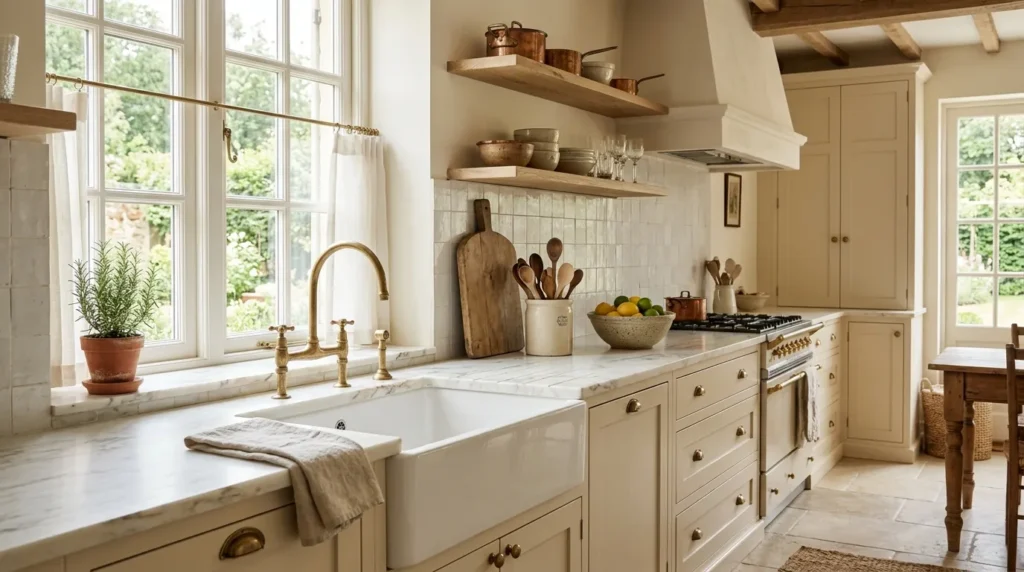
4. Marble Countertops
Quick Benefits
- Adds classic elegance
- Complements warm cabinetry
- Creates natural variation
- Works with traditional architecture
- Provides a timeless surface
Why It Works
Natural stone is a natural partner for French-inspired interiors because it introduces subtle variation that manufactured, perfectly uniform surfaces sometimes lack. Marble is particularly associated with classic European kitchens and can provide a beautiful contrast to painted cabinets and aged metals.
The appeal isn’t just the color. Veining creates movement across the countertop, making the surface feel like part of the architecture rather than simply a functional worktop.
If you’re renovating, remember that natural stone requires maintenance choices that should fit your household. The right countertop is the one that looks beautiful while also matching how you actually cook and live.
How To Style It
White or softly veined marble works beautifully with cream cabinets and brass fixtures, while warmer stone tones can complement wood cabinetry.
Keep the countertop relatively uncluttered so the stone remains visible. A wooden cutting board, ceramic utensil crock, and one large stoneware bowl can provide practical decoration without covering the surface.
If marble isn’t practical for your household or budget, look for other surfaces that provide a similar light, naturally varied appearance. The overall design effect comes from the combination of stone, wood, cabinetry, and metal—not from one material alone.
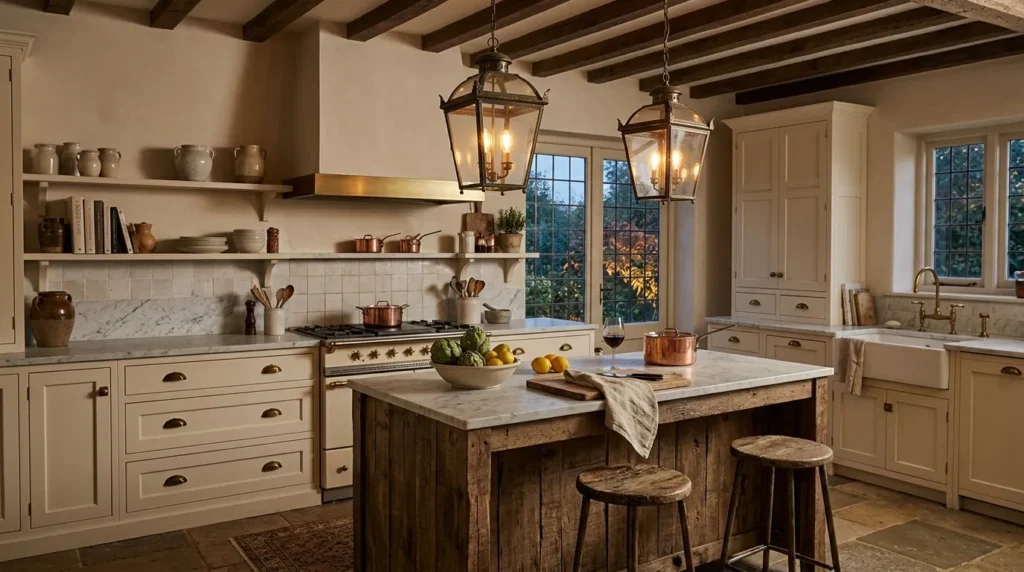
5. Vintage-Inspired Lighting
Quick Benefits
- Adds architectural character
- Creates warm ambiance
- Provides a decorative focal point
- Works with traditional kitchens
- Helps define the island
Why It Works
Lighting has an enormous influence on how a kitchen feels, and decorative fixtures can make even a relatively simple space look more intentional.
French-inspired kitchens often benefit from lighting that feels architectural or collected rather than purely functional. Lantern-style pendants, aged metal fixtures, glass shades, and classic sconces can introduce the right amount of character.
The goal is warmth. A beautiful fixture should illuminate the room effectively while also contributing to the atmosphere.
How To Style It
If you have a kitchen island, consider two or three appropriately scaled pendants rather than a single oversized fixture. For a smaller kitchen, one decorative pendant or a pair of wall sconces may provide enough visual interest.
Choose finishes that relate to the other materials in the kitchen. Aged brass works beautifully with cream cabinetry, while black metal can provide stronger contrast.
Use layered lighting whenever possible: overhead illumination for general visibility, task lighting for work surfaces, and decorative fixtures for atmosphere. Warm-toned bulbs can help reinforce the cozy quality of the materials.
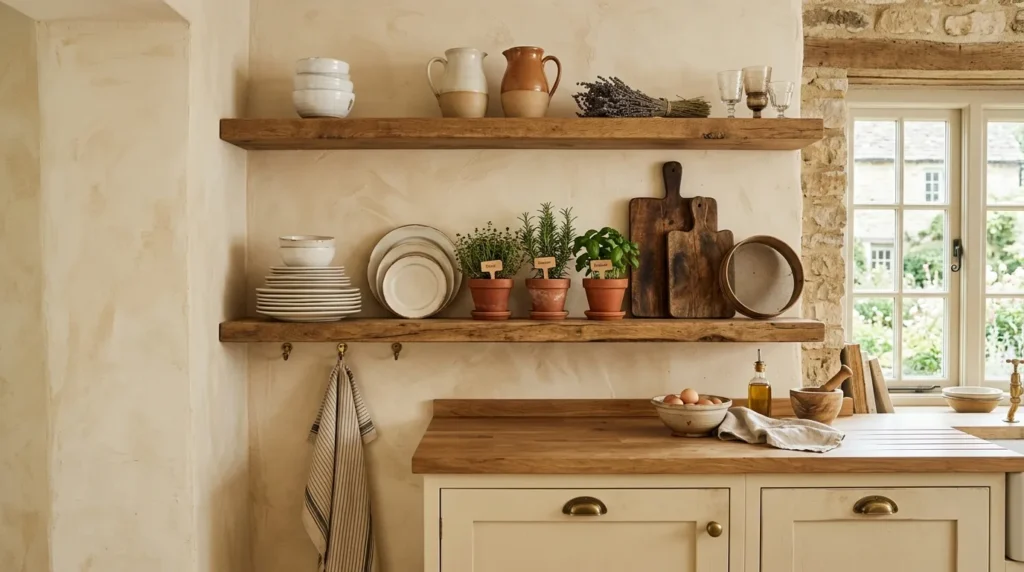
6. Open Wood Shelves
Quick Benefits
- Creates a relaxed appearance
- Adds natural texture
- Makes everyday dishes accessible
- Breaks up cabinetry
- Provides easy styling opportunities
Why It Works
Open shelving can make a kitchen feel less formal because it allows practical objects to become part of the decor. Stacks of plates, ceramic pitchers, wooden boards, and glassware can add personality without relying on decorative objects that have no purpose.
Wood shelves are particularly effective because they introduce another natural material into a room that might otherwise be dominated by painted cabinetry and stone.
The key is restraint. Open shelves can quickly look crowded if every inch is filled.
How To Style It
Choose shelves with enough depth and strength for the dishes you intend to store. Natural oak, reclaimed-looking timber, and warm walnut can all complement French-inspired cabinetry.
Group items rather than spacing individual pieces evenly. A stack of white plates, a ceramic pitcher, and a small wooden board can look more natural than a shelf filled with dozens of unrelated objects.
Leave some empty space. The negative space helps the display feel relaxed and prevents the kitchen from looking visually busy.
7. Patterned Tile Backsplash
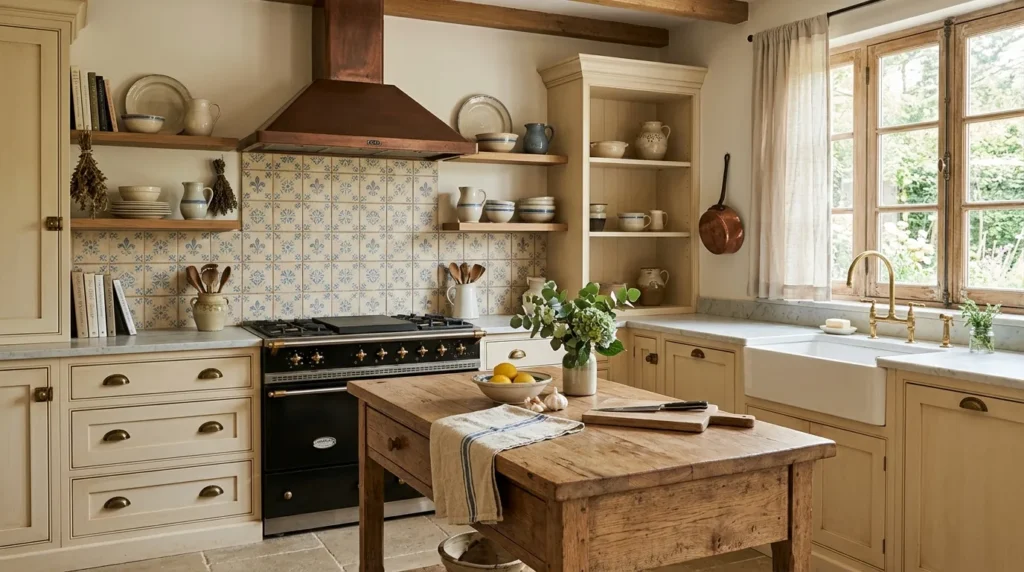
Quick Benefits
- Adds visual personality
- Creates a focal point
- Reinforces traditional style
- Works with neutral cabinetry
- Offers many customization options
Why It Works
A patterned backsplash can bring the decorative quality often associated with European kitchens into an otherwise simple room. Tile gives you an opportunity to introduce subtle pattern without changing the overall color palette.
Classic shapes, hand-painted-looking designs, small-format tiles, and softly patterned surfaces can all work. The best choice depends on how much visual activity the rest of the kitchen already has.
If your cabinets and countertops are relatively simple, a decorative backsplash can become a focal point. If the room already contains heavily veined stone, ornate lighting, and detailed cabinetry, a quieter tile may be more successful.
How To Style It
Look for tile in warm whites, soft creams, muted blues, sage green, dusty gray, or other understated tones. Avoid choosing a pattern simply because it looks attractive on its own; consider how it will interact with the cabinetry and countertop.
A backsplash behind the range can be a good location for a more decorative treatment while keeping surrounding walls simpler.
Repeat one color from the tile elsewhere through ceramics, textiles, or artwork. This creates cohesion without requiring an exact match.
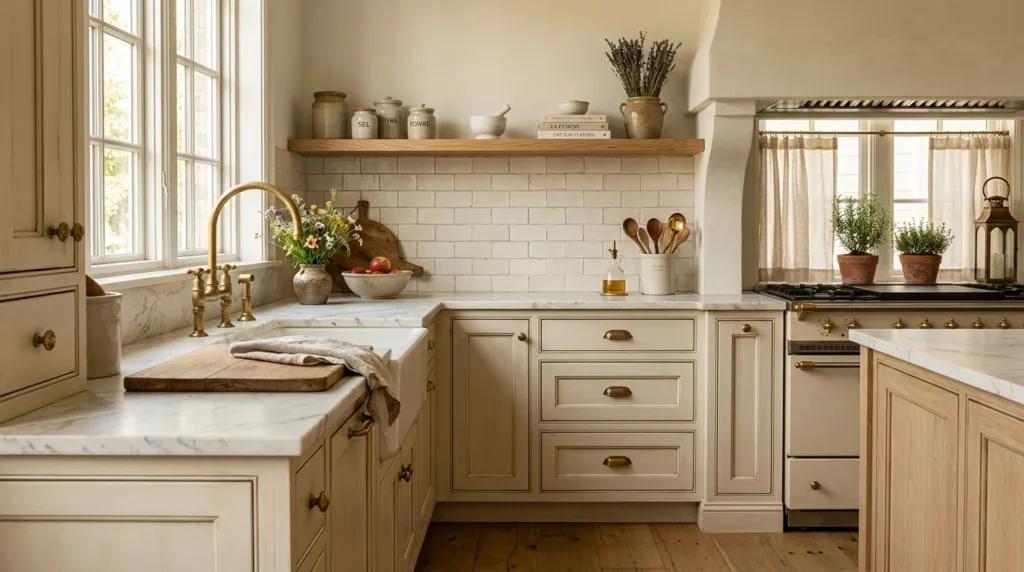
8. Farmhouse Sink
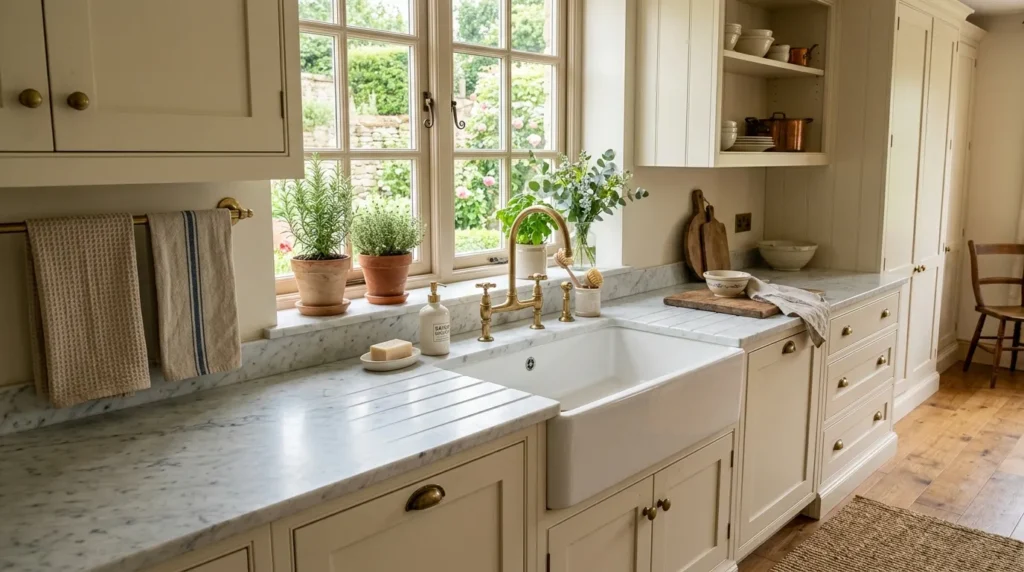
Quick Benefits
- Adds traditional character
- Provides a generous basin
- Creates a strong focal detail
- Works beautifully with painted cabinets
- Complements classic kitchens
Why It Works
An apron-front farmhouse sink instantly introduces traditional character and is especially effective in kitchens inspired by European country homes.
Beyond its appearance, a deep sink can be practical for households that regularly wash large pots, baking dishes, or oversized cookware. That combination of visual appeal and everyday usefulness makes it a natural fit for a lived-in kitchen.
The surrounding materials also influence how the sink feels. A white fireclay-style sink can look crisp and classic, while surrounding it with wood, stone, and aged metal creates a softer, more collected atmosphere.
How To Style It
Pair a farmhouse sink with simple traditional cabinetry rather than adding too many decorative details around it.
An aged brass or brushed metal faucet can reinforce the vintage-inspired appearance. Add a small ceramic soap dispenser, a linen hand towel, or a simple wooden brush nearby.
If you’re planning a renovation, pay close attention to cabinet dimensions and installation requirements before selecting the sink. Apron-front sinks can require specific cabinet configurations, so the practical planning matters just as much as the visual design.
9. Linen And Natural Textures
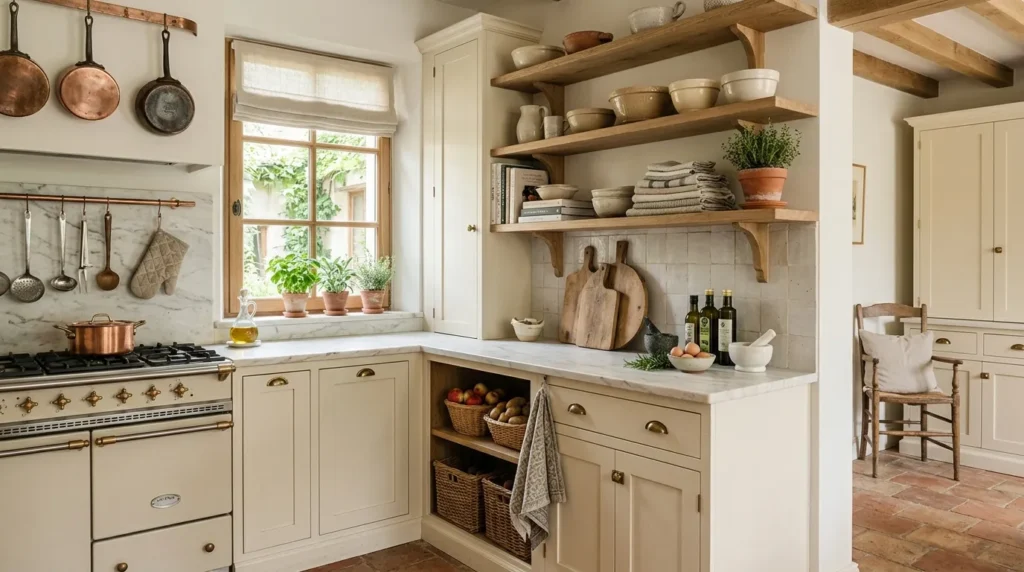
Quick Benefits
- Softens hard surfaces
- Adds visual warmth
- Creates a relaxed atmosphere
- Works with neutral palettes
- Easy to update seasonally
Why It Works
A kitchen can have beautiful cabinets and countertops yet still feel cold if every surface is hard, glossy, and perfectly uniform. Natural textiles help soften that effect.
Linen, cotton, woven baskets, wood, ceramic, and stone all contribute texture without requiring bright colors. This layered approach is particularly useful in French-inspired interiors because the style often depends more on material variation than dramatic decoration.
These elements also make the room feel lived in. A linen towel hanging from an oven handle or a woven basket holding kitchen essentials can look beautiful precisely because it has a practical purpose.
How To Style It
Choose neutral or muted textiles in cream, flax, oatmeal, soft gray, or faded blue. Hang one or two linen towels where they’re genuinely useful rather than decorating every handle.
Woven baskets can hold produce, bread, or linens. Wooden cutting boards can lean against the backsplash, while handmade-looking ceramics can sit on open shelves.
Mix textures rather than trying to coordinate everything exactly. The combination of rough wood, soft linen, smooth ceramic, and natural stone is what creates the layered appearance.
10. Antique Kitchen Accents
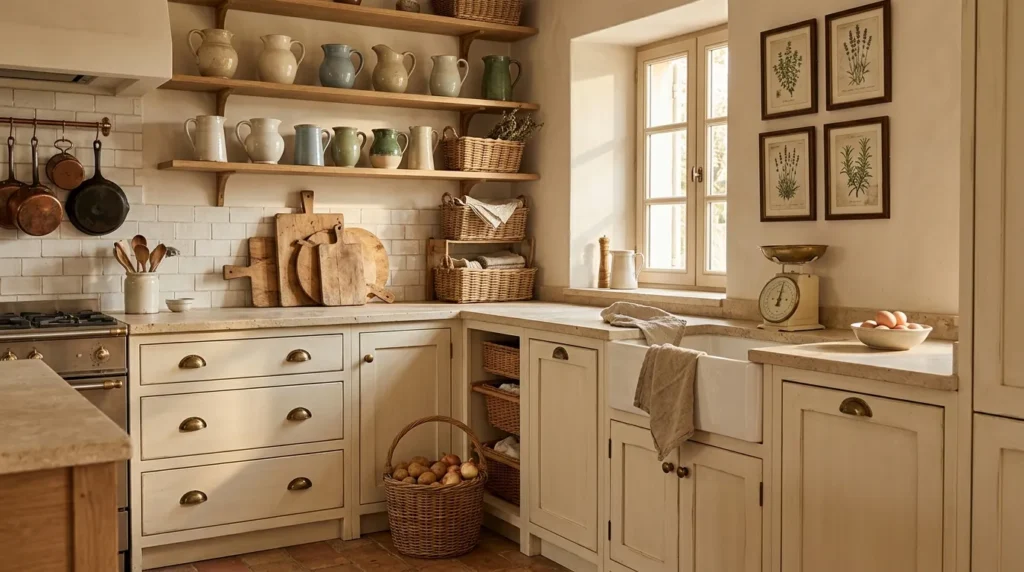
Quick Benefits
- Adds personality
- Creates a collected appearance
- Introduces history-inspired details
- Makes new kitchens feel established
- Easy to change over time
Why It Works
The finishing touch in a French-inspired kitchen is often the feeling that the room wasn’t decorated all at once. Antique-style accessories and vintage-inspired pieces can create that impression even in a brand-new kitchen.
Aged cutting boards, ceramic pitchers, old-style scales, framed botanical prints, woven baskets, and traditional cookware can all contribute to the aesthetic.
The most important thing is not to turn the kitchen into a display room. French-inspired interiors generally feel best when decorative objects appear naturally connected to everyday life.
How To Style It
Choose a few meaningful-looking pieces instead of filling every countertop. A large ceramic pitcher beside a stack of wooden boards can be enough for one area, while a framed botanical print can add character to an empty wall.
Mix old-looking accessories with modern conveniences. A contemporary coffee maker can coexist with vintage-inspired ceramics as long as the overall palette remains cohesive.
For the most convincing collected look, vary the materials and shapes while keeping colors relatively restrained. Warm wood, cream ceramics, aged brass, linen, and natural stone create an easy foundation.
FAQ
What makes a kitchen French style?
French-style kitchens typically combine classic architectural details, warm neutral colors, natural materials, traditional cabinetry, aged metal finishes, and a relaxed, collected appearance. Painted cabinets, natural wood, stone, farmhouse sinks, decorative tile, linen, and vintage-inspired accessories are common elements. The overall goal is comfortable elegance rather than a perfectly matched or overly polished space.
What colors work best in a French-style kitchen?
Warm white, cream, ivory, beige, soft gray, muted blue, sage, and other understated tones work beautifully in French-inspired kitchens. These colors provide a gentle backdrop for natural stone, wood, brass, and ceramic. You don’t need to use every shade; choosing two or three complementary tones can create a more cohesive and timeless result.
How can I make my kitchen look French without remodeling?
Start with details that don’t require construction. Replace cabinet hardware with an aged finish, introduce linen towels, add natural wood cutting boards, display ceramic pieces, change pendant lighting, or install open shelves if practical. Vintage-inspired artwork and a few carefully chosen accessories can also create the feeling without replacing the cabinets or countertops.
Are farmhouse sinks French style?
Farmhouse or apron-front sinks can work very well in French-inspired kitchens because they reinforce the traditional, practical character associated with country-style interiors. A deep ceramic or fireclay-style sink can be paired with painted cabinetry, natural stone, wood, and aged metal for a classic look. Installation requirements should be considered before purchasing one.
What countertop looks best with French-style cabinets?
Natural stone, especially softly veined marble, is a classic choice, but other warm or subtly patterned surfaces can work as well. The best countertop depends on your cooking habits, maintenance preferences, and budget. What matters most visually is how the countertop interacts with the cabinetry, wood, backsplash, and hardware.
How do you make a French kitchen feel cozy?
Layer natural textures rather than relying on lots of decorations. Combine painted cabinetry with wood, stone, linen, ceramic, woven materials, and warm metal. Comfortable lighting also makes a significant difference. Keep practical objects visible in an organized way so the kitchen feels lived in rather than staged.
Related Articles
- French Country Living Room Ideas With Timeless Appeal
- Cozy Farmhouse Kitchen Ideas for Everyday Living
- European-Inspired Home Decor Ideas
- Warm Neutral Kitchen Ideas for a Timeless Look
- Classic Kitchen Cabinet Ideas for Beautiful Homes
Conclusion
A French-inspired kitchen doesn’t have to look like a perfect reproduction of a European country home. The charm comes from combining traditional details with materials and finishes that feel comfortable, practical, and slightly collected.
Start with the foundation. Creamy painted cabinets, natural wood, stone, and warm metal can establish the overall mood. Then add character through a farmhouse sink, vintage-inspired lighting, patterned tile, open shelving, and natural textiles.
The most successful kitchens usually aren’t the ones with the most decoration. They’re the ones where every material has a reason to be there. A wooden island adds warmth, brass hardware introduces age-inspired character, linen softens hard surfaces, and everyday ceramics can make open shelving feel personal.
If you’re working with an existing kitchen, don’t feel pressured to change everything at once. Start with one or two details that will make the biggest visual difference, then build gradually. A new pendant light, aged hardware, a linen runner, or a beautiful ceramic pitcher can sometimes shift the atmosphere more than an entire collection of decorative accessories.
Above all, let the kitchen feel lived in. French-inspired design is at its best when elegance and everyday life exist comfortably together.