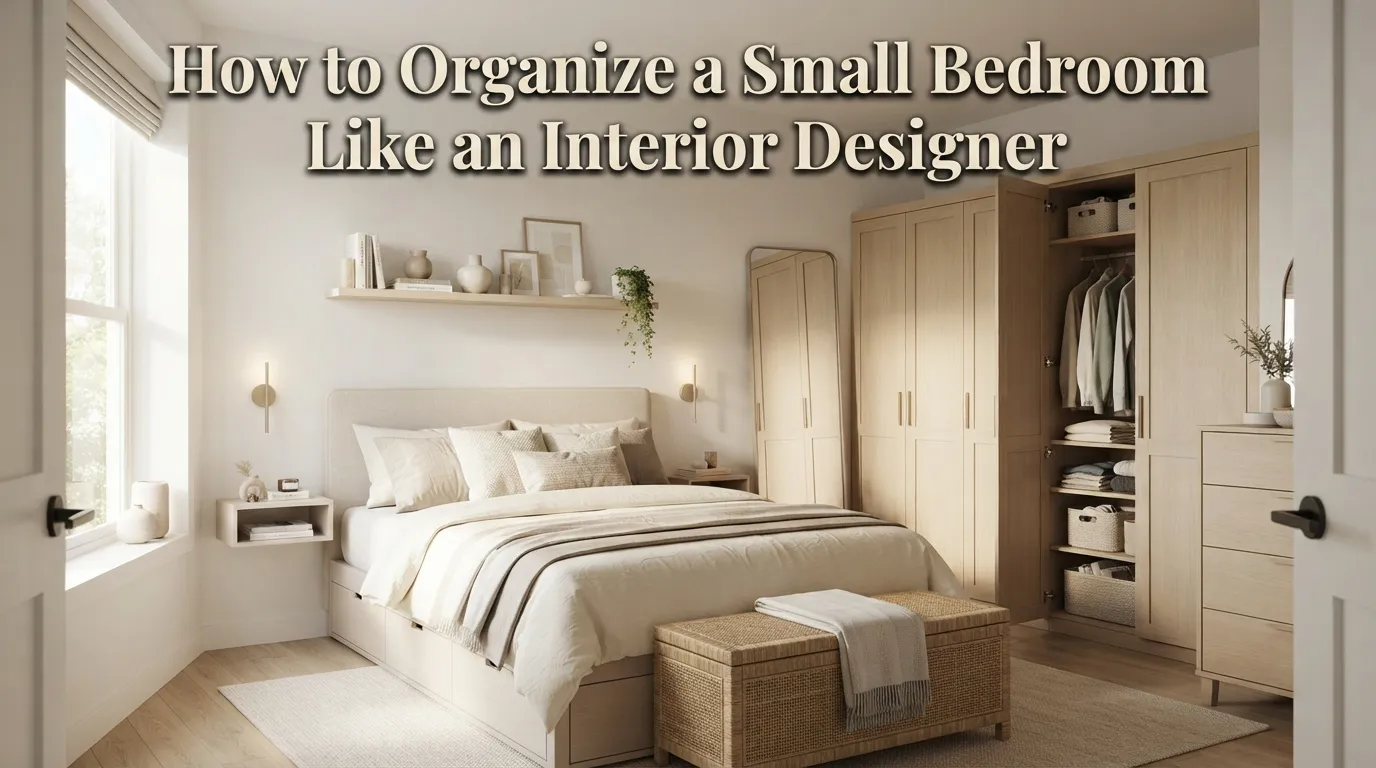
How to Organize a Small Bedroom Like an Interior Designer
A small bedroom can be surprisingly difficult to organize. There may be enough room for a bed, dresser, and nightstand, yet somehow the space still feels crowded. Clothes collect on chairs, bedside tables become catch-all surfaces, and storage disappears almost as quickly as you create it.
The solution isn’t always buying more organizers.
Interior designers typically approach a small bedroom differently. Instead of trying to squeeze more belongings into the room, they look at the space as a whole: how people move through it, where the natural storage opportunities are, what should remain visible, and which pieces of furniture are doing more than one job.
That way of thinking can make even a compact bedroom feel calmer and more intentional.
One of the biggest improvements often comes from reducing visual competition. When storage is concentrated, furniture is properly scaled, and everyday belongings have logical homes, the room can feel noticeably more spacious without changing its actual dimensions.
I’ve noticed that the most successful small bedrooms aren’t necessarily the ones with the most clever storage products. They’re the ones where the organization works with the owner’s habits. Frequently used items stay accessible, seasonal belongings are moved out of prime storage areas, and decorative surfaces aren’t overloaded.
You also don’t need to redesign the entire room in one weekend. A better approach is to work through the space strategically, starting with the belongings and areas that cause the most daily frustration.
In this guide, you’ll find ten interior-designer-inspired ways to organize a small bedroom, from using vertical storage and under-bed space to simplifying the nightstand, improving closet flow, and choosing furniture that earns its footprint.
The goal is simple: create a bedroom that feels organized, comfortable, practical, and easy to maintain.
Table of Contents
1. Edit Before Organizing
Remove unnecessary belongings first so you’re organizing what you actually use.
2. Maximize Vertical Space
Use walls and tall furniture to increase storage without consuming valuable floor area.
3. Simplify the Nightstand
Keep bedside essentials contained so the area feels calm and functional.
4. Use Under-Bed Storage
Turn the unused space beneath the bed into practical hidden storage.
5. Streamline the Closet
Arrange clothing so everyday pieces are visible, accessible, and easy to maintain.
6. Choose Dual-Purpose Furniture
Use pieces that combine storage and function to make every square foot work harder.
7. Create Clear Zones
Give sleeping, dressing, storage, and other activities defined areas.
8. Use Matching Containers
Create visual consistency with coordinated baskets, bins, and organizers.
9. Keep Surfaces Light
Reduce visible clutter on dressers, shelves, and other horizontal surfaces.
10. Build a Daily Reset
Create simple habits that keep the bedroom organized without constant effort.
1. Edit Before Organizing
Quick Benefits
- Prevents wasted storage
- Makes organization easier
- Reduces visual clutter
- Reveals what storage you actually need
- Creates more usable space
Why It Works
One of the most important principles in organizing a small bedroom is deceptively simple: don’t organize belongings you don’t need.
If your closet is packed with clothes you never wear, buying another set of hangers won’t solve the underlying problem. If your dresser drawers are full of forgotten accessories, additional drawer dividers may simply help you store more things you don’t use.
Interior designers and professional organizers often begin by editing the contents of a space before introducing storage solutions.
This matters because storage has limits. A small bedroom cannot accommodate an unlimited number of belongings, no matter how clever the organizers are.
Start by asking what you actually use, what you genuinely love, and what fits your current lifestyle.
The goal isn’t extreme minimalism. It’s making room for the belongings that deserve to be in your bedroom.
How To Style It
Begin with one category rather than emptying the entire room.
Clothing is usually a good starting point. Remove pieces that no longer fit, are uncomfortable, haven’t been worn in a long time, or don’t suit your current lifestyle.
Then move to shoes, accessories, bedside items, and decorative objects.
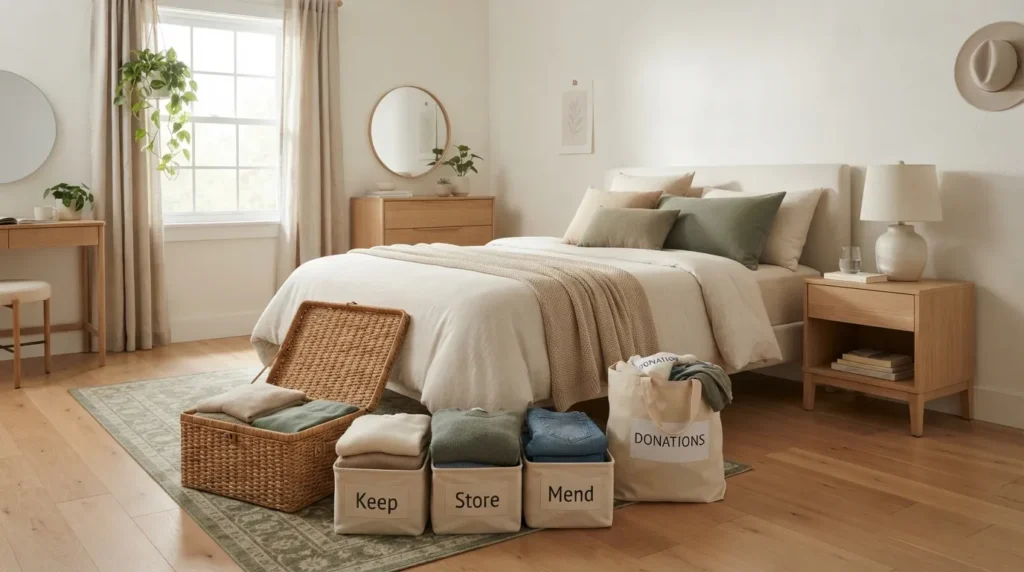
Create clear categories for keeping, donating, relocating, and disposing of items appropriately.
Avoid making the entire floor your sorting surface. In a small bedroom, work in manageable batches so you can still move around the room.
Once you’ve reduced the excess, you’ll have a much clearer idea of which storage solutions are actually necessary.
2. Maximize Vertical Space
Quick Benefits
- Adds storage without using much floor space
- Draws the eye upward
- Helps small rooms feel taller
- Keeps belongings accessible
- Creates opportunities for decorative organization
Why It Works
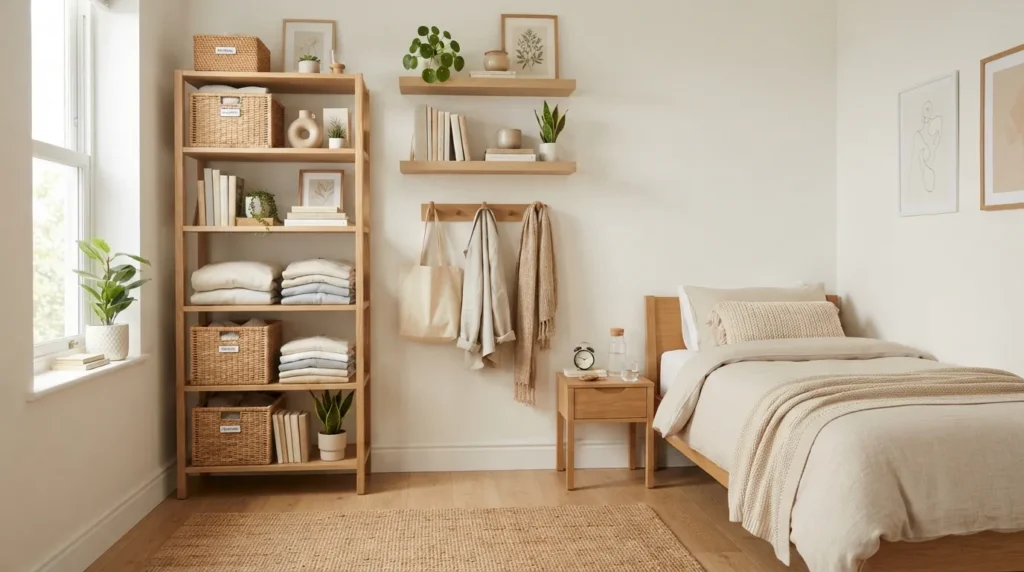
When floor space is limited, walls become valuable real estate.
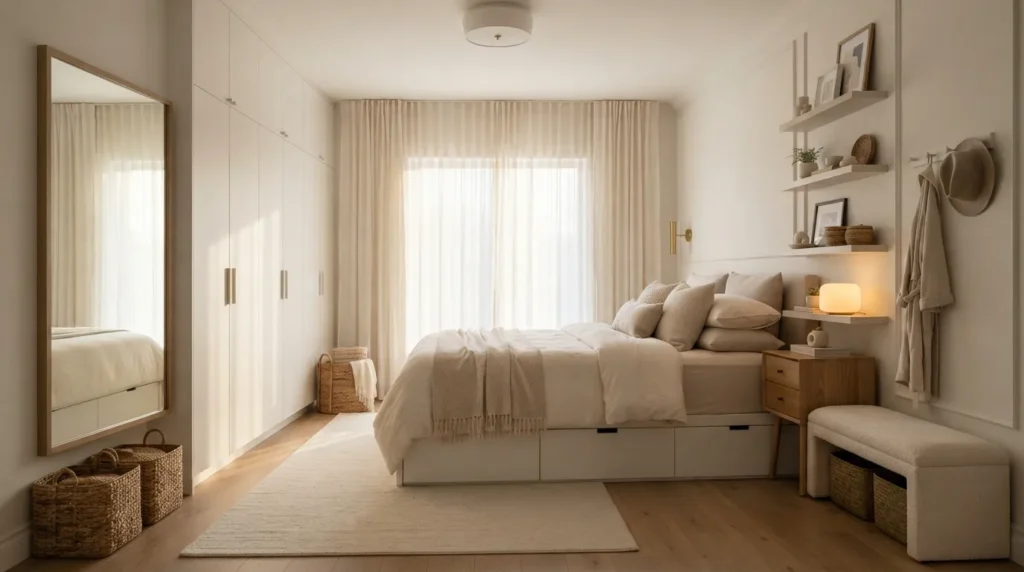
Tall bookcases, narrow shelving, wall-mounted hooks, pegboards, floating shelves, and vertical cabinets can provide useful storage while preserving the floor area needed for movement.
This is one of the reasons built-in storage often looks so effective in small bedrooms. It uses height rather than spreading storage horizontally across the room.
Even a simple tall bookcase can make a meaningful difference when compared with a short, wide cabinet occupying the same general footprint.
However, vertical storage should still be visually controlled. Too many open shelves filled with small objects can make the room feel busy.
The best approach is to combine practical storage with a limited amount of display.
How To Style It
Look for narrow, tall furniture when the room allows it.
A tall bookcase can hold folded clothing, baskets, books, accessories, and decorative objects. Floating shelves can be useful for small collections, framed art, or items you use regularly.
Wall hooks near the bedroom door can hold robes, bags, or frequently worn clothing without requiring another piece of furniture.
If you use open shelving, place belongings into matching or coordinated baskets to reduce visual noise.
Keep the highest shelves for seasonal or occasional items and reserve easy-to-reach areas for things you use every day.
Always secure tall furniture appropriately, particularly in homes with children or pets.
3. Simplify the Nightstand
Quick Benefits
- Makes the room feel calmer
- Improves bedtime routines
- Prevents small clutter piles
- Keeps essentials accessible
- Creates a more polished appearance
Why It Works
A nightstand may be one of the smallest pieces of furniture in the bedroom, but because it sits directly beside the bed, clutter there is highly noticeable.
Receipts, water bottles, chargers, books, skincare products, glasses, and miscellaneous objects can quickly turn a bedside table into a miniature storage problem.
The interior-designer approach is to make the nightstand serve a specific purpose rather than becoming an overflow surface.
Keep only what genuinely supports your bedtime and morning routines.
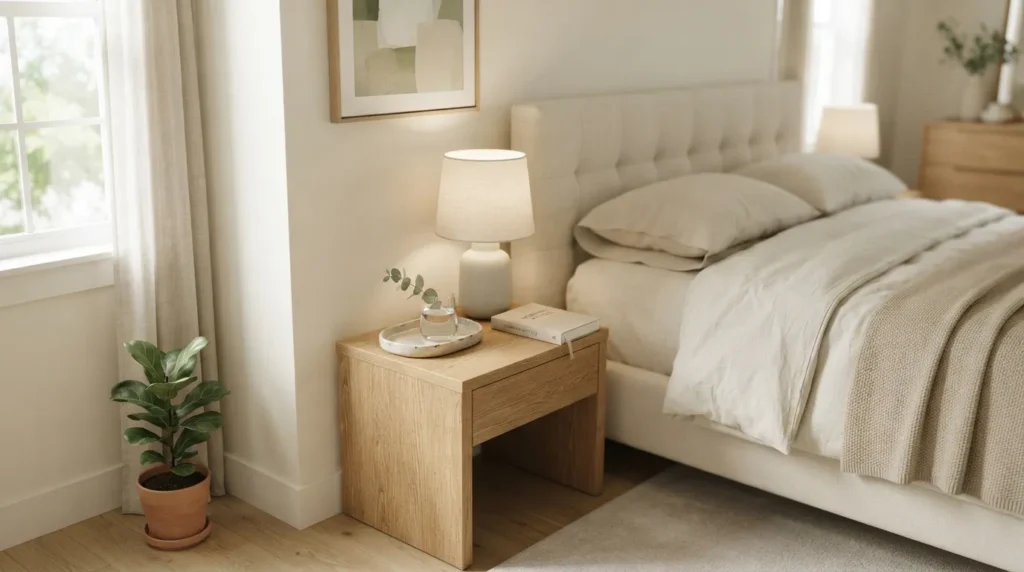
A lamp, book, water glass, or small decorative object may be all you need on top.
If the nightstand has drawers or shelves, use them for the less visually appealing essentials.
How To Style It
Start by clearing the entire nightstand.
Return only the items you use regularly.
A compact lamp can provide useful reading light without taking up excessive space. A small tray can contain jewelry, glasses, or other tiny objects.
Use the drawer for chargers, medications or personal-care items as appropriate, and other necessities that don’t need to remain visible.
If you don’t have a nightstand with storage, consider a small wall-mounted shelf or narrow bedside cabinet.
Keep cords organized and avoid allowing charging cables to become permanent visual clutter.
The result should feel intentionally simple rather than empty.
4. Use Under-Bed Storage
Quick Benefits
- Uses otherwise wasted space
- Ideal for seasonal belongings
- Keeps rarely used items out of sight
- Reduces closet pressure
- Works especially well in small bedrooms
Why It Works
The space underneath a bed is often one of the largest unused storage areas in a small bedroom.
Rather than allowing dust and miscellaneous objects to collect underneath, use that footprint strategically.
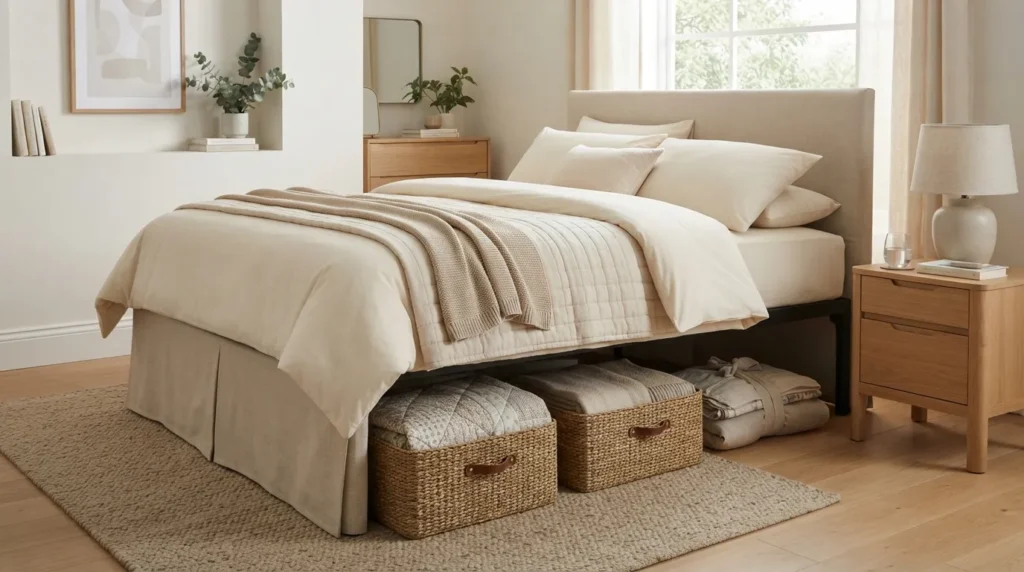
Under-bed storage is particularly useful for belongings you don’t need every day, such as seasonal clothing, extra bedding, luggage, or occasionally used accessories.
The key is making sure the storage is contained and easy enough to access.
If you simply push random boxes beneath the bed, the area can become another clutter zone.
Well-designed under-bed drawers or low-profile containers keep belongings grouped and make cleaning easier.
How To Style It
Measure the available clearance beneath the bed before purchasing containers.
Choose low-profile boxes, fabric storage bags, or rolling drawers that fit comfortably.
Use labels if the containers hold seasonal or occasional belongings.
Avoid storing items that are sensitive to moisture or temperature changes unless the storage environment is appropriate for them.
Keep everyday clothing and frequently needed objects in easier-to-access locations.
The under-bed area should function as secondary storage rather than the bedroom’s primary closet.
If your bed frame has no clearance, consider a storage bed if it fits your style, budget, and room dimensions.
5. Streamline the Closet
Quick Benefits
- Makes clothing easier to find
- Reduces overcrowding
- Improves daily routines
- Makes better use of hanging space
- Helps identify duplicate items
Why It Works
A small bedroom often feels cluttered because the closet isn’t working efficiently.
When clothes are packed tightly onto a rod, shelves become disorganized, and shoes occupy the floor, getting dressed becomes unnecessarily difficult.
A streamlined closet starts with editing the contents.
Once you’ve reduced clothing you don’t wear, you can arrange the remaining pieces in a way that makes sense for your routines.
The goal isn’t simply to make the closet look attractive. It should make your everyday life easier.
Grouping clothing by type, color, season, or frequency of use can all work. Choose the system you’ll actually maintain.
How To Style It
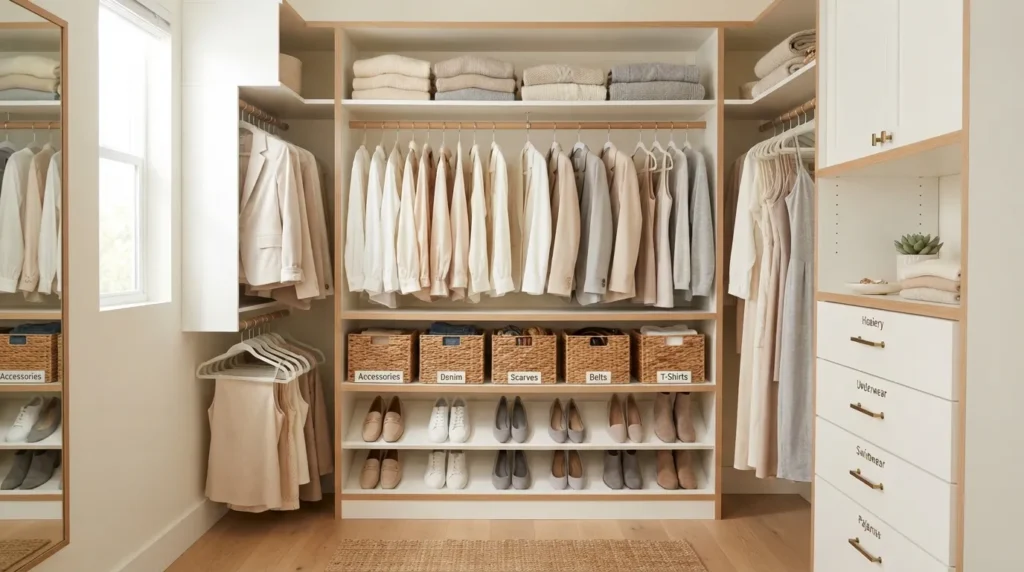
Use consistent hangers if possible. Matching hangers immediately create a cleaner visual line and can also help you assess how much hanging space you’re using.
Group clothing by category, such as shirts, dresses, pants, and jackets.
If color-coding helps you find things quickly, arrange each category by color. If not, don’t force it.
Use shelf dividers or baskets for folded items so stacks remain contained.
Store less frequently used items toward the back or higher areas of the closet, while keeping everyday clothing within easy reach.
For shoes, a vertical rack, narrow organizer, or designated shelf can keep the floor clear.
6. Choose Dual-Purpose Furniture
Quick Benefits
- Maximizes limited floor space
- Adds storage without extra pieces
- Reduces visual clutter
- Makes furniture more useful
- Supports flexible room layouts
Why It Works
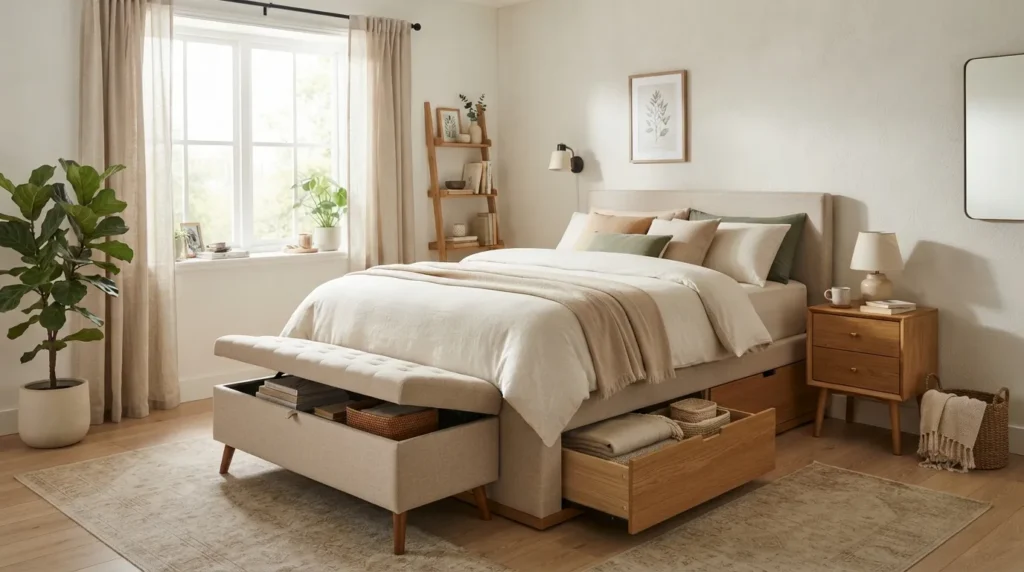
In a small bedroom, every piece of furniture has to justify its footprint.
A storage bench can provide seating and hold blankets. A bed with drawers can replace a separate storage cabinet. A dresser can double as a changing or display surface.
This is why multifunctional furniture is so useful in compact rooms.
Instead of adding several specialized pieces, look for furniture that performs two jobs without becoming awkward to use.
However, multifunctional doesn’t mean complicated.
A simple storage ottoman can be more useful than an elaborate piece with features you rarely use.
How To Style It
Before buying furniture, ask what problem it needs to solve.
If you need more clothing storage, a tall narrow dresser may be better than a wide storage bench.
If you need somewhere to sit while getting dressed, a storage ottoman at the foot of the bed may be worthwhile.
Choose furniture that fits comfortably within the available dimensions. Measure doorways and pathways as well as the intended location.
Keep finishes coordinated so multifunctional pieces don’t make the room feel visually fragmented.
When possible, choose furniture with clean lines and simple proportions. Bulky silhouettes can make a small bedroom feel crowded even when the storage capacity is excellent.
7. Create Clear Zones
Quick Benefits
- Improves room flow
- Makes storage easier to understand
- Prevents activities from overlapping
- Makes small spaces feel intentional
- Helps establish better habits
Why It Works
A small bedroom may need to accommodate sleeping, dressing, reading, storage, and sometimes working.
Without clear zones, these activities can blend together and create visual disorder.
The solution doesn’t require physical walls.
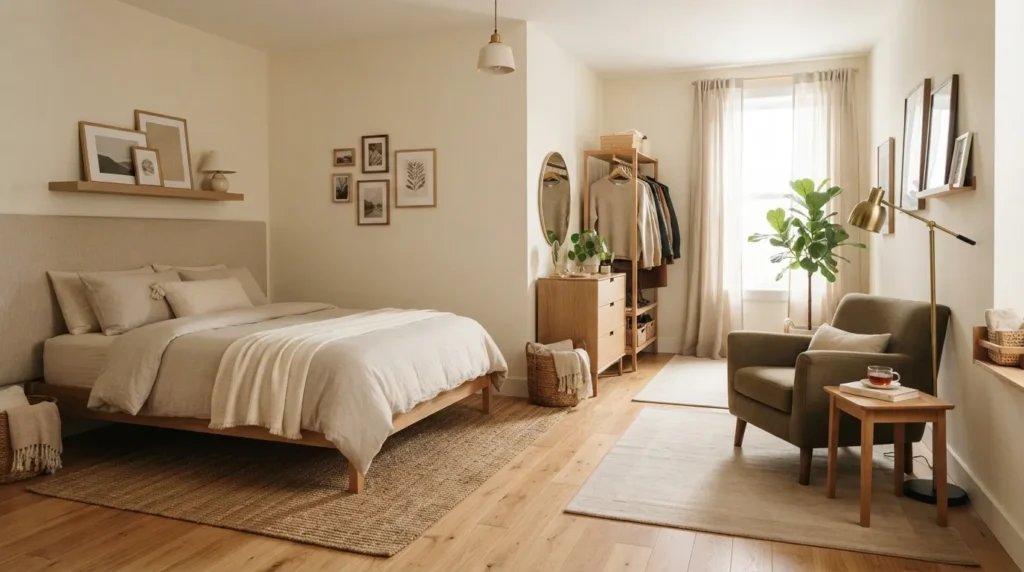
Furniture placement, rugs, lighting, shelving, and storage can create subtle boundaries.
For example, the bed defines the sleeping zone, a dresser and mirror can establish a dressing area, and a small chair with a floor lamp can create a reading corner.
This gives the room structure without making it feel divided.
Think about how you move through the bedroom during a typical day.
Where do you get dressed? Where do you put clothes after wearing them? Where do you read? Where do you charge your phone?
Organize the room around those behaviors.
How To Style It
Start by identifying the primary functions your bedroom needs to support.
Keep the bed area relatively calm and uncluttered.
Place clothing storage near the dressing area when possible. Keep a laundry hamper where clothes are naturally removed rather than hiding it somewhere inconvenient.
If you have room for a chair, position it near a lamp and keep it free of clothing by giving worn-but-not-dirty garments a designated solution.
Use rugs or lighting to subtly define zones without adding unnecessary furniture.
8. Use Matching Containers
Quick Benefits
- Creates visual consistency
- Controls small belongings
- Makes shelves look organized
- Simplifies storage categories
- Reduces visual noise
Why It Works
Small bedrooms can become visually busy when shelves and closets contain dozens of different packages, boxes, bags, and containers.
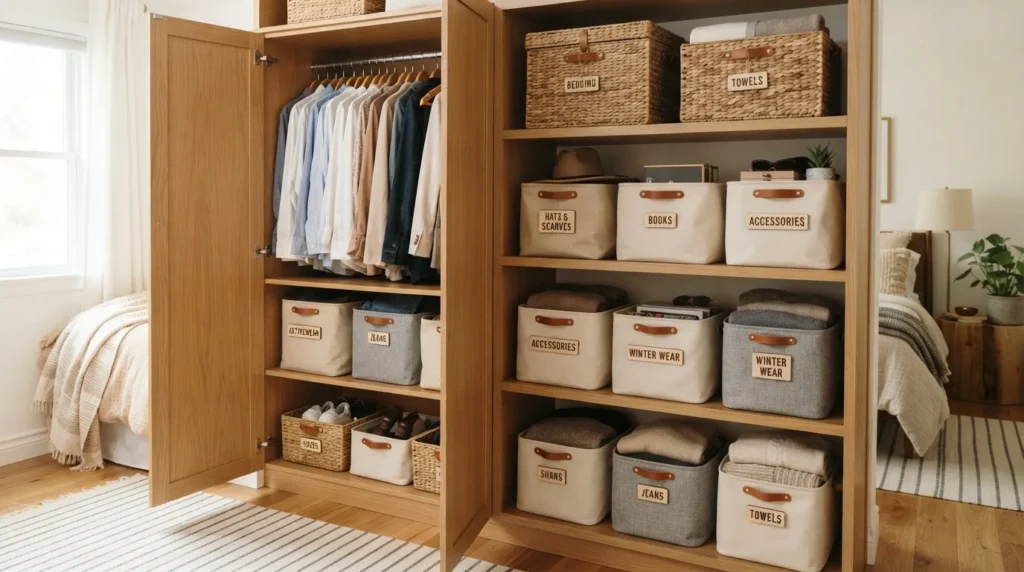
Matching or coordinated storage bins create a calmer visual field.
This doesn’t mean everything has to be identical. A few consistent materials and colors can be enough.
Neutral fabric bins, woven baskets, clear organizers, or simple boxes can help group similar belongings while making the room feel more intentional.
The key is choosing containers based on what you’re storing.
Open baskets are useful for frequently accessed items. Lidded boxes work better for belongings you rarely need. Clear containers can make sense when visibility is helpful.
How To Style It
Choose a small palette of storage materials.
For a soft bedroom, fabric or woven baskets can complement the décor. For a more contemporary room, simple matte boxes or clear organizers may work better.
Label containers when the contents aren’t immediately obvious.
Avoid buying storage containers before measuring the shelves or closet.
A container that looks perfect online can be surprisingly inefficient if it leaves awkward gaps.
Use the same style of container across a shelving unit when possible. Repetition creates the polished look associated with professionally organized spaces.
9. Keep Surfaces Light
Quick Benefits
- Creates visual breathing room
- Makes cleaning easier
- Highlights intentional décor
- Reduces distractions
- Makes the bedroom feel more spacious
Why It Works
Horizontal surfaces attract clutter.
Dressers, desks, shelves, and nightstands quickly become temporary homes for objects because they’re convenient.
But when every surface is occupied, the room can feel crowded even if the floor is relatively clear.
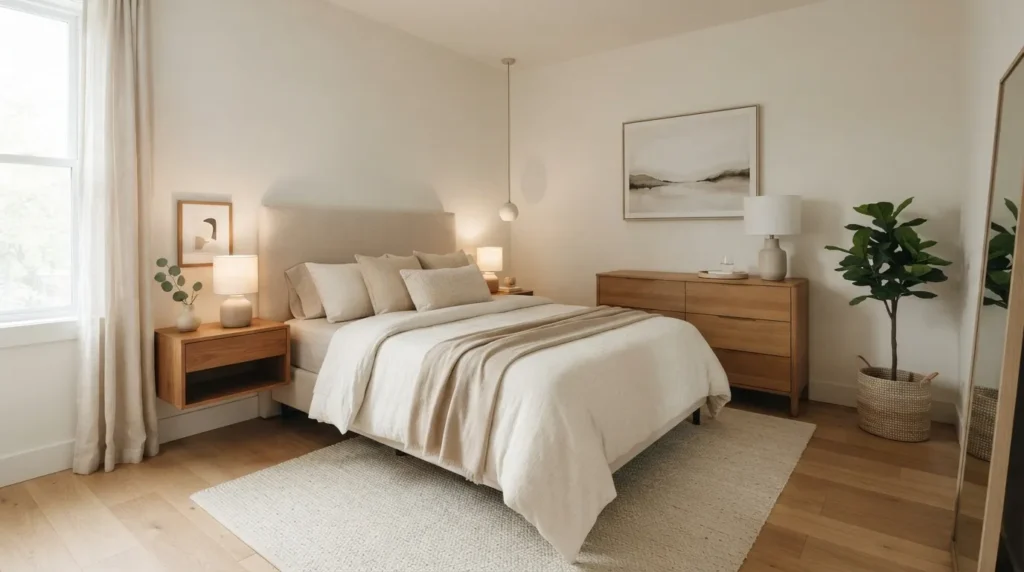
Interior designers often use negative space intentionally. Leaving portions of a surface empty gives the eye somewhere to rest.
This doesn’t mean your bedroom should have no personality.
A few well-chosen objects can have more impact than a collection of small decorations.
Instead of displaying ten items on a dresser, consider a lamp, mirror, tray, or vase with one or two meaningful objects.
How To Style It
Choose one focal arrangement for each major surface.
On a dresser, you might use a lamp, a framed mirror, and a small tray.
On a desk, keep only the items necessary for your work routine and perhaps one decorative object.
On shelves, group objects in small clusters and leave space between them.
Every few weeks, reassess the surfaces. If something consistently becomes a dumping ground, the problem may be the lack of a convenient storage solution rather than a lack of discipline.
10. Build a Daily Reset
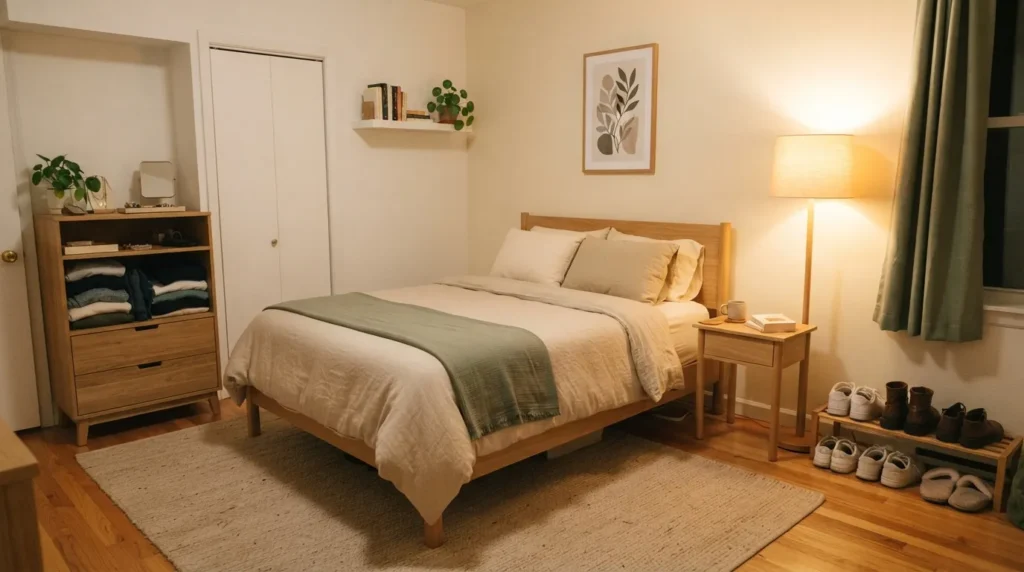
Quick Benefits
- Keeps clutter from accumulating
- Makes mornings easier
- Reduces cleaning time
- Supports long-term organization
- Creates sustainable habits
Why It Works
The best-organized bedroom isn’t one that looks perfect for one afternoon.
It’s a room that can return to order without requiring a major effort every week.
A short daily reset helps maintain that balance.
Before bed or after waking, return loose belongings to their homes, place clothing where it belongs, clear the nightstand, and put away anything that has migrated into the room.
This doesn’t need to take more than a few minutes.
The reason it works is simple: small amounts of clutter are much easier to manage than large ones.
You aren’t trying to constantly clean. You’re preventing little problems from becoming bigger ones.
How To Style It
Create a short list of actions that take five to ten minutes.
You might make the bed, put dirty clothes in the hamper, return shoes to storage, clear the nightstand, and put away anything left on the floor.
Keep a small basket available for belongings that belong elsewhere in the home.
Once or twice a week, use that basket to return everything to its proper location.
The routine should be realistic enough that you can continue it even on busy days.
Consistency will always outperform an elaborate organizing system that you rarely use.
How Interior Designers Make Small Bedrooms Feel Larger
Organization and visual design work together.
One of the easiest ways to make a small bedroom feel larger is to preserve visible floor space.
Choose appropriately scaled furniture and avoid filling every corner simply because it is available.
Use vertical storage where possible, and consider furniture with legs rather than heavy pieces that completely cover the floor.
Mirrors can also help reflect light and create the perception of additional space, particularly when positioned thoughtfully.
A consistent color palette can reduce visual fragmentation. Light walls, coordinated furniture, and similar storage materials can create a smoother visual flow.
Lighting matters too.
A combination of overhead lighting, bedside lamps, and strategically placed accent lighting can make the room feel deeper and more inviting.
The goal isn’t to trick the eye into believing the bedroom is enormous. It’s to remove unnecessary visual obstacles so the existing space feels more open.
Small Bedroom Storage Ideas That Don’t Look Bulky
Storage doesn’t have to look like storage.
A woven basket beside the bed can hold extra blankets. A storage bench can provide seating while hiding seasonal belongings. Floating shelves can display books without requiring a bulky bookcase.
A narrow dresser can use vertical space efficiently. Wall hooks can hold robes or bags without consuming floor area.
Another useful strategy is integrating storage into existing furniture.
A bed frame with drawers, a nightstand with a closed cabinet, or a wardrobe with built-in shelving can reduce the number of separate pieces in the room.
Whenever possible, choose closed storage for visually busy categories.
Open shelving is beautiful when curated, but clothing, cables, paperwork, and miscellaneous personal belongings can make open storage look crowded quickly.
How To Organize a Small Bedroom Closet
Begin by removing clothing that no longer belongs in your current wardrobe.
Then organize the remaining items according to how you dress.
You might group everyday clothing together and move seasonal pieces to higher shelves or under-bed storage.
Use matching hangers to create a cleaner visual line and maximize available hanging space.
Add shelf dividers if folded clothing tends to collapse into messy piles.
For accessories, use small bins or drawer organizers rather than letting belts, scarves, and jewelry spread across shelves.
Keep the floor as clear as possible. A narrow shoe rack or vertical organizer can make a major difference.
Most importantly, avoid overfilling the closet. If hangers are packed so tightly that you have to push clothing aside to see what’s there, the system is already working against you.
What to Keep on a Bedroom Dresser
A dresser doesn’t need to become a decorative showroom.
Keep items that are useful, attractive, or both.
A lamp, mirror, tray, vase, framed photograph, or small plant can create a polished arrangement without overwhelming the surface.
The practical items you use every day should ideally have storage rather than living permanently on top.
If you regularly find yourself dropping mail, receipts, jewelry, or clothing on the dresser, create a designated container or nearby storage solution.
A beautiful surface is much easier to maintain when it has a clear purpose.
Frequently Asked Questions
How do you organize a very small bedroom?
Start by removing belongings you no longer use, then prioritize vertical and hidden storage. Use furniture that serves multiple purposes, keep walkways open, and organize belongings according to how you actually use the room. Under-bed storage, tall shelving, coordinated containers, and a simplified nightstand can make a significant difference without adding unnecessary furniture.
What should I get rid of in a small bedroom?
Start with clothing that no longer fits or gets worn, duplicate accessories, broken items, unused décor, expired products, and belongings that don’t belong in the bedroom. The goal isn’t to remove everything that isn’t essential. Keep items that are useful, meaningful, or genuinely support your current lifestyle.
How do you make a small bedroom look organized?
Reduce visible clutter, keep surfaces relatively clear, use coordinated storage containers, and choose furniture with appropriate proportions. Repeating storage materials and finishes can create visual consistency. Keeping the floor and main walking paths open also makes the room feel significantly more orderly.
Is a bed with storage worth it for a small bedroom?
A storage bed can be very useful when you need additional space for seasonal clothing, bedding, or other occasional belongings. Before buying one, measure the room carefully and consider whether drawers can open comfortably. The storage should remain accessible enough that you will actually use it.
How do I organize clothes in a small bedroom?
Edit your wardrobe first, then group clothing by category and arrange frequently worn pieces where they’re easiest to reach. Matching hangers can make the closet feel more cohesive, while shelf dividers and baskets can control folded clothing. Move seasonal pieces to higher shelves or under-bed storage when practical.
How can I organize a small bedroom without buying anything?
Start by editing your belongings and changing how you use existing storage. Rearrange furniture to improve movement, group similar items together, repurpose boxes or baskets you already own, and create designated homes for everyday belongings. Often the biggest improvement comes from removing excess rather than purchasing another organizer.
How do I keep a small bedroom organized?
Use a short daily reset. Return clothes and belongings to their designated locations, clear the nightstand and floor, and deal with items that don’t belong in the room. Periodically reassess storage and remove things that have accumulated. A simple routine is easier to maintain than a complicated organizational system.
Conclusion
Organizing a small bedroom like an interior designer isn’t about making the room look perfectly staged. It’s about making thoughtful decisions about space, storage, furniture, and everyday habits.
Start by editing what you own. Then use vertical areas, under-bed storage, multifunctional furniture, and coordinated containers to make the most of the space you have.
Pay special attention to the places that collect clutter most often. A nightstand covered in everyday items, an overstuffed closet, or a dresser that constantly becomes a dumping ground usually signals that the storage system doesn’t match your routine.
You don’t need to solve everything at once.
Start with one drawer, one closet section, or one surface. Once that area works better, move to the next.
The most successful small bedrooms leave enough room for the things that matter: comfortable movement, restful sleep, personal style, and a little breathing room.
A beautifully organized bedroom isn’t necessarily one with the most storage. It’s one where everything you regularly use has a logical place—and where maintaining that order doesn’t feel like another full-time job.
Start small, edit thoughtfully, and let the organization evolve around the way you actually live.
Related Articles
- 20 Small Bedroom Ideas That Make a Room Feel Larger
- 15 Small Closet Organization Ideas for More Storage
- 18 Bedroom Storage Ideas for a Clutter-Free Space
- 20 Cozy Bedroom Decorating Ideas for a Relaxing Retreat
- 15 Small Space Organization Ideas That Actually Work