10 Small Balcony Ideas for Morning Relaxation
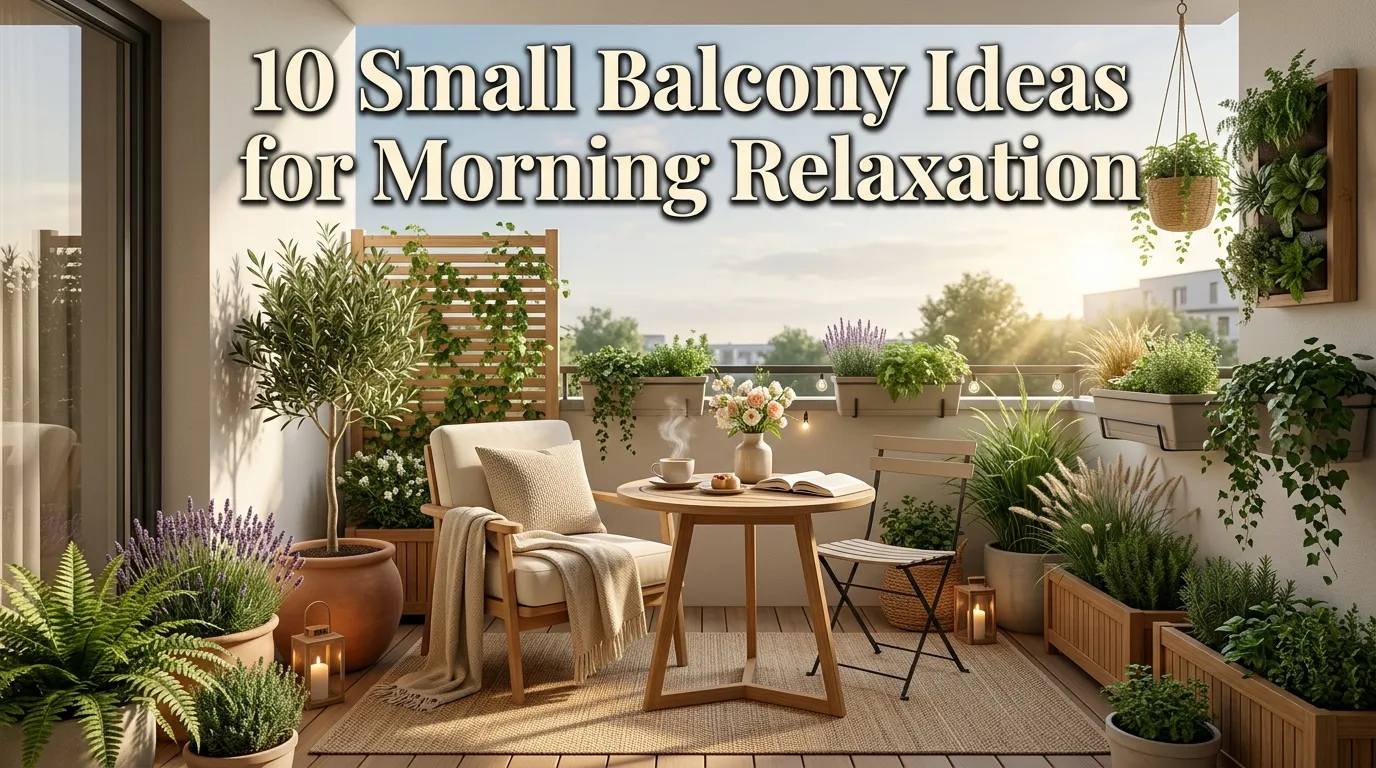
A small balcony can become one of the most enjoyable spaces in your home, especially when you give it a purpose beyond simply storing a few plants or outdoor items. Even a narrow apartment balcony can feel like a peaceful morning retreat with the right seating, lighting, greenery, and thoughtful use of vertical space.
The trick is not trying to squeeze a full-size patio into a tiny footprint. Instead, focus on creating a few comfortable moments: somewhere to sit with coffee, a little greenery to soften the view, enough room to move around, and textures that make the space feel welcoming. In my experience, the smallest balconies often benefit most from intentional decorating because every piece has a job.
Morning light can also make a balcony feel completely different from the rest of your home. A small café table beside a chair can create a natural spot for breakfast, while a railing planter or wall-mounted shelf can bring in greenery without taking up valuable floor space. Soft cushions, a lightweight outdoor rug, and warm natural materials can make the setting feel finished without making it crowded.
The best part is that you don’t need a large budget or a major renovation. Many of these ideas can be adapted for renters, apartment dwellers, and homeowners alike. You can start with one comfortable chair or a few plants and gradually build the space around how you actually use it.
Below, you’ll find ten practical ideas for turning a compact balcony into a relaxing morning escape—along with styling tips, layout suggestions, and visual inspiration to help you create a space you’ll genuinely look forward to using.
Table of Contents
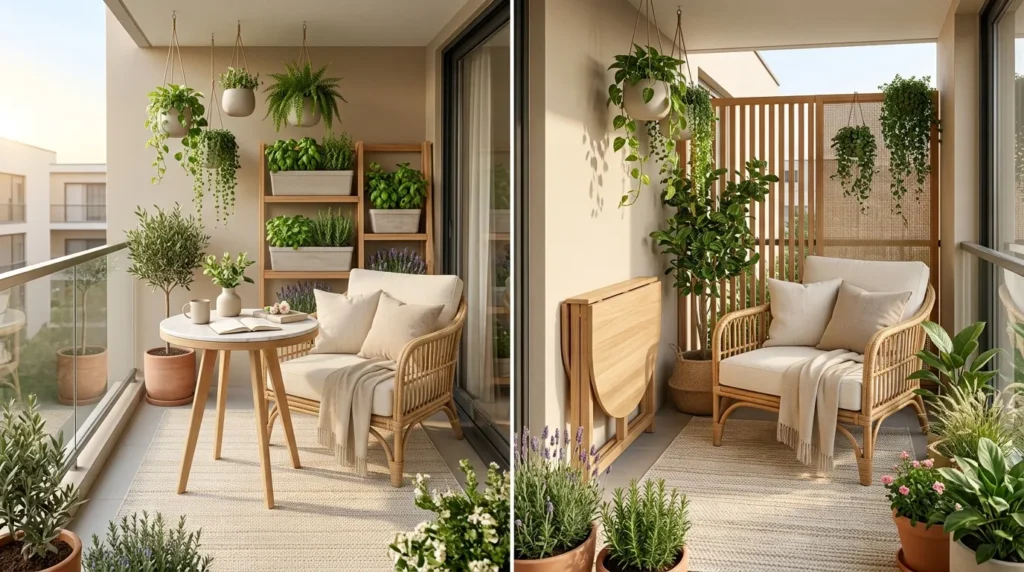
1. Compact Café Seating
A small table and comfortable chair can create an inviting breakfast and coffee corner without overwhelming the balcony.
2. Layered Greenery
Plants add privacy, texture, and a calming natural element while making efficient use of limited space.
3. Soft Outdoor Textiles
Outdoor cushions, rugs, and throws can make a hard balcony surface feel considerably warmer and more comfortable.
4. Vertical Plant Wall
Using walls and railings for greenery frees up floor space while creating a lush backdrop.
5. Warm Natural Materials
Wood, woven textures, and other organic materials give a small balcony a relaxed, welcoming character.
6. Morning Light Corner
Arranging seating around the balcony’s natural light can make your favorite morning routine feel more intentional.
7. Folding Furniture
Furniture that folds away gives you flexibility when the balcony needs to serve more than one purpose.
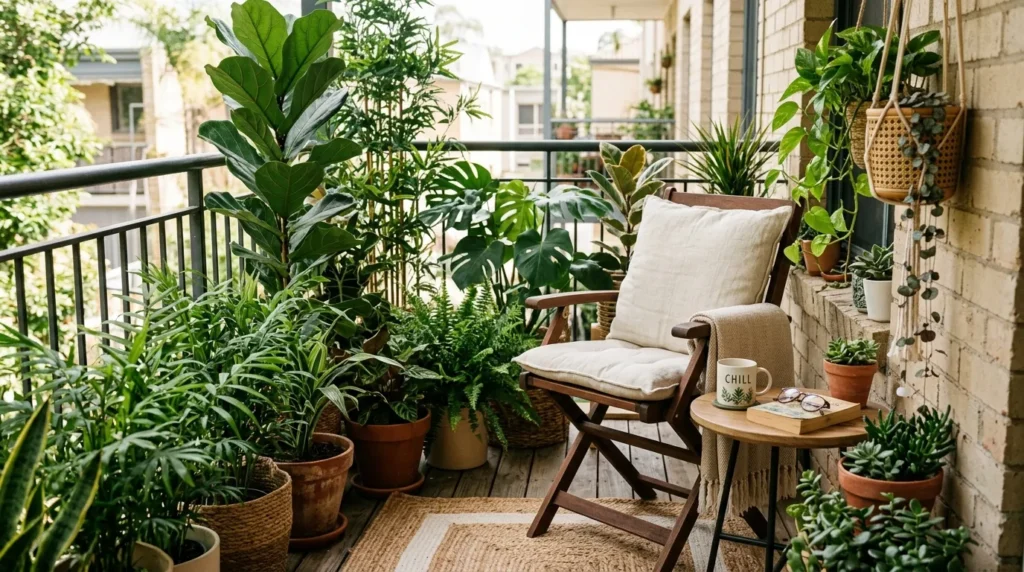
8. Privacy With Plants
Tall planters, climbing greenery, and screening elements can make a balcony feel more secluded.
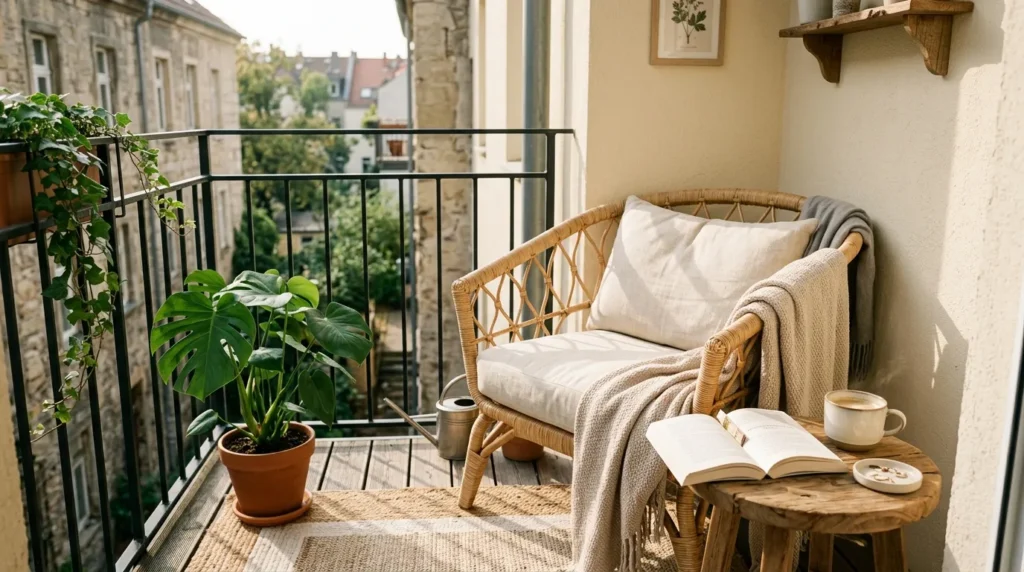
9. Minimal Reading Nook
A comfortable chair, small side table, and good book can turn even a narrow balcony into a personal retreat.
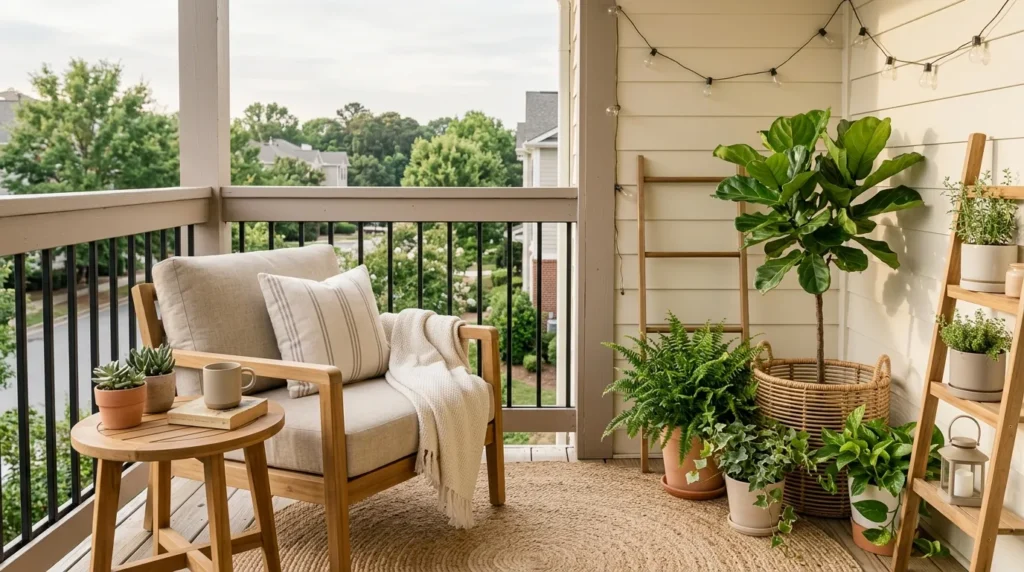
10. Calm Neutral Palette
A restrained palette of warm neutrals creates a visually peaceful space without making a compact balcony feel busy.
1. Compact Café Seating
Quick Benefits
- Creates a dedicated morning coffee spot
- Uses very little floor space
- Works well on narrow balconies
- Easy to adapt for renters
- Provides practical everyday seating
Why It Works
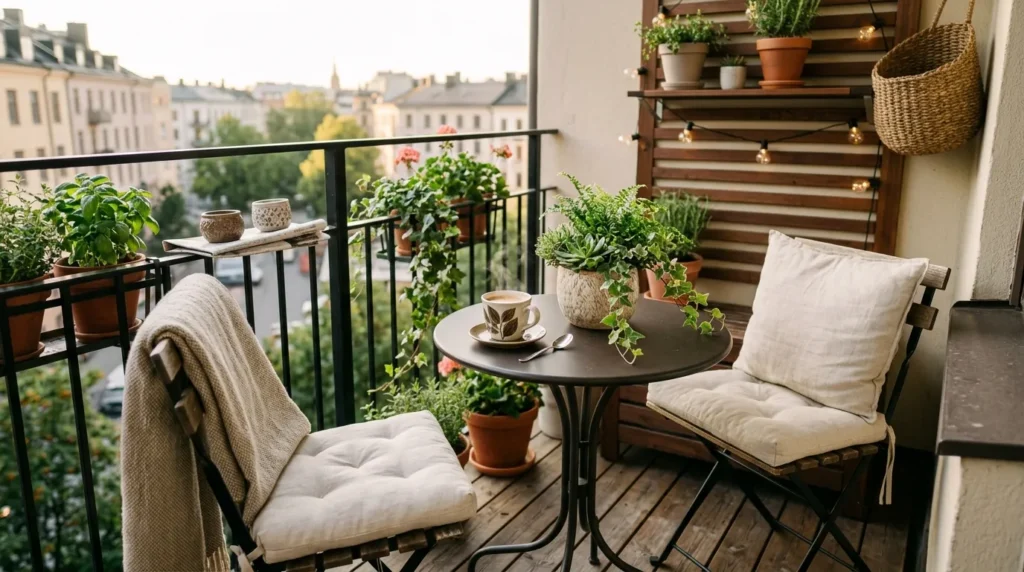
A tiny balcony does not need a full outdoor dining set to feel useful. A compact café-style arrangement can provide everything you need for coffee, breakfast, journaling, or a few quiet minutes before the day begins. The small scale keeps the floor visually open, which is particularly important when the balcony is narrow.
Round bistro tables are especially useful because they eliminate sharp corners and make movement around the furniture easier. A small square table can work just as well when the balcony has a more rectangular layout.
One thing that works especially well is positioning the table near the balcony railing rather than directly against the door. This keeps the entrance clear and allows the seating area to feel like a destination instead of an extension of the doorway.
Choose furniture that is comfortable enough for regular use, not simply attractive in photographs. A supportive chair and a stable tabletop will make you much more likely to actually use the space each morning.
How To Style It
Start with a compact outdoor table approximately the size needed for two coffee mugs and a small plate. Pair it with one or two slim chairs depending on available space. Folding bistro furniture is particularly useful when you need to occasionally clear the balcony.
For a softer appearance, choose cushions in oatmeal, beige, muted green, or another understated outdoor-friendly shade. Add a small potted plant beside the table rather than placing several objects directly on the tabletop.
If the balcony receives strong morning sunlight, look for weather-resistant finishes and fabrics designed for outdoor use. A small tray can also keep coffee essentials organized while adding a decorative element.
2. Layered Greenery
Quick Benefits
- Adds natural color and texture
- Helps soften hard architectural surfaces
- Can create a sense of privacy
- Works in small containers
- Makes the balcony feel more inviting
Why It Works
Plants are one of the easiest ways to make a small outdoor space feel less stark. Concrete, metal railings, painted walls, and glass doors can create a very hard visual environment, while foliage introduces softer shapes and natural variation.
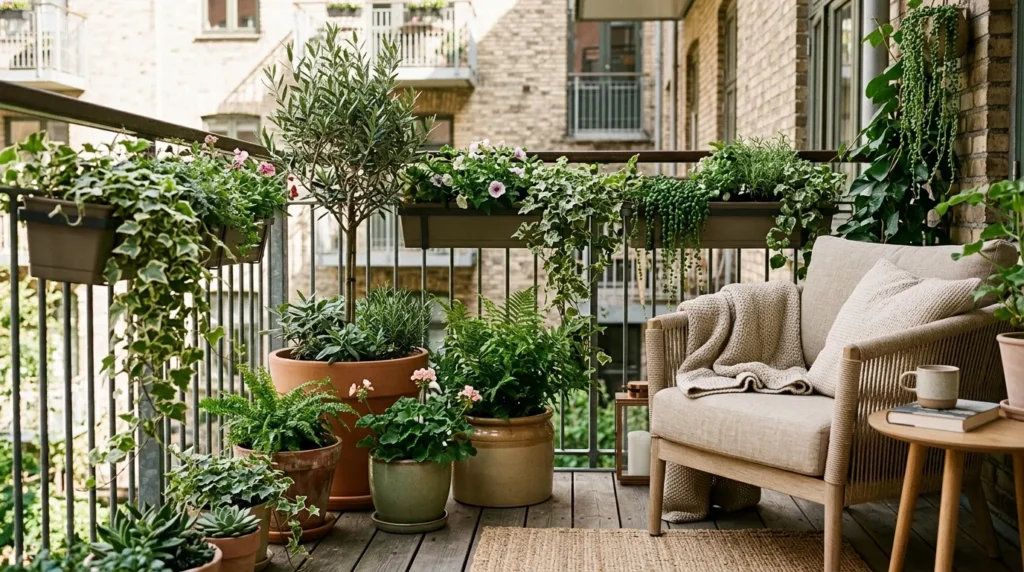
The key is layering rather than filling every available surface. A few plants at different heights can create much more visual interest than a large collection of identical pots spread across the floor.
For example, one medium planter can anchor a corner while a railing planter adds greenery at eye level. A small pot on a table can then bring the greenery closer to where you sit.
I’ve noticed that balconies feel particularly peaceful when the plants have slightly different leaf shapes and heights. You don’t need a complicated collection. Even three or four carefully selected plants can make a noticeable difference.
For apartment balconies, consider the amount of direct sunlight, wind exposure, and maintenance you can realistically provide before choosing plants.
How To Style It
Use a combination of floor planters, railing containers, and elevated pots. Keep the largest planter toward a corner so it doesn’t interrupt the main walking path. Medium plants can sit beside seating, while smaller varieties can decorate a table or shelf.
Choose containers in two or three complementary finishes instead of mixing too many colors. Terracotta, natural stone tones, matte ceramic, and simple woven planters can all work beautifully with neutral outdoor furniture.
If you’re decorating a rental, avoid permanent planters or fixtures unless your lease permits them. Railing-mounted planters can be especially useful because they provide greenery without sacrificing precious floor space.
For a morning-focused balcony, fragrant plants can also add another sensory layer, provided they suit your climate and light conditions.
3. Soft Outdoor Textiles
Quick Benefits
- Makes seating more comfortable
- Adds color without permanent changes
- Softens hard flooring
- Creates visual warmth
- Makes the balcony feel more finished
Why It Works
Outdoor balconies often contain materials that are practical but visually cold. Metal furniture, concrete flooring, glass doors, and painted walls can make the space feel more functional than relaxing.
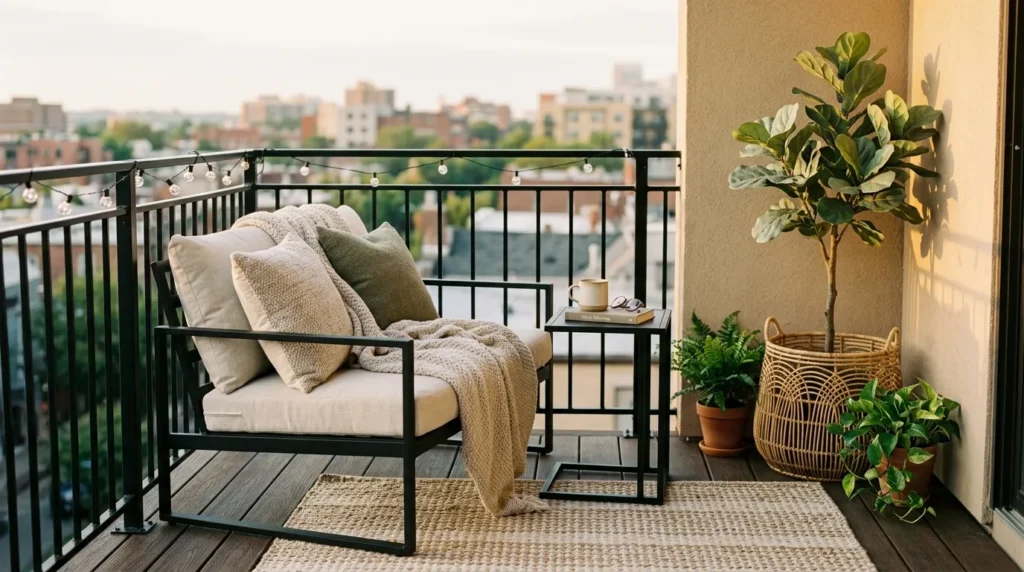
Textiles change that quickly. A weather-resistant cushion or small outdoor rug introduces softness and helps define the seating area without requiring structural changes.
The important distinction is choosing textiles designed for outdoor conditions. Indoor pillows and rugs may fade, absorb moisture, or deteriorate much faster when exposed to sunlight and weather.
A small rug can also help visually separate the relaxation area from the rest of the balcony. This is particularly helpful when the balcony serves several purposes.
You don’t need many textiles. One rug, a comfortable seat cushion, and perhaps one decorative pillow can be enough to create the effect.
How To Style It
Start with a small outdoor rug that fits underneath the front legs of your seating rather than trying to cover the entire balcony. This saves money and keeps the design proportional.
Layer cushions in closely related shades such as cream, sand, taupe, olive, or soft blue. If you prefer a more colorful balcony, use one accent color rather than introducing several competing shades.
For a relaxed look, natural-looking textures such as woven fabrics and subtle stripes work beautifully. Keep bulky throws to a minimum unless you have a dry storage solution.
A narrow outdoor storage bench can solve two problems at once by providing seating and a place to store cushions when the weather changes.
4. Vertical Plant Wall
Quick Benefits
- Saves valuable floor space
- Adds a strong visual focal point
- Creates a lush backdrop
- Can improve privacy
- Makes narrow balconies feel more layered
Why It Works
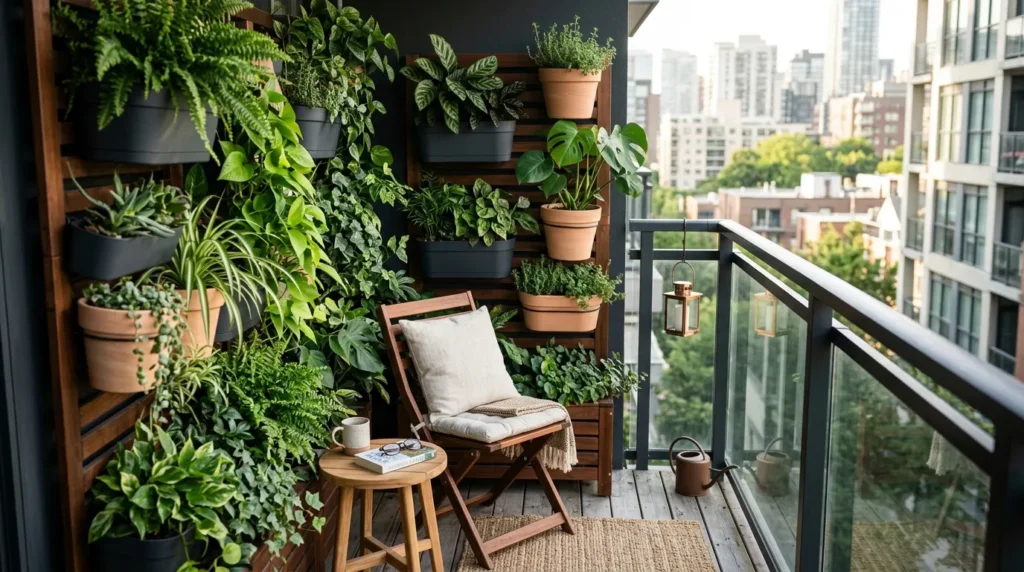
When floor space is limited, the walls become valuable decorating real estate. Instead of spreading plants across the balcony floor, moving some greenery upward creates depth without reducing the walking area.
A vertical plant display can be as simple as several wall-mounted planters or as elaborate as a dedicated plant panel. The best option depends on whether you own the property and can safely attach items to the wall.
The idea works particularly well on narrow balconies because the eye naturally travels upward. A vertical arrangement gives the space height and makes the balcony feel intentionally designed rather than simply furnished.
Another advantage is that greenery can serve as a visual backdrop behind a chair or small table. This creates a more immersive feeling, almost like a miniature garden room.
How To Style It
Choose one wall or section rather than covering every surface. Arrange planters at varied heights to create a natural rhythm.
If drilling isn’t permitted, use freestanding vertical plant stands or approved hanging systems instead. Always consider the weight of planters and water, especially when attaching anything to a balcony wall or railing.
For a sophisticated look, keep the containers within a consistent color family. Black or charcoal planters can create a modern appearance, while terracotta and natural wood feel warmer and more traditional.
Place your seating where the greenery can be enjoyed from eye level. The goal isn’t simply to display plants; it’s to make the entire morning seating area feel surrounded by nature.
5. Warm Natural Materials
Quick Benefits
- Creates a relaxed atmosphere
- Adds tactile interest
- Complements greenery
- Works with many decorating styles
- Prevents the space from feeling overly sterile
Why It Works
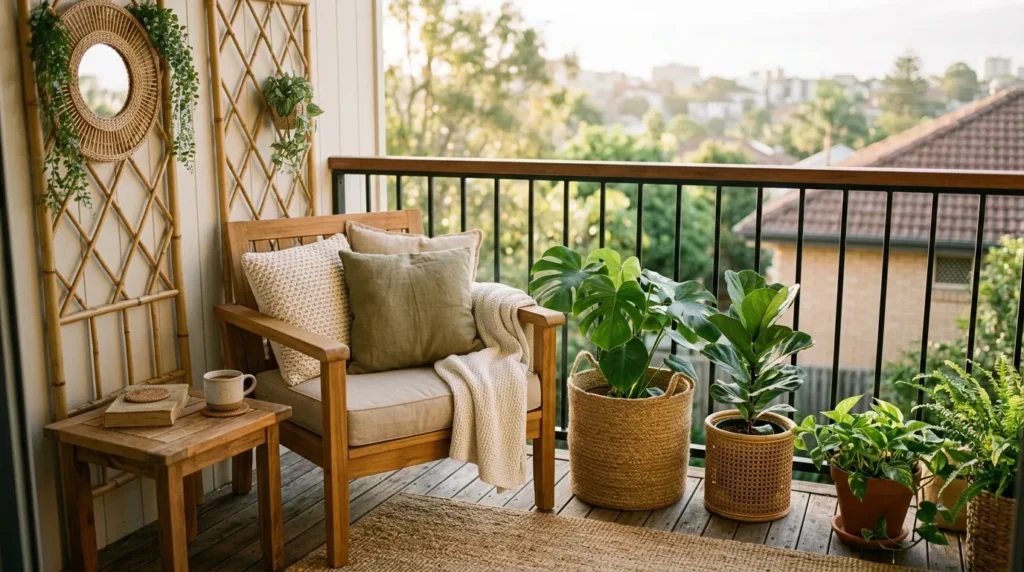
Natural-looking materials have a way of making outdoor spaces feel more grounded. Wood, rattan-inspired textures, woven baskets, bamboo details, and stone-look accessories can add warmth without requiring a complicated design scheme.
This is particularly useful when the balcony itself has modern construction materials. A glass railing and gray concrete floor can feel considerably softer when paired with a warm wood chair and woven planter.
The goal is balance. Too many different textures can make a small space look cluttered, so choose two or three dominant materials and repeat them.
A simple wooden stool can function as a side table. A woven planter can hide an ordinary plastic nursery pot. A small wood-look tray can keep your morning coffee accessories together.
These details make the balcony feel considered while still preserving its practical purpose.
How To Style It
Begin with one warm material as an anchor. If you have wooden furniture, repeat that tone with a tray, planter stand, or small accessory.
Woven textures are especially effective for softening modern spaces. Use them sparingly through baskets, planters, cushions, or outdoor accessories.
Avoid placing untreated materials in locations where they will be repeatedly exposed to rain or intense moisture unless they are specifically suitable for outdoor use.
For a relaxed morning aesthetic, combine natural materials with greenery and neutral textiles. This creates a cohesive look without requiring every item to match exactly.
6. Morning Light Corner
Quick Benefits
- Takes advantage of natural sunlight
- Creates a dedicated relaxation zone
- Makes mornings feel more intentional
- Can reduce the need for decorative lighting
- Helps define the balcony layout
Why It Works
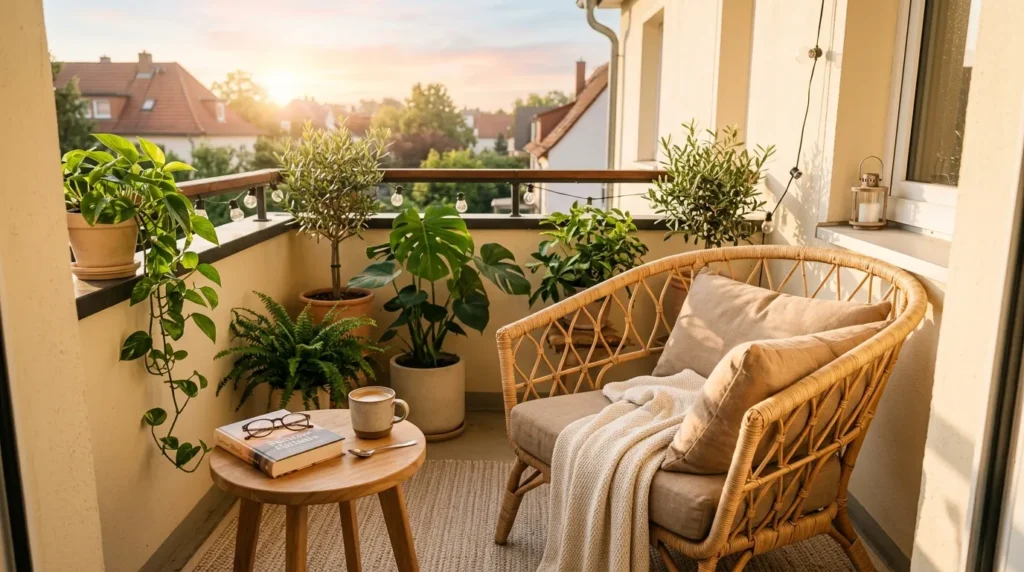
The direction and quality of natural light should influence how you arrange a small balcony. If your balcony receives pleasant morning sunlight, make that feature part of the design rather than treating it as incidental.
A chair positioned to catch early light can become an obvious place to sit with coffee, read, or simply enjoy the view. If the sunlight becomes intense later in the morning, adjustable shade can make the space more comfortable throughout the day.
Pay attention to glare and heat as well. A beautiful sunny corner isn’t particularly useful if the chair becomes uncomfortable after a few minutes.
One simple trick I always suggest is spending a few mornings observing the balcony before purchasing furniture. Notice where the sunlight lands, where the breeze moves, and which part of the space feels most comfortable.
How To Style It
Place your primary chair or small seating arrangement where the morning light is pleasant but doesn’t interfere with the doorway.
A light-colored cushion can keep the area feeling bright, while a small side table gives you a practical place for coffee, a phone, or a book.
If direct sunlight is strong, consider an outdoor shade sail, umbrella designed for compact spaces, or another suitable shading solution. Make sure any shade structure is securely installed and appropriate for your building.
Keep the décor relatively simple in this area. Let the natural light and outdoor view become part of the design.
7. Folding Furniture
Quick Benefits
- Maximizes flexibility
- Frees floor space when needed
- Works especially well for renters
- Makes cleaning easier
- Adapts to changing needs
Why It Works
Small balconies often have to do several jobs. One morning they may be a breakfast spot; later, they might need to accommodate laundry, plants, storage, or simply provide access to the door.
Folding furniture gives you a way to change the layout without permanently committing valuable floor space to bulky pieces.
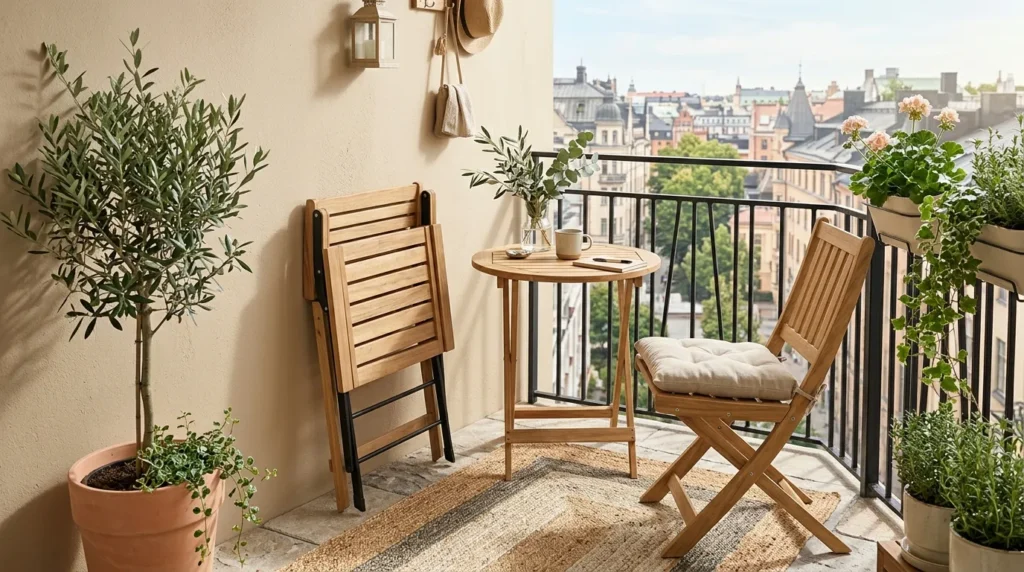
A folding café table can be opened for breakfast and folded against the wall afterward. Folding chairs can be stored when you need additional floor space.
This flexibility is particularly valuable in apartments where every square foot matters.
The important thing is choosing furniture that is easy to operate. If folding and storing it feels like a chore, you’re less likely to use the feature.
How To Style It
Look for slim folding chairs and tables with finishes suited to outdoor conditions. Neutral colors help the furniture blend into the balcony when folded.
Keep one comfortable chair permanently available if possible, then use folding pieces for occasional guests or meals.
A narrow wall-mounted table can provide a similar benefit, although renters should choose options that don’t require permanent installation unless allowed.
Keep folded furniture secured so it doesn’t shift or become a hazard during strong wind. Outdoor conditions should always influence where and how lightweight pieces are stored.
8. Privacy With Plants
Quick Benefits
- Creates a more secluded atmosphere
- Softens neighboring views
- Adds greenery
- Can make seating feel more private
- Works with many balcony styles
Why It Works
A balcony can be beautifully decorated and still feel uncomfortable if it is completely exposed to neighboring buildings. Privacy doesn’t necessarily require a solid screen. Plants can create a softer visual boundary while preserving light and airflow.
Tall container plants can be positioned along one side of the balcony, creating a natural screen behind or beside the seating area.
Vining plants can also add height when grown on an appropriate support, although you should check building rules before attaching anything to walls or railings.
The trick is to avoid blocking too much of the balcony. A completely enclosed space can feel smaller, while partial screening creates intimacy without making the area feel boxed in.
How To Style It
Place taller plants toward the side where privacy is most needed. Keep lower plants around the seating area so you maintain an open sightline.
Choose containers that are heavy and stable enough for the conditions of your balcony, especially in windy locations.
If you need immediate privacy, an outdoor screen or approved privacy panel can work alongside plants. Keep the colors neutral so the screen doesn’t overpower the greenery.
For a softer look, combine tall leafy plants with trailing varieties. This creates different levels of foliage and makes the privacy solution feel like part of the décor rather than an obstacle.
9. Minimal Reading Nook
Quick Benefits
- Creates a personal retreat
- Requires very little furniture
- Encourages quiet morning routines
- Works on narrow balconies
- Easy to personalize
Why It Works
Sometimes the best balcony design is the simplest. A comfortable chair, a small table, and a little greenery can be enough to create a genuine outdoor retreat.
A reading nook gives the balcony a clear purpose. Instead of wondering what to do with the space, you have an obvious destination for reading, journaling, listening to music, or enjoying your first cup of coffee.
This approach also prevents one of the most common small-space decorating mistakes: buying too much furniture simply because the balcony feels empty.
An empty section of floor isn’t necessarily wasted space. It can make the entire balcony feel more comfortable and easier to navigate.
How To Style It
Choose the most comfortable chair that fits without obstructing the doorway. Add a small side table that can hold a mug and book.
A cushion in a washable outdoor fabric can increase comfort while adding a subtle layer of color. If you like reading outdoors for longer periods, consider the direction of the sun so you aren’t staring directly into bright morning light.
Add one plant beside the chair and perhaps a small lantern or weather-resistant decorative object. Keep the rest of the balcony uncluttered.
The result should feel like a place you can settle into rather than another area that needs constant tidying.
10. Calm Neutral Palette
Quick Benefits
- Creates visual calm
- Makes small spaces feel less busy
- Works with existing architecture
- Coordinates easily with greenery
- Provides a timeless foundation
Why It Works
Color can dramatically affect how a small balcony feels. A large number of competing colors can make a compact area appear visually crowded, while a restrained palette gives the eye room to rest.
Warm neutrals are particularly versatile for outdoor spaces. Cream, beige, taupe, soft gray, natural wood, and muted greens can work together without making the balcony feel overly coordinated.
This doesn’t mean the space has to be boring. Texture becomes more important when the color palette is simple.
A woven cushion, ribbed planter, smooth ceramic pot, textured outdoor rug, and leafy plant can all look different while still belonging to the same visual family.
That’s why a neutral balcony can feel both peaceful and layered at the same time.
How To Style It
Choose two or three primary neutral shades and repeat them throughout the balcony. For example, combine cream textiles, natural wood, and muted green plants.
Use black or dark charcoal sparingly if you want more definition. A dark table frame or planter can provide contrast without overwhelming the palette.
Introduce visual interest through texture rather than additional colors. Woven materials, wood grain, foliage, stone textures, and subtle fabric patterns can keep the space interesting.
If you already own colorful outdoor furniture, don’t feel obligated to replace it. Instead, use neutral accessories around it to create more visual balance.
Creating a Morning Routine You’ll Actually Enjoy
The most successful balcony isn’t necessarily the one with the most decorations. It’s the one that makes you want to step outside.
Think about what you naturally enjoy in the morning. Maybe it’s coffee and a book. Maybe it’s watering plants, eating breakfast, stretching, or simply sitting quietly for ten minutes before the rest of the household wakes up.
Design the balcony around that routine.
If coffee is your ritual, prioritize a stable side table. If you love reading, invest more of your budget in a comfortable chair. If greenery makes you feel relaxed, use vertical planting and railing planters rather than sacrificing your entire floor area to pots.
This approach also helps prevent unnecessary purchases. Instead of starting with a decorative theme, start with the experience you want the balcony to provide.
A small space becomes much easier to decorate when every item supports that experience.
Small Balcony Layout Mistakes To Avoid
A few common choices can make a compact balcony feel much smaller than it actually is.
Blocking the doorway: Keep a clear path from the interior door to the rest of the balcony. A beautiful chair isn’t useful if everyone has to squeeze around it.
Using oversized furniture: Always measure the available floor area before purchasing outdoor seating. Check the furniture dimensions, not just the product photographs.
Filling every corner: Empty space is useful. It gives you room to move and makes the furniture feel intentional.
Ignoring weather exposure: Consider sunlight, rain, wind, and temperature changes before choosing furniture, cushions, rugs, or plants.
Using too many small decorations: Several tiny accessories can create more visual clutter than one or two larger, purposeful pieces.
Forgetting storage: If cushions, blankets, or folding furniture need to come inside every evening, decide where those items will live before decorating.
Choosing style over comfort: A balcony can look beautiful in photographs and still be unpleasant to use. Comfortable seating should always be part of the plan.
How To Make a Small Balcony Feel Larger
You don’t need to physically enlarge a balcony to make it feel more spacious.
Use furniture with visible legs rather than heavy pieces that sit directly on the floor. This allows more of the flooring to remain visible and creates a lighter visual effect.
Keep the central walking path open whenever possible. Pushing furniture toward the edges can create a more functional layout.
Use vertical space for plants, shelves, and decorative elements. Drawing the eye upward makes the room feel taller and keeps the floor clear.
A consistent color palette also helps. When furniture, textiles, and planters share related tones, the space feels less fragmented.
Finally, don’t underestimate the power of one strong focal point. A beautiful chair surrounded by greenery can be more effective than ten unrelated decorations.
Choosing Plants for a Balcony
Plant selection should always start with the conditions of your specific balcony.
Observe how much direct sun the area receives, whether the balcony is exposed to strong wind, and how often you realistically want to water and maintain plants.
For sunny balconies, choose plants suited to bright conditions. For shaded balconies, look for varieties that tolerate lower light. Container size also matters because larger plants generally require more root space and may need heavier, more stable pots.
If you’re new to balcony gardening, start with a small number of forgiving plants rather than buying an entire collection.
And remember that a balcony isn’t automatically suitable for every plant simply because it is outdoors. Heat reflected from walls, wind, and intense sunlight can create conditions very different from a garden bed.
When in doubt, ask a local nursery for recommendations based on your growing conditions.
Making the Space Rental-Friendly
Renters can create beautiful balcony retreats without making permanent changes.
Focus on freestanding furniture, removable rugs, portable planters, folding tables, and decorative pieces that can move with you.
Before attaching planters, privacy screens, shelves, or shade structures to a wall or railing, check your lease and building rules.
Weight is another consideration. Large ceramic planters, furniture, and other heavy objects should be used responsibly and according to building requirements.
A renter-friendly balcony can still feel highly personalized. The key is using pieces that create atmosphere without depending on permanent installation.
Frequently Asked Questions
How do I make a very small balcony cozy?
Focus on one primary purpose and choose appropriately scaled furniture. A comfortable chair, small side table, a few plants, and an outdoor rug can be enough. Keep the doorway and walking path clear, and use vertical space for greenery or décor so the floor doesn’t become crowded.
What furniture is best for a small balcony?
Compact café tables, folding chairs, slim lounge chairs, and multifunctional benches are excellent choices. Measure the balcony before buying anything and consider how the furniture affects the doorway and walking path. Furniture that can fold or serve more than one purpose is particularly useful when space is limited.
How can I add privacy to a small balcony?
Plants, tall containers, approved privacy screens, outdoor curtains, and climbing greenery can all help. Partial screening often works better than completely enclosing the balcony because it maintains light and airflow while making the seating area feel more secluded.
What colors work best for a small balcony?
Warm neutrals, soft whites, natural wood tones, muted greens, and subtle earth tones are easy to combine and can keep the space visually calm. If you prefer stronger colors, use one or two accents rather than several competing shades.
How can I decorate a balcony without drilling?
Use freestanding planters, folding furniture, railing planters approved for your building, outdoor rugs, portable shelves, and lightweight décor. Renters should always check lease and building rules before attaching anything to walls or railings.
How do I make a balcony feel like a morning retreat?
Start with the activity you want to enjoy there. Add comfortable seating, a convenient table for coffee or books, greenery, soft outdoor textiles, and lighting or shade appropriate to the space. Position the seating to take advantage of pleasant morning light while keeping the layout easy to navigate.
How many plants should I put on a small balcony?
There isn’t a fixed number. Start with a few plants at different heights and see how the space feels. One larger corner plant, a railing planter, and two or three smaller containers can create substantial visual impact without taking over the floor.
Conclusion
A small balcony doesn’t have to feel like an afterthought. With thoughtful furniture placement, a little greenery, comfortable textures, and a clear sense of purpose, even a narrow outdoor space can become one of the most relaxing corners of your home.
The most important step is to design around how you actually want to spend your mornings. A compact café table may be perfect for someone who loves breakfast outside, while another person may get much more use from a comfortable reading chair surrounded by plants.
Don’t feel pressured to complete everything at once. Start with the piece that will make the biggest difference to your daily routine, then build from there.
Perhaps it’s a comfortable chair. Perhaps it’s a few lush plants or a small outdoor rug. Once you create that first inviting corner, the rest of the balcony becomes easier to shape.
The goal isn’t to make a tiny balcony look like a large patio. It’s to make the space feel intentional, comfortable, and unmistakably yours.
Related Articles
- 15 Cozy Apartment Balcony Decorating Ideas
- 20 Small Patio Ideas for Comfortable Outdoor Living
- 17 Easy Indoor Plant Styling Ideas for Beginners
- 15 Small Space Decorating Ideas That Actually Work
- 20 Neutral Home Decor Ideas for a Calmer Space