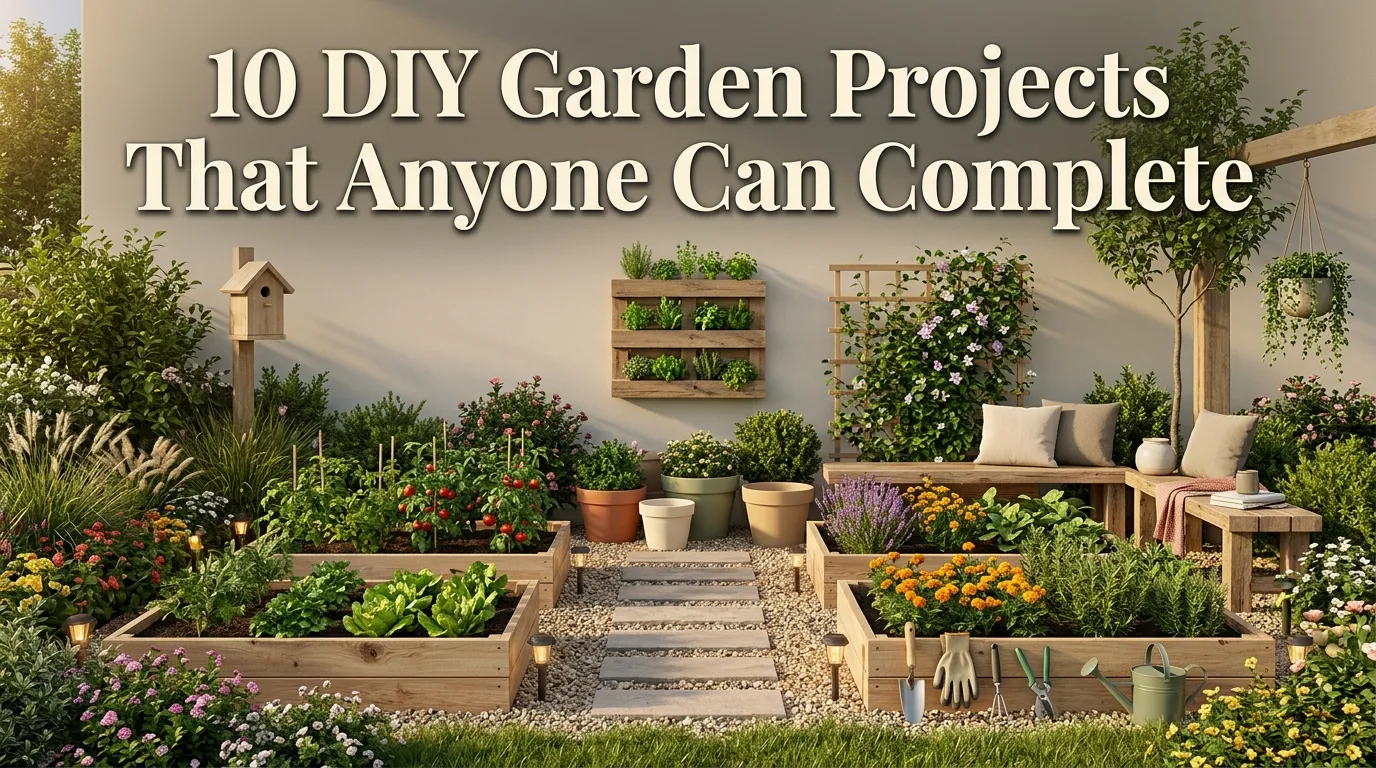
10 DIY Garden Projects That Anyone Can Complete
A garden does not have to be professionally landscaped to feel beautiful, useful, and inviting. Some of the most rewarding outdoor spaces are built gradually, one simple project at a time. A raised planter here, a small garden path there, or a handmade trellis can completely change how a backyard, patio, or side yard feels.
DIY garden projects are especially appealing because they let you improve your outdoor space without committing to a major renovation. You can choose projects based on your available time, budget, tools, and gardening experience. Some can be completed in an afternoon, while others are better treated as weekend projects.
If you are anything like me, the best garden projects are the ones that look good but also solve a practical problem. A trellis gives climbing plants somewhere to grow. A raised bed creates a defined planting area. A simple potting station gives gardening supplies a home. Even a basic path can make a garden easier to navigate while adding structure.
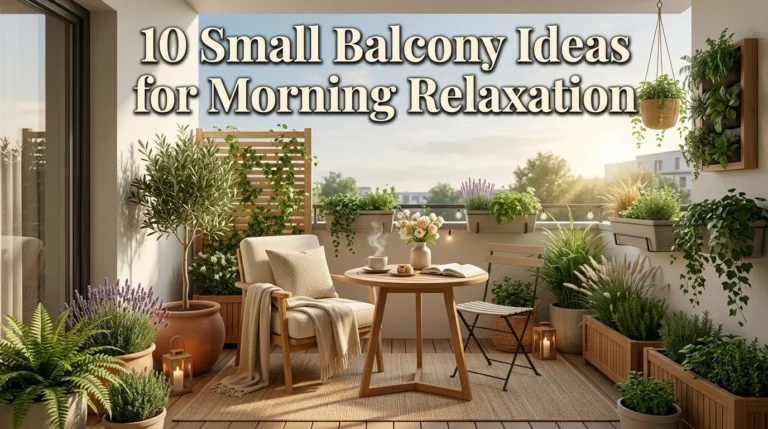
You also do not need a huge backyard to enjoy these ideas. Many can be adapted for balconies, patios, small yards, rental properties, and container gardens. The materials can often be adjusted to suit what you already have, which makes DIY gardening a practical way to work within a budget.
The projects below focus on approachable improvements rather than complicated construction. You will find ideas for planting, organization, garden structure, outdoor seating, and decorative details that can make your space feel more intentional.
Before starting any project, check the condition of your materials, use appropriate protective equipment, and choose tools that match your experience level. For projects involving permanent structures, digging, electrical work, or heavy loads, follow local requirements and manufacturer instructions.
Start with one project that solves a real need in your garden. Once you see the difference, you may find yourself looking at the rest of the yard with a completely different eye.
Table of Contents
1. Simple Raised Beds
Create defined planting areas while making vegetables, herbs, and flowers easier to organize.
2. Wooden Garden Trellis
Give climbing plants a sturdy structure while adding height and visual interest.
3. Container Herb Garden
Turn a small patio, balcony, or unused corner into a convenient herb-growing space.
4. Gravel Garden Path
Create an affordable walkway that adds structure and makes different garden areas easier to reach.
5. DIY Potting Bench
Give gardening tools, soil, pots, and planting supplies a dedicated workspace.
6. Painted Garden Pots
Refresh ordinary containers with simple finishes that coordinate with your outdoor space.
7. Simple Compost Station
Create a practical place to manage suitable garden and kitchen organic material.
8. Outdoor Garden Bench
Add a comfortable resting place where you can enjoy the garden you’ve created.
9. Vertical Plant Wall
Make use of walls and fences when ground space is limited.
10. Solar Garden Lighting
Add gentle evening illumination to paths, planting beds, and outdoor sitting areas.
1. Simple Raised Beds
Quick Benefits
- Creates organized planting areas
- Makes garden layouts easier to manage
- Can improve accessibility
- Defines flowers and vegetables visually
- Works in small and large gardens
Why It Works
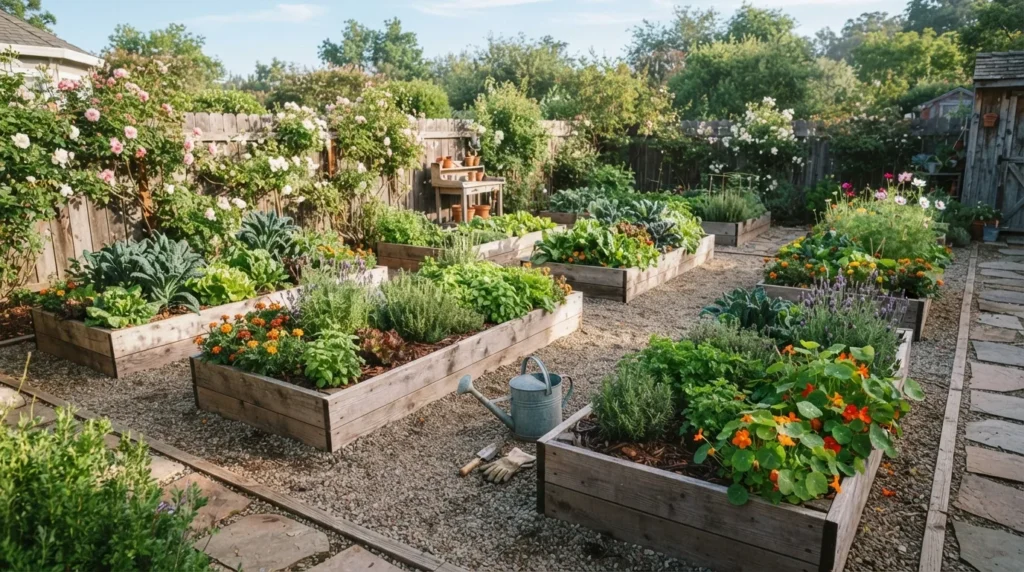
Raised beds are one of those projects that can make a garden look more organized almost immediately. Instead of planting directly into one large area, you create defined sections where vegetables, herbs, flowers, or pollinator-friendly plants can have their own space.
The structure also makes it easier to think about soil, spacing, and seasonal planting. You can create separate beds for different types of plants rather than trying to manage everything in one large border.
A raised bed does not need to be elaborate. Simple untreated or appropriately rated outdoor lumber, stone, brick, or other suitable materials can create a clean border.
The size matters more than decoration. A bed that is too wide can make the center difficult to reach, while a narrow bed may not provide enough planting space.
For gardeners with limited mobility, raised beds can also be designed at a more comfortable working height, provided the structure is engineered appropriately for the soil load.
How To Style It
Start by choosing a level location with enough sunlight for the plants you intend to grow.
Mark the outline before buying materials. This gives you a chance to see how the bed affects walking paths and existing planting areas.
Keep the width manageable so you can reach the middle from either side. If the bed is against a wall or fence, make it narrower because access will be limited to one side.
Use a simple rectangular shape for an easy first project. Once the basic layout works, you can repeat the shape to create a larger garden system.
Fill the bed with appropriate growing medium rather than simply using whatever soil is available.
Finish the surrounding area with mulch, gravel, stepping stones, or grass depending on the rest of your landscape.
If you plan to grow food, choose materials and soil products appropriate for edible gardening.
2. Wooden Garden Trellis
Quick Benefits
- Supports climbing plants
- Adds vertical interest
- Makes use of limited ground space
- Creates a garden focal point
- Can provide partial privacy
Why It Works
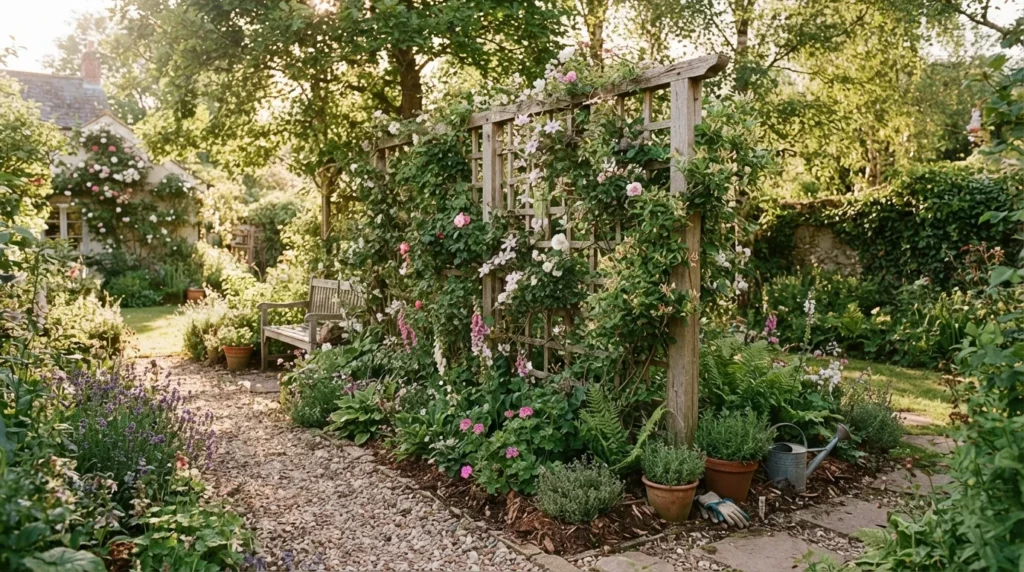
Gardens are often designed horizontally, but adding height can dramatically change the way the space feels. A trellis provides a simple way to bring vertical structure into an otherwise flat planting area.
Climbing plants can use the structure to grow upward rather than spreading across the ground. Depending on the plant, a trellis can also create seasonal screening or a decorative backdrop.
You can build a basic trellis from wood strips, bamboo, metal mesh, or other outdoor-rated materials suitable for the plants you plan to support.
The important thing is to consider the mature size and weight of the plant. A lightweight annual vine requires a different support system from a vigorous perennial climber.
A trellis can also make a small garden feel more layered. Instead of seeing only the ground plane, your eye moves upward through foliage, flowers, and structure.
How To Style It
Choose a location where the trellis will receive appropriate light for the climbing plant.
A simple rectangular wooden frame with evenly spaced horizontal and vertical pieces creates a timeless appearance.
Paint or stain the structure only with products appropriate for outdoor use and compatible with the material.
Secure the trellis firmly. Do not rely on the plant itself to stabilize the structure, especially when mature growth becomes heavy or catches wind.
Place the trellis behind a flower bed, beside a patio, or against a suitable wall or fence.
For a softer appearance, surround the base with lower-growing plants so the structure feels integrated into the garden rather than simply placed on top of it.
3. Container Herb Garden
Quick Benefits
- Works in small spaces
- Keeps herbs close to the kitchen
- Easy to rearrange
- Suitable for beginners
- Adds useful greenery
Why It Works
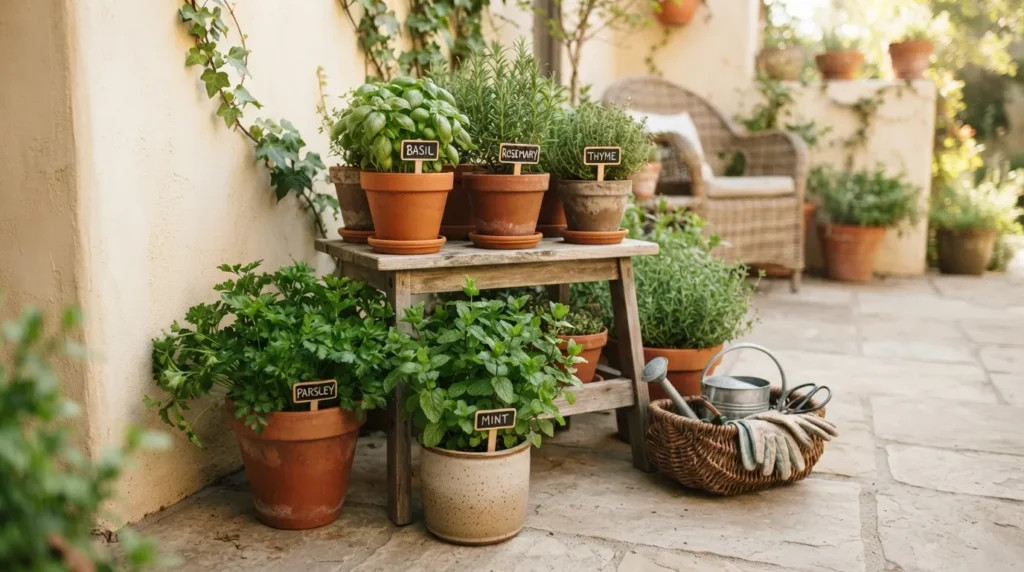
You do not need a large backyard to grow useful herbs. A few containers can provide a compact garden that works on a patio, balcony, deck, windowsill, or small outdoor corner.
Container gardening is particularly approachable because you can control the location, growing medium, and arrangement more easily than with an entire garden bed.
Herbs also make excellent candidates because many varieties can be grown in relatively small containers when provided with appropriate light, drainage, and care.
A container herb garden can be both practical and decorative. Grouping several pots together creates a cohesive display while keeping the plants accessible.
One advantage is flexibility. If a location does not receive enough sunlight, you can move containers when their size allows it.
How To Style It
Choose containers with drainage holes and sizes appropriate for the mature herbs.
Group herbs with similar growing requirements rather than choosing containers solely based on appearance.
Place the garden where it receives the light required by the specific herbs you select.
Use a quality container growing medium rather than dense garden soil.
For a cohesive look, use matching pots in different sizes or choose one material, such as terracotta, glazed ceramic, or galvanized metal.
A small wooden stand can add height to the arrangement, but keep taller containers from blocking sunlight for shorter plants.
Label the herbs with simple wooden or metal markers if you are growing several varieties.
4. Gravel Garden Path
Quick Benefits
- Defines garden areas
- Provides a practical walking route
- Can be less expensive than hard paving
- Adds texture
- Works with many garden styles
Why It Works
A garden path does more than help you walk from one area to another. It guides movement and gives the landscape a sense of structure.
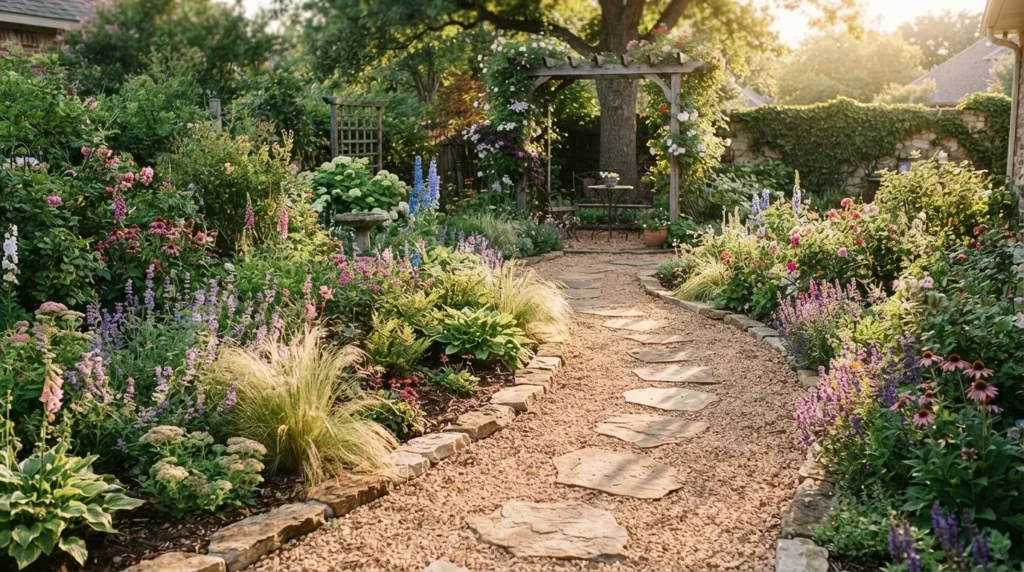
Gravel is an approachable material for creating informal paths because it can adapt to curves and irregular garden layouts. It also provides a different texture from grass, soil, and planting beds.
The success of a gravel path depends heavily on preparation. Simply spreading loose gravel over grass may look fine temporarily, but weeds, uneven surfaces, and material migration can become problems.
A properly prepared base and suitable edging can help the path remain more stable.
The type and size of gravel also matter. Very small material can move easily, while larger stones may be uncomfortable underfoot.
For accessibility and frequent use, consider whether loose gravel is appropriate for your needs.
How To Style It
Mark the path with a hose, rope, or landscape paint before digging. Curves can look natural, but the route should still feel practical.
Remove vegetation and prepare the ground according to the site conditions and chosen path construction.
Consider landscape fabric where appropriate, understanding that it is not a complete substitute for proper preparation and maintenance.
Add edging to help keep gravel within the intended area.
Choose a gravel color that complements your home’s exterior, garden structures, and existing stonework.
Use stepping stones at transitions or in areas where you want a more stable walking surface.
Keep the path wide enough for comfortable movement, especially if you regularly carry watering cans, baskets, or gardening tools.
5. DIY Potting Bench
Quick Benefits
- Creates a dedicated gardening workspace
- Keeps tools organized
- Makes repotting easier
- Provides storage
- Can be customized to your garden
Why It Works
Gardening involves more small tasks than most people realize. Filling containers, preparing seedlings, sorting tools, mixing growing medium, and cleaning pots can quickly become messy when there is no dedicated work surface.
A potting bench gives those activities a home.
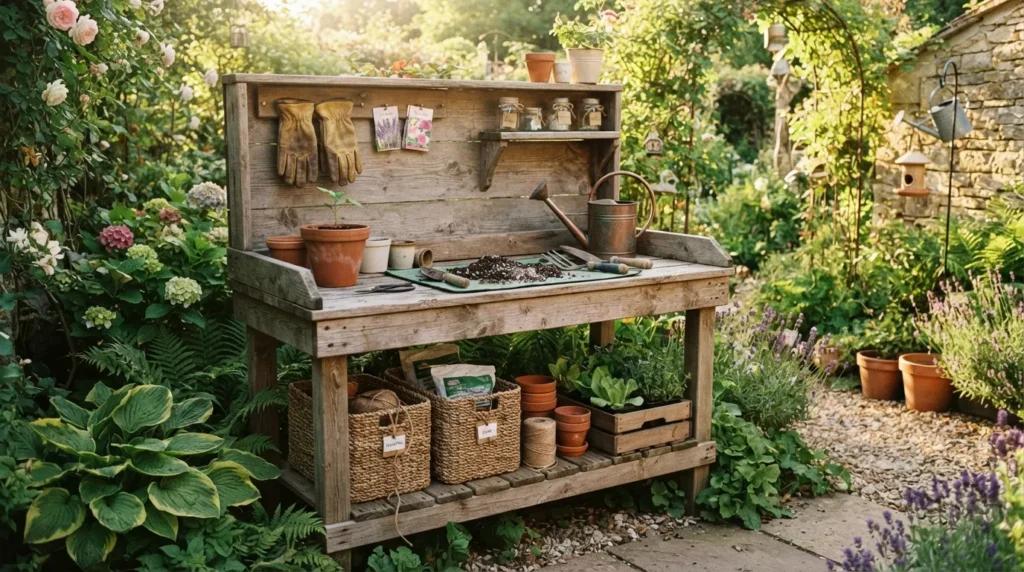
It does not need to be complicated. A sturdy outdoor work surface with a lower shelf can provide enough functionality for many home gardeners.
The best design depends on how you actually garden. Some people need storage for hand tools, while others want space for bags of growing medium, pots, labels, and seed trays.
A DIY version also allows you to use reclaimed or leftover materials when they are structurally appropriate.
Think of it as a small outdoor workstation rather than another decorative object.
How To Style It
Choose a location that is convenient to your garden but does not interfere with walking paths.
A roofed or sheltered location can help protect the work surface from weather.
Include a durable countertop, lower storage shelf, and hooks for frequently used hand tools.
Use bins or baskets to organize small supplies such as plant labels, gloves, twine, and pruners.
Add a shallow tray or removable container for soil-related tasks so cleanup is easier.
If you build from wood, use outdoor-appropriate materials and finishes suitable for the environment.
Keep heavy materials low and stable, and ensure the bench is structurally sound before placing equipment on it.
6. Painted Garden Pots
Quick Benefits
- Refreshes inexpensive containers
- Adds coordinated color
- Gives old pots a second life
- Easy to personalize
- Works for patios and small gardens
Why It Works
Sometimes a garden needs a visual refresh rather than another large project. Painting plain or tired-looking containers can provide a noticeable change with relatively little material.
This is also a useful way to create consistency when you have collected pots from different sources over the years.
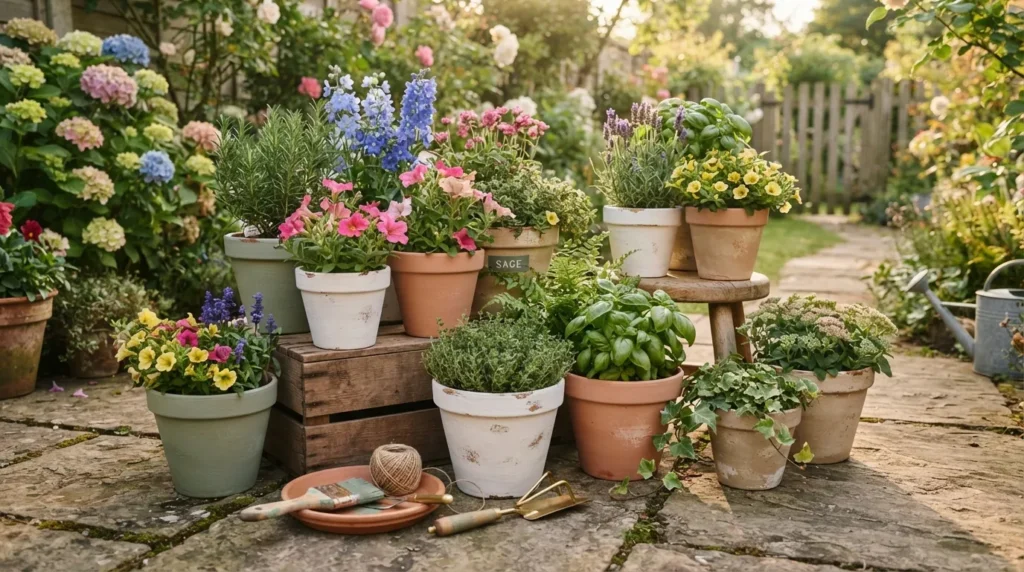
A unified finish can make mismatched containers feel more intentional.
You can use one color throughout the garden or create a small palette that connects with your home’s exterior.
The project is particularly flexible because containers can be updated again later.
The most important consideration is choosing a coating appropriate for the material and outdoor exposure. Surface preparation also affects durability.
How To Style It
Clean the pots thoroughly and allow them to dry before painting.
Use products specifically intended for the material and outdoor conditions.
For a classic look, try muted white, warm gray, sage, terracotta-inspired shades, or earthy brown.
If you prefer something more decorative, use simple stripes, geometric shapes, or painted rims rather than covering every surface with a complicated pattern.
Keep the plant itself in mind. A bold pot can compete with colorful flowers, while a neutral finish lets the foliage become the focal point.
Group pots in odd numbers or varied heights to create a more natural arrangement.
Allow painted surfaces to cure according to the product instructions before placing them outdoors or exposing them to moisture.
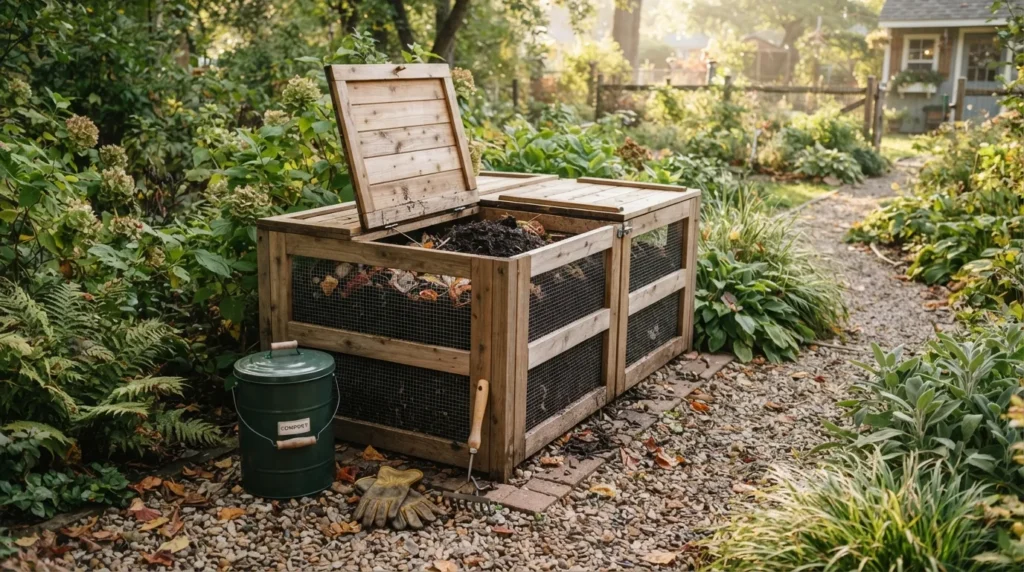
7. Simple Compost Station
Quick Benefits
- Gives organic garden material a dedicated location
- Can reduce suitable household and garden waste
- Produces useful compost over time
- Keeps composting organized
- Can be adapted to different garden sizes
Why It Works
Composting can turn appropriate organic material into a valuable garden resource while giving you a practical reason to organize food scraps and garden debris.
A compost station does not have to be complicated. The right setup depends on your available space, local regulations, climate, and what materials you intend to compost.
Good airflow, moisture management, and a suitable balance of carbon-rich and nitrogen-rich materials are important for successful composting.
A simple contained area can also look much neater than an unstructured pile.
The biggest mistake is treating compost as a place for every type of household waste. Not everything belongs in a home compost system, and local guidance should always take priority.
How To Style It
Choose a location with suitable drainage and convenient access.
Build or purchase a container that allows adequate airflow. Pallets, wire mesh, wood, or purpose-built compost bins can work depending on the setup.
Keep a small covered container nearby for collecting suitable kitchen scraps.
Balance green materials such as appropriate fresh plant matter with brown materials such as dry leaves and other suitable carbon-rich material.
Avoid adding meat, dairy, pet waste, or other materials unless your specific composting system and local guidance explicitly allow them.
Turn or aerate the compost when appropriate and monitor moisture. It should generally feel damp rather than saturated.
Keep the station visually tidy by surrounding it with a simple screen, fence, or planting where appropriate.
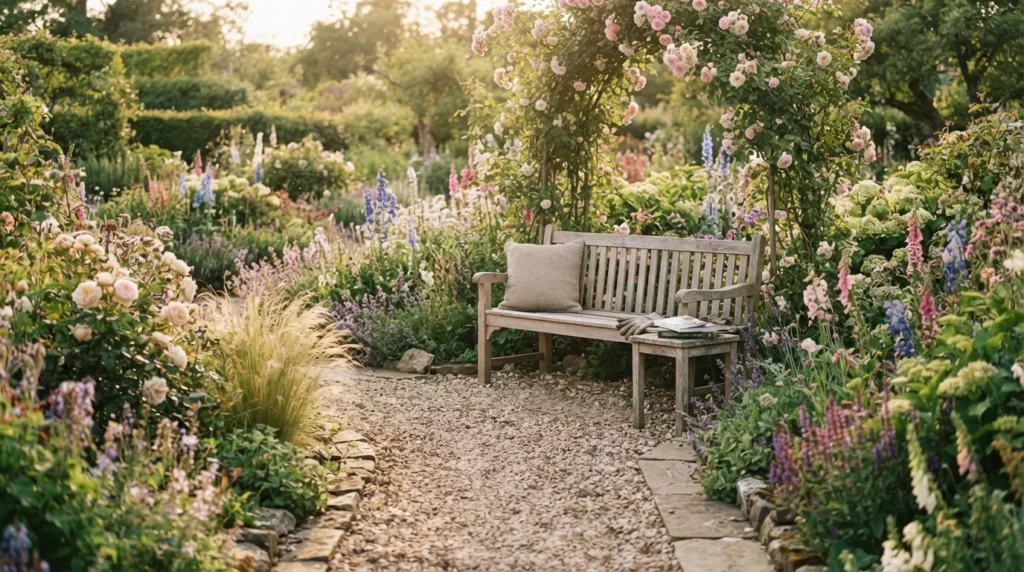
8. Outdoor Garden Bench
Quick Benefits
- Adds useful seating
- Creates a destination in the garden
- Provides a place to rest
- Can become a visual focal point
- Works in many garden styles
Why It Works
A garden becomes more enjoyable when there is somewhere to sit and experience it.
A bench can transform an overlooked corner into a destination. It gives you a place to read, drink coffee, observe plants, or simply pause after gardening.
You do not need an elaborate outdoor lounge area. A simple sturdy bench can be enough.
The location is particularly important. A bench placed at the end of a path can create a visual destination. One positioned beneath a tree can provide shade when conditions permit. Another beside a flower bed can bring you closer to the plants.
Comfort and durability should take priority over appearance. Outdoor furniture needs to withstand the conditions of its location.
How To Style It
Choose a stable, weather-appropriate bench design and place it on a firm, level surface.
Position it where you can actually enjoy something: a flower bed, view, water feature, mature tree, or particularly attractive planting area.
Add a removable outdoor cushion if appropriate for your climate and storage situation.
A small side table can hold a drink or gardening book, but avoid cluttering the seating area.
Frame the bench with plants rather than surrounding it completely. Leave enough clearance for comfortable access.
For a natural look, use wood with simple lines and pair it with stone, gravel, or greenery.
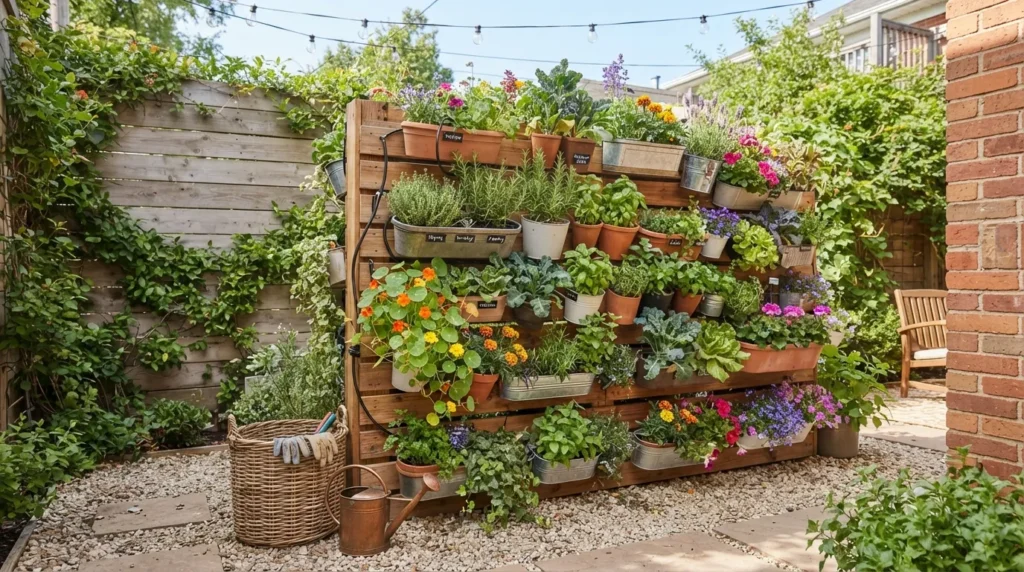
9. Vertical Plant Wall
Quick Benefits
- Uses walls and fences efficiently
- Adds greenery without consuming much floor space
- Creates a strong focal point
- Works for decorative and edible plants
- Can improve privacy in suitable locations
Why It Works
Vertical gardening is particularly useful when horizontal space is limited.
Instead of spreading plants across the ground, you use a wall, fence, trellis, or freestanding vertical structure to create another growing layer.
This can be as simple as a series of containers mounted to a suitable support or a purpose-built vertical planter.
The important thing is to understand the weight involved. Wet soil and mature plants can become surprisingly heavy, so the support system must be appropriate for the load.
Watering is another consideration. Plants positioned high on a wall can dry out faster than plants at ground level.
Vertical gardening works best when the plants are selected for the specific light, moisture, and structural conditions.
How To Style It
Choose a wall or fence that receives suitable light.
Use containers designed for outdoor exposure and secure them properly.
Group plants according to their growing needs. Do not place shade-loving plants in a location that receives intense afternoon sun simply because the arrangement looks attractive.
Use repeated containers for a cohesive appearance or mix materials within a controlled palette.
Leave enough space between plants for airflow and maintenance.
For a decorative wall, combine foliage textures and plant heights. For an edible garden, group herbs or suitable compact vegetables based on their requirements.
Inspect the mounting system regularly, especially after severe weather.
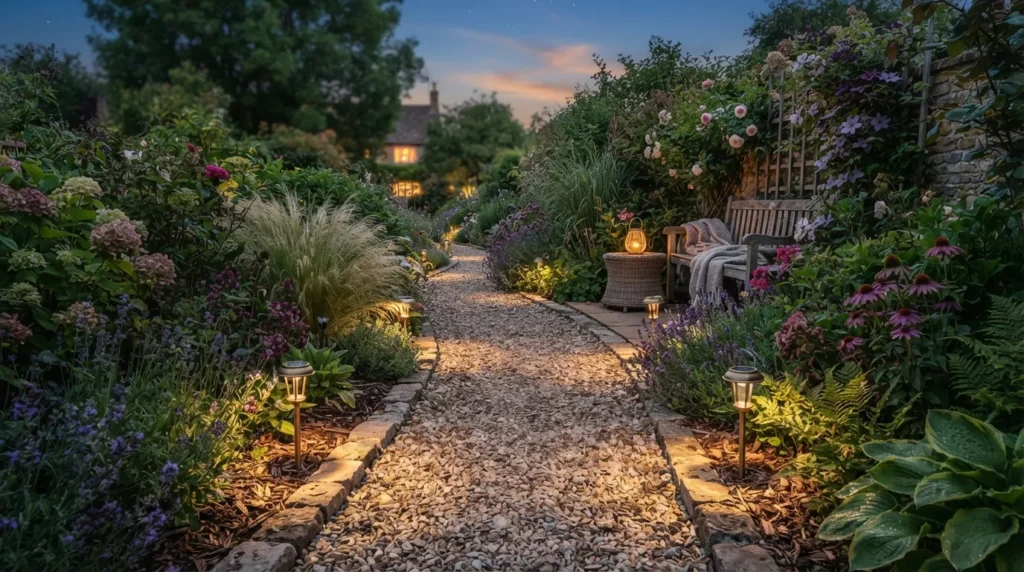
10. Solar Garden Lighting
Quick Benefits
- Extends garden enjoyment into the evening
- Adds gentle visual definition
- Can highlight paths and planting areas
- Requires no traditional wiring for many models
- Easy to reposition
Why It Works
A garden can look completely different after sunset. Solar garden lights provide a relatively simple way to add subtle illumination without creating a complicated electrical project.
The best lighting does not necessarily make the entire garden bright. Instead, it helps define paths, highlight plants, and create small points of interest.
Path lights can guide movement, while spot-style fixtures can draw attention to trees, architectural features, or special plants.
Because solar lights depend on available sunlight, placement matters. Shaded locations may not provide enough charging time for reliable performance.
Quality also varies considerably, so choose products appropriate for outdoor exposure and follow the manufacturer’s installation and operating instructions.
How To Style It
Start by identifying areas that would benefit from gentle illumination.
Place path lights at intervals rather than creating an uninterrupted line of bright fixtures.
Use a few accent lights to highlight particularly attractive trees or planting beds.
Avoid pointing bright lights directly toward seating areas or neighboring properties.
Keep the overall effect subtle. Too many lights can make a garden feel harsh rather than relaxing.
Clean solar panels periodically so they can receive adequate sunlight.
Position fixtures where they receive sufficient direct light during the day, while keeping them clear of dense foliage that may block the panel.
Frequently Asked Questions
What is the easiest DIY garden project for beginners?
Container gardening is one of the easiest places to start because it requires relatively few materials and can be adapted to small spaces. Painting existing garden pots is another simple project that can refresh an outdoor area quickly. If you want a larger improvement, a basic raised bed can be approachable when its size, materials, and construction are kept simple.
What DIY garden projects can be completed in one day?
Depending on your experience and the size of the project, painting garden pots, creating a container herb garden, assembling a simple vertical planter, setting up solar lighting, or building a small garden trellis may be completed in a day. Preparation, drying time, weather, and material availability can affect the actual schedule.
How can I improve my garden on a small budget?
Start with projects that use what you already have. Repurpose suitable containers, divide existing plants, create simple planting beds, add inexpensive mulch, or refresh old pots with an appropriate outdoor finish. Small structural changes such as a simple path, trellis, or seating area can also create a noticeable difference without requiring a complete landscape redesign.
What are the best DIY garden projects for small yards?
Vertical planters, container gardens, compact raised beds, narrow trellises, wall-mounted storage, and small seating areas work particularly well in limited spaces. The key is to use vertical surfaces and choose multifunctional pieces. Avoid adding large structures that make movement difficult or block valuable light.
How do I make a DIY garden project last longer?
Choose materials appropriate for outdoor exposure, prepare surfaces correctly, and follow product instructions for finishes, fasteners, and installation. Protect wood where appropriate, provide drainage for containers, secure structures properly, and inspect projects periodically for weather damage. Good maintenance is often just as important as the original construction.
Can renters do DIY garden projects?
Yes. Many projects can be adapted for renters without permanent changes. Container gardens, movable raised planters, freestanding trellises, painted pots, portable benches, solar lights, and freestanding storage are good options. Always check your lease or property rules before attaching structures to walls, fences, or other permanent surfaces.
What should I consider before building a garden structure?
Consider the location, dimensions, materials, drainage, sunlight, wind exposure, maintenance requirements, and intended load. For structures that support people, significant weight, climbing plants, or permanent installations, make sure the construction is appropriate for the conditions and follow applicable local requirements.
Conclusion
DIY garden projects can change the way an outdoor space looks and functions without requiring a complete landscaping overhaul. The most useful projects tend to be the ones that solve a practical problem while also adding personality.
A raised bed can organize planting. A trellis can create height. A container herb garden can bring useful plants closer to the kitchen. A potting bench can make gardening tasks easier, while a simple bench can give you a reason to spend more time outside.
You can also start very small. Refreshing a few pots, adding solar lighting, or creating a simple vertical planter may be enough to make a neglected corner feel purposeful.
Before beginning any project, think about how you actually use your garden. Do you need more growing space? Better storage? A place to sit? A clearer path? More evening lighting? Let the answer determine what you build rather than choosing a project simply because it looks attractive online.
The beauty of DIY gardening is that your outdoor space can evolve gradually. You can learn from one project and use that experience to make the next one better.
Choose one manageable idea, gather the appropriate materials, and give yourself enough time to do the preparation properly. A few thoughtful improvements can turn an ordinary yard, patio, or garden corner into a space that feels much more personal and enjoyable.
Related Articles
- Easy Backyard Landscaping Ideas for Beginners
- Small Garden Ideas for Beautiful Outdoor Spaces
- DIY Raised Garden Bed Ideas for Beginners
- Budget-Friendly Patio Makeover Ideas
- Easy Outdoor Decor Ideas for Summer