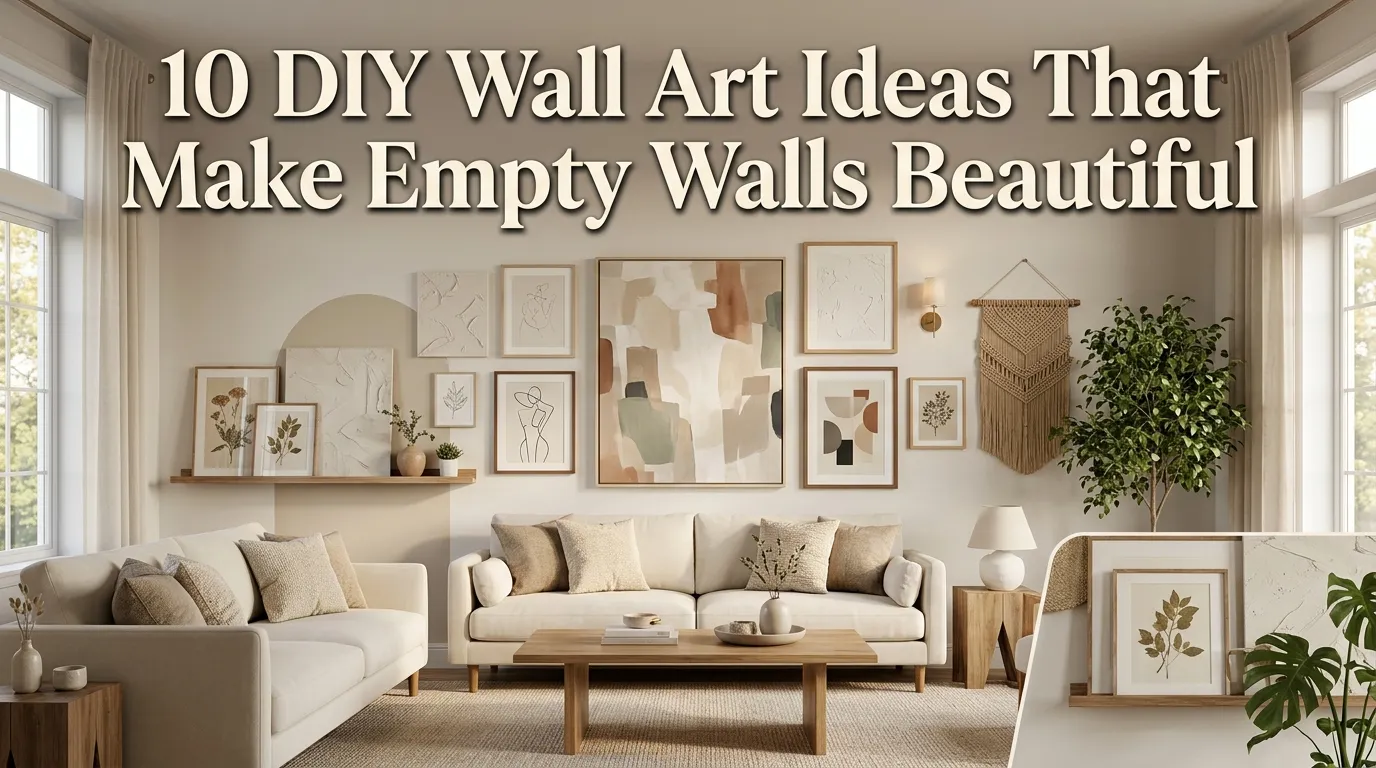
10 DIY Wall Art Ideas That Make Empty Walls Beautiful
An empty wall can make an otherwise beautiful room feel unfinished. Maybe the furniture is in place, the colors work together, and the room feels comfortable—but that large blank stretch above the sofa, bed, console table, or dining area still seems to be waiting for something.
The good news is that filling an empty wall doesn’t have to mean spending hundreds of dollars on oversized artwork. DIY wall art can give you the opportunity to create something that actually fits your space, color palette, and personal style. Even simple materials can become beautiful focal points when they’re thoughtfully arranged.
This is especially useful if you’re decorating on a budget. A few inexpensive frames, leftover fabric, paint, natural materials, or even thrifted finds can become a cohesive gallery or statement piece. The trick is choosing an idea that suits the scale of the wall and doesn’t make the room feel cluttered.
DIY wall decor can also be surprisingly flexible. You can create minimalist abstract artwork for a modern living room, botanical-inspired pieces for a farmhouse bedroom, textured panels for a neutral space, or a personalized gallery that tells a story.
Before starting, take a moment to consider the wall’s size, the furniture underneath it, and the colors already present in the room. A large wall usually needs a larger visual statement, while a smaller wall may look better with a compact arrangement.
Below are ten DIY wall art ideas that can transform blank walls into warm, personal, Pinterest-worthy spaces without requiring advanced artistic skills.
Table of Contents
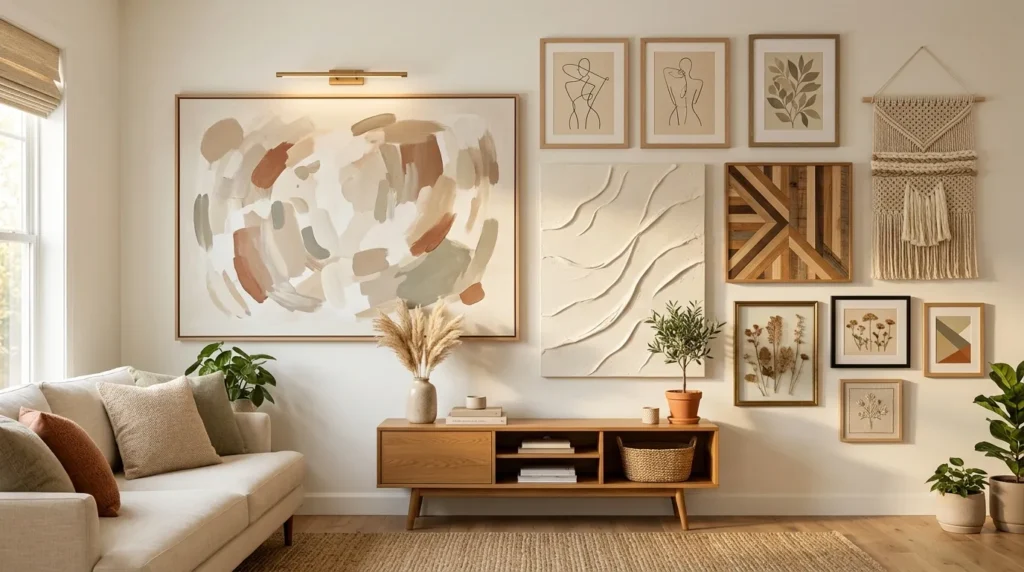
1. Framed Fabric Art
Turn beautiful fabric scraps or textiles into inexpensive artwork with texture and personality.
2. Painted Abstract Panels
Create simple modern artwork using paint, neutral colors, and uncomplicated shapes.
3. Botanical Pressed Art
Bring natural beauty indoors with pressed leaves, flowers, and botanical arrangements.
4. Oversized Canvas Art
Make a dramatic statement with a large homemade canvas that fills an empty wall beautifully.
5. Wooden Wall Signs
Use wood and simple lettering to create personalized artwork with farmhouse-inspired character.
6. Thrifted Frame Gallery
Transform mismatched secondhand frames into a cohesive collection with one unifying finish.
7. Textured Plaster Art
Add dimension and visual interest with raised, organic textures inspired by contemporary interiors.
8. Woven Wall Hanging
Introduce softness and natural texture with a simple woven or fiber-based wall display.
9. Painted Landscape Art
Create a calming landscape scene that brings color and personality to a blank wall.
10. Photo Memory Gallery
Turn meaningful family photographs into a warm, personalized wall arrangement.
1. Framed Fabric Art
Quick Benefits
- Budget-friendly
- Adds softness and texture
- Easy to customize
- Works with many decorating styles
- Great for large walls
Why It Works
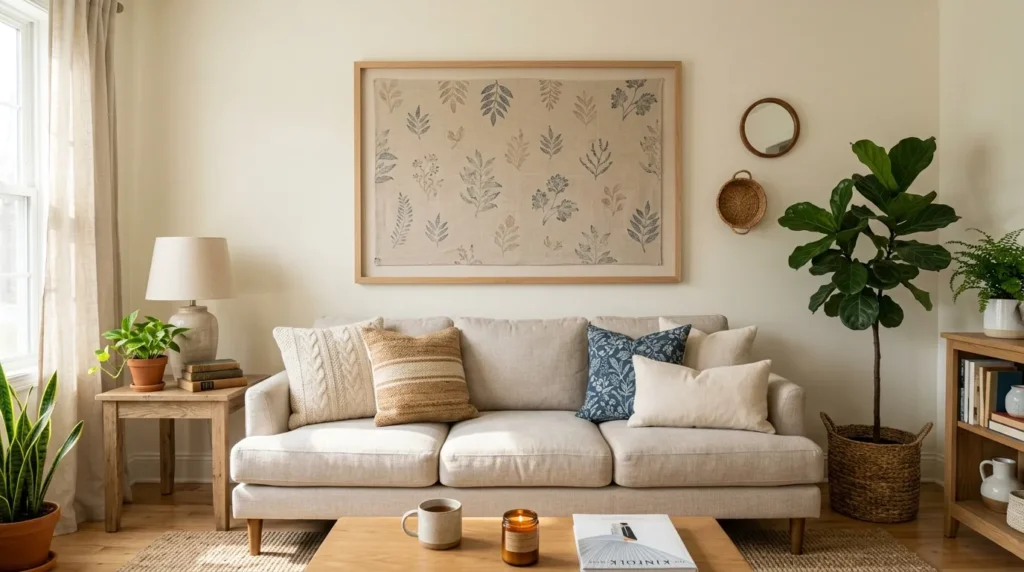
Fabric can make surprisingly beautiful wall art because it introduces texture that traditional prints often lack. Linen, vintage textiles, block prints, woven fabrics, and even attractive remnants can become decorative focal points when framed properly.
This idea is especially useful when you’re decorating a neutral room. A subtle textile pattern can add visual interest without introducing a large amount of color.
It also gives you an easy way to repeat colors already present in the room. If your sofa has beige, rust, blue, or green accents, choose a textile that contains one or two of those shades.
How To Style It
Start with a frame that suits the scale of your wall. For a large blank area above a sofa or bed, one oversized textile can look more intentional than several tiny pieces.
Stretch or mount the fabric neatly so it remains flat inside the frame. If the textile is delicate or valuable, use a preservation-friendly mounting approach rather than permanently attaching it.
For a farmhouse room, try linen or vintage-inspired floral fabric. A geometric textile works well in modern interiors, while faded patterns can add character to a traditional room.
Keep the surrounding decor relatively simple so the fabric remains the focal point.
2. Painted Abstract Panels
Quick Benefits
- Easy for beginners
- Fully customizable
- Inexpensive materials
- Works with modern interiors
- Can be made to fit any wall
Why It Works
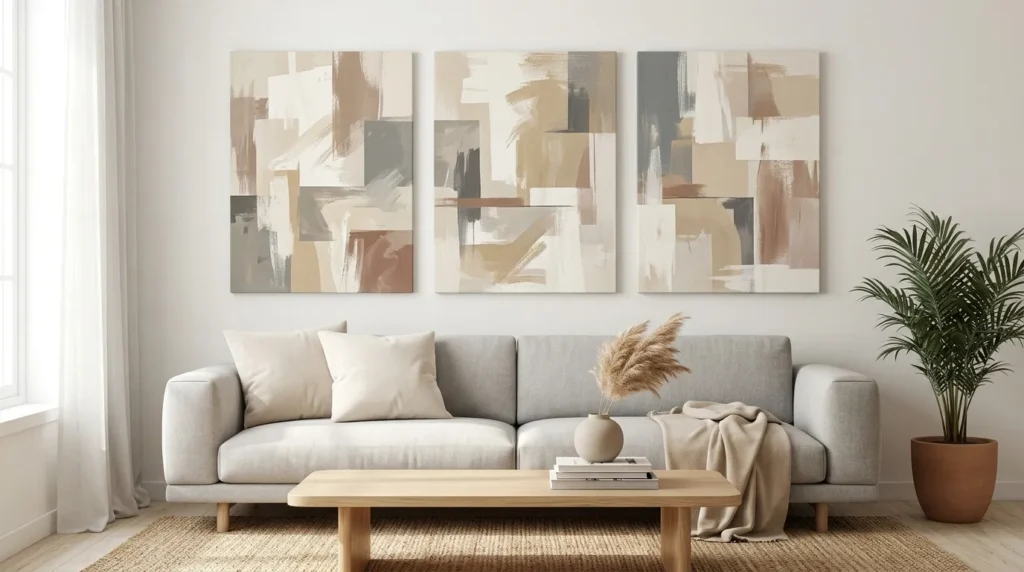
You don’t have to be a professional painter to create abstract wall art. Simple shapes, broad brushstrokes, layered neutrals, and imperfect lines can produce a sophisticated result.
One advantage of making your own artwork is that you can choose the exact colors needed for the room. Instead of searching for a print that happens to match your decor, you can create a piece around your existing palette.
Abstract art also works well when you need something large. Several inexpensive canvases can be transformed into a coordinated set that would otherwise cost much more as finished artwork.
How To Style It
Choose two to five colors from your room. For a calm neutral palette, consider cream, beige, taupe, soft gray, and muted brown. For something more colorful, add one stronger accent shade.
Try painting three panels that share similar shapes rather than making each canvas completely identical. This creates cohesion without looking overly manufactured.
Use large brushes for broad areas and smaller brushes for details. Don’t worry about making every line perfect—the handmade quality is part of the appeal.
Frame the finished canvases if desired, or leave the edges exposed for a more contemporary appearance.
3. Botanical Pressed Art
Quick Benefits
- Brings nature indoors
- Creates delicate texture
- Works with neutral interiors
- Easy to personalize
- Perfect for bedrooms and living rooms
Why It Works
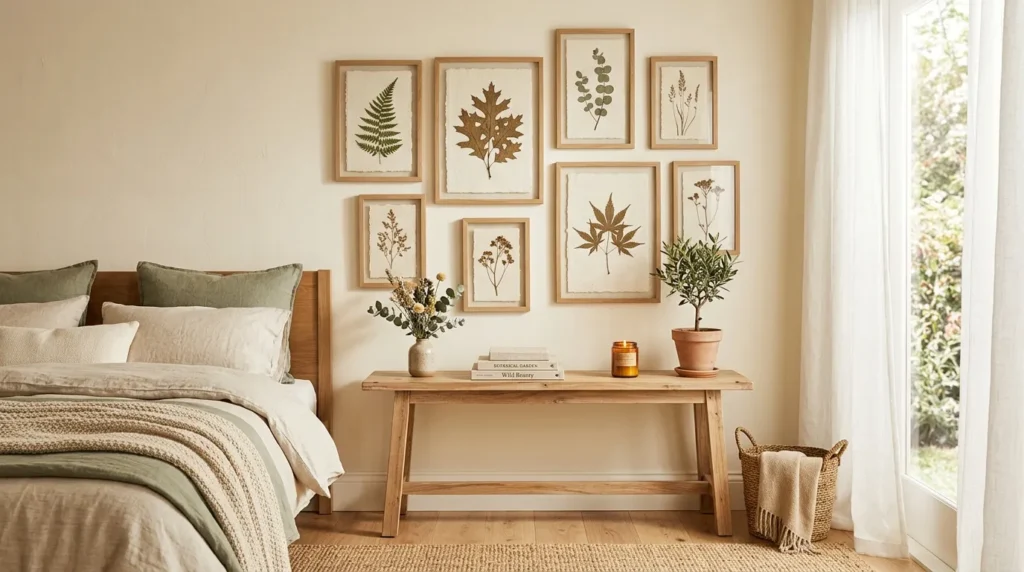
Botanical artwork has a timeless quality because it combines natural shapes with simple composition. Pressed leaves, grasses, flowers, and other plant materials can create understated artwork that works beautifully in bedrooms, entryways, kitchens, and living rooms.
The natural variation is part of what makes each piece unique. No two leaves have exactly the same shape or color, so even a very simple arrangement can feel personal.
This idea also pairs naturally with other organic materials such as wood, linen, rattan, and woven baskets.
How To Style It
Choose clean, dry botanical materials and press them carefully before framing. Use acid-free paper and appropriate framing materials if you want the finished artwork to last.
Arrange a single leaf or stem for a minimalist look, or create a small collection of related specimens.
Natural wood frames work beautifully with botanical art, while thin black or brass frames can create a more polished appearance.
Hang several pieces in a row for a simple gallery arrangement. Keep spacing consistent and use similar frame sizes if you want a more orderly look.
4. Oversized Canvas Art
Quick Benefits
- Fills large blank walls
- Creates a strong focal point
- Can be customized
- Often inexpensive to make
- Works in spacious rooms
Why It Works
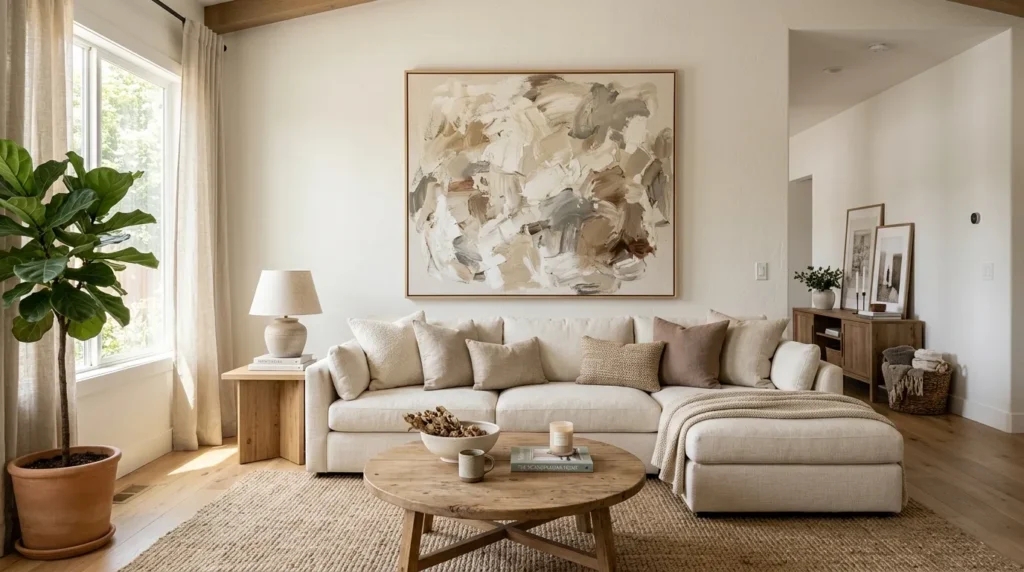
Large walls often need large-scale artwork. One oversized canvas can visually anchor a room much more effectively than several small pieces scattered across a large empty area.
DIYing the artwork gives you control over both size and color. You can create something specifically designed to sit above a particular sofa, bed, console, or dining table.
Large abstract designs are especially forgiving because they don’t require detailed drawing skills. Texture, color blocks, soft gradients, or loose brushwork can create an attractive finished piece.
How To Style It
Measure the wall and the furniture beneath it before choosing your canvas dimensions. Artwork above furniture generally looks better when its width relates proportionally to the furniture rather than being dramatically narrower or wider.
Choose a restrained palette that complements the room. Large areas of color have more visual impact than small decorative accents, so test your colors before painting the entire canvas.
For a sophisticated look, use a neutral background with subtle layers of beige, cream, gray, or muted earth tones.
A simple floating frame can make DIY artwork feel more finished, especially in a contemporary or transitional room.
5. Wooden Wall Signs
Quick Benefits
- Adds warmth
- Works well in farmhouse homes
- Easy to personalize
- Affordable materials
- Adds natural texture
Why It Works
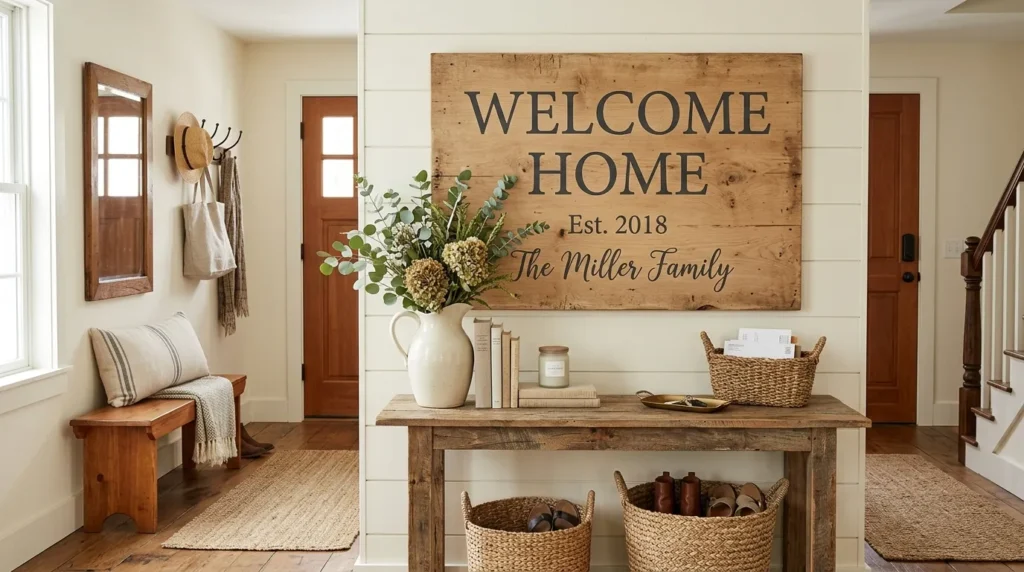
Wooden wall art adds both color and material interest to a room. Unlike a standard paper print, the visible grain and texture of the wood become part of the artwork.
This makes wooden signs particularly useful in farmhouse, rustic, cottage, and casual interiors. They can also be adapted for more modern rooms when the typography and finish are kept simple.
Personalization is another advantage. You can create artwork featuring a meaningful phrase, family name, date, location, or simple botanical design.
How To Style It
Start with a smooth, properly prepared piece of wood. Choose a finish that works with your room—natural wood for a warm organic look, whitewashed wood for farmhouse interiors, or a darker stain for richer contrast.
Keep lettering simple and readable. One short phrase can often look more sophisticated than a sign packed with text.
For a large wall, consider creating a horizontal wooden panel rather than a small sign. This can fill the space above a console table or sofa while maintaining a clean composition.
Pair the wood with ceramic, woven, or greenery accents nearby to create a layered natural look.
6. Thrifted Frame Gallery
Quick Benefits
- Budget-friendly
- Highly customizable
- Great for personal style
- Repurposes secondhand finds
- Works with many room styles
Why It Works
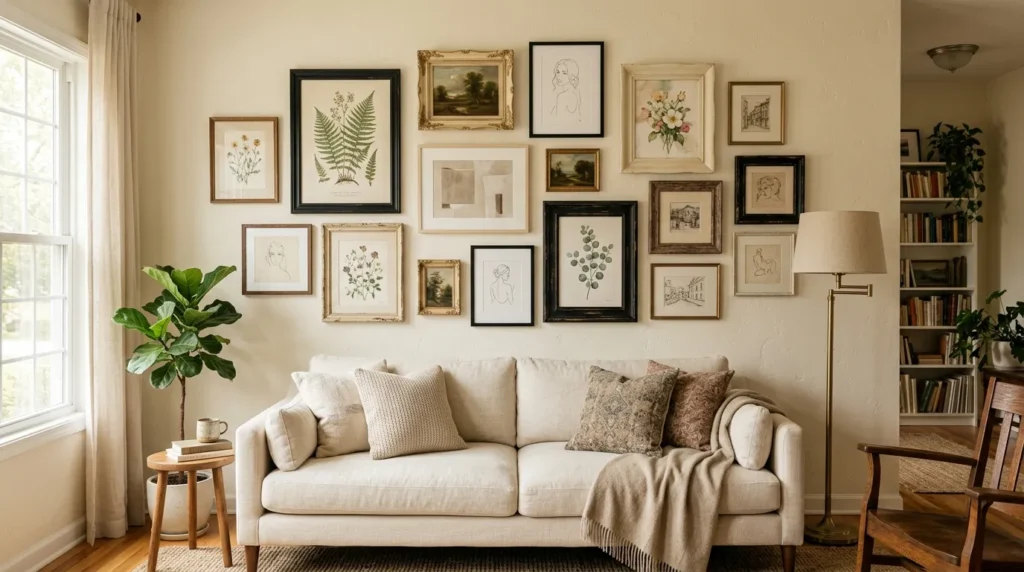
A gallery wall doesn’t have to be assembled from expensive matching frames. Thrift stores, flea markets, and secondhand shops can be excellent sources of interesting frames that already have character.
The secret to making mismatched frames look intentional is to establish one or two connecting elements. That might be a shared frame color, similar artwork, a consistent mat, or a limited color palette.
This approach also lets you build the gallery gradually. You don’t need to find every piece at once.
How To Style It
Collect frames in different shapes and sizes, then decide whether you want to keep their original finishes or unify them with paint.
For a classic appearance, paint all the frames one color such as black, cream, or warm white. For a collected vintage look, keep several finishes but repeat similar artwork colors.
Before hanging anything, lay the arrangement on the floor and experiment with spacing. Photograph the layout before transferring it to the wall.
Use a central focal point and build outward rather than trying to make every frame perfectly symmetrical.
7. Textured Plaster Art
Quick Benefits
- Adds dimension
- Creates a contemporary look
- Works with neutral palettes
- Suitable for minimalist rooms
- Can be highly sculptural
Why It Works
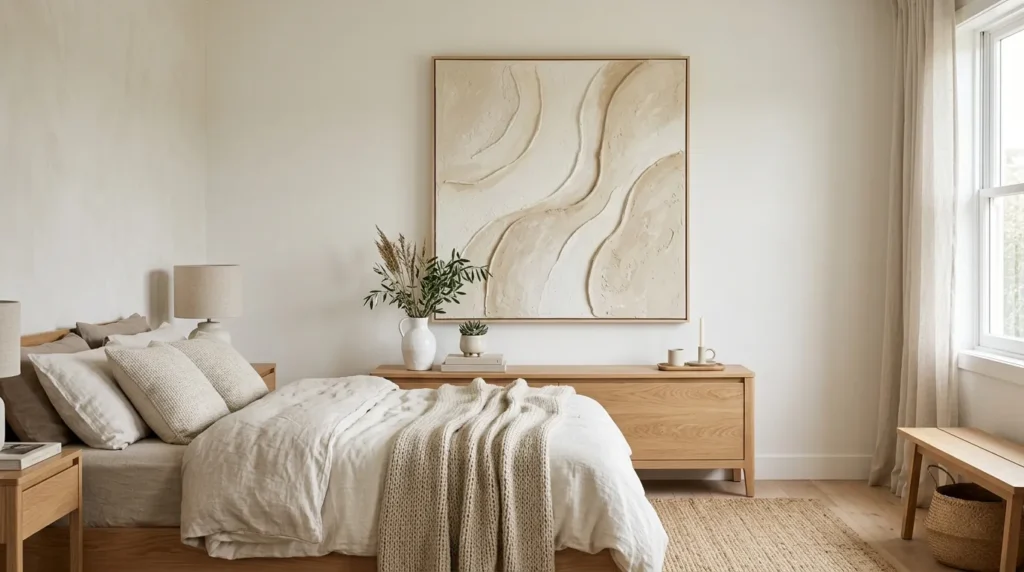
Textured artwork is a beautiful option when you want a blank wall to have more depth without introducing bright colors. Raised plaster-like surfaces catch light differently throughout the day, creating subtle shadows that give the artwork a changing appearance.
This type of art works particularly well in neutral interiors where texture is more important than color.
Organic shapes are especially popular because they feel softer and less rigid than traditional geometric artwork.
How To Style It
Use a suitable art panel or canvas and choose a texture medium intended for the surface. Experiment on a small board before working on the final piece so you can understand how thick the material should be and how it will dry.
Create broad curves, arches, waves, or abstract raised forms. A monochromatic palette of ivory, cream, and warm white can produce a sophisticated effect.
Keep the frame simple or use a floating frame that allows the texture to remain visible.
Place the finished artwork somewhere with natural or directional light so the raised surface can create subtle shadows.
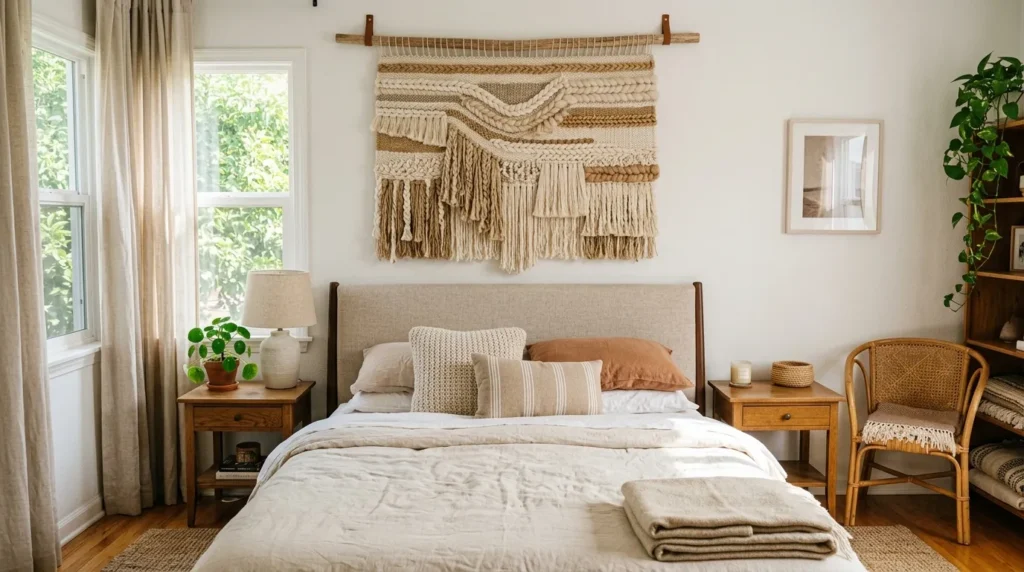
8. Woven Wall Hanging
Quick Benefits
- Adds softness
- Introduces natural texture
- Works with neutral decor
- Lightweight compared with framed art
- Creates a cozy atmosphere
Why It Works
Woven wall hangings can soften a room that contains many hard surfaces. Their fibers introduce movement and texture, making them especially useful above beds, reading chairs, consoles, or other areas where you want the room to feel comfortable.
They also pair naturally with wood, rattan, linen, jute, and other organic materials.
A woven piece can be highly detailed or extremely simple. Even a minimalist arrangement of neutral fibers can make a blank wall feel more finished.
How To Style It
Choose fibers in colors that already appear in the room. Cream, oatmeal, beige, warm gray, and natural tan are easy to combine with existing neutral furniture.
For a larger wall, look for a wider hanging or create a set of two or three related pieces. Hang them at a comfortable visual height rather than placing them too close to the ceiling.
A natural wooden dowel can reinforce the organic appearance.
Keep nearby accessories simple so the texture remains the main attraction.
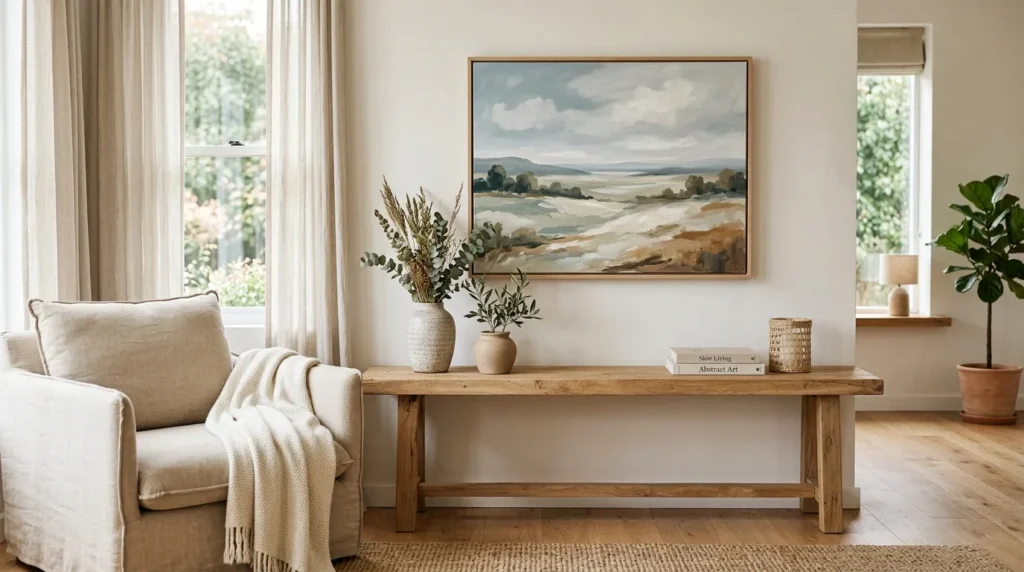
9. Painted Landscape Art
Quick Benefits
- Adds color and personality
- Creates a calming focal point
- Suitable for beginners
- Works in many rooms
- Easy to customize
Why It Works
A simple landscape can bring a sense of calm to an otherwise empty wall. You don’t need advanced painting skills to create an atmospheric scene—soft hills, a distant horizon, trees, or abstract fields can be enough.
The advantage of making the piece yourself is that you can control the palette. If your room contains sage green, dusty blue, warm beige, or terracotta, those shades can become part of the landscape.
The result feels more connected to the room because the artwork was created specifically for its surroundings.
How To Style It
Start with a simple composition rather than trying to reproduce a highly detailed landscape. Layer broad shapes from background to foreground.
Muted colors generally create a more timeless appearance than highly saturated ones. Try combinations such as dusty blue and cream, sage and beige, or warm brown and soft gray.
Use a simple wood or black frame depending on your decor style.
Hang the artwork above a console or sofa and repeat one or two of its colors in nearby pillows, ceramics, or textiles.
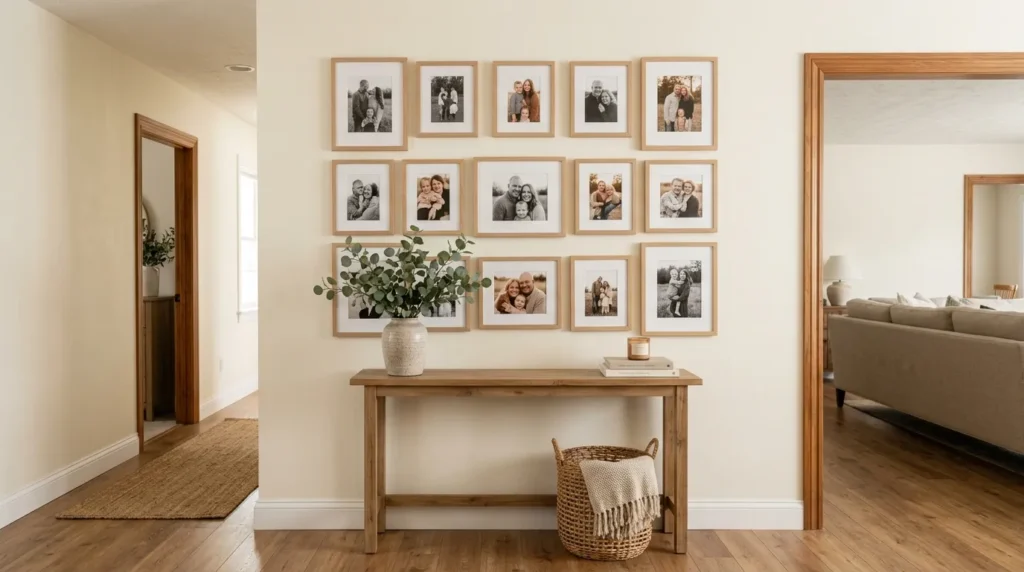
10. Photo Memory Gallery
Quick Benefits
- Highly personal
- Creates meaningful decor
- Easy to update
- Works in hallways and bedrooms
- Can grow over time
Why It Works
Some of the best wall art isn’t something you buy—it is something that means something to you. A photo gallery can transform an empty wall into a collection of memories while still looking polished enough to function as part of the room’s overall design.
The key is presentation. Randomly attaching photographs to a wall can look temporary, while consistent frames and thoughtful spacing create a more intentional appearance.
This is especially effective in hallways, stairways, family rooms, and bedrooms.
How To Style It
Choose a consistent frame color if you want a clean, modern look. Black, white, natural wood, and warm brass can all work depending on the room.
For a more traditional gallery, use matching mats. For a casual family display, vary the photographs while keeping the frame style consistent.
Arrange the photos before hanging them and maintain even spacing. A symmetrical grid works well for a modern room, while a more organic arrangement suits collected interiors.
Choose photographs with a similar editing style or color tone if you want the entire display to feel cohesive.
How To Make DIY Wall Art Look Expensive
DIY artwork can look surprisingly polished when you pay attention to scale, framing, and composition.
Choose the right size. One large piece can often look more sophisticated than several tiny decorations struggling to fill a large wall.
Limit the color palette. Artwork that repeats two or three colors from the room usually feels more intentional.
Use quality-looking frames. Even inexpensive art can look elevated when placed inside a simple, well-proportioned frame.
Leave breathing room. Don’t cover every inch of the wall. Negative space helps artwork stand out.
Pay attention to placement. Art should relate to the furniture underneath it. A tiny picture floating above a large sofa will usually look disconnected.
Mix textures thoughtfully. Wood, fabric, paper, canvas, and woven fibers can create a more interesting display than using the same medium everywhere.
The goal isn’t to make DIY art look like something mass-produced. A little imperfection can actually make the finished room feel more personal and authentic.
FAQ
What is the easiest DIY wall art for beginners?
Painted abstract art is one of the easiest options because it doesn’t require precise drawing skills. You can work with simple shapes, brushstrokes, and a limited color palette. Framed fabric and botanical art are also beginner-friendly because the materials themselves provide much of the visual interest.
How do I decorate a large blank wall?
Large walls generally benefit from artwork with enough scale to visually anchor the space. An oversized canvas, large textile, gallery wall, or coordinated set of panels can work well. Consider the furniture below the wall and choose artwork that feels proportional rather than using many small pieces simply to fill the empty area.
How can I make cheap DIY wall art look expensive?
Focus on scale, composition, color, and framing. A large artwork in a restrained palette often looks more sophisticated than many small pieces. Use simple quality-looking frames, repeat colors already found in the room, and leave enough negative space around the artwork so the overall arrangement feels intentional.
What can I use instead of traditional wall art?
Textiles, woven pieces, framed fabric, pressed botanicals, wooden panels, mirrors, decorative plates, photographs, and sculptural objects can all function as wall decor. These alternatives are particularly useful when you want to add texture rather than simply adding another printed picture.
How high should DIY wall art be hung?
Artwork is generally easiest to view when its center sits around eye level, but the exact height should also relate to nearby furniture and the room’s proportions. When hanging art above a sofa, console, or bed, consider the entire furniture-and-art arrangement rather than treating the wall as an isolated space.
Should DIY wall art match my room?
It doesn’t have to match exactly. In fact, artwork can add personality by introducing a complementary color, texture, or material. However, repeating one or two colors or finishes from the room can help the artwork feel connected to the rest of the space.
How do I arrange multiple pieces of wall art?
Lay the pieces on the floor first and experiment with different layouts. A symmetrical grid creates a clean, organized appearance, while varied sizes and spacing can create a more collected look. Keep the overall arrangement visually balanced and maintain enough space between pieces so they don’t appear crowded.
Related Articles
- Easy DIY Home Decor Ideas for Every Room
- Beautiful Gallery Wall Ideas for Living Rooms
- Budget-Friendly Ways to Decorate Blank Walls
- DIY Farmhouse Decor Ideas for a Cozy Home
- Simple Bedroom Wall Decor Ideas
Conclusion
An empty wall is an opportunity to add personality, texture, and color to your home—not simply a space that needs to be filled.
The best DIY wall art projects are often the ones that connect naturally to the room. A framed textile can introduce softness, a painted canvas can repeat your favorite colors, pressed botanicals can bring nature indoors, and a photo gallery can turn meaningful memories into everyday decor.
Don’t feel like you need to tackle a complicated project. Start with the wall you’re trying to decorate and ask what it needs. A large wall may call for one oversized piece, while a narrow hallway might be better suited to a small gallery.
Most importantly, give yourself permission to experiment. DIY artwork doesn’t need to look factory-perfect. The handmade quality is often what makes it feel special.
Choose a project that fits your style, gather a few affordable materials, and create something specifically for your home. With the right scale and a thoughtful color palette, even the emptiest wall can become one of the most beautiful details in the room.