How to Decorate a Living Room with Modern Lighting
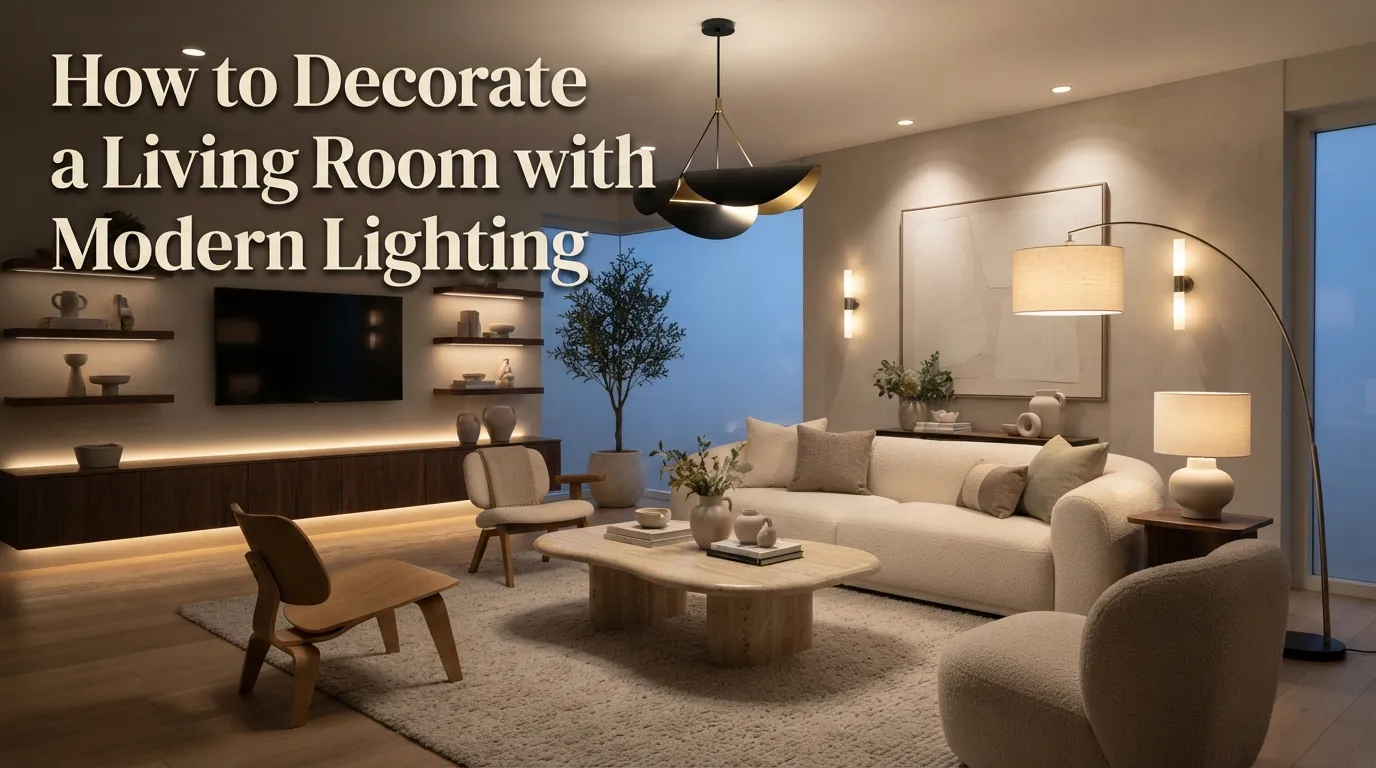
Modern lighting can completely change the way a living room looks and feels. The right fixture does more than brighten a dark corner—it can define the mood, highlight architectural details, make furniture feel more intentional, and give an otherwise ordinary room a polished finishing touch.
One of the biggest mistakes I see with living room lighting is relying on a single ceiling fixture. It may provide enough light to walk around, but it rarely creates the warm, layered atmosphere that makes a living room feel comfortable. A room can have beautiful furniture and thoughtful décor and still feel flat when every light source comes from one place.
The better approach is to think of lighting in layers. Ambient lighting provides overall illumination, task lighting helps with activities such as reading, and accent lighting draws attention to artwork, shelving, plants, or architectural features. When these layers work together, you can adjust the atmosphere throughout the day instead of living with the same brightness from morning to night.
Modern lighting also gives you plenty of opportunities to add personality. A sculptural pendant can become the focal point above a seating area, while a slim floor lamp can fill an empty corner without making a small room feel crowded. Wall sconces can frame artwork or a fireplace, and table lamps can bring softer pools of light closer to eye level.
Whether your living room is large and open or compact and apartment-sized, the goal is the same: choose lighting that supports the way you actually use the room while complementing your existing style.
Below, you’ll find ten practical ways to decorate a living room with modern lighting, including ideas for placement, fixture selection, layering, color temperature, and creating a polished look without making the room feel overly designed.
Table of Contents
1. Sculptural Ceiling Light
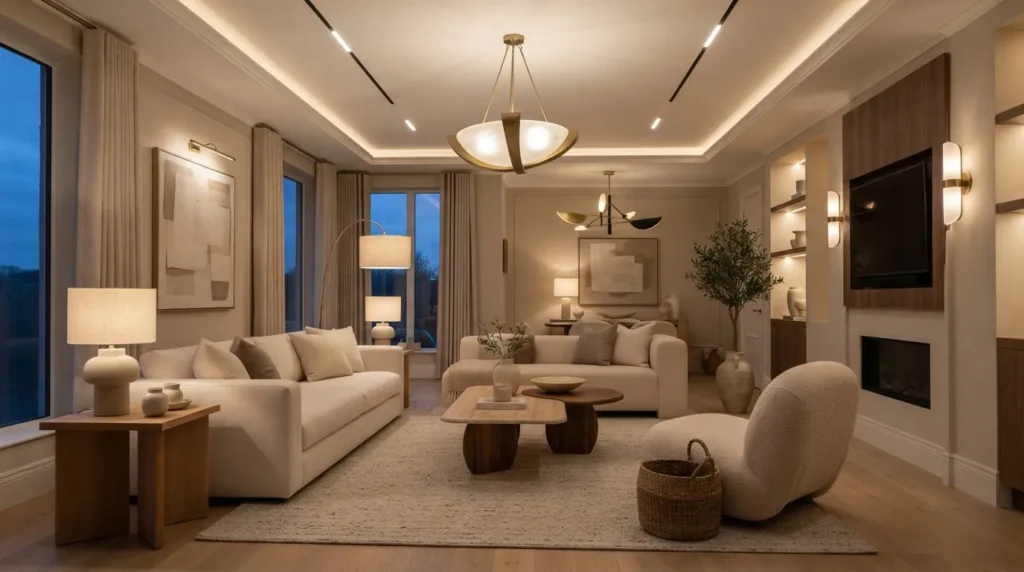
A statement ceiling fixture can establish a modern focal point while providing useful ambient illumination.
2. Layered Light Sources
Combining ceiling, floor, table, and accent lighting creates a more comfortable and flexible atmosphere.
3. Sleek Floor Lamps
A streamlined floor lamp can brighten a reading corner while adding height and visual interest.
4. Modern Wall Sconces
Wall-mounted lighting saves floor space and provides beautiful pools of light around architectural or decorative features.
5. Warm Accent Lighting
Small accent lights can highlight artwork, shelving, plants, and other details that deserve attention.
6. Statement Pendant
A distinctive pendant can bring personality to an open living room while helping define a specific zone.
7. Minimal Table Lamps
A carefully chosen table lamp adds warmth at seating level and gives side tables a practical purpose.
8. Recessed Ceiling Lights
Recessed fixtures provide clean, unobtrusive illumination when used thoughtfully alongside decorative lighting.
9. Dimmable Atmosphere
Dimmers allow one lighting scheme to support everything from daytime activity to relaxed evening gatherings.
10. Cohesive Fixture Finishes
Repeating compatible finishes helps different lighting fixtures feel like part of one intentional design.
1. Sculptural Ceiling Light
Quick Benefits
- Creates an immediate focal point
- Provides essential ambient illumination
- Adds architectural interest
- Works with contemporary and transitional interiors
- Can replace ordinary builder-grade fixtures
Why It Works
A ceiling light is often the first lighting element people notice when they enter a living room, so it deserves more attention than simply choosing the brightest fixture available.
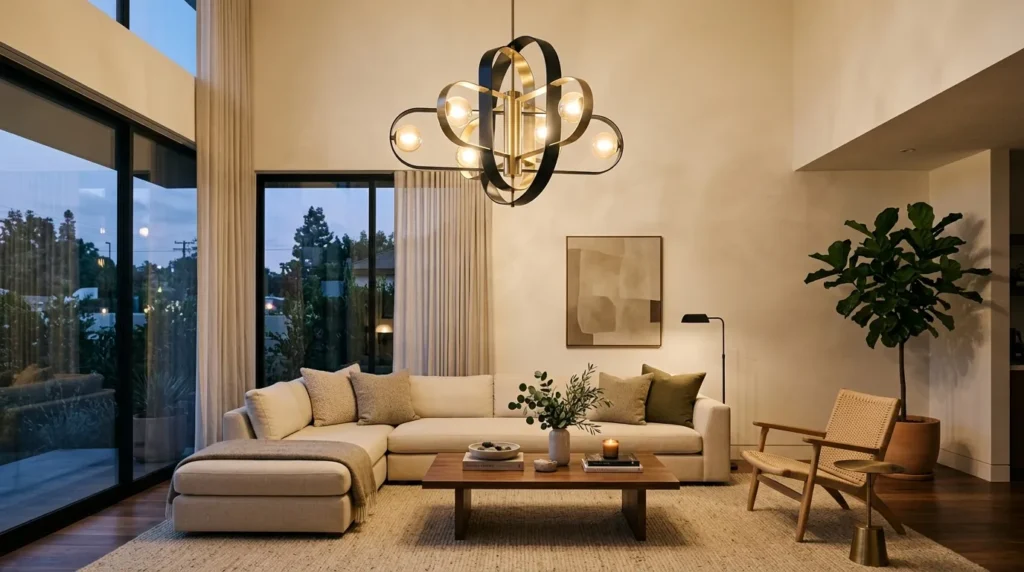
A sculptural fixture can function almost like artwork overhead. Curved metal, layered glass, globe shapes, linear forms, and geometric silhouettes can introduce visual interest without taking up valuable floor or wall space.
The key is scale. A fixture that is too small can disappear above a large seating arrangement, while one that is excessively large may make the room feel crowded. The height of the ceiling and size of the seating area should both influence your choice.
In my experience, modern lighting looks especially sophisticated when the fixture has a clear silhouette rather than too many competing decorative details. A simple black linear chandelier can look striking in a neutral room, while an opal-glass fixture can create a softer, more understated effect.
Think of the ceiling fixture as one part of the room’s overall lighting plan rather than the entire solution.
How To Style It
For a larger living room, consider a sculptural chandelier or linear pendant positioned over the visual center of the seating arrangement. In a smaller room, a compact flush mount or semi-flush fixture can provide similar style without overwhelming the ceiling.
Choose the finish based on your existing décor. Matte black works beautifully with contemporary spaces, brushed metal can feel refined and transitional, while warm brass adds a softer decorative note.
If the room has low ceilings, avoid fixtures that hang too far downward. A low-profile sculptural fixture can provide the same visual impact while maintaining comfortable head clearance.
Keep surrounding décor relatively simple if the ceiling fixture is bold. You want the eye to notice the shape of the light without competing with an oversized gallery wall or an abundance of accessories.
2. Layered Light Sources
Quick Benefits
- Creates a warmer atmosphere
- Prevents harsh shadows
- Makes the room more functional
- Allows lighting to change throughout the day
- Gives you more decorating flexibility
Why It Works
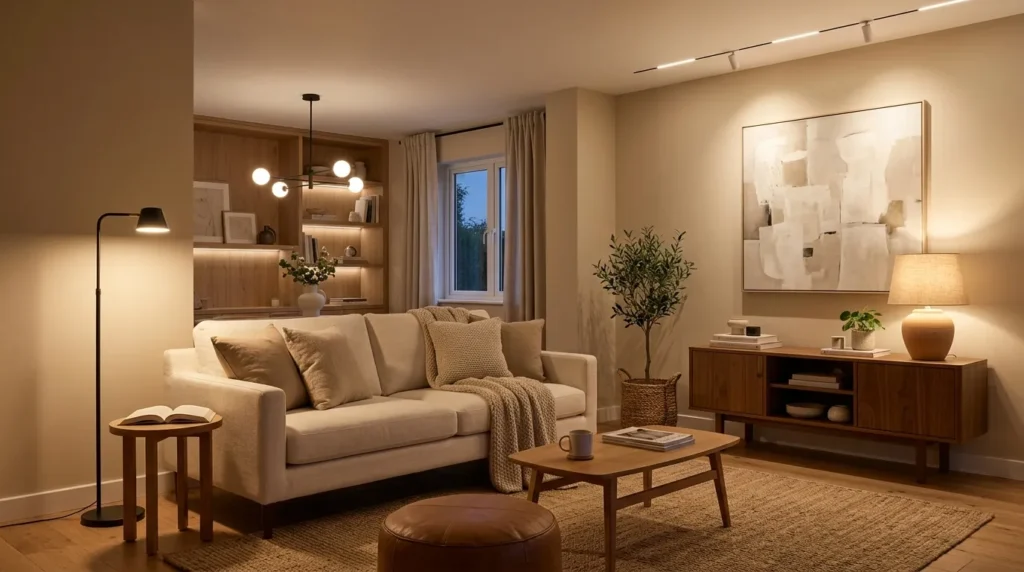
The most comfortable living rooms rarely depend on one light source. Instead, they use several sources at different heights to create visual depth.
Ambient lighting provides general illumination. Task lighting helps with specific activities such as reading or working. Accent lighting draws attention to artwork, shelves, plants, or architectural details.
When these layers overlap, the room feels more balanced because light isn’t concentrated only on the ceiling.
This is especially important in the evening. A bright overhead fixture can make a living room feel stark, while a combination of floor lamps, table lamps, wall lights, and subtle accent lighting creates softer pools of illumination.
One simple trick I always suggest is walking around your living room after dark and identifying the areas that disappear into shadow. Those are often the best places for a secondary lamp.
You don’t necessarily need more brightness everywhere. You need light in the right places.
How To Style It
Start with your main ceiling fixture as the ambient layer. Then add a floor lamp beside a sofa or reading chair, a table lamp on a console or side table, and accent lighting where you want to highlight décor.
Try to distribute the light around the room rather than grouping every fixture on one side.
Different heights are important. Ceiling light illuminates from above, table lamps bring light closer to eye level, and floor lamps bridge the gap between the two.
Use lamps with similar visual characteristics without making every fixture identical. Repeating a finish or shape can create cohesion while allowing each light to perform a different role.
3. Sleek Floor Lamps
Quick Benefits
- Adds light without wall installation
- Fills empty corners
- Provides useful reading light
- Introduces vertical height
- Works well in rental homes
Why It Works
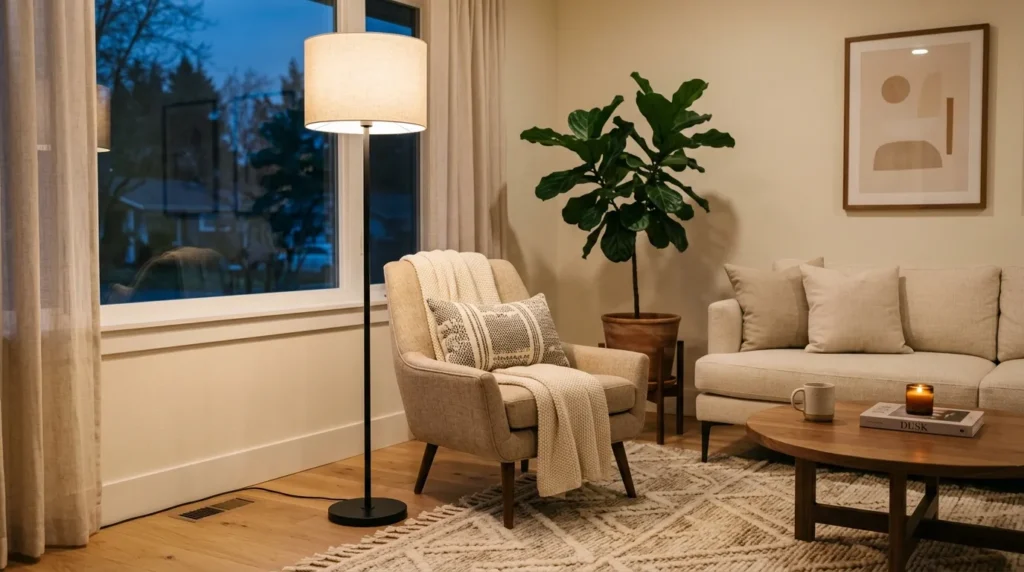
A floor lamp is one of the easiest ways to improve living room lighting because it requires little commitment and can often be moved when the layout changes.
Modern floor lamps are available in many silhouettes, from slim arc designs to straight minimalist poles and sculptural tripod forms. Their vertical shape also helps draw the eye upward, which can make a room feel more balanced.
A floor lamp works particularly well beside a sofa, lounge chair, or reading nook. Instead of illuminating the entire room, it provides a concentrated area of useful light while contributing to the overall ambiance.
Arc lamps are especially effective when you want light over a seating area without placing a table directly beneath the fixture. Their curved arm can extend over a sofa or chair and create a distinctive architectural shape.
For smaller rooms, choose a slim profile. The goal is to add light without introducing another bulky piece of furniture.
How To Style It
Place a floor lamp beside a chair where you naturally read or relax. If you’re using an arc lamp, position the base where it won’t interfere with walking paths and allow the arm to extend over the seating area.
For a modern look, consider finishes such as matte black, brushed brass, chrome, or simple white. Match the lamp’s visual weight to the rest of the room.
A dark floor lamp can create useful contrast in a pale living room, while a lighter fixture can blend into a neutral palette.
Avoid putting a floor lamp directly behind a sofa if the switch or shade becomes difficult to reach. Convenience matters because the best lighting is lighting you actually use.
4. Modern Wall Sconces
Quick Benefits
- Saves valuable floor space
- Creates attractive wall illumination
- Frames artwork or furniture
- Adds architectural character
- Works especially well in smaller rooms
Why It Works
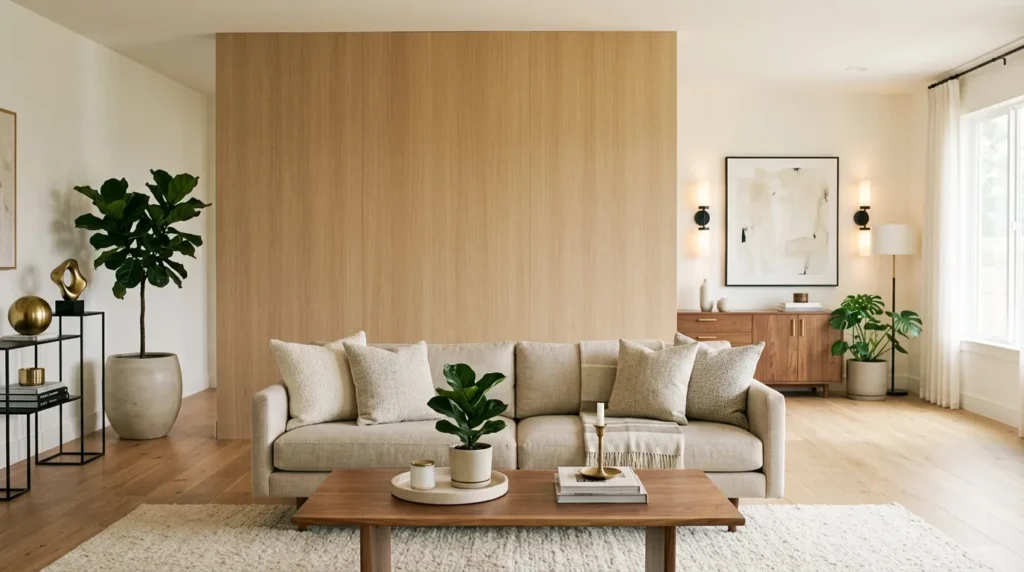
Wall sconces are an excellent option when floor and table space are limited. Instead of introducing another piece of furniture, you can bring light directly onto the wall.
Modern sconces can be surprisingly decorative. A pair of simple globe sconces can frame a fireplace, while slim directional fixtures can highlight artwork or a textured wall.
They also help bring lighting to eye level. This is important because rooms can feel visually unbalanced when all illumination comes from overhead.
A pair of matching sconces can create symmetry, which works particularly well around a fireplace, media console, or large piece of artwork.
If you rent, permanent wall installation may not be practical. In that case, consider plug-in sconces or renter-friendly lighting options that don’t require significant electrical work.
How To Style It
Use symmetry when you want a formal, polished appearance. Place matching sconces on either side of a fireplace, artwork, mirror, or built-in shelving.
For a more relaxed modern interior, a single sculptural sconce can work as an asymmetrical accent.
Choose the shade shape based on the effect you want. Downward-directed shades provide useful localized illumination, while fixtures that cast light upward and downward can create a beautiful wash across the wall.
Keep the surrounding wall relatively uncluttered so the lighting has room to breathe.
If you’re installing hardwired sconces, have electrical work completed by a qualified professional and follow applicable local requirements.
5. Warm Accent Lighting
Quick Benefits
- Highlights decorative details
- Creates evening ambiance
- Adds depth to the room
- Makes shelving more attractive
- Helps create visual focal points
Why It Works
Accent lighting is often the difference between a living room that looks decorated and one that feels atmospheric.
Instead of trying to make the entire room equally bright, accent lighting allows you to decide where the eye should go.
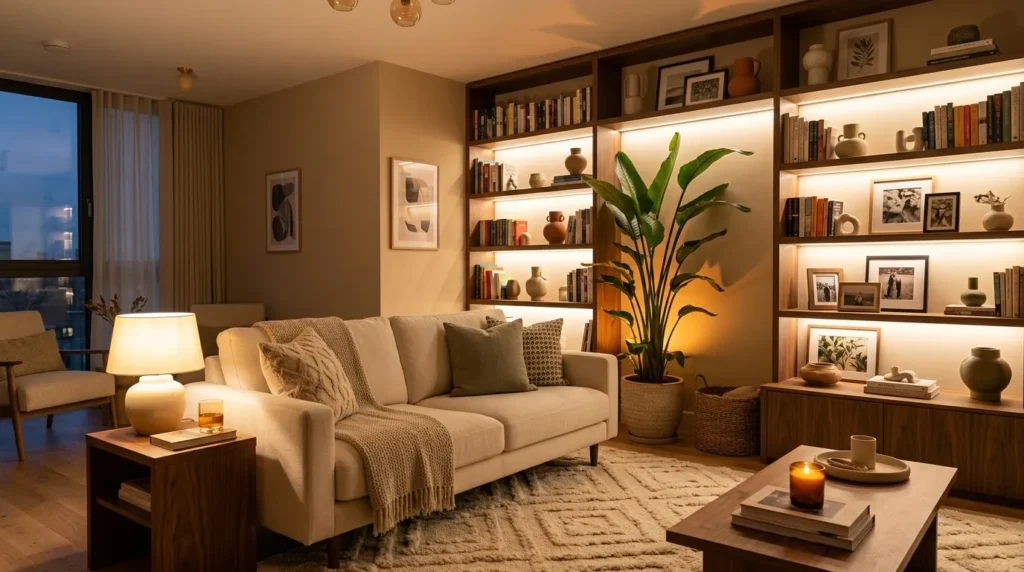
A softly illuminated artwork, a glowing shelf, or a plant highlighted from below can create depth and make the room feel more layered.
This type of lighting is particularly effective in the evening because it creates small pools of brightness against darker surroundings. The contrast makes the room feel intimate without requiring bright overhead illumination.
I’ve seen this approach work especially well in neutral living rooms. When furniture and walls are relatively restrained, carefully positioned light becomes another design element.
The important thing is subtlety. Accent lighting should enhance the feature rather than make it look dramatically spotlighted.
How To Style It
Use small directional lights to highlight artwork or architectural features. Integrated shelf lighting can bring attention to books and objects without requiring additional floor space.
A small lamp inside or beside a bookcase can also create a warm glow. For plants, avoid exposing foliage to excessive heat and choose lighting appropriate for the purpose.
Aim the light carefully. You want to illuminate the object without creating distracting glare on glass, framed artwork, or television screens.
Warm-toned bulbs can create a cozy evening effect, especially when paired with neutral furniture and natural textures.
6. Statement Pendant
Quick Benefits
- Defines an open seating area
- Adds personality
- Creates a strong focal point
- Helps visually organize large rooms
- Combines function and decoration
Why It Works
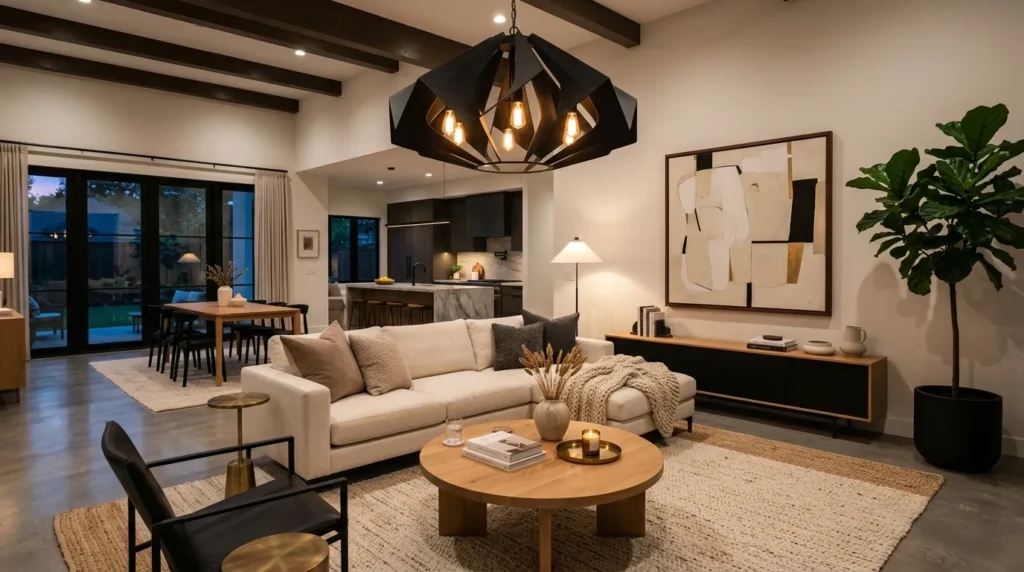
An open-concept living room can sometimes feel visually undefined. Furniture may be arranged correctly, but there is nothing overhead or around it that tells the eye where one zone begins and another ends.
A statement pendant can help solve that problem.
Positioned over a central seating arrangement, a pendant creates an invisible boundary around the living area. In a large open room, this can make the seating zone feel more intentional and intimate.
The fixture itself can also become a sculptural element. Oversized paper-style shades, globe clusters, linear pendants, and minimalist geometric fixtures all provide different personalities.
However, statement doesn’t have to mean enormous. A moderately sized fixture with an interesting silhouette can have plenty of impact.
How To Style It
Center the pendant according to the seating arrangement rather than automatically placing it in the geometric center of the entire room.
For an open-plan space, consider how the fixture relates to the sofa, coffee table, and surrounding zones.
If the room already contains strong patterns or large artwork, choose a simpler pendant. If the furniture is understated, a more sculptural fixture can become the centerpiece.
Keep the hanging height appropriate to the room and furniture arrangement. The fixture should feel connected to the seating area without obstructing views or becoming a physical hazard.
7. Minimal Table Lamps
Quick Benefits
- Brings light closer to eye level
- Creates a cozy atmosphere
- Makes side tables more functional
- Easy to move
- Adds decorative personality
Why It Works
Table lamps may be small, but they have a major influence on how a living room feels at night.
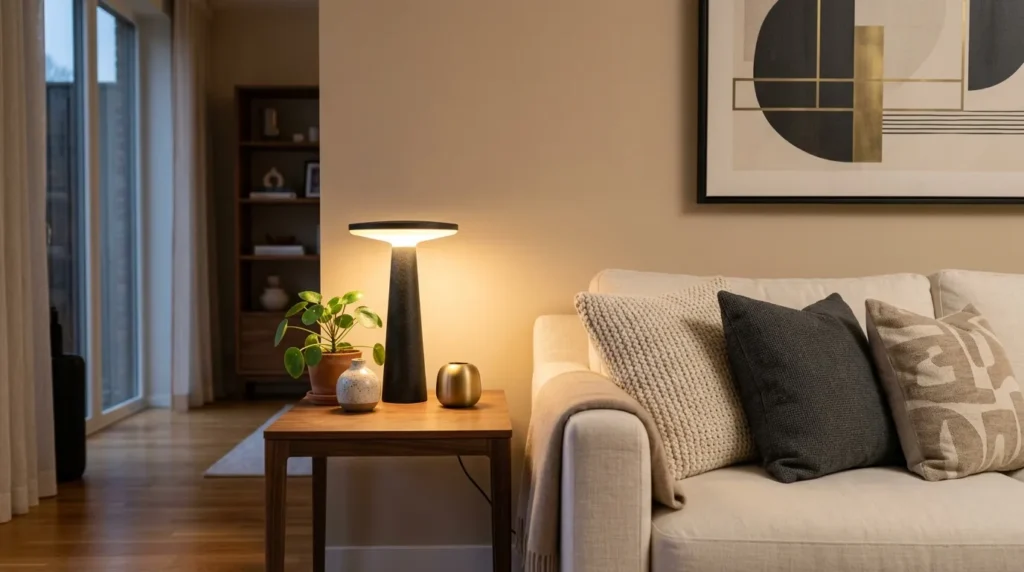
Placed beside a sofa, on a console table, or on a media cabinet, a lamp creates a concentrated pool of light that feels much softer than a bright ceiling fixture.
Modern table lamps also provide an opportunity to introduce shape and material. A ceramic base can add organic texture, while metal and glass can reinforce a contemporary aesthetic.
One of the most useful principles is to avoid thinking of lamps as purely functional objects. They should contribute to the room visually even when they’re switched off.
Scale matters here as well. A tiny lamp can disappear on a large console, while an oversized shade can dominate a narrow side table.
How To Style It
Choose a lamp that is proportionate to the furniture beneath it. A substantial sofa table can support a larger lamp, while a small side table usually needs a compact design.
For a modern living room, look for simple silhouettes with clean lines. Neutral ceramic, frosted glass, black metal, brushed brass, or sculptural stone-like finishes can work beautifully.
Use table lamps in pairs if you want symmetry, or choose one statement lamp for a more relaxed arrangement.
Make sure cords can be managed neatly and that switches are easy to reach. A beautiful lamp that requires you to reach behind furniture every evening quickly becomes inconvenient.
8. Recessed Ceiling Lights
Quick Benefits
- Provides clean ambient illumination
- Maintains a minimalist appearance
- Works well in contemporary interiors
- Helps illuminate larger spaces
- Doesn’t compete with decorative fixtures
Why It Works
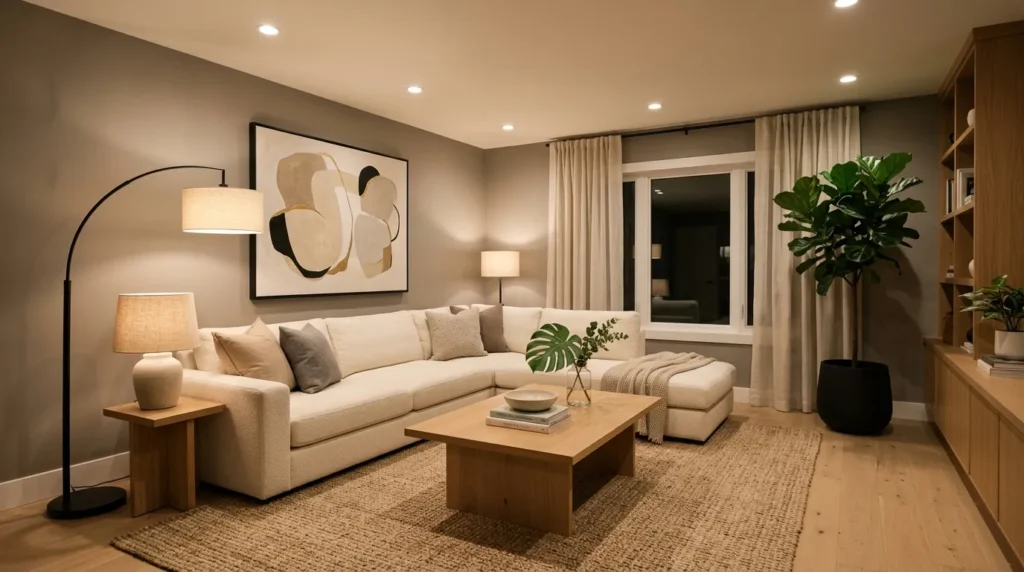
Recessed lights are useful when you want illumination without a visually prominent ceiling fixture. Their low-profile design keeps the ceiling clean and allows decorative lighting elsewhere to become the focal point.
However, recessed lighting works best as part of a larger plan rather than as the only lighting source.
A ceiling full of evenly spaced bright lights can create a commercial or overly clinical feeling. Strategic placement is much more effective.
Think about what the room actually needs illuminated. Seating areas, pathways, artwork, shelving, and architectural details may all require different lighting positions.
For existing homes, installing recessed fixtures may involve electrical work and ceiling access, so this is generally a project to plan carefully rather than an impulse decorating change.
How To Style It
If recessed lights are already installed, use them as your general illumination layer and add softer lamps around the room.
For a new installation or renovation, work with a qualified electrician or lighting professional to determine appropriate placement and controls.
Avoid placing every fixture in a rigid grid simply because the ceiling allows it. Consider the furniture arrangement and how light will interact with the room.
Dimmable recessed lighting can be particularly useful because it lets you reduce the intensity when table and floor lamps become the primary evening light sources.
9. Dimmable Atmosphere
Quick Benefits
- Gives you greater control
- Supports multiple activities
- Creates better evening ambiance
- Reduces reliance on one brightness level
- Makes lighting more adaptable
Why It Works
A living room rarely needs the same amount of light all day.
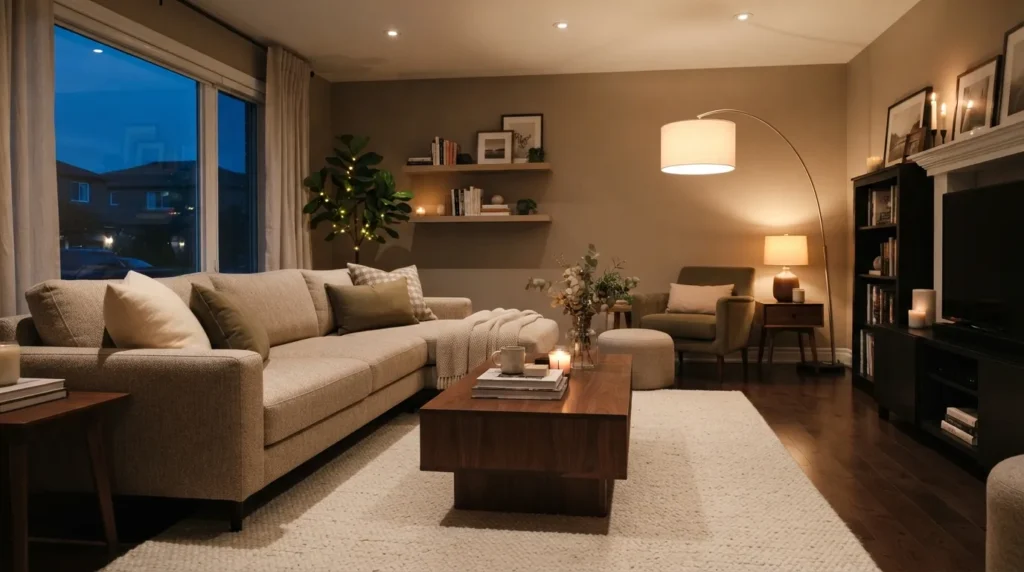
You may want bright illumination while cleaning, moderate light while chatting with family, and a much softer glow while watching a movie or relaxing at night.
Dimming gives you control over that transition.
Even the most beautiful fixture can feel uncomfortable when it is always operating at maximum brightness. Adjustable lighting lets you adapt the atmosphere to the activity rather than forcing the room to remain in one setting.
If you’re renovating, consider dimmable controls for appropriate fixtures. Smart bulbs and compatible lamps can provide additional flexibility where practical.
The goal isn’t necessarily to make every light adjustable. Prioritize the fixtures you use most often.
How To Style It
Start by identifying your primary evening activities. If the living room is mainly used for television, conversation, and reading, create separate lighting zones that can be adjusted independently.
Keep ambient lighting lower when using table and floor lamps. This creates the layered effect that makes modern interiors feel warm rather than brightly illuminated.
If you use smart lighting, establish a few simple scenes instead of constantly changing individual bulbs. A daytime setting, relaxed evening setting, and brighter cleaning setting may be all you need.
Choose controls that are intuitive enough for everyone in the household to use.
10. Cohesive Fixture Finishes
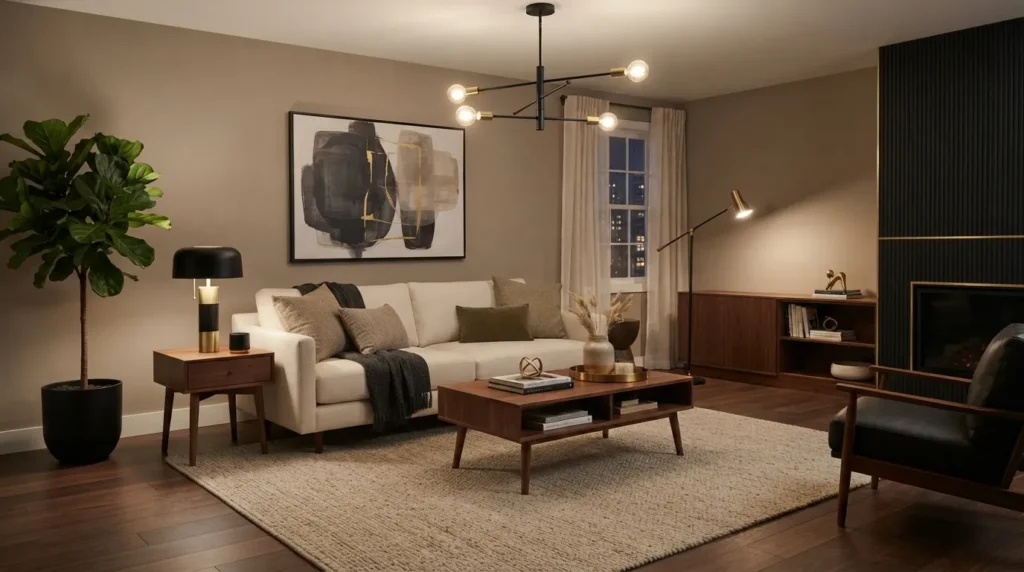
Quick Benefits
- Makes mixed lighting feel intentional
- Creates visual consistency
- Helps connect different areas
- Supports a polished modern aesthetic
- Makes decorating easier
Why It Works
You don’t have to purchase every lighting fixture from the same collection. In fact, matching everything perfectly can sometimes make a room feel more like a showroom than a home.
What matters is visual relationship.
If your floor lamp is matte black, you might repeat black in a table lamp base or a small architectural detail. If warm brass appears in the chandelier, a subtle brass accent elsewhere can help connect the room.
This repetition creates cohesion without making the design predictable.
You can also mix finishes successfully when the overall palette is restrained. Black and brass, brass and white, or chrome with soft neutral materials can all work when used intentionally.
The easiest way to avoid a mismatched appearance is to repeat a finish at least twice.
How To Style It
Look around your living room before buying new lighting. Identify existing metals in curtain rods, cabinet hardware, furniture legs, mirrors, and decorative objects.
Choose a lighting finish that either complements those materials or deliberately creates contrast.
If you mix finishes, keep one as the dominant metal and use the second as an accent. For example, mostly matte black fixtures with small brass details can feel sophisticated without becoming visually busy.
Remember that the finish is only one part of the fixture. Shape, scale, shade material, and light quality should also work with the room.
How To Choose the Right Light Color
One of the easiest ways to improve modern living room lighting is to pay attention to color temperature.
Light that feels very cool and blue can make a living room feel stark, particularly when the room already contains white walls, gray furniture, or reflective surfaces.
Warmer light tends to create a more comfortable evening atmosphere and can complement wood, beige, cream, tan, and other warm materials.
The best choice depends on the room and how you use it, but consistency matters. Using dramatically different bulb colors throughout the same living room can make one area appear noticeably disconnected from another.
For many residential spaces, a warm-to-neutral white range works well, particularly in living areas intended for relaxing.
Also consider the bulb’s color rendering quality when you’re illuminating artwork, fabrics, and decorative objects. The goal is for colors to look natural rather than distorted under artificial light.
How To Match Lighting to Your Living Room Style
Modern lighting doesn’t mean every room needs stark black fixtures and sharp geometric shapes.
The right interpretation depends on the rest of your décor.
Modern Minimalist
Choose clean silhouettes, restrained finishes, simple shades, and fixtures that don’t introduce unnecessary ornamentation.
Modern Farmhouse
Combine contemporary shapes with warmer finishes, natural textures, and understated metal details. Black fixtures can work particularly well alongside wood.
Scandinavian-Inspired
Look for soft curves, pale finishes, simple forms, and fixtures that create gentle rather than dramatic illumination.
Mid-Century Modern
Globe shades, sculptural arms, warm metals, and distinctive geometric silhouettes can complement this style beautifully.
Contemporary
You have more flexibility to mix materials and shapes. Sculptural fixtures can become major focal points, particularly in neutral rooms.
The important thing is to choose lighting that feels connected to the furniture and architecture rather than treating the fixture as a separate design decision.
Common Modern Lighting Mistakes To Avoid
A beautiful lighting plan can still fall short when a few practical details are overlooked.
Using only overhead lighting: This is probably the most common issue. Add lighting at different heights to create depth.
Choosing fixtures that are too small: A tiny pendant can look lost above a large living room. Consider the scale of the room and furniture.
Ignoring glare: Bright bulbs reflected in television screens, glass tables, or artwork can become distracting. Think carefully about the direction of the light.
Mixing inconsistent bulb colors: Different color temperatures can make the room feel visually disconnected.
Over-lighting every surface: More light isn’t always better. A comfortable living room needs areas of brightness and shadow.
Forgetting switches: Place controls where they’re easy to reach. Smart controls and dimmers can be useful, but simple access still matters.
Buying solely for appearance: A gorgeous fixture isn’t successful if it doesn’t provide the right type or amount of light for the space.
Ignoring scale: Consider ceiling height, room dimensions, furniture size, and visual weight before choosing a fixture.
Making Modern Lighting Feel Cozy
Modern design can sometimes be misunderstood as meaning cold, stark, or overly minimalist.
It doesn’t have to.
The warmth comes from how you combine lighting with the rest of the room.
Pair sleek fixtures with soft upholstery, textured rugs, wood tones, woven baskets, curtains, books, and greenery. Use multiple low-level light sources rather than depending entirely on overhead illumination.
A modern black floor lamp can feel incredibly cozy beside a boucle chair. A simple brass table lamp can warm up a gray sofa. A sculptural pendant can look sophisticated while still creating a comfortable atmosphere when paired with warm illumination.
The contrast between clean-lined fixtures and tactile materials is often what makes a modern living room feel welcoming rather than sterile.
Frequently Asked Questions
What type of lighting is best for a modern living room?
A combination of ambient, task, and accent lighting usually works best. Start with a ceiling fixture or recessed lighting for general illumination, then add floor lamps, table lamps, wall sconces, or accent lights at lower levels. This layered approach creates flexibility and a more comfortable atmosphere than relying on one fixture.
How many light sources should a living room have?
There is no universal number because room size, ceiling height, natural light, and furniture layout all matter. A useful starting point is to combine one primary ambient source with several secondary lights distributed around the room. The goal is balanced illumination rather than simply adding as many fixtures as possible.
Should modern living room lights be warm or cool?
Warm-to-neutral white light is generally comfortable for residential living areas, especially in the evening. Cooler light can work in certain contemporary spaces but may feel harsh when overused. Whichever temperature you choose, keeping the bulbs reasonably consistent throughout the room helps the lighting feel cohesive.
How do I make my living room lighting look expensive?
Focus on scale, layering, and consistency rather than choosing the most expensive fixtures. A well-proportioned statement light, a couple of thoughtfully placed lamps, cohesive finishes, and dimmable controls can create a sophisticated result. Keep cords organized and avoid overcrowding the room with decorative lighting.
Where should a floor lamp go in a living room?
Floor lamps work well beside sofas, reading chairs, consoles, and darker corners. Position one where it provides useful light without blocking a walking path. Arc lamps can extend over seating areas, while slim straight lamps are useful when floor space is limited.
Can I mix different lighting finishes?
Yes. Mixing finishes can make a room feel more collected and personal. The easiest approach is to choose one dominant finish and use another sparingly as an accent. Repeating at least one finish elsewhere in the room can help different fixtures feel intentionally connected.
How can I improve living room lighting without remodeling?
Start with portable fixtures such as floor lamps, table lamps, plug-in sconces, and accent lights. Replace harsh bulbs with suitable warm-to-neutral options and use dimmable or smart bulbs where compatible. Rearranging existing lamps can also make a surprising difference without any construction.
Conclusion
Decorating a living room with modern lighting is less about finding one spectacular fixture and more about creating a thoughtful combination of light, shape, scale, and atmosphere.
Start with the room’s practical needs. Decide where you need general illumination, where reading or other activities take place, and which features deserve a little extra attention. Then build layers using ceiling fixtures, floor lamps, table lamps, sconces, and accent lighting.
Don’t be afraid to let one fixture become the star. A sculptural pendant or striking floor lamp can give a simple living room a memorable focal point. At the same time, softer lamps positioned around the room can keep the space comfortable once the sun goes down.
Pay attention to color temperature, fixture scale, and finish coordination as you make your choices. These small details often determine whether the finished room feels polished or pieced together.
Most importantly, design the lighting around the way you actually live. Your living room should feel bright when you need to be productive, comfortable when you’re talking with family and friends, and soft enough to relax in at the end of the day.
Start with one lighting change that solves a real problem, then build the rest of the room around it. The result can be modern, practical, warm, and distinctly your own.
Related Articles
- 15 Modern Living Room Ideas for a Stylish Home
- 20 Cozy Living Room Ideas for Relaxed Everyday Living
- 15 Modern Home Decor Ideas That Feel Warm and Inviting
- 20 Small Living Room Decorating Ideas That Maximize Space
- 17 Living Room Accent Wall Ideas for a Modern Home