
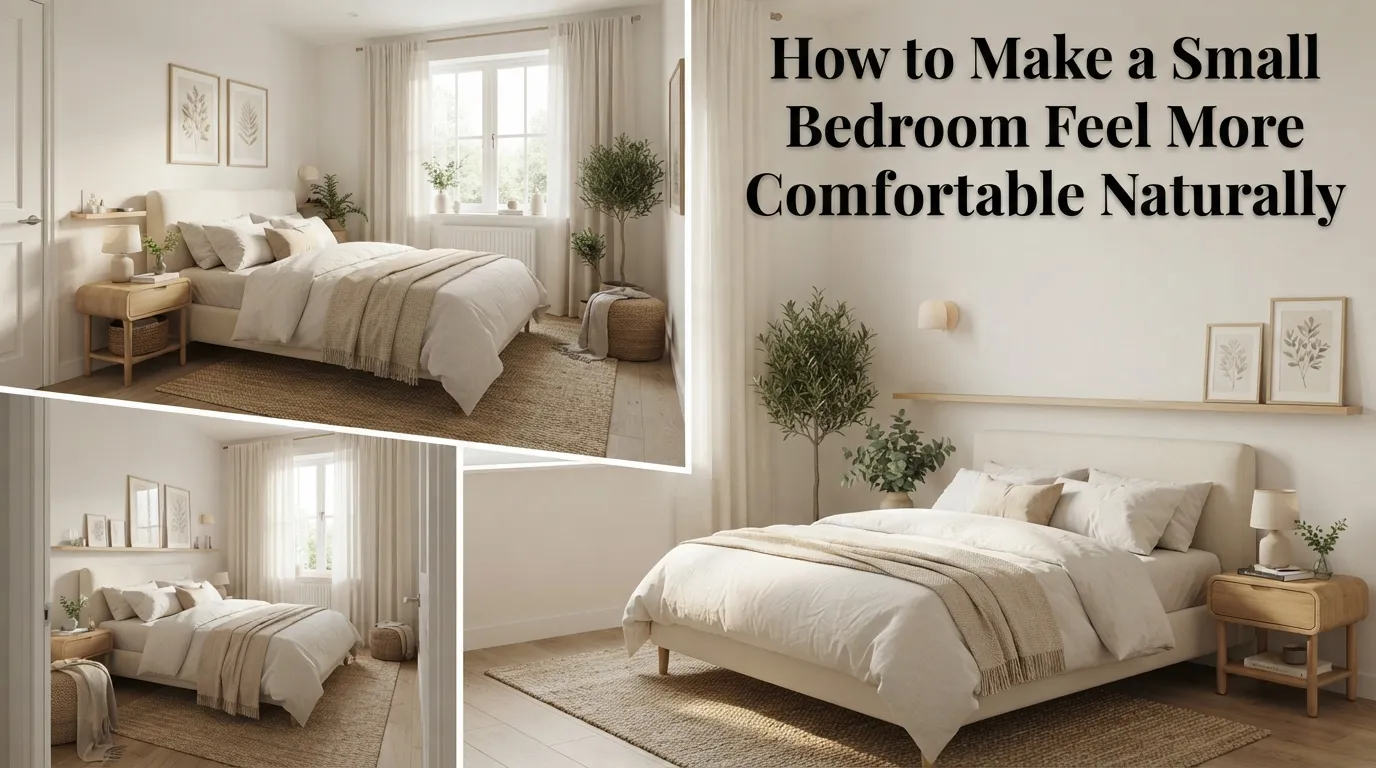
How to Make a Small Bedroom Feel More Comfortable Naturally
A small bedroom does not have to feel cramped, crowded, or uncomfortable. In many homes, the problem is not the size of the room itself but the way furniture, lighting, colors, and everyday belongings are arranged. When those elements work together, even a compact bedroom can feel calm, welcoming, and surprisingly spacious.
The best part is that creating a more comfortable small bedroom does not always require a renovation or expensive furniture. Natural materials, softer lighting, breathable fabrics, thoughtful storage, and a little visual editing can make a meaningful difference. Sometimes something as simple as moving a nightstand, replacing heavy bedding, or opening up a blocked window can change the entire feeling of the room.
If you are working with a bedroom in a small apartment, guest room, older home, or rental, it is especially helpful to focus on changes that improve both appearance and everyday function. A bedroom should have enough room to walk around, enough storage to keep clutter under control, and enough softness to make you want to relax at the end of the day.
Natural decorating is particularly effective in a compact room because it tends to emphasize texture and simplicity rather than adding visual noise. Think warm wood, linen, cotton, woven baskets, plants, gentle colors, and daylight. These elements can make the room feel grounded without making it feel overdecorated.
Below, you will find practical ways to make a small bedroom more comfortable while keeping the space light, useful, and personal. You do not need to use every idea. Start with the changes that solve your biggest problem, then gradually build a room that feels easy to live in.
Table of Contents
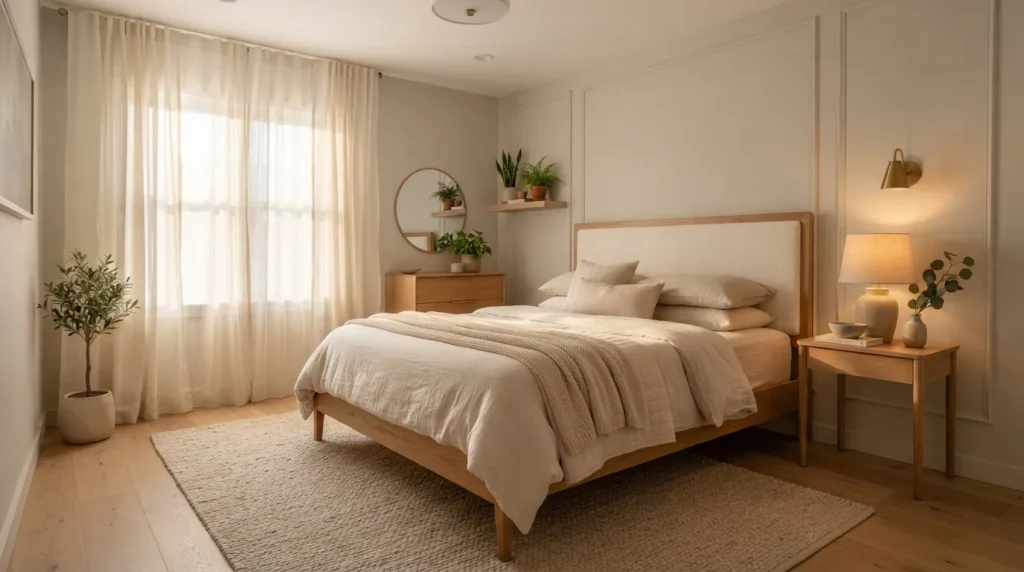
1. Clear Walking Space
Opening up the floor around the bed can immediately make a compact bedroom feel easier to use.
2. Embrace Natural Light
Daylight can make a small room feel brighter, softer, and more connected to the outdoors.
3. Choose Soft Neutrals
A gentle palette can reduce visual clutter and create a restful atmosphere.
4. Add Natural Textures
Wood, linen, cotton, and woven materials bring warmth without overwhelming limited space.
5. Layer Gentle Lighting
Several smaller light sources can make the bedroom feel cozy after sunset.
6. Use Vertical Storage
Taking advantage of wall height gives you useful storage without sacrificing valuable floor space.
7. Simplify Your Bedding
Lightweight, breathable layers can make a small bedroom feel more relaxed and comfortable.
8. Bring In Greenery
A carefully chosen plant can introduce freshness and natural character.
9. Soften Hard Corners
Rounded shapes and tactile fabrics can make a compact room feel more welcoming.
10. Keep Surfaces Calm
Intentional styling helps prevent everyday clutter from taking over the bedroom.
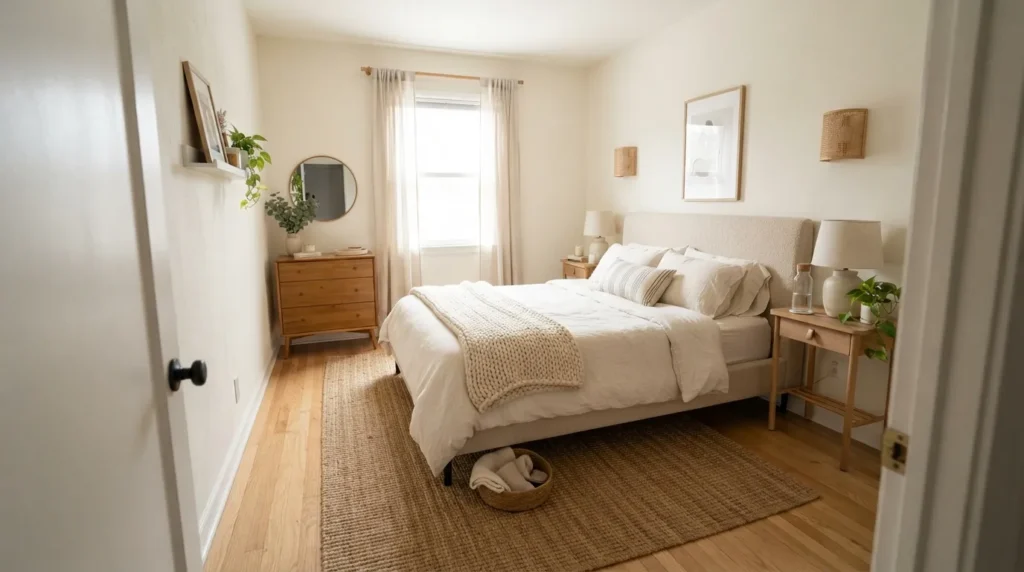
1. Clear Walking Space
Quick Benefits
- Makes the room easier to move through
- Creates a sense of openness
- Reduces visual clutter
- Improves everyday functionality
- Helps furniture feel better proportioned
Why It Works
In a small bedroom, every inch of floor space matters. A room can have beautiful furniture and still feel uncomfortable when there is barely enough space to walk between the bed, door, dresser, and closet.
The first step is to look at the room from a practical perspective rather than a decorative one. Imagine getting into bed at night, opening a closet door, making the bed, or carrying laundry through the room. If furniture consistently gets in the way, the layout needs attention before additional decor is added.
One mistake many homeowners make is trying to fill every available corner. In a larger bedroom, an extra chair or cabinet may add character. In a compact bedroom, the same piece can create unnecessary obstacles.
A little empty floor space is valuable. It gives furniture room to breathe and creates visual separation between different areas.
Even moving a nightstand a few inches or replacing a bulky bench with a slimmer stool can make a noticeable difference.
How To Style It
Start by measuring the largest pieces of furniture. The bed usually determines the rest of the layout, so position it first.
Whenever possible, keep a clear route from the bedroom entrance to the bed and closet. Avoid placing baskets, stools, or decorative furniture in pathways.
If the room is especially narrow, consider floating nightstands or compact wall-mounted shelves instead of traditional bedside tables.
Choose furniture with legs when possible. Seeing some floor beneath a dresser or nightstand can make the room feel visually lighter.
For a very small bedroom, avoid oversized upholstered furniture with deep frames. A slim bed frame, narrow nightstand, and simple dresser can provide the same functionality while taking up less visual space.
Before buying anything new, try removing one piece of furniture for a few days. Living with the change can help you determine whether the room actually needs it.
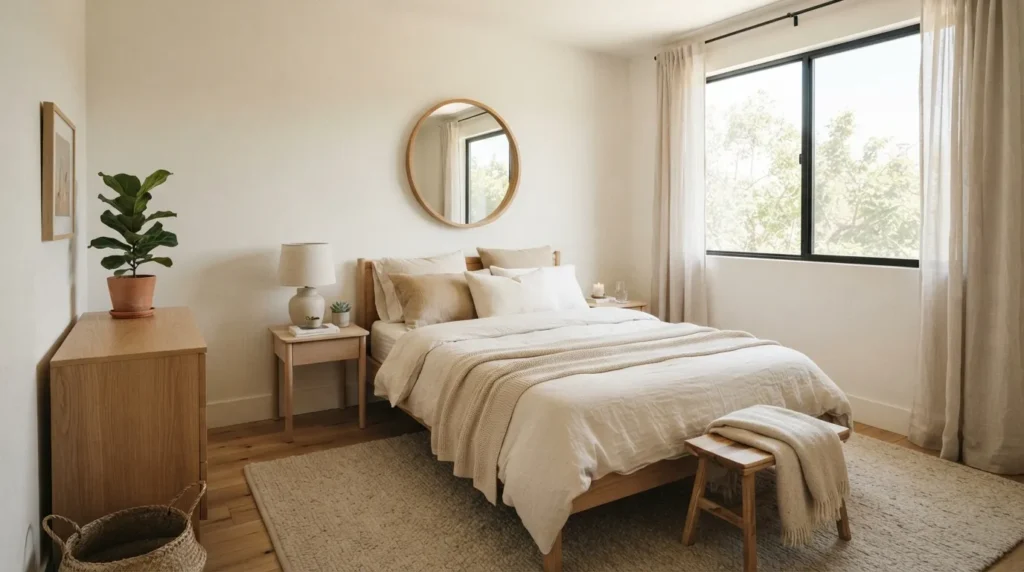
2. Embrace Natural Light
Quick Benefits
- Makes the room feel brighter
- Highlights natural textures
- Creates a more open appearance
- Supports a connection with the outdoors
- Reduces reliance on artificial lighting during the day
Why It Works
Natural light is one of the simplest tools for making a small bedroom feel more comfortable. When daylight can move freely through the room, walls and furniture tend to appear less visually heavy.
The goal is not necessarily to make the bedroom extremely bright. Soft, filtered daylight can be just as effective. What matters is avoiding unnecessary barriers that block the window or make the room feel darker than it needs to be.
Heavy curtains, oversized furniture, or tall storage placed directly beside a window can reduce the amount of light entering the room.
Natural light also works particularly well with organic materials. Linen curtains, pale wood, cotton bedding, and woven accessories catch changing daylight throughout the day, giving the room subtle variation.
If your bedroom receives limited sunlight, do not worry. You can still make the most of whatever daylight is available by keeping the window area clean and visually simple.
A small mirror positioned thoughtfully can also reflect daylight into another part of the room.
How To Style It
Use lightweight curtains in linen, cotton, or a linen-look fabric. Hang them high and wide when possible so the fabric does not cover the entire window when open.
If privacy is important, combine sheer curtains with a simple shade. This gives you flexibility without making the window feel visually heavy.
Keep large furniture away from the glass when possible. A low bench or compact plant can work better near the window than a tall cabinet.
Choose lighter colors around the window to help maintain the feeling of openness. Cream, warm white, pale beige, and soft natural wood are particularly useful.
Clean the windows regularly, especially if they collect dust. It is a small maintenance task, but cleaner glass allows more daylight to enter.
If the room faces a neighboring building or receives little direct sun, focus on softness rather than brightness. Diffused daylight can still create a comfortable atmosphere.
3. Choose Soft Neutrals
Quick Benefits
- Creates a calm visual foundation
- Makes furniture feel less dominant
- Works well with natural materials
- Allows seasonal accessories to change easily
- Helps reduce visual busyness
Why It Works
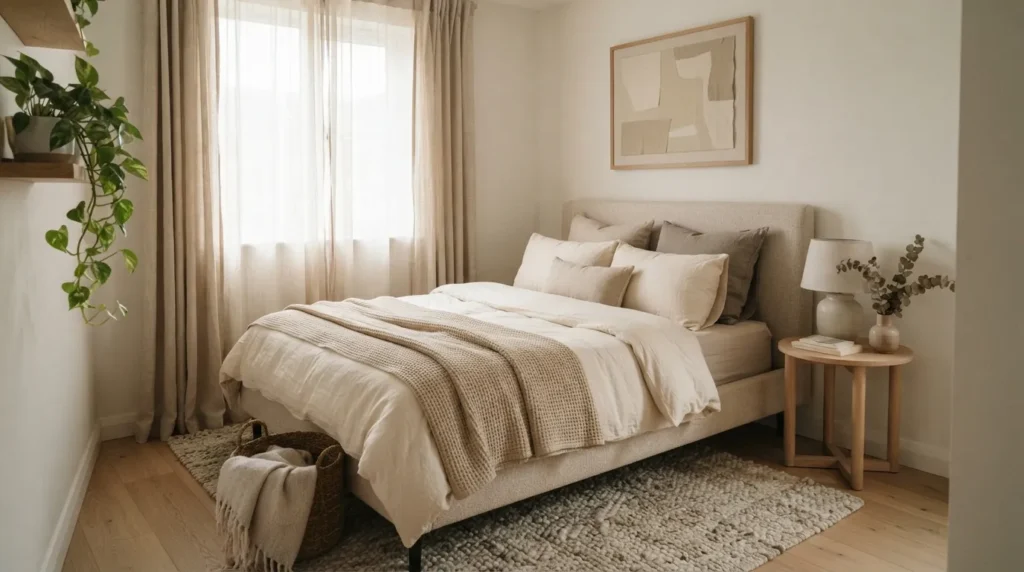
Color has a major influence on how a compact room feels. While dark colors can certainly work in small bedrooms, a softer neutral palette is often an easy way to create a lighter and calmer atmosphere.
Warm white, ivory, oatmeal, beige, soft taupe, pale greige, and muted earthy shades can create continuity between walls, bedding, curtains, and furniture.
The important part is not making everything exactly the same color. A room decorated entirely in one flat shade can feel dull. Instead, use closely related tones and let texture provide the variation.
For example, warm ivory walls can work with cream bedding, beige curtains, pale oak furniture, and a slightly deeper taupe throw.
This creates visual layers without strong contrasts dividing the room into separate sections.
If you love color, you do not have to eliminate it. Add muted green, dusty blue, soft terracotta, or warm brown through artwork, pillows, a throw, or a small rug.
The idea is to keep the strongest colors concentrated in smaller areas rather than allowing several competing colors to dominate the entire room.
How To Style It
Choose one main neutral for the walls and repeat it through larger textiles. Then introduce two supporting shades.
For a naturally warm bedroom, try ivory, beige, and light brown. For something slightly cooler, consider soft white, pale gray, and muted blue.
Use bedding with subtle variations rather than a perfectly matching set. A cream duvet with an oatmeal throw and beige pillows can look more relaxed than identical pieces.
If you have dark furniture, balance it with lighter walls and textiles. If your furniture is pale, introduce one or two darker accents to prevent the room from feeling washed out.
Avoid excessive patterns in a very small room. One understated pattern can add personality without competing with everything else.
The goal is a palette that feels continuous from one side of the room to the other.
4. Add Natural Textures
Quick Benefits
- Adds warmth without visual clutter
- Creates depth in neutral rooms
- Makes the space feel more inviting
- Works across many decorating styles
- Brings an organic quality indoors
Why It Works
A small bedroom can benefit from texture more than additional decoration. When you do not have much space for furniture or accessories, materials themselves can become part of the design.
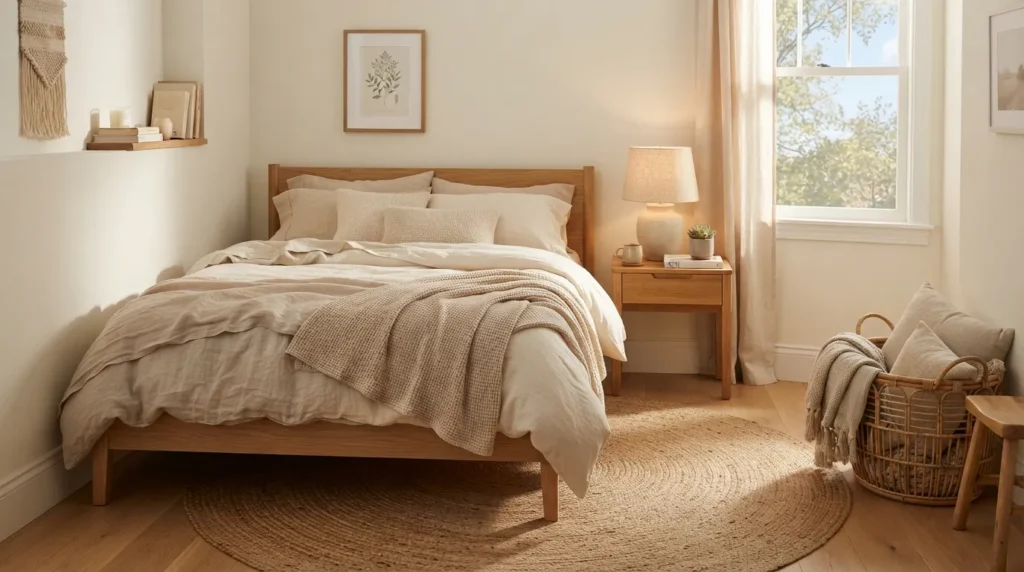
Natural wood, linen, cotton, wool, rattan, jute, seagrass, and woven fibers each create subtle visual differences. They also tend to age gracefully and work well with simple color palettes.
This is particularly useful if you prefer a neutral bedroom. Without texture, beige and cream can sometimes look flat. Add a woven basket, linen curtains, a cotton quilt, and a wood nightstand, and suddenly the same palette feels much more layered.
Natural textures also suit the purpose of a bedroom. They create softness without requiring excessive decorative objects.
You do not need to use every natural material at once. A few repeated textures are usually enough.
One simple trick I always suggest is to choose one hard natural material and two soft ones. For example, use wood furniture with linen bedding and a woven rug.
How To Style It
Start with furniture. Light or medium wood can provide warmth without feeling too heavy.
Then layer textiles. Linen bedding, cotton sheets, a wool or cotton throw, and a woven rug can create depth while keeping the room comfortable.
Use woven baskets for practical storage. They can hold blankets, laundry, handbags, or extra bedding while contributing to the overall aesthetic.
A small rattan stool can serve as both seating and a bedside surface. A wooden peg rail can provide useful wall storage without requiring a large cabinet.
Avoid combining too many busy textures in one small area. The materials should complement one another rather than compete.
If you rent, focus on portable elements such as baskets, bedding, rugs, curtains, and small wooden accessories. These can transform the room without permanent changes.
5. Layer Gentle Lighting
Quick Benefits
- Makes evenings feel more relaxing
- Adds depth to a compact room
- Creates a warmer atmosphere
- Supports reading and nighttime routines
- Reduces dependence on harsh overhead lighting
Why It Works
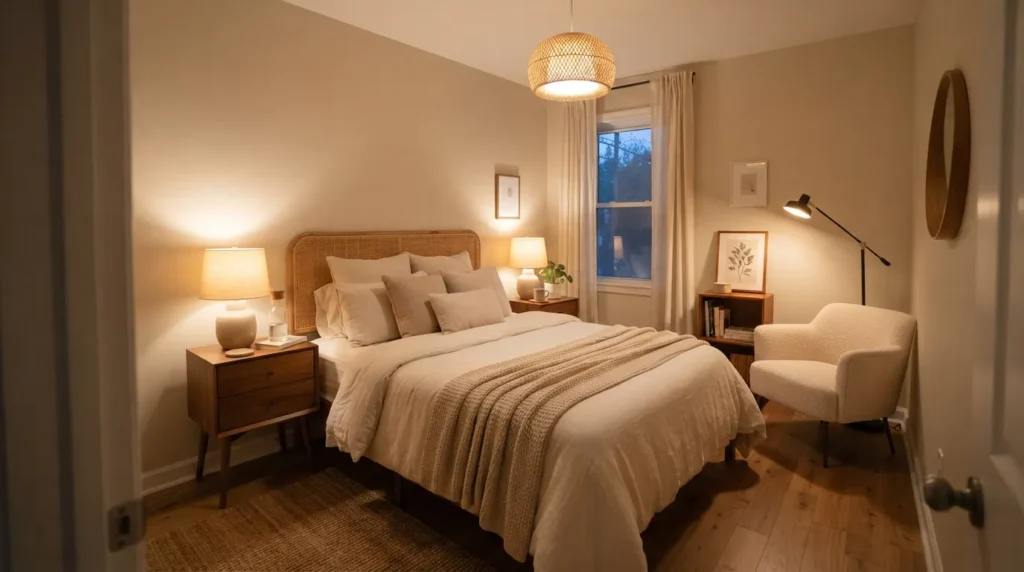
A small bedroom can feel completely different once the sun goes down. If the only light source is a bright ceiling fixture, the room may feel stark even if the daytime design is warm and inviting.
Layered lighting creates a softer atmosphere by distributing illumination throughout the room.
Think of the lighting in three levels: general light, task light, and accent light.
A ceiling fixture provides general illumination. Bedside lamps or sconces provide task lighting for reading. A floor lamp, small table lamp, or decorative light can add another layer.
Warm-toned bulbs generally create a more relaxing feeling than very cool lighting. Dimmers are also useful because the amount of light you want at 8 p.m. may be very different from what you need while getting dressed in the morning.
In a small bedroom, lighting can also replace some decorative objects. A beautiful lamp can function as both a practical item and a design feature.
The goal is to create pools of light rather than illuminating every surface equally.
How To Style It
If you have nightstands, place a lamp on each side for symmetry. If the nightstands are too small, wall sconces are an excellent alternative.
Choose fixtures that are proportionate to the room. An oversized floor lamp may overwhelm a compact bedroom, while a slim fixture can add height without taking over the floor.
Use warm light in the evening and keep brighter general lighting available for daytime tasks.
A small reading lamp near a chair can make an unused corner more functional.
For renters, plug-in sconces and portable lamps can create a similar effect without electrical work.
Avoid placing bright lights directly in your line of sight while lying in bed. Indirect or shaded light tends to feel more comfortable.
6. Use Vertical Storage
Quick Benefits
- Frees valuable floor space
- Makes use of unused wall height
- Keeps belongings organized
- Reduces visible clutter
- Helps small rooms function more efficiently
Why It Works
When floor space is limited, look upward. The vertical area of a bedroom is often underused, even though it can provide valuable storage.
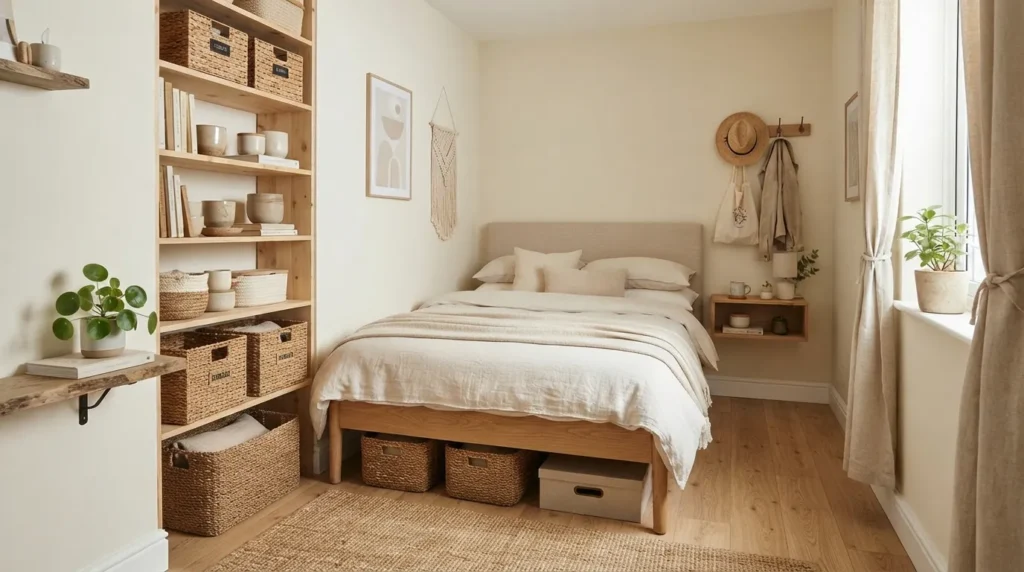
Tall bookcases, wall-mounted shelves, peg rails, hooks, narrow cabinets, and high storage boxes can hold everyday belongings without expanding the furniture footprint.
This approach is especially useful in bedrooms without large closets.
Vertical storage also draws the eye upward, which can make a compact room feel taller. The key is keeping the arrangement visually organized.
Open shelves can be beautiful but may quickly become cluttered. Closed storage is often better for items you do not want on display.
A small bedroom benefits from storage that performs more than one job. A bed with drawers, a wall-mounted nightstand with storage, or a tall narrow dresser can provide significantly more capacity than a collection of small pieces.
The goal is to create enough storage that surfaces can remain calm.
How To Style It
Use the wall above a dresser for shelves, artwork, or a combination of both.
A tall narrow bookcase can work better than a wide low unit when floor space is limited.
Install hooks near the entrance for robes, bags, or frequently worn clothing. A simple wooden peg rail can look attractive while keeping everyday items accessible.
If you have space beneath the bed, use low storage boxes or drawers for seasonal clothing and extra linens.
Choose baskets and containers in similar materials or colors so the storage itself becomes part of the design.
Do not fill every shelf. Leave some open space between groups of objects.
For a rental, removable hooks, freestanding shelves, and under-bed containers can provide many of the same benefits without permanent installation.
7. Simplify Your Bedding
Quick Benefits
- Makes the bed easier to maintain
- Improves comfort
- Reduces visual heaviness
- Allows better airflow
- Creates a relaxed appearance
Why It Works
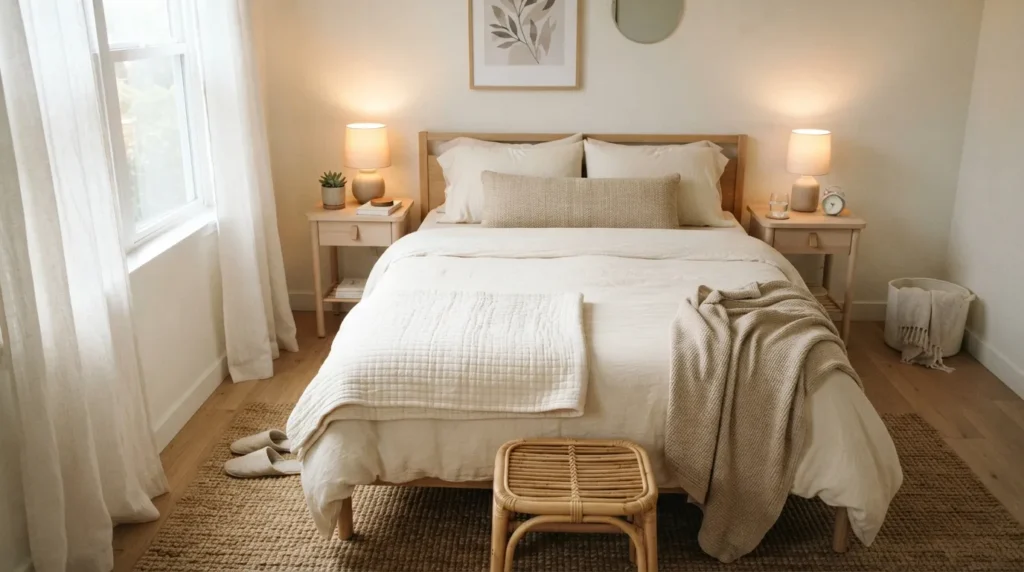
The bed occupies a large percentage of a small bedroom, which means the bedding has an outsized effect on how the room feels.
Very thick comforters, excessive decorative pillows, and multiple heavy blankets can make a compact bedroom look crowded.
A simpler arrangement often feels more comfortable.
Choose breathable materials such as cotton and linen when they suit your climate and sleeping preferences. Layer lightly rather than piling everything onto the mattress.
The visual goal is softness without bulk.
A simple duvet, two or four sleeping pillows, one or two decorative pillows, and a lightweight throw may be enough.
You can also use bedding to introduce subtle texture. A quilted coverlet, linen duvet, or knitted throw adds dimension without requiring additional furniture.
Comfort should always come first. The prettiest bedding arrangement is not useful if it makes sleeping too warm or creates unnecessary maintenance.
How To Style It
Begin with comfortable sheets appropriate for the season. Add a lightweight duvet or comforter and fold a quilt or coverlet across the lower third of the bed.
Use pillows in related colors rather than matching every piece exactly.
A single textured throw at the foot of the bed can provide visual warmth without creating excessive bulk.
During warmer months, remove heavier layers and let the bed feel lighter. During colder months, add one practical blanket rather than several decorative layers.
Choose bedding colors that connect with the walls and curtains. This creates continuity and prevents the bed from becoming an overly strong visual block.
If storage is limited, use bedding that can serve multiple purposes. A quilt can function as an extra layer, decorative cover, or seasonal blanket.
8. Bring In Greenery
Quick Benefits
- Adds a natural focal point
- Introduces subtle color
- Softens hard furniture
- Creates visual freshness
- Works with neutral palettes
Why It Works
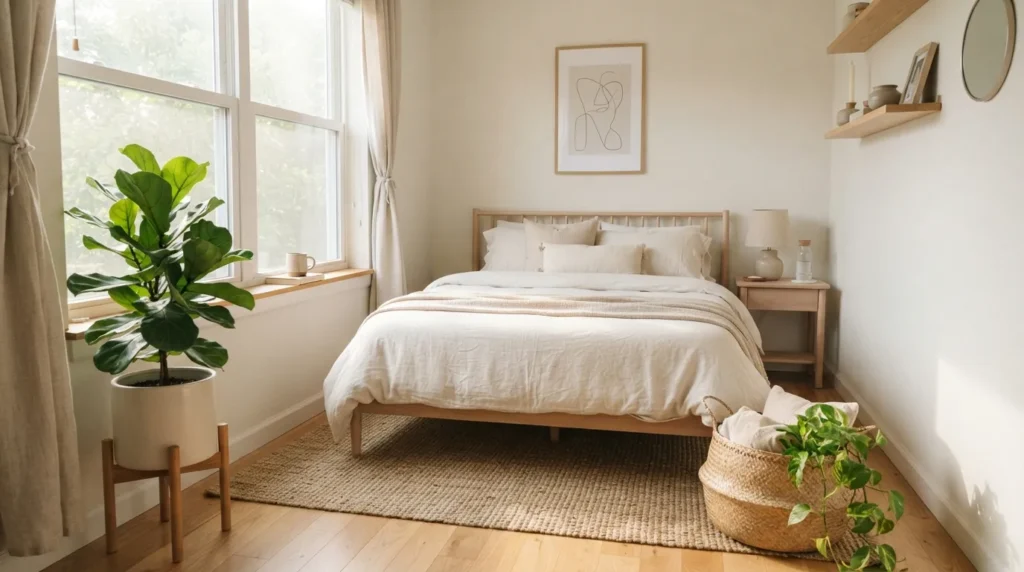
Plants can make a small bedroom feel more connected to nature, but you do not need a jungle to get the effect.
One well-placed plant can be more effective than several small pots scattered around the room.
Greenery introduces an organic shape that contrasts nicely with rectangular furniture, straight shelves, and architectural lines.
Plants can also work as a form of living decor. Their leaves add movement and subtle variation while keeping the color palette relatively simple.
The important consideration is the actual environment. Choose plants based on the amount of available light and your willingness to maintain them. A plant that struggles in a dark corner will not improve the room.
If natural light is limited, quality artificial greenery can still provide visual softness, although live plants can be especially rewarding when the conditions are suitable.
The goal is not to follow a trend. It is to introduce one natural element that makes the room feel more alive.
How To Style It
Place a medium-sized plant near a window if the light requirements allow it.
For a very small bedroom, choose a compact plant on a shelf or nightstand rather than a large floor plant.
Use a simple ceramic or woven planter that connects with the room’s existing materials.
Avoid placing plants where they block walking paths, curtains, or closet doors.
Trailing plants can work beautifully on high shelves because they add softness without using floor space.
If you travel often or do not enjoy plant care, choose low-maintenance varieties appropriate to your environment or use a realistic faux plant.
Keep the arrangement simple. One healthy plant usually looks more intentional than several neglected ones.
9. Soften Hard Corners
Quick Benefits
- Makes the room feel warmer
- Breaks up rigid furniture lines
- Adds tactile comfort
- Creates a more relaxed appearance
- Can make a small space feel less severe
Why It Works
Compact bedrooms often contain many straight lines: rectangular beds, dressers, shelves, doors, windows, and storage units.
When all of these shapes are hard and angular, the room can feel visually rigid.
Softening some of those lines introduces balance.
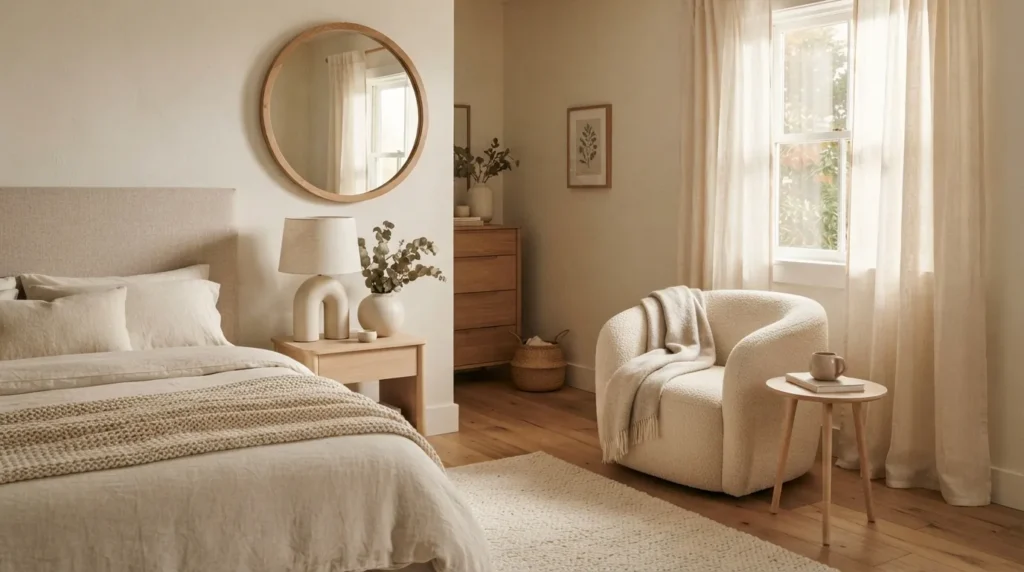
You can do this through rounded furniture, curved lamps, soft rugs, flowing curtains, upholstered pieces, or simply the texture of bedding.
You do not need to replace all your furniture. A round mirror above a dresser or a curved bedside lamp may be enough to change the visual rhythm.
Textiles are another easy solution. A soft rug beneath the bed can visually connect separate furniture pieces and make the room feel more comfortable underfoot.
The combination of straight architectural lines and softer decorative shapes tends to feel more natural than either extreme alone.
How To Style It
If your bed and dresser are rectangular, add one rounded object nearby.
A circular mirror, small round table, curved chair, or rounded lamp can create subtle contrast.
Use curtains with a soft drape rather than stiff panels. Add a rug with a gentle pattern or irregular texture.
For an inexpensive change, replace sharp decorative containers with rounded ceramic vessels.
A small upholstered stool can also soften the edge of a dresser or vanity area.
Keep the shapes relatively simple. Too many unusual silhouettes can make a small room feel busy.
The best result comes from repetition. If you introduce one curved element, echo it somewhere else through a lamp, mirror, basket, or accessory.
10. Keep Surfaces Calm
Quick Benefits
- Reduces visual clutter
- Makes cleaning easier
- Helps the room feel more peaceful
- Highlights meaningful decor
- Makes storage work harder
Why It Works
A small bedroom has less visual space to hide everyday clutter. A few receipts, chargers, skincare products, books, and clothing items can quickly make the entire room look disorganized.
Keeping surfaces intentionally calm is therefore one of the most effective ways to improve comfort.
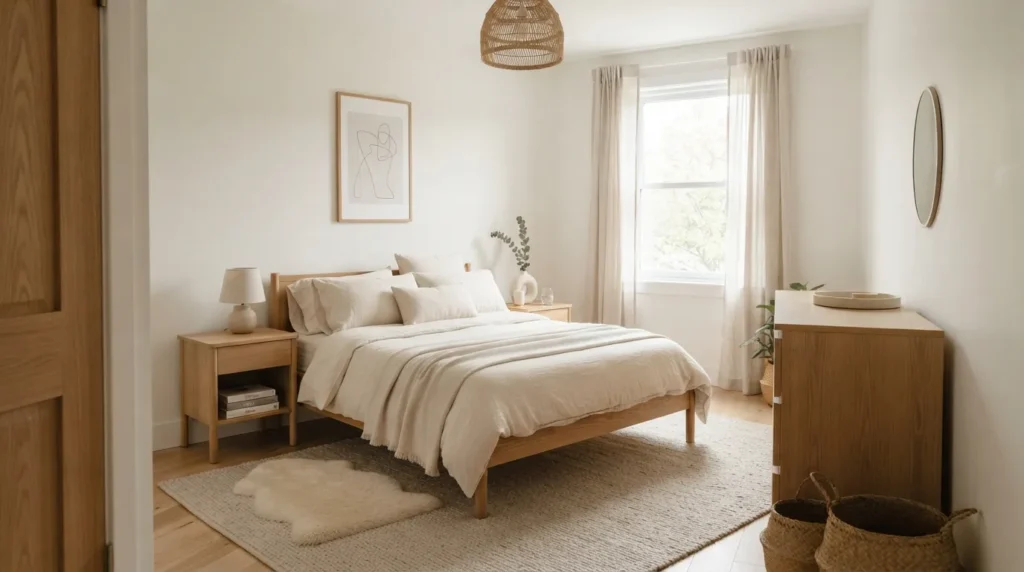
This does not mean every nightstand should be empty. It means everything visible should have a reason to be there.
A bedside lamp, book, small plant, and water glass may be useful. Five decorative objects plus several everyday items may become overwhelming.
The same applies to dressers and shelves.
When surfaces are edited, the room appears larger because the eye can move across the furniture without constantly stopping at small objects.
This is also practical. Fewer objects mean fewer things to move when dusting and cleaning.
I’ve found that comfortable rooms often have a mixture of open space and personal items. The goal is not perfection. It is creating enough order that the room remains easy to use.
How To Style It
Start with one surface at a time.
Remove everything from the nightstand and return only the items you use regularly. Add one decorative element if desired.
Use trays to group smaller items such as jewelry, perfume, or skincare. A tray makes several objects feel like one organized arrangement.
Keep chargers and cables tucked away when possible. Cable clips or small boxes can help prevent visual mess.
On a dresser, choose one main focal point such as a mirror or artwork, then add only a few supporting pieces.
Use baskets and drawers for items that do not need to remain visible.
Most importantly, create a simple evening reset. Put clothing away, return books to their place, and clear the bedside area. A small routine can keep the bedroom comfortable without requiring a major cleaning session.
Frequently Asked Questions
How can I make a small bedroom feel more comfortable?
Focus first on clear walking space, comfortable bedding, warm lighting, and organized storage. Use a restrained color palette and natural textures such as wood, linen, cotton, and woven materials. Avoid filling every corner with furniture or decor. A small bedroom usually feels more comfortable when it has enough empty space to move around and enough storage to keep everyday items under control.
What colors make a small bedroom feel bigger?
Soft neutrals such as warm white, ivory, pale beige, light greige, and muted earthy shades can help create a lighter visual appearance. The best choice depends on the room’s natural light. Instead of using one color everywhere, combine closely related shades to create depth without strong visual divisions.
How do I make a small bedroom cozy without clutter?
Use texture instead of adding lots of objects. Layer breathable bedding, add a soft rug, use warm lamps, and introduce one or two natural materials such as wood or woven fibers. Keep decorative objects selective and use baskets, drawers, and under-bed storage for everyday belongings. Comfort comes from softness and function, not from filling every available surface.
Should a small bedroom have a rug?
A rug can make a small bedroom feel warmer and more cohesive, especially when it extends beyond the sides of the bed. Choose a size that fits the room without creating an obstacle around the door or closet. If a large rug is not practical, a runner beside the bed can provide softness while taking up less floor space.
How can I add storage without making my bedroom feel crowded?
Use vertical and multifunctional storage. Tall narrow shelving, wall hooks, floating nightstands, under-bed drawers, storage beds, and baskets can increase capacity without requiring much additional floor space. Keep frequently used items accessible and store less-used belongings behind doors, in drawers, or beneath the bed.
How can natural light improve a small bedroom?
Natural light can make walls and furniture appear lighter and help the room feel more open. Keep windows unobstructed, use lightweight curtains, and avoid placing tall furniture directly in front of the glass. A strategically positioned mirror can also reflect daylight into darker parts of the room.
What materials work best for a naturally comfortable bedroom?
Wood, linen, cotton, wool, jute, rattan, seagrass, and other woven materials can add warmth and texture without requiring many decorative objects. You do not need to use all of them. Combining one or two natural hard materials with soft textiles is usually enough to create an inviting, balanced bedroom.
Conclusion
A small bedroom can be comfortable, beautiful, and practical without feeling crowded. The key is to treat every element as part of the room’s overall experience rather than trying to add more decoration.
Start with the basics: create clear walking paths, make the most of natural light, choose a calm color palette, and give everyday belongings a proper place. Once those foundations are working, introduce natural textures, warm lighting, comfortable bedding, and a little greenery.
Remember that empty space is useful. You do not need to fill every corner just because there is room for something there. A compact bedroom often feels better when furniture is carefully selected and surfaces are allowed to breathe.
Natural materials can also make a surprisingly large difference. A wooden nightstand, linen curtains, cotton bedding, woven basket, or small plant can introduce warmth without overwhelming the room.
Most importantly, design the bedroom around how you actually live. If you read in bed, prioritize a good reading light. If storage is your biggest problem, solve that before buying decorative accessories. If the room feels dark, focus on window treatments and layered lighting.
Start with one change that solves a real problem. Then add another when it makes sense. Over time, these small decisions can turn even a very compact bedroom into a space that feels calm, comfortable, and genuinely yours.
Related Articles
- Small Bedroom Ideas That Make Every Inch Count
- Cozy Bedroom Decor Ideas for a Relaxing Home
- Neutral Bedroom Ideas for a Calm and Timeless Look
- Natural Home Decor Ideas for a Warm Interior
- Bedroom Storage Ideas for Small Spaces